
Key Takeaways
- A fastener’s unit price is only one factor; total cost includes installation labor, corrosion protection, and the risk of premature failure.
- Always match the fastener material, grade, and thread system to the exact application and environment to avoid joint failure or rework.
- A detailed fastener type chart standardises specification across design, purchasing, and maintenance, reducing mis-orders and assembly errors.
- Verify the complete standard (ISO, DIN, ASME), coating, and any required certifications before placing an order.
It’s 6:45 a.m. The maintenance supervisor stares into a bin of mixed metric and imperial bolts left from last month’s equipment retrofit. Two production lines are down, and the wrong fastener choice could mean a coupling failure that stops the plant for another shift. This is where a fastener types chart becomes more than a wall poster—it’s a critical tool for rapid, reliable identification.
Whether you’re restocking inventory for an OEM assembly line, sourcing for a construction project, or specifying hardware for a packaging machine, selecting the correct fastener starts with knowing exactly what you’re looking at. This guide walks through who benefits most from a structured identification approach, what criteria matter when choosing a fastener, and how common configurations map to real-world applications.
Who Needs This Guide and What Problem It Solves
Industrial buyers, maintenance engineers, and procurement teams routinely handle thousands of fastener part numbers. Without a clear reference, the risk mounts: using a zinc-plated screw in a corrosion-heavy washdown area, ordering an M8 bolt when a 5/16-18 was specified, or mixing up a fine-thread fastener with a coarse-thread one. A fastener types chart helps break down identification by head style, drive type, thread form, and dimensional standards. The problem this guide solves is the gap between generic hardware catalogs and job-specific selection logic. By understanding the key characteristics that differentiate fasteners, you can reduce ordering errors, prevent field failures, and streamline vendor communication.
Key Selection Criteria for Fasteners
When you reach for a fastener type chart, you’re typically filtering on a handful of decisive factors. Here are the ones that matter most for B2B buyers.
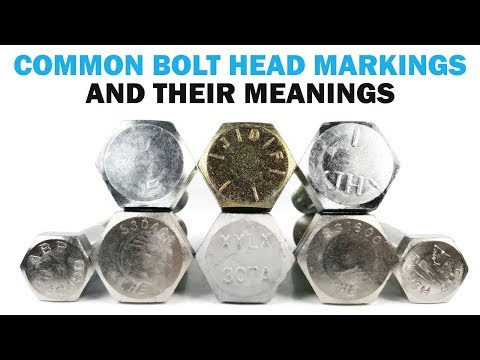
- Material and Strength Grade: Carbon steel fasteners are affordable but require coating for corrosion resistance. Alloy steel and stainless steel (A2, A4, etc.) offer higher strength or chemical compatibility. Strength grades like Class 8.8, 10.9, and 12.9 (metric) or Grade 5 and Grade 8 (imperial) define mechanical properties. The wrong grade in a dynamic load application can result in catastrophic failure.
- Coatings and Corrosion Resistance: Zinc plating, hot-dip galvanizing, and specialty coatings like Xylan or PTFE extend service life in harsh environments. Food-grade or marine applications demand specific finishes that maintain integrity without contaminating product.
- Thread Type and Fit: Coarse threads install faster and resist stripping; fine threads provide greater adjustment precision and hold better under vibration. Match the thread standard—ISO metric, UNC/UNF, BSW—to the mating component. An M8-1.25 fastener will not interchange with a 5/16-18, even if they appear similar.
- Head Style and Drive Type: The head configuration (hex, socket cap, pan, flat) determines tool access and load distribution. Drive type—hex, Torx, Phillips—impacts installation torque and field serviceability. A fastener types chart typically cross-references these features so you can identify a part at a glance.
- Sizing Standards: Metric designations like M8, M10, and M12 indicate the bolt’s nominal diameter in millimeters. The number after the dash (e.g., M10 x 1.5) is the thread pitch, crucial for matching nuts and tapped holes. Imperial fasteners use fractions of an inch and threads-per-inch. Misunderstanding sizing leads to cross-threading and joint failure.
Common Fastener Categories and Who Each Suits
Fastener types charts typically group hardware into broad categories based on function. Understanding these categories helps you communicate with suppliers and specify exactly what you need in an RFQ.
- Bolts: Hex bolts, carriage bolts, flange bolts, and anchor bolts are the workhorses of construction and heavy equipment. A small fabrication shop might keep a stock of common M10–M24 hex bolts, while a structural steel contractor orders A325 or A490 high-strength bolts by the pallet for bridge or building frameworks.
- Screws: Machine screws, self-tapping screws, and wood screws dominate assembly and finishing tasks. Electronics manufacturing demands tiny precision screws with specific head profiles, while a cabinetmaker relies on course-thread wood screws. Screws are often specified by head type and drive style on a fastener type chart.
- Nuts and Washers: Hex nuts, lock nuts, and flange nuts pair with bolts to secure joints. Flat washers distribute load; lock washers resist vibration loosening. In automotive production, prevailing-torque lock nuts are common for powertrain assembly, whereas large-diameter flat washers support structural steel bolted connections.
- Specialty Fasteners: Rivets, threaded inserts, and retaining rings serve niche roles. Aerospace applications often require high-strength, lightweight alloy rivets installed with controlled squeeze force. In contrast, a handyman might use pop rivets for sheet metal repair. A comprehensive fastener types chart will include these less common but essential categories.
Total Cost of Ownership: Beyond the Unit Price
The unit price of a bolt or screw is only part of the picture. A low‑cost fastener that corrodes within months in an outdoor application will generate additional costs in replacement labor, production downtime, and potential damage to surrounding components. Galvanised or stainless‑steel fasteners carry a higher initial price, yet they avoid frequent rework. Installation speed also matters: a fastener that requires a special tool or extra handling steps can inflate assembly costs per joint. Even logistics—bulk packaging versus small kits—affects the total outlay. When evaluating total cost, buyers weigh purchase price against the expected service life, installation time, and the risk of failure in its intended environment.
Pitfalls to Avoid: What Buyers Often Get Wrong
One common mistake is selecting a fastener based solely on dimensions without checking the strength grade or material. A plain steel bolt in a high‑humidity setting will rust quickly, while substituting an ungraded fastener for a high‑strength application can lead to joint failure. Mismatched thread systems—ordering a coarse‑thread screw for a fine‑thread tapped hole, or confusing metric with imperial threads—is another frequent error. Buyers sometimes overlook drive style compatibility with their assembly tools, which can slow production or damage fastener heads during installation. Finally, ignoring certification requirements for traceable applications (aerospace, automotive, structural) can cause costly rejections. Before ordering, verify the exact standard (ISO, DIN, ASME), material grade, plating or coating, and any lot‑traceability or test‑certificate needs.
Integrating a Fastener Type Chart into Your Workflow
A comprehensive fastener type chart acts as a central reference for design, procurement, and maintenance teams. Designers use it to quickly confirm standard call‑outs, avoiding custom components when a standard fastener already exists. Procurement staff rely on unambiguous descriptions—head style, thread designation, material—to issue accurate RFQs and avoid costly mis‑orders. On the assembly floor, a visual chart helps operators distinguish similar fasteners, reducing mix‑ups that require rework. For maintenance crews, the chart speeds identification during repairs, ensuring the correct replacement is ordered the first time. By embedding a well‑organised chart into your ERP or inventory system, you turn what could be a guessing game into a standardised, repeatable process that cuts lead times and reduces downtime.
| Aspect | Key Considerations |
|---|---|
| Fastener Categories | Bolts (hex, socket cap, shoulder), screws (wood, machine, self‑tapping, set screws), nuts (plain, lock, flange), washers (flat, lock, fender), specialty (rivets, inserts, retaining rings) |
| Critical Selection Criteria | Material and grade (strength, corrosion resistance), thread type (metric coarse/fine, UNF/UNC, BA), size (diameter, length), head and drive style (Torx, hex socket, Phillips, slotted), environmental demands (temperature, chemicals, vibration) |
| Total Cost Factors | Initial price plus installation labor, tooling requirements, protective coatings, replacement frequency, failure risk, and inventory carrying cost |
| Common Purchasing Mistakes | Wrong material for environment, mismatched thread systems, ignoring grade/strength specs, incorrect size (confusing metric/imperial), ordering without checking drive‑tool compatibility, overlooking certification and traceability needs |
| Workflow Integration | Provides one‑source reference for design, procurement, assembly, and maintenance; standardises call‑outs to reduce mis‑orders; helps ERP data quality; speeds repair turnaround |
Frequently Asked Questions
What information should a fastener types chart include?
A comprehensive chart typically covers head styles (e.g., hex, pan, countersunk), drive types (Phillips, Torx, socket), thread designations (metric, imperial, fine/coarse), materials and grades, and the fastener category (bolt, screw, nut, washer). It may also show visual cross‑references between different standards like ISO, DIN, and ASME.
How can I avoid ordering the wrong thread type?
Check the thread specification on the mating component or the original assembly drawing. Note whether the thread is metric (e.g., M6×1.0) or imperial (e.g., 1/4-20 UNC), and whether it is coarse or fine pitch. A fastener chart with thread identification diagrams can help, and always confirm the standard (ISO 724 metric or ASME B1.1 imperial) before ordering.
Why does strength grade matter for bolts?
The strength grade (e.g., property class for metric bolts like 8.8, 10.9) indicates the bolt’s minimum tensile strength and hardness. Using a lower‑grade bolt in a high‑load application can cause stretching or shear failure, while a higher‑grade bolt may be unnecessarily expensive. The grade must match the design requirements and torque specification.
What is the difference between a lock washer and a flat washer?
A flat washer primarily spreads fastener load and prevents damage to the mating surface. A lock washer—such as a split ring or serrated type—adds friction or biting action to resist loosening under vibration. In critical applications, prevailing‑torque lock nuts or thread‑locking compounds are often preferred over lock washers.
When should I use stainless steel fasteners?
Stainless steel fasteners are chosen when corrosion resistance is needed, such as in outdoor, marine, or food‑processing environments. They also provide strength at elevated temperatures. However, they are generally more expensive and may gall during installation, so the application’s mechanical and environmental demands should justify the cost.