
Skip to content

Bolts · GB/T 15389 / DIN 939

M20 Stud Dimensions & Specifications

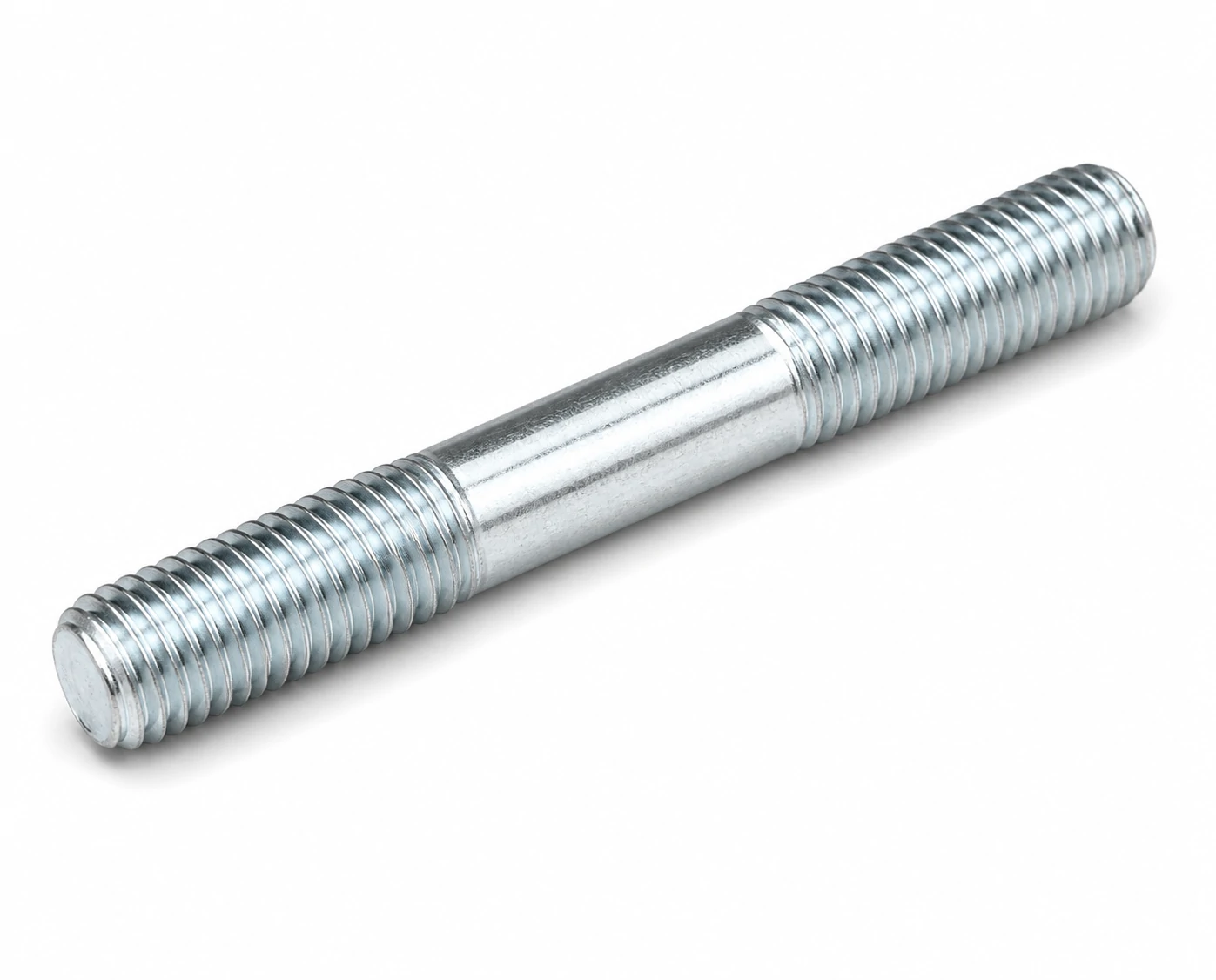
M20 Stud Dimensions & Specifications reference image

The M20 size of Stud is dimensioned by GB/T 15389 / DIN 939. The tables below give the dimensional row from the standard, the drill and spanner sizes that go with it, and the assembly torque per property class. The technical drawing on this page redraws to the exact values selected.

M20 Dimensional Row (GB/T 15389 / DIN 939)

Thread sizePitch (mm)Length L (mm)Engagement depth bm (mm)MaterialReference standard
M202.518030Cl. 8.8 alloy steelDIN 939 / GB/T 901

Spanner & Drive for M20 Stud — GB/T 15389 / DIN 939 (Series 096)

Drive geometry for M20 Stud — GB/T 15389 / DIN 939 (Series 096) is given by the row above; match the tool to the listed values.

Hole Sizes for M20

Coarse-thread pitch (ISO 724)2.5 mm
Through-hole / clearance (ISO 273 medium)22 mm
Tapping drill, coarse thread17.5 mm

Tightening Torque for M20

Class 8.8 (dry, ~µ 0.125)≈ 410 Nm
Class 10.9 (dry, ~µ 0.125)≈ 580 Nm
Class 12.9 (dry, ~µ 0.125)≈ 690 Nm

Indicative dry-joint values. Lubrication can lower the required torque by 15–25%. Always confirm against the joint design, especially when going up a strength class.

Proof Load & Strength for M20

Tensile stress area As (ISO 898-1)245 mm²
Proof load, class 8.8147 kN
Proof load, class 10.9203 kN
Proof load, class 12.9238 kN
Min. ultimate tensile, class 8.8196 kN

Proof load = stress area × proof stress per ISO 898-1. Design joints so the working preload stays below the proof load of the selected class.

M20 Stud — GB/T 15389 / DIN 939 (Series 096) Weight

A steel M20 stud at the listed 180 mm length weighs approximately 444 g each — about 444 kg per 1,000 pieces. Stainless A2/A4 weighs roughly the same (density 7.9–8.0 g/cm³). Actual weight varies slightly with head form, thread and finish; use this figure for freight estimation only.

Common Applications for M20 Stud — GB/T 15389 / DIN 939 (Series 096)

M20 Stud — GB/T 15389 / DIN 939 (Series 096) are commonly specified for structural steelwork, heavy machinery foundations and large flange joints.

Installation Tips for M20 Stud — GB/T 15389 / DIN 939 (Series 096)

  • At M20 the stretch in the bolt becomes the controlling factor — for critical joints, use angle-controlled or stretch-controlled tightening instead of pure torque.

When to Step Up or Down from M20

When the joint preload approaches the proof load of M20 class 8.8, step up to M24 class 8.8 (or move to M20 class 10.9). When the joint is over-specified, M16 often saves weight and cost without losing the safety margin.


Technical Drawing

Customize the parameters below — every spec field is editable, and the drawing redraws to match the values you choose. Changing the size will snap the other fields to that size's standard values; you can then override any individual value.

Sends the selected values to the quote form below.

Request a Quote

Adjust the parameters in the drawing above and click "Request this configuration" to send the exact specification straight to this form.

Request a Quotation

Specification
Business Information

Dimensions & Specifications (GB/T 15389 / DIN 939)

Thread sizePitch (mm)Length L (mm)Engagement depth bm (mm)MaterialReference standard
M61.0508Cl. 8.8 alloy steelDIN 939 / GB/T 901
M81.256010Cl. 8.8 alloy steelDIN 939 / GB/T 901
M101.58015Cl. 8.8 alloy steelDIN 939 / GB/T 901
M121.7510018Cl. 8.8 alloy steelDIN 939 / GB/T 901
M142.012021Cl. 8.8 alloy steelDIN 939 / GB/T 901
M162.015024Cl. 8.8 alloy steelDIN 939 / GB/T 901
M202.518030Cl. 8.8 alloy steelDIN 939 / GB/T 901
M243.020036Cl. 8.8 alloy steelDIN 939 / GB/T 901
M303.524045Cl. 8.8 alloy steelDIN 939 / GB/T 901
M364.028054Cl. 8.8 alloy steelDIN 939 / GB/T 901

Frequently Asked Questions

What is the coarse-thread pitch of M20 for Stud — GB/T 15389 / DIN 939 (Series 096)?

For M20 the standard coarse pitch is 2.5 mm — this is the value used for Stud — GB/T 15389 / DIN 939 (Series 096).

What torque do M20 class 8.8 Stud — GB/T 15389 / DIN 939 (Series 096) take?

A dry M20 class 8.8 joint takes about 410 Nm (≈ 580 Nm for 10.9, ≈ 690 Nm for 12.9). Confirm against your joint design; lubrication reduces these values.

What clearance and tapping drill suit M20?

Use a 22 mm clearance hole (ISO 273 medium) for through-fixing, or a 17.5 mm tapping drill for a coarse M20 thread.

Should M20 Stud — GB/T 15389 / DIN 939 (Series 096) be tightened by torque or by angle?

For critical structural joints at M20, angle-controlled or stretch-controlled tightening is more repeatable than pure torque — the friction scatter at large diameters can dominate the torque signal.

How do I request a quotation?

Use the technical drawing on this page to pick the exact configuration, then submit it with the quote form. We respond within one business day.

