
Key Takeaways
- High-strength fasteners are classified by internationally recognized standards, such as ISO 898-1 (metric) and SAE J429 (inch), which define minimum tensile and yield strengths.
- Property class 12.9 offers the highest tensile strength among common metric grades but may not suit all dynamic load situations; 8.8 and 10.9 provide balanced strength and toughness.
- Material selection—from medium carbon steel to quenched and tempered alloy steel—directly influences performance, while protective coatings like zinc plating or hot-dip galvanizing extend service life.
- Proper selection requires matching the fastener grade to the application's mechanical demands, environmental conditions, and mating materials, with documentation per the governing standard.
When High-Strength Fasteners Are Required
Procurement teams and engineers specifying fasteners for structural connections, heavy machinery, or high-pressure systems often start with load requirements. High-strength fasteners encompass a family of bolts, nuts, studs, and washers manufactured from alloy steels or heat-treated carbon steels to deliver tensile strengths exceeding 800 MPa or 120,000 psi. These components are engineered to meet SAE, ASTM, or ISO standards and are selected for joints where failure is not an option. Typical B2B use cases include OEM assembly of construction equipment, bolted steel frameworks, petrochemical flanges, and wind turbine towers.
Core Specification Attributes
- Diameters / Thread Sizes: Standard ranges from M6 to M64 (metric) or 1/4″ to 2-1/2″ (inch), with intermediate and oversized diameters available to order.
- Thread Pitch: Coarse (UNC, metric coarse) and fine (UNF, metric fine) series per ISO 261, ASME B1.1. Fine threads provide higher vibration resistance in thin-walled components.
- Lengths: Typically supplied up to 600 mm for standard items; longer lengths are produced through custom manufacturing.
- Head / Drive Types: Hex head, heavy hex, socket cap, flange bolt, and stud configurations; drive recesses include hex, Torx, and 12-point.
- Material Grades: Carbon steel (0.20–0.55% C), alloy steel (e.g., 4140, 4340, 10B21), and stainless steel (A2/A4 or 304/316).
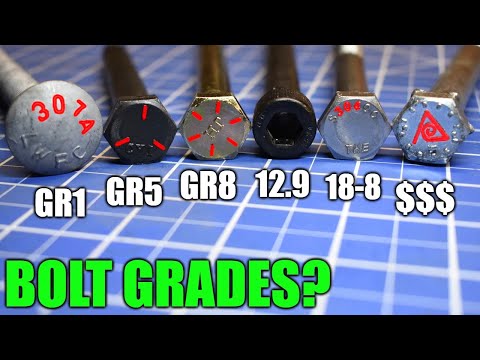
- Property Class / Grade: Per ISO 898-1: Class 8.8, 10.9, 12.9; per SAE J429: Grade 2, Grade 5, Grade 8; per ASTM: A325, A490, A354 BD. Yield and tensile values align with the respective standard.
- Surface Finish: Protective coatings include zinc electroplating (clear, yellow, black), hot-dip galvanizing (ISO 1461), PTFE, Geomet®, and Dacromet® for enhanced corrosion resistance or friction control.
Differentiating Within the High-Strength Product Line
High-strength fasteners are not a single commodity; the line includes several variants optimized for different assembly conditions. Full-thread vs. partial-thread bolts (e.g., DIN 931 vs. DIN 933) affect shear plane placement and grip length. Coarse threads offer faster assembly and are less prone to stripping in softer materials, while fine threads provide greater clamping force and vibration resistance. Head styles—such as heavy hex for structural bearing surfaces, flange bolts for even load distribution, or socket caps for confined spaces—further tailor the fastener to the joint. Additionally, the chosen property class dictates more than just strength: a 12.9 bolt has higher tensile capacity than 8.8 but lower ductility, which may influence fatigue performance. Proper nut pairing (e.g., ISO 898-2 Class 10 nut with Class 10.9 bolt) is essential to guarantee full load transfer.
Typical Applications and Procurement Scenarios
Buyers in heavy industries rely on high-strength fasteners across construction (steel frame connections, bridge bearings), mining and earthmoving (chassis bolts, bucket pins), oil & gas (flange bolting, wellhead components), wind energy (tower anchor bolts, blade studs), and heavy transport. Joint types range from pure tension in tower flanges to shear-loaded bracket connections, demanding careful grade selection. Environmental factors further drive choices: corrosive offshore environments might require ASTM A193 B7 studs with PTFE coating, while high-temperature turbines need alloy steels with controlled thermal expansion. Understanding the load case—static, dynamic, or impact—ensures the right balance of strength, toughness, and durability.
Customization and Branding Capabilities
Beyond standard catalog items, manufacturers can accommodate special dimensions, including non-standard diameters, tight length tolerances, and custom under-head profiles. Coatings may be tailored for specific friction coefficients (e.g., zinc-flake, Xylan®, or electrolytic nickel plating) or electrical isolation requirements. Head marking enables full traceability: customers can specify their logo, part number, lot code, or grade symbol stamped onto the fastener head. Packaging is flexible, from bulk cartons and pallets to kitted sets with sealed bags and RFID tags for automated inventory management. Such customization supports seamless integration into existing supply chains and OEM assembly lines.
Ordering Considerations for B2B Buyers
When planning procurement, note that minimum order quantities (MOQs) generally start in the 5,000–10,000 piece range for standard diameters and grades; smaller quantities may be possible for larger or special fasteners, though unit cost may be higher. Lead times for stock sizes are often 2–4 weeks, while made-to-order items with special coatings or non-standard materials typically require 6–12 weeks, depending on current production schedules. Standard export packaging consists of cardboard cartons stacked on fumigated pallets or in wire-bound crates; mixed containers with customized labeling and barcoding are available on request.
Request a Quotation Based on Your Specifications
Our engineering and sales teams are ready to provide a competitive quotation tailored to your project’s exact needs. Please share your dimensional drawings, target standards (ISO, ASTM, SAE), required quantities, and any special coating or marking instructions. We typically respond within two business days with a feasibility assessment and price estimate.
Selecting High-Strength Fasteners: A Decision Framework for Engineers and Procurement Teams
Choosing the correct high-strength fastener requires a systematic review of mechanical loads, environmental exposure, dimensional constraints, and applicable standards. The right grade and material ensure joint integrity, avoid premature failure, and optimize total cost of ownership.
- Load requirements: Determine static and dynamic tensile, shear, and fatigue loads. Higher property classes or SAE grades provide greater tensile strength but may have lower ductility.
- Operating environment: Corrosive, high-temperature, or cryogenic conditions dictate material choice and surface treatments. For instance, alloy steel with zinc flake coating may replace stainless in mildly corrosive indoor settings to balance cost and performance.
- Joint design and thread engagement: Fine threads offer higher resistance to vibration loosening and allow finer adjustments, while coarse threads are more robust in tapped holes of soft materials. Adequate thread engagement length is critical to achieve full bolt strength.
- Compatibility with mating parts: The nut or internal thread must match the bolt’s strength grade. Using a lower-strength nut with a high-strength bolt compromises the assembly.
Comparing ISO 898-1 Property Classes and SAE J429 Grades
High-strength fasteners are governed by two primary systems: the metric ISO 898-1 standard and the inch-based SAE J429. Understanding their equivalences helps buyers transition between regional specifications.
ISO 898-1 property classes are identified by a numeric code: the first digit approximates one-hundredth of the minimum tensile strength in MPa, and the second digit reflects the yield-to-tensile ratio. For example, Bolt Property Classes — ISO 898-1 include 8.8 (800 MPa tensile, 640 MPa yield) and 10.9 (1,000 MPa tensile, 900 MPa yield). Class 12.9 reaches 1,200 MPa tensile with 1,080 MPa yield—the highest common grade—but its lower elongation makes it less suitable for impact loads.
In the SAE J429 system, Grade 5 (medium carbon steel, 120,000 psi tensile) and Grade 8 (medium carbon alloy steel, 150,000 psi tensile) are widely used. Grade 8 roughly corresponds to metric class 10.9. ASTM A325 and A490 are structural bolt standards that define high-strength requirements for steel construction.
When substituting between systems, always verify mechanical properties rather than relying solely on nominal equivalence.
Material Options for Heavy-Duty Fasteners
The base material fundamentally determines a fastener’s mechanical attributes and its suitability for specific environments.
- Carbon steel: Suitable for property classes up to 8.8 (SAE Grade 5). It offers good formability and cost-effectiveness for general industrial applications.
- Alloy steel: Chromium, molybdenum, or vanadium additions improve hardenability. Quenching and tempering produce martensitic microstructures that achieve classes 10.9 and 12.9. These materials excel in automotive powertrains, heavy machinery, and structural joints.
- Stainless steel: Grades A2 (304) and A4 (316) provide inherent corrosion resistance. High-strength variants like A4-80 reach 800 MPa tensile, but they cannot match the top-end strength of alloy steel fasteners.
- Other alloys: Nickel-based superalloys or titanium may be specified for extreme temperatures or weight-sensitive applications; these are typically custom orders.
Surface Treatments and Protective Coatings
Surface finishes protect against corrosion, reduce friction, and can provide aesthetic or functional properties. Selecting the right coating involves balancing protection, torque-tension characteristics, and cost.
- Zinc plating (electrodeposited): Offers moderate corrosion resistance with hydrogen embrittlement risk for high-strength parts; post-plating baking mitigates this.
- Hot-dip galvanizing: Provides a thick, durable zinc coat ideal for outdoor structural applications but may require thread clearance adjustments.
- Zinc flake coatings (Dacromet, Geomet): Deliver high corrosion protection without hydrogen embrittlement, commonly used on automotive and wind energy fasteners.
- Black oxide: Minimal corrosion protection, often supplemented with oil for internal machine components.
- PTFE or Xylan: Applied for lubrication and chemical resistance in specialized assemblies.
Key Facts About High-Strength Fasteners
- High-strength fasteners are defined by minimum tensile strengths typically above 800 MPa (metric) or 120,000 psi (inch).
- ISO 898-1 property classes 8.8, 10.9, and 12.9 are the most widely specified metric grades; SAE J429 Grade 8 is a common inch equivalent.
- Alloy steel, quenched and tempered, is the standard material for classes 10.9 and above.
- Proper installation torque is essential: under-tightening leads to joint separation, while over-tightening can cause bolt yield or fracture.
- Matching the nut strength to the bolt grade is mandatory for assembly integrity.
- Custom marking, packaging, and material certifications are available from qualified suppliers to meet project traceability requirements.
Consolidated Selection Reference: High-Strength Fasteners
| Aspect | Metric (ISO 898-1) | Inch (SAE J429 / ASTM) |
|---|---|---|
| Common grades / classes | 8.8, 10.9, 12.9 | Grade 5, Grade 8, ASTM A325, A490 |
| Material | Carbon steel (8.8), alloy steel (10.9, 12.9) | Medium carbon steel (Grade 5), alloy steel (Grade 8) |
| Tensile strength (min) | 800 MPa (8.8), 1000 MPa (10.9), 1200 MPa (12.9) | 120,000 psi (Grade 5), 150,000 psi (Grade 8) |
| Typical finish | Zinc plating, hot-dip galvanizing, zinc flake | Zinc plating, mechanical galvanizing, plain oiled |
| Key applications | Automotive, machinery, structural steel, heavy equipment | Construction, agricultural equipment, transportation |
Our technical sales team can provide specific property class recommendations, surface treatment options, and custom packaging configurations. To request a quotation, please send your detailed specifications, including diameter, length, required grade, quantity, and any special coating or marking needs. We respond with a feasibility assessment and price estimate within two business days.
Frequently Asked Questions
What are the most common grades for high-strength fasteners?
In metric, ISO 898-1 property classes 8.8, 10.9, and 12.9 are standard. For inch sizes, SAE J429 grades 5 and 8, and ASTM A325/A490 are typical. These grades indicate minimum tensile and yield strengths.
How do I distinguish between ISO 898-1 property classes?
The first digit multiplied by 100 gives approximate minimum tensile strength in MPa; the second digit indicates the yield-to-tensile ratio. For example, class 8.8 has a minimum tensile strength of 800 MPa and yield strength of 640 MPa (0.8 ratio). Markings on the bolt head confirm the class.
Which is stronger: grade 8.8 or 12.9?
Grade 12.9 is stronger, with a minimum tensile strength of 1,200 MPa versus 800 MPa for 8.8. However, 12.9 is more brittle and less suitable for highly dynamic loads.
What materials are used for heavy-duty fasteners?
Medium carbon steel is common for 8.8, while alloy steels with chromium, molybdenum, or vanadium are quenched and tempered for 10.9 and 12.9. Stainless steels like A2-70 and A4-80 offer corrosion resistance in high-strength applications.
What should I consider when selecting high-strength fasteners?
Evaluate the load (static, dynamic, impact), operating temperature, exposure to corrosion, joint geometry, and compatibility with mating components. Always refer to the relevant standard for strength validation.