MIT Team Transforms 1985 Idea into 3D-Printed Y-Zipper Fastener
MIT researchers have brought a 1985 fastener design to life using 3D printing. The Y-zipper features interlocking Y-shaped teeth that snap together without separate parts, offering a lightweight, tool-free alternative to screws and bolts for applications from aerospace to medical devices.
Key Figures
This story is anchored to specific dates or periods such as 1985. Those reference points make it easier to track how the situation develops over time.
- Date / period: 1985 MIT Team Transforms 1985 Idea into 3D-Printed Y-Zipper Fastener MIT researchers have brought a 1985 fastener design to life using 3D printing.
3D-printed fasteners, a niche but rapidly expanding segment of the additive manufacturing industry, are poised to reshape how engineers approach joining components. At the Massachusetts Institute of Technology, researchers have now transformed a decades-old concept into a tangible product: the Y-zipper, a linear interlocking fastener that requires no separate parts and can be produced in a single print cycle.
From 1985 Concept to Modern Manufacturing
The original Y-zipper design, first sketched in 1985, envisioned a series of Y-shaped teeth that would flex and snap together to form a secure, reversible bond. However, the manufacturing technologies of the time could not produce the intricate geometries with the necessary precision and material properties. Additive manufacturing has changed that equation. Using advanced computational design tools and multi-material 3D printers, the MIT team engineered teeth profiles that deflect predictably under load, allowing them to interlock tightly without fracturing.
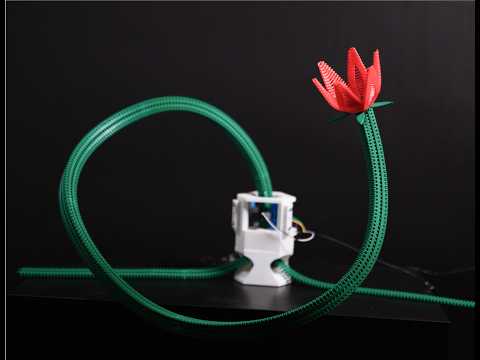
Unlike traditional zippers that rely on a sliding mechanism and fabric tape, the Y-zipper is a self-contained structure printed directly onto the parts it joins. This eliminates secondary assembly steps and reduces the risk of failure at attachment points. The design can be tailored to specific load requirements by adjusting tooth pitch, thickness, and material composition, making it suitable for applications ranging from consumer goods to aerospace components.
How the Y-Zipper Outperforms Traditional Fasteners
The Y-zipper offers several advantages over conventional mechanical fasteners like screws, bolts, and snap fits. By integrating the joining feature directly into the part geometry, it removes the need for additional hardware, which cuts weight and part count. This is particularly valuable in industries where every gram matters, such as drones, satellites, and medical implants.
The fastener’s behavior is engineered at the micro scale. When the teeth are pressed together, they deform elastically and then rebound into a locked position. Disassembly requires a specific prying motion that concentrated stresses in designated flexural zones, preventing accidental separation under normal tensile or shear loads. Key characteristics include:
- Snap-fit interlocking for tool-free assembly and disassembly
- High strength-to-weight ratio from topology-optimized tooth profiles
- Reversible and reusable without permanent deformation or damage
- Compatible with a wide range of 3D-printing polymers and composites
- Single-step fabrication that consolidates multiple components into one part
Early prototypes have demonstrated pull-out strengths comparable to small metal screws, while being fully non-metallic and corrosion-resistant. Researchers are now exploring how the Y-zipper performs under cyclic loading, temperature extremes, and chemical exposure to qualify it for regulated industries.
The technology also opens up creative possibilities for modular design. Since the fastener can be printed along curved surfaces and embedded within complex assemblies, it allows engineers to rethink how structures are segmented and maintained. For example, a drone frame could be printed with integral Y-zipper seams that allow quick access to internal electronics without tools.
| Aspect | Details |
|---|---|
| Concept origin | 1985, previously unrealized due to manufacturing limits |
| Key innovation | 3D‑printed Y‑shaped teeth that snap‑lock without separate parts |
| Material compatibility | Various polymers and composites usable in additive manufacturing |
| Primary advantages | Lightweight, tool‑free assembly, reusability, corrosion‑free |
| Potential applications | Aerospace, drones, robotics, medical devices, consumer products |
Will this additive-only fastener find a permanent place in high-stress structural applications where traditional metal hardware has reigned for centuries? That remains an open question, but the Y-zipper certainly challenges the notion that joining technologies must be made of separate, standardized parts.
Why This Matters
The Y-zipper demonstrates how additive manufacturing can unlock hardware concepts that were previously impossible to produce. By embedding the fastener directly into the part, it slashes assembly steps, reduces weight, and enables new modular designs—factors that could influence future manufacturing in weight-sensitive and high-value industries.
Sources
- Massachusetts Institute of Technology (mit.edu)
Source: Bluesky @flipso.com
FAQ
Is this fastener report confirmed?
It reflects what the cited reporting stated at the time, which can be preliminary. For anything consequential, comparing two or more independent reports is the most reliable way to confirm the details.
Who and where is involved in this fastener story?
The article identifies the main organisations, people and locations tied to the development. Those named entities are the anchors for following how the story evolves across later coverage.
Is Bluesky @flipso.com the only source for this fastener story?
Bluesky @flipso.com is the outlet attached to this item, but it should not be the only reference for an important development. Comparing it with other independent reports gives a fuller and more reliable picture.
What are the key figures in this fastener story?
The article cites figures such as 1985. Numbers like these convey the scale and direction of what happened; for the exact amount and the context around it, the original report is the reference.
When do the developments in this fastener story take effect?
The dates or periods mentioned here are the reference points for tracking how the situation unfolds. Timelines in early reporting can shift, so the named source is worth checking for updates.
What is this fastener story about?
It summarises a recent development in fastener, drawing on the original reporting. The key facts — who is involved, what changed and any figures or dates attached — are highlighted so the story is quick to grasp.