Fastener Accessibility Gap Exposes Weekend Sourcing Pain for DIY Repairs
A Reddit user’s struggle to buy five M4 and M6 socket head cap screws highlights a persistent gap in fastener retail: specialty stores closed on weekends and online bulk packs force unnecessary expense and waste.
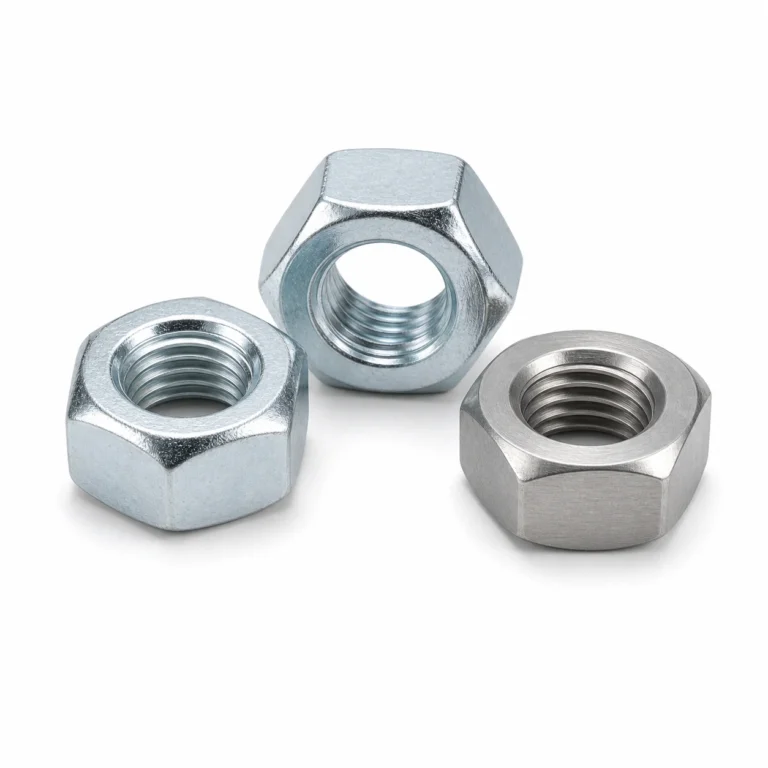
Standardized mechanical fasteners form the backbone of assembly lines, repair shops, and home workshops alike. Yet acquiring exactly the right metric socket head cap screw in small quantities can still frustrate users, as a recent online discussion highlights. A post on Reddit described a common scenario: a person needed only a handful of M4 and M6 socket head cap screws and matching nuts but found all local specialty fastener stores shuttered for the weekend. Online marketplaces offered only bulk packs, turning a small repair into an oversized expense.
Precision Standardization: The ISO 4762 Socket Head Cap Screw
The components in question—socket head cap screws—are governed by strict dimensional and mechanical standards. The Socket Head Cap Screws — ISO 4762 / DIN 912 specification defines hexagon socket drive recesses, head profiles, and thread tolerances for metric sizes from M1.6 to M64. M4 and M6 designations refer to 4 mm and 6 mm nominal diameters, typically with coarse pitch threads per ISO 261. Such screws deliver high tensile strength in a compact head, making them indispensable in machinery, automotive assemblies, and electronic enclosures.

For the consumer, standardisation means interchangeability—any M4×12 socket head cap screw made to ISO 4762 will fit a tapped hole of the same specification. But standardisation does not guarantee accessibility. The Reddit user’s plea for “varying lengths” underscores the reality that prototyping and maintenance often require mixed assortments, not boxes of 200 identical pieces.
Retail Accessibility and the Weekend Shutdown Problem
Specialty fastener retailers tend to operate during standard business hours, leaving a service gap on weekends. While large home‑improvement chains stock some metric fasteners, their selections often lean towards imperial sizes or limited metric ranges. Independent fastener shops, although better stocked with ISO‑compliant hardware, typically mirror trade‑counter schedules that leave DIYers and small‑shop mechanics stranded after 5 p.m. on Friday. The tri‑city area mentioned in the post likely reflects a broader pattern: industrial‑supply districts with a workweek rhythm that conflicts with hobbyist availability.
The alternative presented on Reddit—ordering from Amazon—quickly collides with another reality. Bulk packaging dominates e‑commerce listings because sellers optimise for professional buyers who consume fasteners in volume. A search for M4 socket head cap screws often returns packs of 200 or more, priced around $70. For someone needing just five pieces of assorted lengths, the mismatch is stark.
E‑Commerce and the Minimum Order Quantity Conundrum
Online platforms like Amazon aggregate inventory from countless third‑party sellers, yet the fastener category rarely serves the micro‑buyer. The root cause is economic: low‑value items incur disproportionate picking, packing, and shipping costs. As a result, sellers bundle fasteners into larger quantities to amortise fulfilment expenses. The Reddit post illustrated the outcome—a $70 outlay for 200 screws, of which the user might use five, leaving the rest to languish in a drawer.
Some specialised industrial suppliers offer small‑quantity packaging or will‑call services, but these channels typically require a business account or advanced planning. For the unplanned Saturday repair, the user is left grinding between unavailable local stores and over‑sized online cartons.
Supply Chain Implications for Maintenance and Prototyping
This micro‑sourcing friction carries real consequences. Prototyping engineers working on proof‑of‑concept assemblies can lose hours to fastener procurement rather than design iteration. Maintenance technicians facing equipment downtime may resort to mismatched hardware, compromising safety or reliability. Even home users suffer: a bicycle part that needs two M6×20 screws becomes a $25 problem when the only retail option is a blister pack of ten at a premium markup.
The fastener industry has long recognised the small‑quantity challenge, yet solutions remain fragmented. Some maker‑oriented online stores now offer pick‑and‑mix assortments, but range is limited. Brick‑and‑mortar retailers continue to prioritise high‑turnover SKUs, leaving part‑number depth to specialists that keep abbreviated schedules.
| Aspect | Details |
|---|---|
| Standards involved | ISO 4762 (socket head cap screws), ISO 261 (metric threads) |
| Typical request | 5 screws in varying M4 and M6 lengths, plus nuts |
| Local retail barrier | Specialty stores closed on weekends; limited stock at general hardware chains |
| Online barrier | Bulk packs of 200 screws for ~$70 dominate listings on Amazon |
| Broader impact | Delays in maintenance, prototyping, and increased inventory clutter for consumers |
The experience shared on Reddit is not unique. Verifying the actual availability of small‑quantity packs on major platforms, checking local store hours, and confirming that online assortments carry genuine ISO 4762 certification are sensible next steps for anyone facing a similar fastener emergency. Until the supply chain more broadly accommodates the weekend warrior, carefully planning purchases or tapping local maker‑spaces that stock common metric sizes may remain the most reliable path.
Key Figures
This story carries monetary or market figures such as $70. They are the kind of detail worth noting up front, then confirming against the original report for exact amounts and scope.
- Bulk pack price: $70 Cost for 200 screws on Amazon, making per-unit cost high for small needs
Why This Matters
The incident highlights a persistent gap in the fastener supply chain for hobbyists and small repair jobs, where minimum order quantities and limited retail hours conflict with just-in-time needs. As precision assembly demands grow, improved small-quantity fulfillment options could unlock significant efficiency and reduce material waste.
Sources
FAQ
What are the key figures in this fastener story?
The article cites figures such as $70. Numbers like these convey the scale and direction of what happened; for the exact amount and the context around it, the original report is the reference.
How large is the financial figure in this fastener story?
The monetary figure reported here is meant to show scale rather than a precise final total, which can change as a deal or announcement develops. The source article carries the exact amount and what it covers.
What is this fastener story about?
It summarises a recent development in fastener, drawing on the original reporting. The key facts — who is involved, what changed and any figures or dates attached — are highlighted so the story is quick to grasp.
Why does this fastener development matter?
The significance lies in what it signals: a notable figure, a decision, or a shift that affects the people, places or organisations named. Those are the points worth following as the story continues.
How current is this fastener information?
This article was published on July 31, 2026. News changes quickly, so use it as a starting point and check the named source for later corrections, revised figures or follow-up reporting.
Is this fastener report confirmed?
It reflects what the cited reporting stated at the time, which can be preliminary. For anything consequential, comparing two or more independent reports is the most reliable way to confirm the details.