
Pallet Wood Crate Builders Navigate Nail vs. Screw Fastener Choice
A Reddit query from a beginner woodworker building a crate from reclaimed pallet parts highlights the critical decision between nails and screws, and the risks of choosing the wrong fastener for structural integrity.
Selecting an inappropriate fastener for a reclaimed pallet crate can quickly lead to split boards, weak joints, or a floor that collapses under load—problems that plague many DIY builders. The dilemma resurfaced this week when a user on the popular woodworking forum r/BeginnerWoodWorking asked for advice on whether to use nails or screws to attach the bottom runner of a crate being built from salvaged pallet parts. The query, posted by /u/Best-Speed-7636, highlights a persistent challenge in the maker community: balancing holding power, ease of use, and the quirks of reclaimed timber.
Understanding Pallet Wood Properties
Reclaimed pallet wood presents unique fastening challenges. Often made from low-grade hardwoods or softwoods that have endured rough handling and exposure to moisture, the material can be brittle, splinter-prone, and riddled with nail holes or cracks. Its density varies wildly—some pallets use dense oak while others consist of lightweight pine—making uniform fastener penetration difficult. This variability demands careful selection of both fastener type and size to avoid splitting the grain or driving a fastener too deep, which weakens the joint.
Wood glue alone rarely suffices for structural joints in crates, especially where the bottom runner bears the weight of stored items. Fasteners must complement the adhesive, creating a mechanical connection that resists shear and withdrawal forces. In crates subject to lifting, stacking, or shifting cargo, the fastener choice becomes a critical safety factor.
Fastener Types: Screws vs. Nails
Screws generally outperform nails for pallet wood crates. Their threaded shafts draw the boards tightly together, compensate for minor gaps caused by warping, and resist pulling out under load. Coarse-thread drywall screws or construction screws with aggressive thread designs work well in softwoods. Nails, while faster to install, rely on friction and are more likely to back out as wood expands and contracts with humidity changes. However, they can be useful in thin or highly fragile pieces where screws might cause splitting, provided a pilot hole is not used.
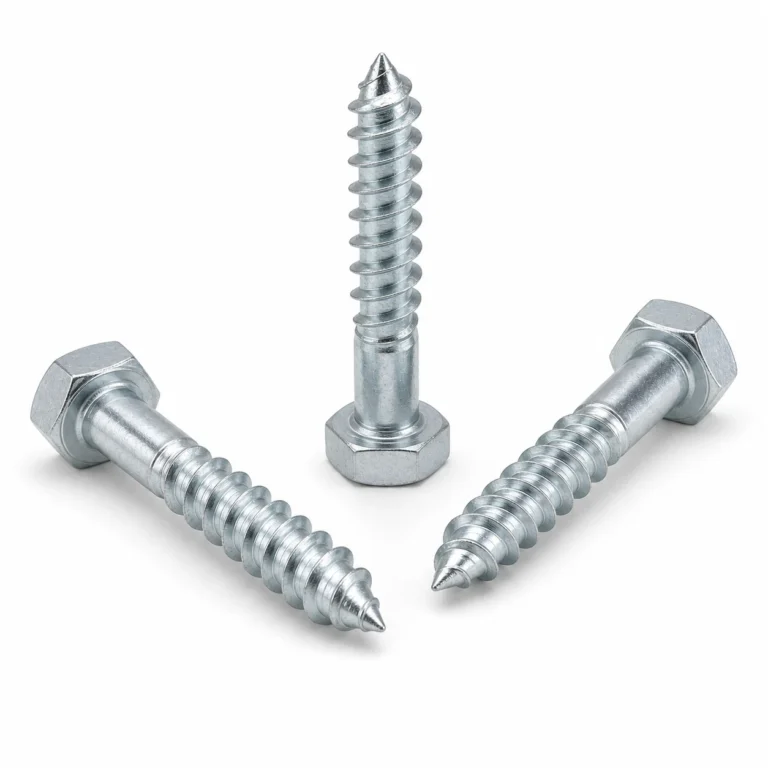
For the specific application—attaching a floor to a bottom runner—experts in the woodworking community often recommend #8 or #10 wood screws, 1-1/4 to 1-1/2 inches long, driven into pre-drilled holes to preserve the integrity of the reclaimed board. This size provides sufficient grip without piercing the runner excessively. In cases where the runner is a thick, dense hardwood, a slightly longer screw or even a Lag Screws (Hex Wood Screws) may be considered, though these are generally overkill for light-duty crates.
Selecting the Correct Size and Material
Fastener diameter and length directly influence holding power. A screw that is too thin may snap under stress; one that is too thick can split the wood. The general rule is to choose a screw that penetrates at least two-thirds of the thickness of the bottom board, without emerging from the opposite side. For typical ¾-inch-thick pallet planks, a 1-1/4-inch screw leaves ample material, while a 1-inch screw may be safer for highly checked or brittle pieces.
Material-wise, zinc-plated or stainless steel fasteners are advisable to resist corrosion, especially if the crate might be exposed to moisture. Interior crates can use standard black phosphate-coated screws, which hold well and are cost-effective. Avoid deck screws with aggressive cutting points that can tear out the back side of a thin runner.
Best Practices for Assembly
Pre-drilling pilot holes is arguably the most critical step when working with reclaimed pallet wood. A drill bit slightly smaller than the screw shank prevents the pressure of the screw from pushing the wood fibers apart and causing splits. Countersinking the screw head slightly below the surface of the floor board ensures a smooth final surface and prevents snagging on cargo. Clamping the assembly before driving screws helps maintain alignment and reduces the likelihood of the wood shifting. Glue applied sparingly to the joint can add stiffness, but fasteners remain the primary mechanical connection.
For crates expected to carry heavy items, reinforcing the floor-to-runner joint with metal corner brackets or L-brackets, fastened with short #6 screws, can distribute stress away from the wood itself. This approach is common in commercial crating and offers a substantial safety margin without requiring oversized fasteners that might damage the reclaimed timber.
Standards and Guidance
While no single specification dictates fastener use in DIY crates, established norms from organizations like DIN provide a baseline. The DIN 571 standard, for instance, defines dimensions and performance for hex wood screws commonly used in timber-to-timber connections. In North America, the American Wood Council publishes design standards that include fastener withdrawal strength values, though these are geared toward construction rather than small crate projects. Adherence to these guidelines, even informally, helps makers avoid premature failures. The woodworking community on platforms like Reddit continues to bridge knowledge gaps, offering crowd-sourced wisdom for niche challenges like working with reclaimed pallet stock.
| Fastener Type | Typical Size | Pros | Cons |
|---|---|---|---|
| Coarse-thread wood screw | #8 × 1-1/4 in. | Strong grip, removable, resists withdrawal | Requires pilot hole, slower installation |
| Common wire nail | 6d (2 in.) | Quick to hammer, low cost | Low withdrawal resistance, may loosen over time |
| Drywall screw | #6 × 1-1/4 in. | Sharp point, readily available | Brittle, can snap under shear loads |
| Lag screw (wood) | 1/4 in. × 2 in. | Very high holding power, ideal for thick runners | Overkill for light crates, requires pre-drilling and wrenching |
| Stainless steel screw | #8 × 1-1/4 in. | Corrosion-resistant for outdoor use | Higher cost, may gall in hardwoods |
Who This Affects Most
The fastener decision directly impacts DIY enthusiasts repurposing shipping materials for furniture or storage. Inexperienced builders—the primary audience of r/BeginnerWoodWorking—face the greatest risk of structural failures if they rely on nails alone or choose undersized screws. Conversely, seasoned makers benefit from the discussion by refining their approaches for quality and durability. The broader woodworking community, as well as online platforms hosting these exchanges, serves as a reservoir of practical knowledge, filling the gap left by the absence of formal crate-building standards for reclaimed materials.
Why This Matters
With the rise of pallet wood upcycling and DIY furniture building, fastener choice directly affects product safety and longevity. This discussion underscores the need for better guidance in informal woodworking communities, where a simple screw size error can lead to costly or hazardous failures.
Sources
- r/BeginnerWoodWorking (reddit.com)
- DIN (din.de)
FAQ
What is this fastener story about?
It summarises a recent development in fastener, drawing on the original reporting. The key facts — who is involved, what changed and any figures or dates attached — are highlighted so the story is quick to grasp.
Why does this fastener development matter?
The significance lies in what it signals: a notable figure, a decision, or a shift that affects the people, places or organisations named. Those are the points worth following as the story continues.
How current is this fastener information?
This article was published on July 31, 2026. News changes quickly, so use it as a starting point and check the named source for later corrections, revised figures or follow-up reporting.
Is this fastener report confirmed?
It reflects what the cited reporting stated at the time, which can be preliminary. For anything consequential, comparing two or more independent reports is the most reliable way to confirm the details.
Who and where is involved in this fastener story?
The article identifies the main organisations, people and locations tied to the development. Those named entities are the anchors for following how the story evolves across later coverage.
Is reddit.com: search results - fastener the only source for this fastener story?
reddit.com: search results - fastener is the outlet attached to this item, but it should not be the only reference for an important development. Comparing it with other independent reports gives a fuller and more reliable picture.