
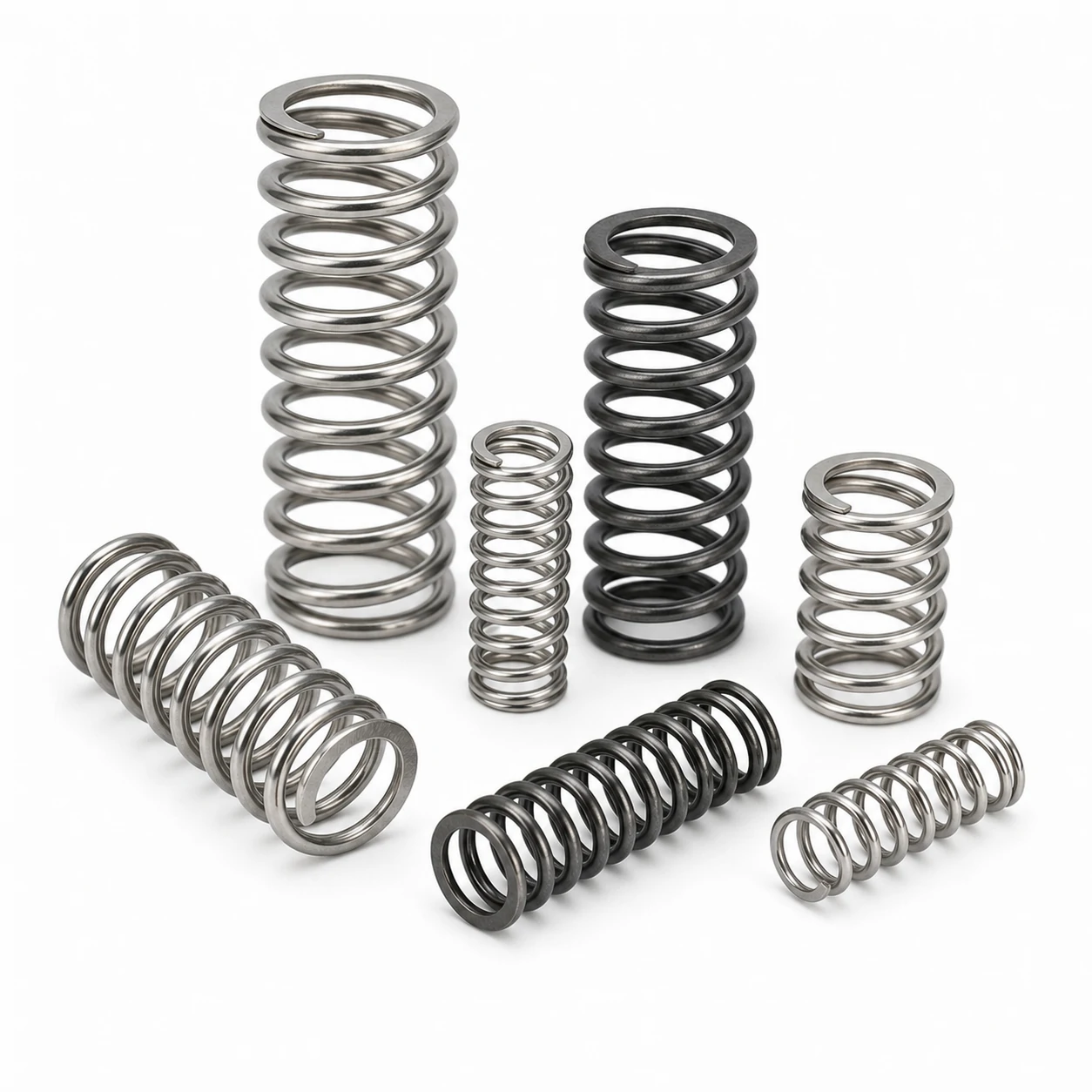
Compression Springs are selected when an assembly calls for storing and returning mechanical energy. This application guide to the DIN 2098 type covers concrete end-uses, the specification checklist, correct installation, and where an alternative fastener performs better. Stocked across roughly 0.5 mm to 10 mm, they cover general to heavy-duty work.
Typical Applications for Compression Springs
The most common settings where these are specified:
- Fabrication & metalwork: bench and on-site assembly of steel frames, enclosures and weldments.
- Mechanisms & latches: return and detent forces in moving assemblies.
- Valves & actuators: controlled closing or opening force.
- Vibration & cushioning: absorbing shock and maintaining contact pressure.
- General machine building: fastening covers, brackets, motors and sub-assemblies on production equipment.
How to Specify Compression Springs for Your Application
- Size: Select on wire diameter, and confirm it against the mating feature in the assembly. This product spans 0.5 mm–10 mm; check the full table below for the exact dimensions of each size.
- Material: Choose the material and finish for the service environment — plated steel for general use, stainless for corrosion resistance.
- Environment: For damp, coastal or chemical exposure prefer A4/316 stainless or a suitable coating; indoors, plated steel or A2 is usually sufficient.
- Standard: This product is supplied to DIN 2098. Quoting the standard on your order guarantees interchangeable dimensions between suppliers.
Where Compression Springs Are Not the Right Choice
Not where a precise, repeatable force is needed without rating the spring, and avoid over-stressing beyond the rated deflection.



