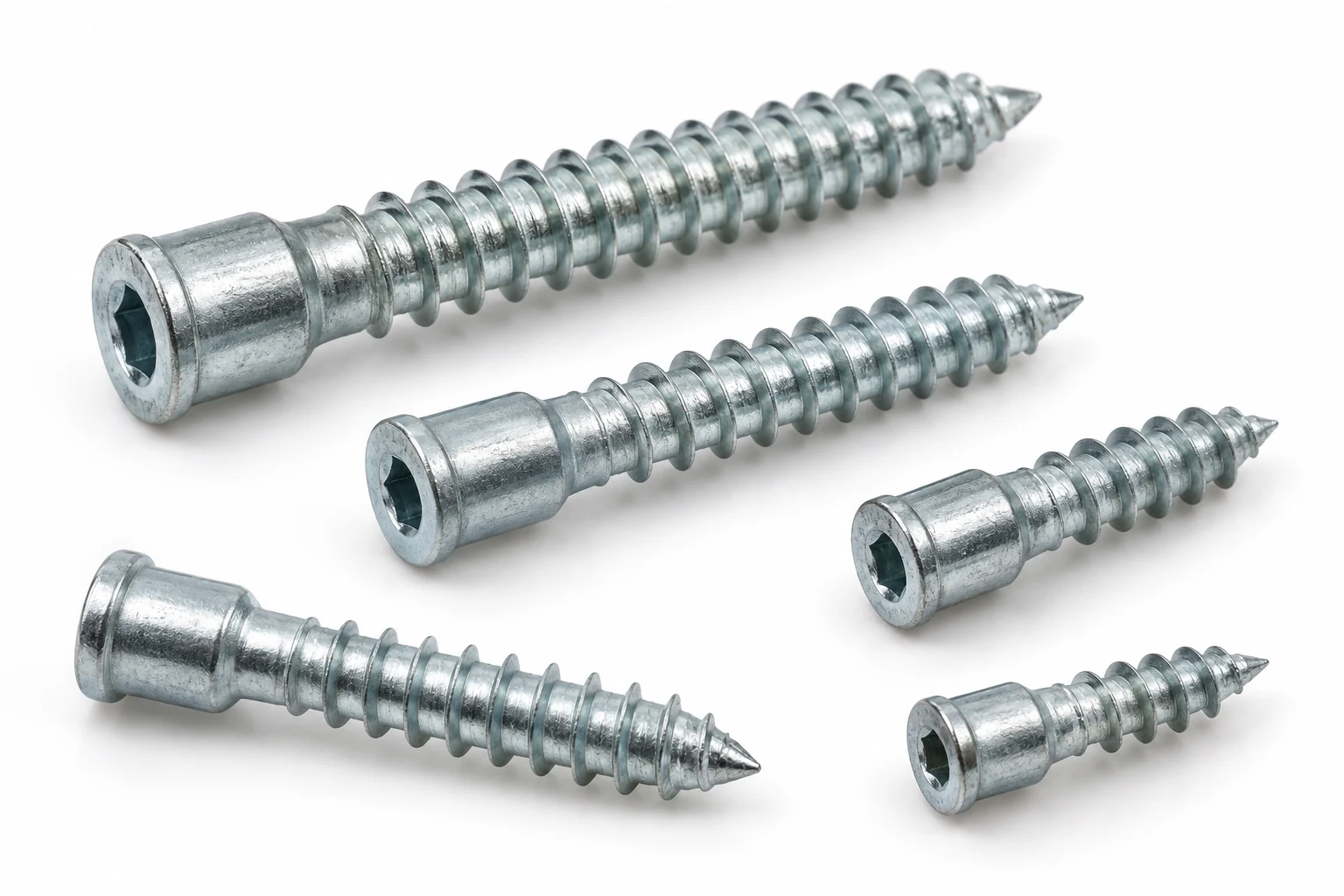
The primary duty of Confirmat Furniture Screws is joining particleboard or fiberboard with a pilot hole and a furniture screw selected for the board thickness. Below: the sectors that specify them in volume, the checklist used to select the right size and material for the application, installation notes, and the known limits of the type. Stocked across roughly 5 mm to 7 mm, they cover general to heavy-duty work.
Typical Applications for Confirmat Furniture Screws
The most common settings where these are specified:
- Particleboard furniture: Confirmat screws clamp board joints with a large-diameter body.
- Cabinet production: Known pilot-hole sizes speed repeatable assembly.
- Flat-pack manufacturing: Hex or Pozidriv options suit production and field assembly.
- Furniture repair: 30–70 mm lengths cover common panel thickness combinations.
Related Confirmat Furniture Screws products

Head Self-Drilling Wood Screws Corrosion-Resistant for Furniture, Decking, Cabinets & Outdoor Woodwork
Double Csk Head · DIN, GB, ANSI, BSW, JIS, GOST
US$0.012 – 0.0336MOQ 10,000 pieces
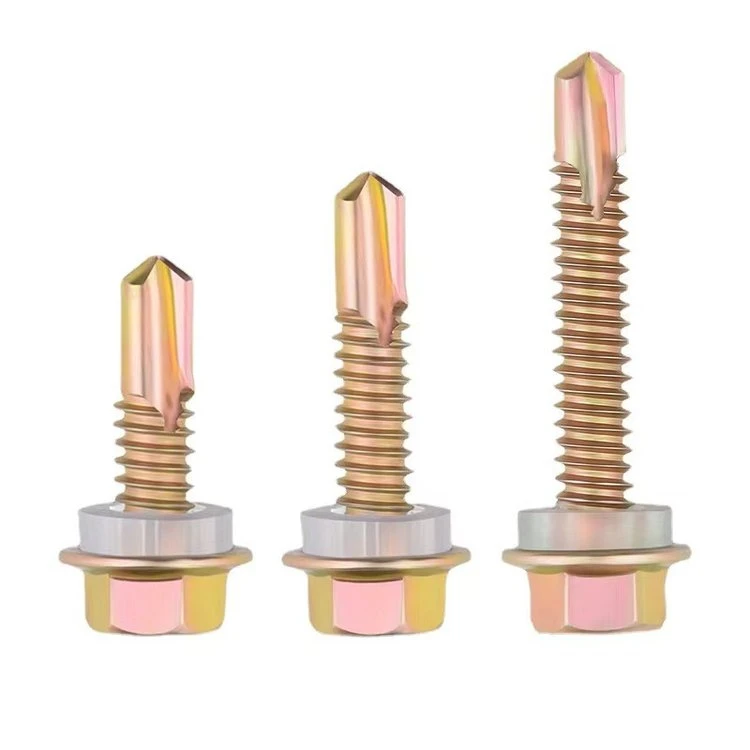
Many Kinds Flange Head Self Drilling Screw Professional Exporter
Hexagon Head · DIN, GB
US$1,200MOQ 2 tons

Zinc Plated Hex Head Self Drilling Screws Roof Screw Galvanized Metal Screws
DIN,DIN,JIS,ANSI,GB,BSW,etc · Shuangzi
US$0.024 – 0.12MOQ 1,000 pieces

C1022 Phil Drive Modify Truss Head Self Drilling Screw with Bsd#2 Drill Zinc Plated
C1022A · ISO
US$0.12MOQ 1,000 pieces

Heavy Duty #5 Point Self-Drilling Screws, Zinc-Tin Alloy Nano Coated Hex Head Fastener, Australian Standard Class 4 Roofing Screw
Hexagon Head · DIN, GB, ANSI, BSW, JIS, GOST, As3566 Standard
US$0.11 – 0.18MOQ 10 pieces
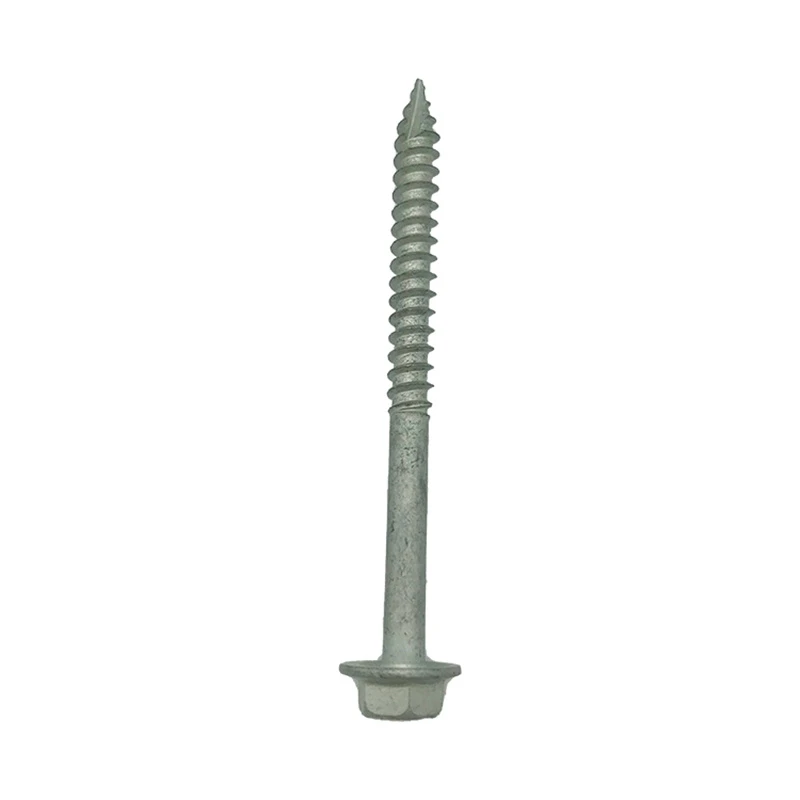
High Grade New Design Metal Self-Drilling Roofing Screw
DIN, GB, ANSI, BSW, JIS, GOST · Carbon Steel
US$0.12MOQ 100,000 pieces
How to Specify Confirmat Furniture Screws for Your Application
- Size: Match the nominal size to the mating thread or hole. This product spans 5 mm–7 mm; check the full table below for the exact dimensions of each size.
- Drive & head: Pick the drive (socket, cross, slot) and head style for the tool access and seating surface; a recessed drive resists cam-out under power tools.
- Environment: For damp, coastal or chemical exposure prefer A4/316 stainless or a suitable coating; indoors, plated steel or A2 is usually sufficient.
- Standard: This product is supplied to Trade series (confirmat furniture screws). Quoting the standard on your order guarantees interchangeable dimensions between suppliers.
Installation & Assembly Practice
- Match the driver exactly to the recess (PH ≠ PZ; hex key sizes per ISO 2936) and keep the tool axial — side load is the main cause of stripped drives.
- In tapped holes, engage a thread length of at least 1× the nominal diameter in steel, 2× in aluminum.
- Set power tools to a torque that seats the head without embedding it into the mating surface.
Common Selection Mistakes with Confirmat Furniture Screws
- Under-sizing the drive for the installation torque — a small recess at high torque strips before the screw is seated.
- Using a countersunk head in thin sheet where the countersink removes most of the load-bearing material.
- Specifying stainless in high-strength duty: A2-70 is roughly class 7 steel, not a 10.9 substitute.
Where Confirmat Furniture Screws Are Not the Right Choice
Not for high-preload structural joints (use a property-class bolt and nut), and not in thin sheet where a self-drilling or self-tapping type suits better.
Custom manufacturing · Made to drawing
Need a confirmat furniture screws outside the standard range?
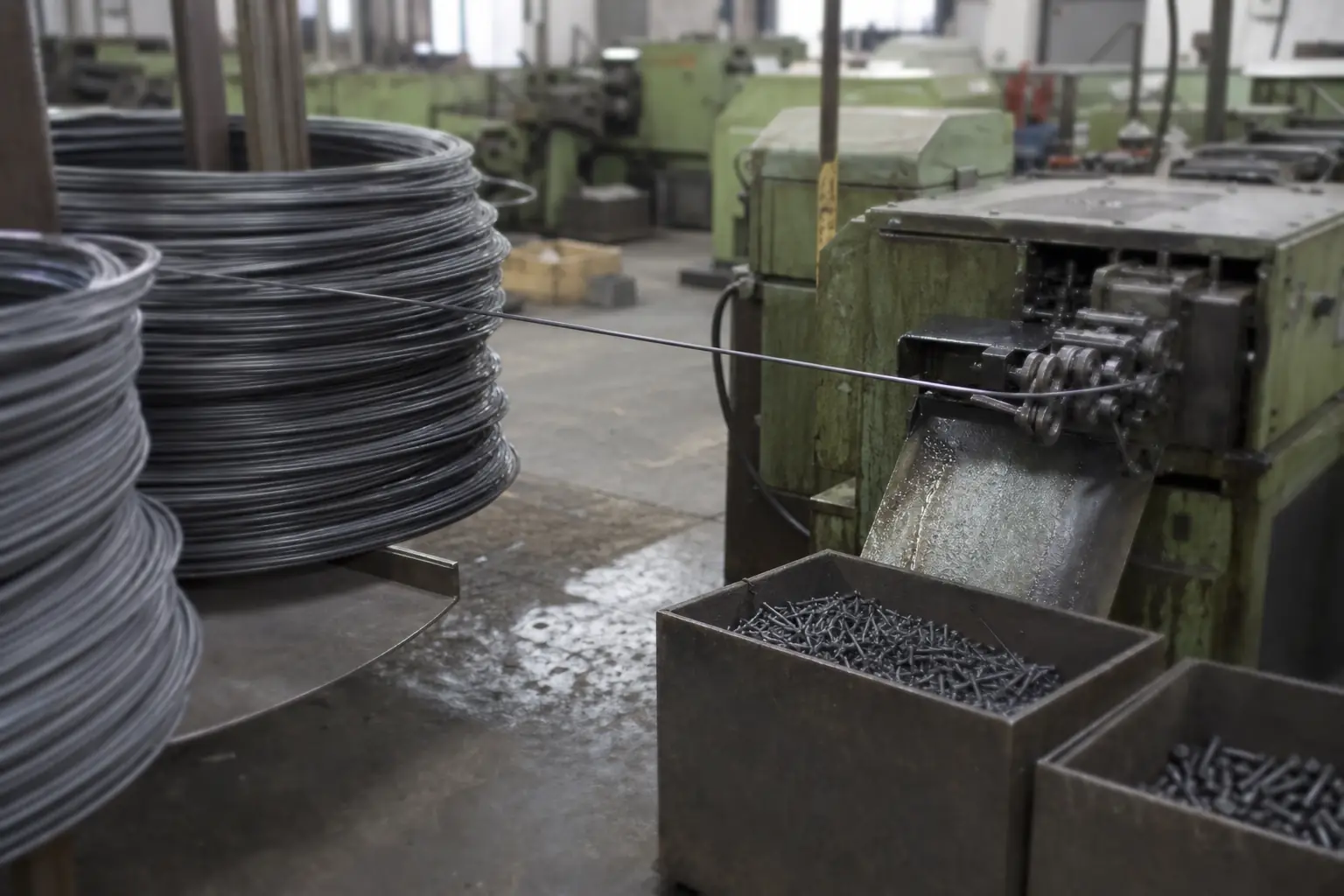
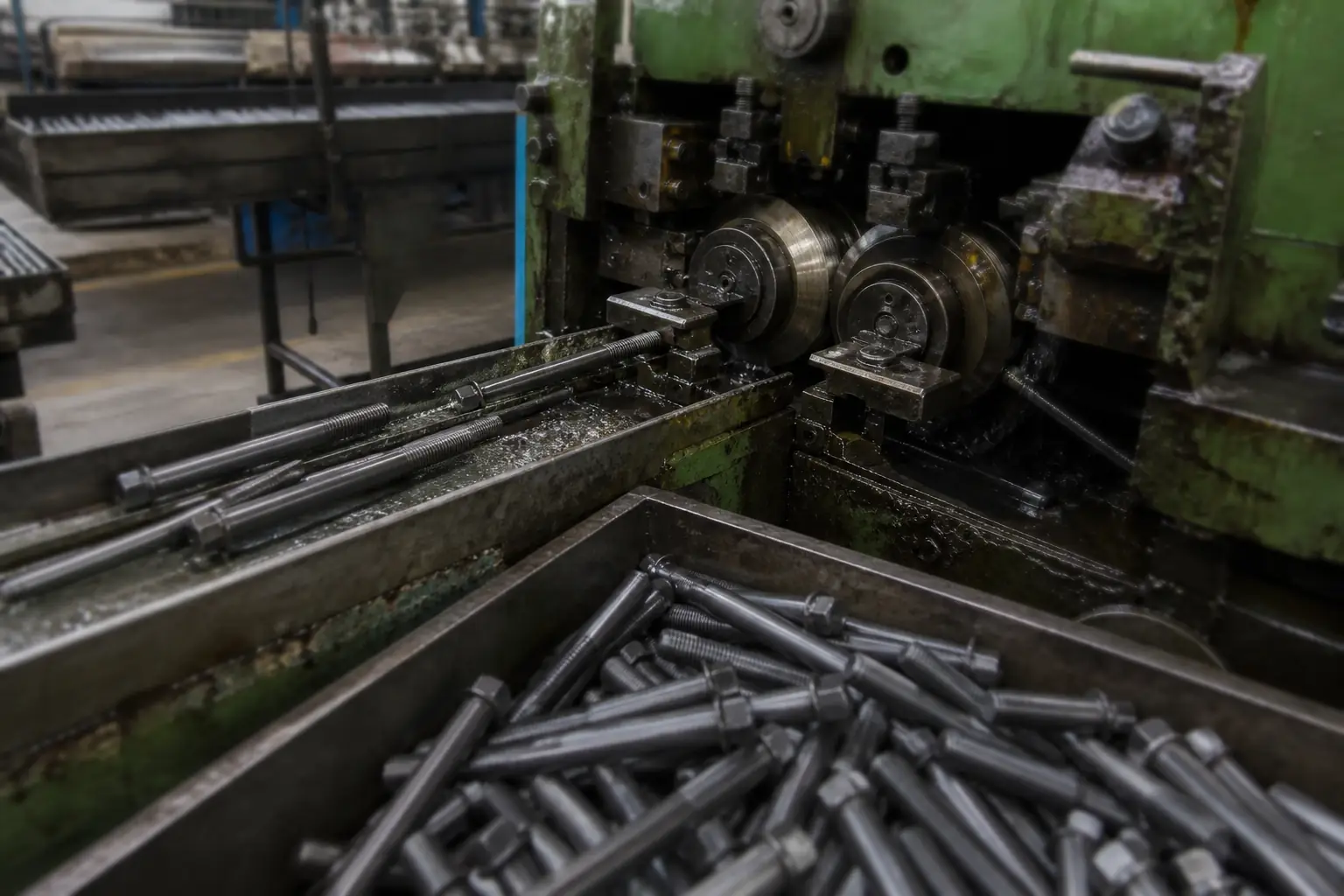
Thread size and pitch, length, property class, drive form, head geometry and head marking are all specifiable — the standard part is where it starts, not where it stops. Made by cold heading or warm forging.
Minimum order from 2,000 pieces; samples within 7 days of drawing approval.