Skip to content

Springs · DIN 2097 · Application guide

Extension Springs — Applications & Typical Uses

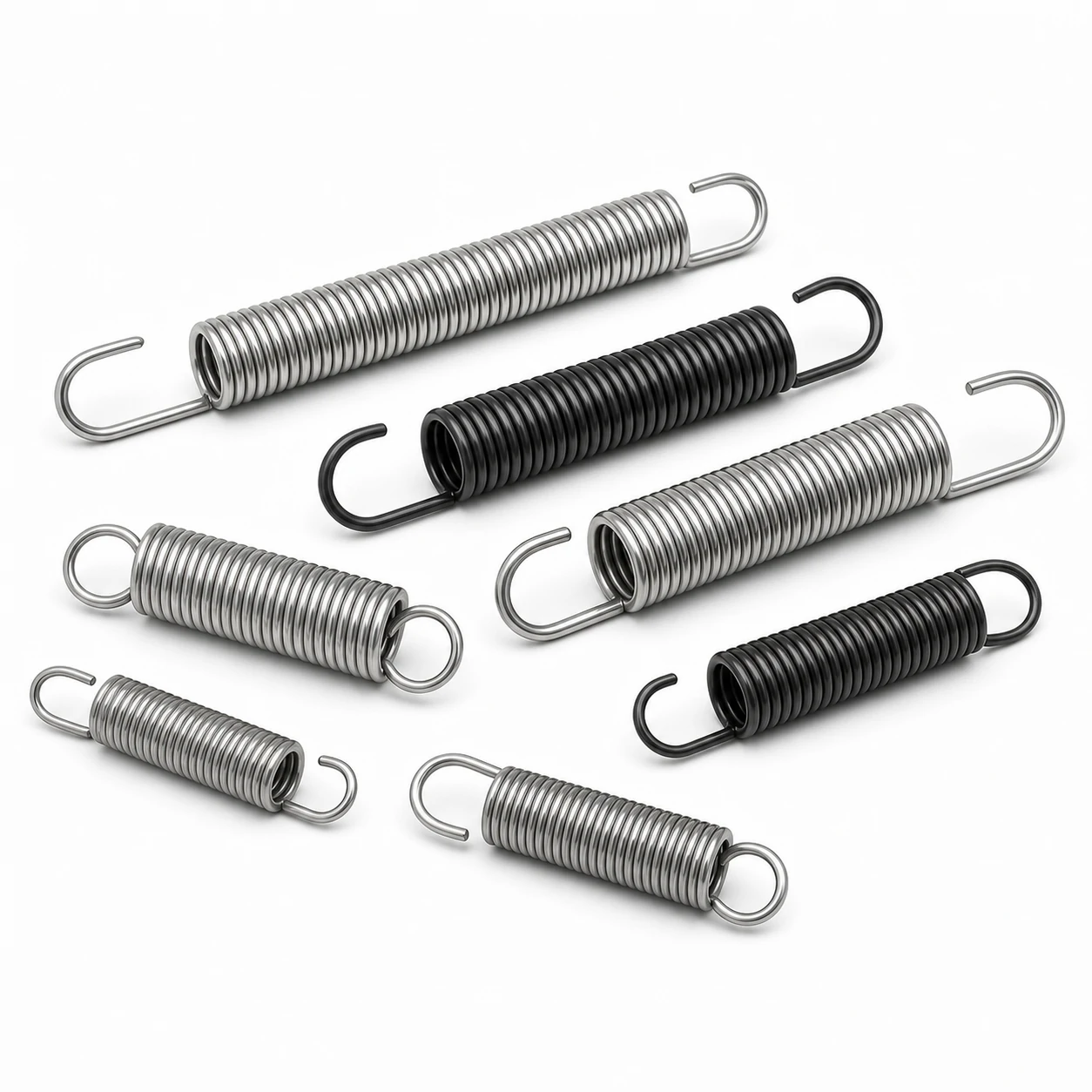
Extension Springs are used primarily for storing and returning mechanical energy. This page summarizes where they fit, the industries that rely on them, and the practical points to get right when you specify them — to DIN 2097. Stocked across roughly M0.5 to M6, they cover light-duty and instrument-scale work.

Typical Applications for Extension Springs

The most common settings where these are specified:

  • Vibration & cushioning: absorbing shock and maintaining contact pressure.
  • General machine building: fastening covers, brackets, motors and sub-assemblies on production equipment.
  • Maintenance & repair (MRO): a stocked size for servicing existing plant where the original fastener spec must be matched.
  • Fabrication & metalwork: bench and on-site assembly of steel frames, enclosures and weldments.
  • Mechanisms & latches: return and detent forces in moving assemblies.

How to Specify Extension Springs for Your Application

  • Size: Match the nominal size to the mating thread or hole. This product spans M0.5–M6; check the full table below for the exact dimensions of each size.
  • Material: Choose the material and finish for the service environment — plated steel for general use, stainless for corrosion resistance.
  • Environment: For damp, coastal or chemical exposure prefer A4/316 stainless or a suitable coating; indoors, plated steel or A2 is usually sufficient.
  • Standard: This product is supplied to DIN 2097. Quoting the standard on your order guarantees interchangeable dimensions between suppliers.

Where Extension Springs Are Not the Right Choice

Not where a precise, repeatable force is needed without rating the spring, and avoid over-stressing beyond the rated deflection.

Technical Drawing

Customize the parameters below — every spec field is editable, and the drawing redraws to match the values you choose. Changing the size will snap the other fields to that size's standard values; you can then override any individual value.

Sends the selected values to the quote form below.

Request a Quote

Set the size and options in the drawing above, then send the exact configuration straight to this form.

Request a Quotation

Specification
Business Information

Dimensions & Specifications (DIN 2097)

Wire dia d (mm)Inner diameter Di (mm)Outer diameter De (mm)Free length Lo (mm)Active coils nInitial tension Fi (N)Rate k (N/mm)MaterialReference standard
0.53.54.52012100.7Spring steelDIN 2097 / EN 15800
0.64.55.72512151.2Spring steelDIN 2097 / EN 15800
0.85.57.13012302.5Spring steelDIN 2097 / EN 15800
1.07.09.04015453.5Spring steelDIN 2097 / EN 15800
1.28.510.95015706.0Spring steelDIN 2097 / EN 15800
1.511.014.060151008.0Spring steelDIN 2097 / EN 15800
2.013.017.0801520016.0Spring steelDIN 2097 / EN 15800
2.517.022.01001538030.0Spring steelDIN 2097 / EN 15800
3.022.028.01201568055.0Spring steelDIN 2097 / EN 15800
4.028.036.0160151500120.0Spring steelDIN 2097 / EN 15800
5.036.046.0200152900210.0Spring steelDIN 2097 / EN 15800
6.046.058.0250155200380.0Spring steelDIN 2097 / EN 15800

Frequently Asked Questions

Are Extension Springs made to a recognized standard?

Yes — they are manufactured to DIN 2097, so dimensions are interchangeable between suppliers when you quote the standard on your order.

What are Extension Springs used for?

Storing and returning mechanical energy. They are supplied to DIN 2097.

Which industries use Extension Springs?

They are commonly specified in maintenance & repair (mro), fabrication & metalwork and mechanisms & latches, among other sectors.

How do I choose the right size of Extension Springs?

Match the nominal size to the mating thread or hole. This product is available from M0.5 to M6; the full dimension table on this page lists each size.

Can I get a quote for Extension Springs in the size and material I need?

Yes. Use the technical drawing and quote form on this page to set the size and options, then send the exact configuration to our team for pricing and lead time.