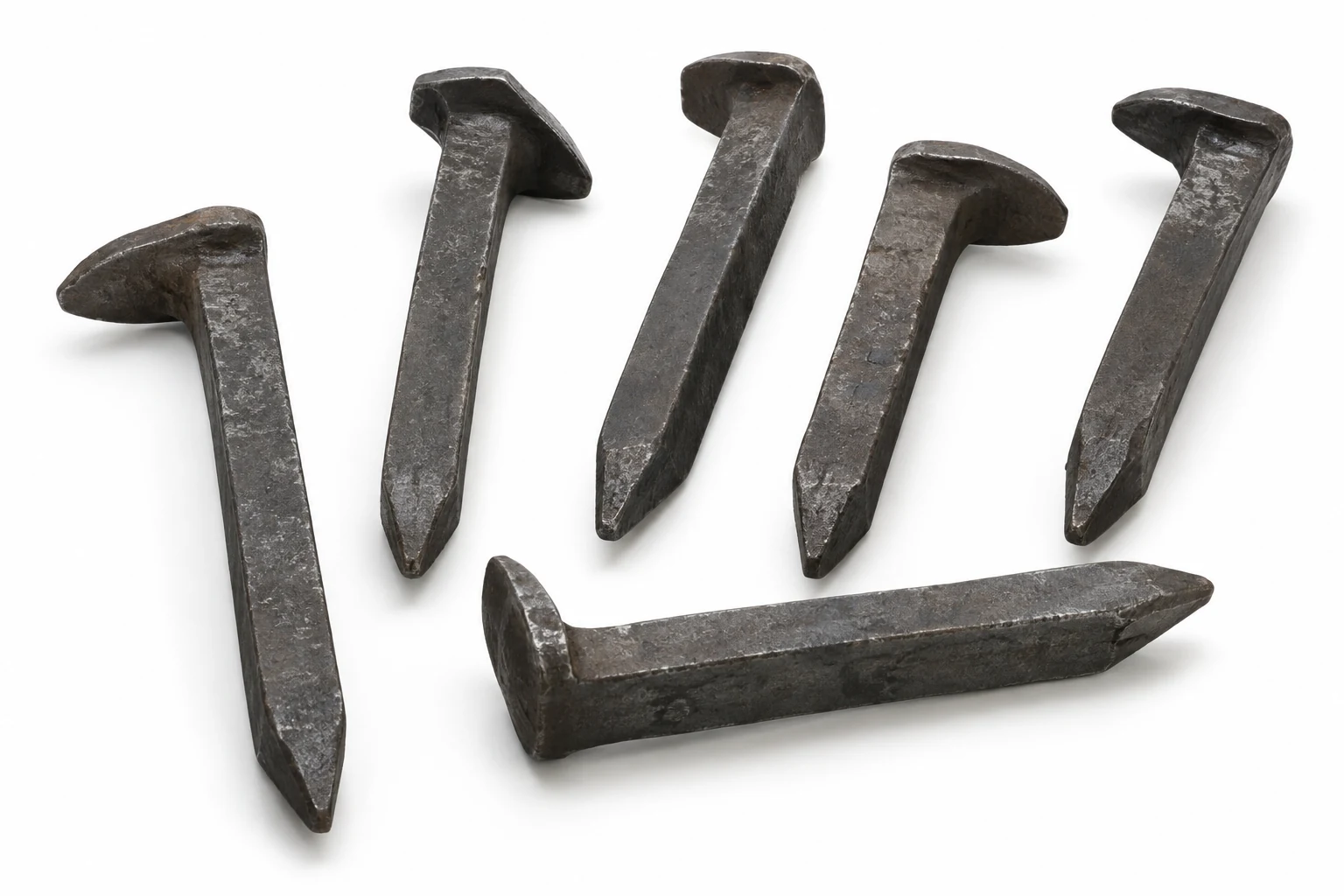
Railroad Cut and Dog Spikes are selected when an assembly calls for driving a square-shank spike with an offset head into a timber sleeper for rail retention. This application guide to the AREMA MRE Chapter 5, Part 2 type covers concrete end-uses, the specification checklist, correct installation, and where an alternative fastener performs better. Stocked across roughly 5 to 6, they cover light-duty and instrument-scale work.
Typical Applications for Railroad Cut and Dog Spikes
The most common settings where these are specified:
- Rail construction: Cut and dog spikes anchor rail components to timber sleepers.
- Track maintenance: Square shanks and offset heads support the documented rail-spike form.
- Railway fabrication: 5-1/2 and 6 in layouts cover the supplied spike examples.
- Infrastructure repair: Steel spikes are driven as a permanent track fastening.
How to Specify Railroad Cut and Dog Spikes for Your Application
- Size: Select on screw size, and confirm it against the mating feature in the assembly. This product spans 5–6; check the full table below for the exact dimensions of each size.
- Material: Choose the material and finish for the service environment — plated steel for general use, stainless for corrosion resistance.
- Environment: For damp, coastal or chemical exposure prefer A4/316 stainless or a suitable coating; indoors, plated steel or A2 is usually sufficient.
- Standard: This product is supplied to AREMA MRE Chapter 5, Part 2. Quoting the standard on your order guarantees interchangeable dimensions between suppliers.
Where Railroad Cut and Dog Spikes Are Not the Right Choice
Not for joints needing later removal or high withdrawal resistance — a screw holds far better in tension.