Skip to content
Screws · DIN 7976 / ISO 1481 · Application guide

What Are Self-Tapping Screws Used For?

Typical applications, the industries that specify self-tapping screws, and how to choose the right size, material and finish for the joint.

Self-Tapping Screws are used for fixing into sheet, timber or plastic by forming their own thread as they are driven, without a tapped hole. They are manufactured to DIN 7976 / ISO 1481, and selection is driven by the size designation, the fit and tolerance the assembly requires, and the service environment.

Primary duty
Fixing into sheet, timber or plastic by forming their own thread as they are driven, without a tapped hole
Governing standard
DIN 7976 / ISO 1481
Size designation range
2.2 to 9.5
Category
Screws

Application notes are general engineering guidance. Verify the property class and any approval requirement against your own design calculation.

What Are Self-Tapping Screws Used For? application image

Application guide for Self-Tapping Screws to DIN 7976 / ISO 1481. The core duty of the type is fixing into sheet, timber or plastic by forming their own thread as they are driven, without a tapped hole. The typical industries, the how-to-specify checklist, assembly practice and the exclusion cases are set out below. Stocked across roughly 2.2 to 9.5, they cover general to heavy-duty work.

Typical Applications for Self-Tapping Screws

The most common settings where these are specified:

  • Electronics & enclosures: mounting PCBs, panels and lids where the drive style and head height matter.
  • Appliances & consumer goods: high-volume assembly with power tools and consistent seating.
  • Machine guarding & panels: removable access covers that are opened for service.
  • General machine building: fastening covers, brackets, motors and sub-assemblies on production equipment.
  • Maintenance & repair (MRO): a stocked size for servicing existing plant where the original fastener spec must be matched.

How to Specify Self-Tapping Screws for Your Application

  • Size: Match the nominal size to the mating thread or hole. This product spans 2.2–9.5; check the full table below for the exact dimensions of each size.
  • Drive & head: Pick the drive (socket, cross, slot) and head style for the tool access and seating surface; a recessed drive resists cam-out under power tools.
  • Environment: For damp, coastal or chemical exposure prefer A4/316 stainless or a suitable coating; indoors, plated steel or A2 is usually sufficient.
  • Standard: This product is supplied to DIN 7976 / ISO 1481. Quoting the standard on your order guarantees interchangeable dimensions between suppliers.

Installation & Assembly Practice

  • Match the driver exactly to the recess (PH ≠ PZ; hex key sizes per ISO 2936) and keep the tool axial — side load is the main cause of stripped drives.
  • In tapped holes, engage a thread length of at least 1× the nominal diameter in steel, 2× in aluminum.
  • Set power tools to a torque that seats the head without embedding it into the mating surface.

Common Selection Mistakes with Self-Tapping Screws

  • Under-sizing the drive for the installation torque — a small recess at high torque strips before the screw is seated.
  • Using a countersunk head in thin sheet where the countersink removes most of the load-bearing material.
  • Specifying stainless in high-strength duty: A2-70 is roughly class 7 steel, not a 10.9 substitute.

Where Self-Tapping Screws Are Not the Right Choice

Not for high-preload structural joints (use a property-class bolt and nut), and not in thin sheet where a self-drilling or self-tapping type suits better.

Technical Drawing

Customize the parameters below — every spec field is editable, and the drawing redraws to match the values you choose. Changing the size will snap the other fields to that size's standard values; you can then override any individual value.

Sends the selected values to the quote form below.

Request a Quote

The form below follows the current technical drawing configuration. Change the drawing values above and the request details update automatically.

Request a Quotation

Specification
Business Information

Dimensions & Specifications (DIN 7976 / ISO 1481)

SizeNominal diameter (mm)Pilot hole (mm)Pitch (mm)Head diameter dk (mm)Head height k (mm)Plate thickness (mm)Reference standardNotes
ST2.22.21.70.714.21.40.5~1.0DIN 7976 / ISO 1481Cross-recess pan-head self-tapping
ST2.92.92.30.945.61.70.6~1.6DIN 7976 / ISO 1481Cross-recess pan-head self-tapping
ST3.53.52.81.276.92.10.8~2.0DIN 7976 / ISO 1481Cross-recess pan-head self-tapping
ST3.93.93.11.297.52.30.9~2.5DIN 7976 / ISO 1481Cross-recess pan-head self-tapping
ST4.24.23.41.418.22.51.0~2.5DIN 7976 / ISO 1481Cross-recess pan-head self-tapping
ST4.84.83.91.599.52.91.2~3.0DIN 7976 / ISO 1481Cross-recess pan-head self-tapping
ST5.55.54.51.8110.93.31.5~3.5DIN 7976 / ISO 1481Cross-recess pan-head self-tapping
ST6.36.35.11.8112.53.82.0~4.0DIN 7976 / ISO 1481Cross-recess pan-head self-tapping
ST8.08.06.72.1216.04.82.5~5.0DIN 7976 / ISO 1481Cross-recess pan-head self-tapping
ST9.59.58.02.1219.05.73.0~6.0DIN 7976 / ISO 1481Cross-recess pan-head self-tapping

Video: What Are Self-Tapping Screws Used For? in use

Self Tapping vs Self Drilling Sheet Metal Screws and the differences between them

Third-party video, selected automatically for this topic. It is not produced by Engineering Hardware and is not a specification source — use the tables on this page for dimensional data.

Inside the plant

Manufactured in our own plant

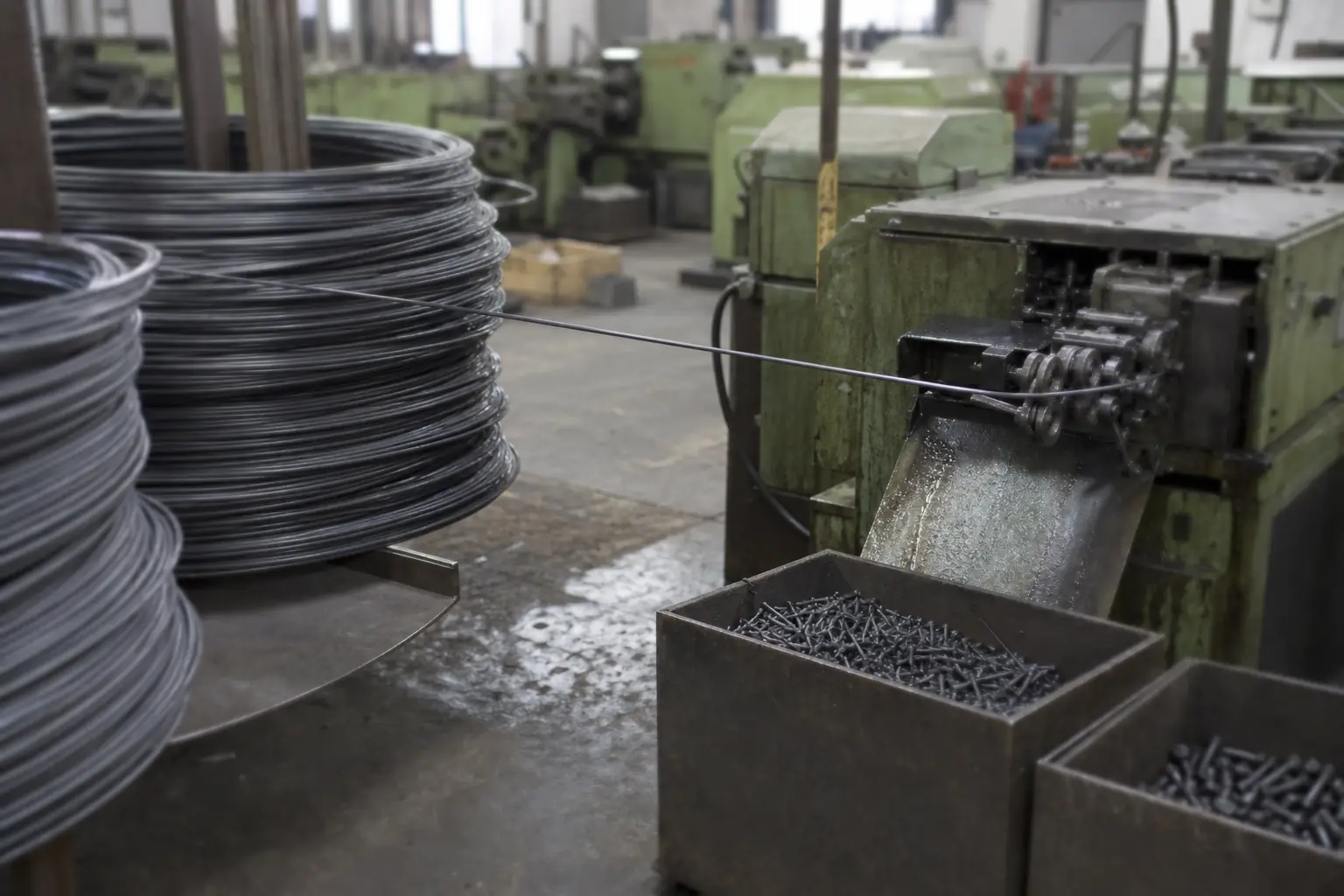
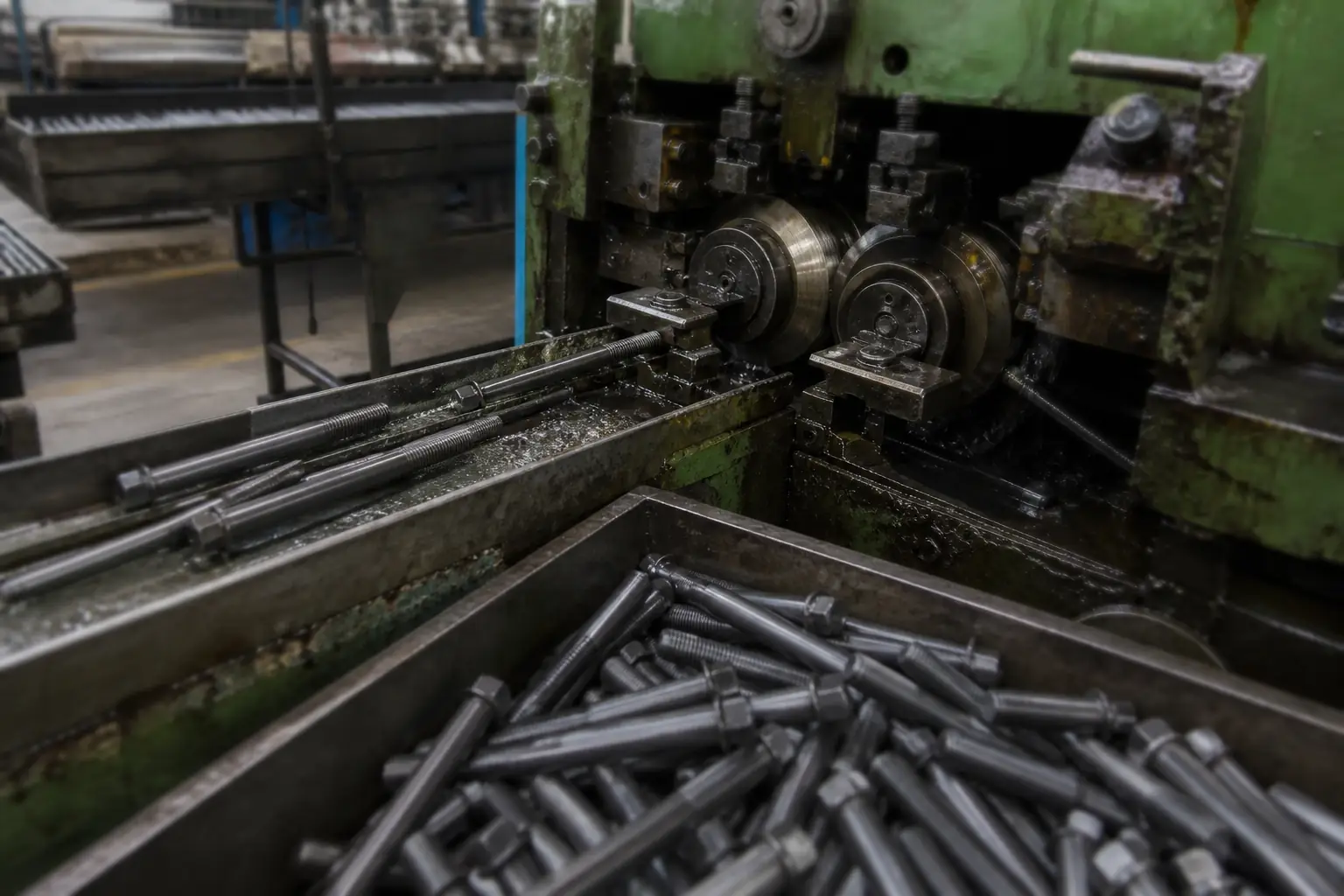
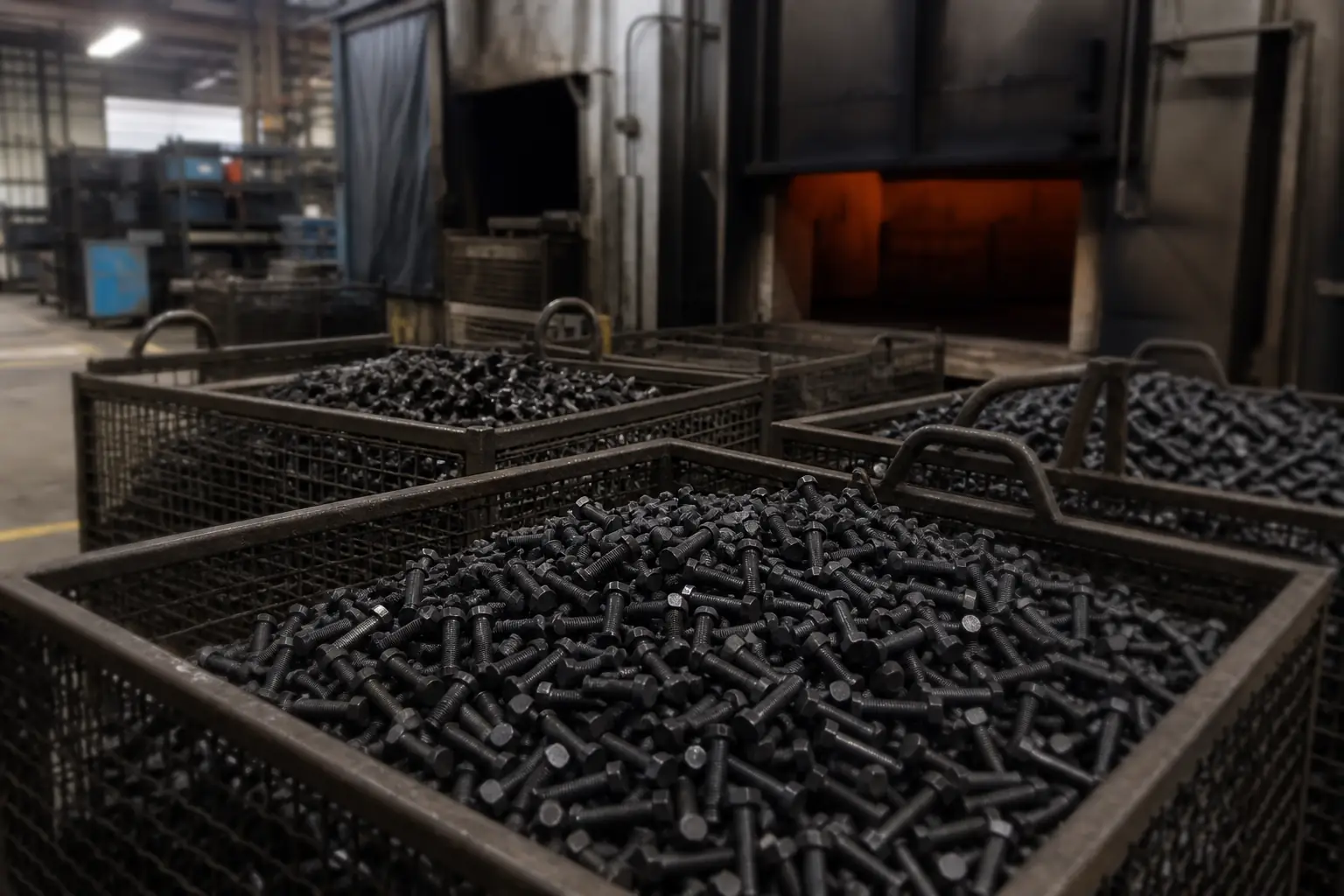
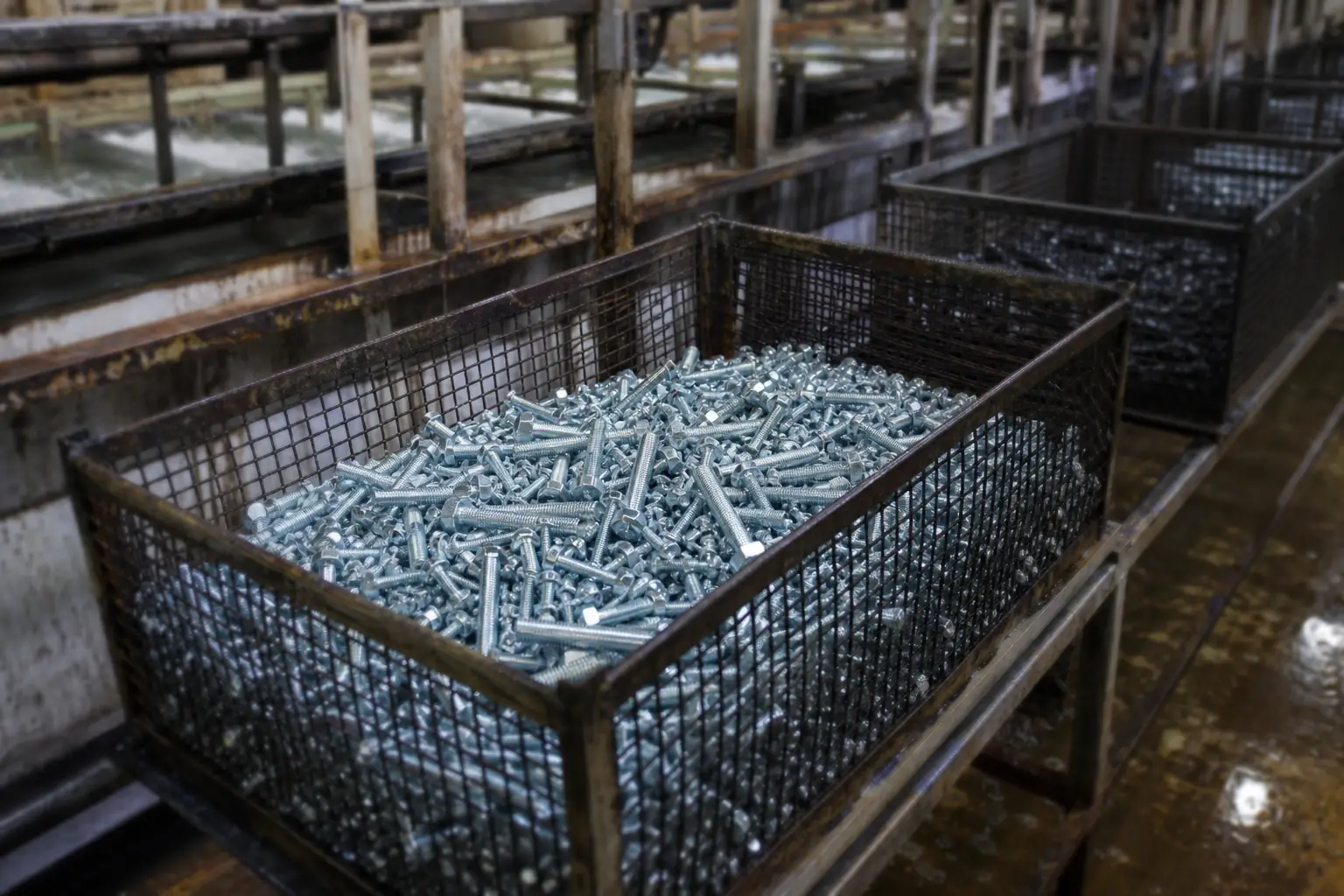
This part is cold-formed, threaded, heat-treated and finished in-house. The stages below are where its class and finish are actually decided.

  1. Wire rod feeding into a cold heading machine
    01

    Cold heading

    Wire rod is drawn to size and cold-formed into blanks. Forming rather than cutting keeps the grain flow continuous around the head, which is where a bolt is most likely to fail.

    Head dimensions and under-head radius checked at set-up and per shift.

  2. Thread rolling machine producing bolt threads
    02

    Thread rolling

    Threads are rolled between hardened dies rather than cut. Rolled threads are stronger in fatigue than cut threads and hold pitch and flank angle far more consistently across a batch.

    Go / no-go ring gauges to ISO 965 tolerance class 6g.

  3. Baskets of bolts staged for heat treatment
    03

    Heat treatment

    Quench-and-temper brings carbon and alloy steel to the property class ordered — 8.8, 10.9 or 12.9 — with the furnace charge tracked so a finished lot can be traced back to it.

    Core hardness and tensile tested per lot to ISO 898-1.

  4. Zinc plated bolts in a treatment basket
    04

    Surface treatment

    Zinc, zinc-nickel, hot-dip galvanizing, black oxide, phosphate and Dacromet, selected against the service environment rather than against the price list.

    Coating thickness and neutral salt spray hours to ISO 9227.

Frequently Asked Questions

What drive type do Self-Tapping Screws use?

Drive depends on the head style — socket (hex key), cross (Phillips/Pozi) or slot. A recessed drive resists cam-out when driven with power tools; check the product head style on this page.

What material should Self-Tapping Screws be for outdoor use?

For damp, coastal or chemical environments specify A4 (316) stainless or a suitably coated steel. For indoor or dry use, A2 (304) stainless or zinc-plated steel is normally adequate.

Are Self-Tapping Screws made to a recognized standard?

Yes — they are manufactured to DIN 7976 / ISO 1481, so dimensions are interchangeable between suppliers when you quote the standard on your order.

What are Self-Tapping Screws used for?

Fixing into sheet, timber or plastic by forming their own thread as they are driven, without a tapped hole. They are supplied to DIN 7976 / ISO 1481.

Can I get a quote for Self-Tapping Screws in the size and material I need?

Yes. Use the technical drawing and quote form on this page to set the size and options, then send the exact configuration to our team for pricing and lead time.