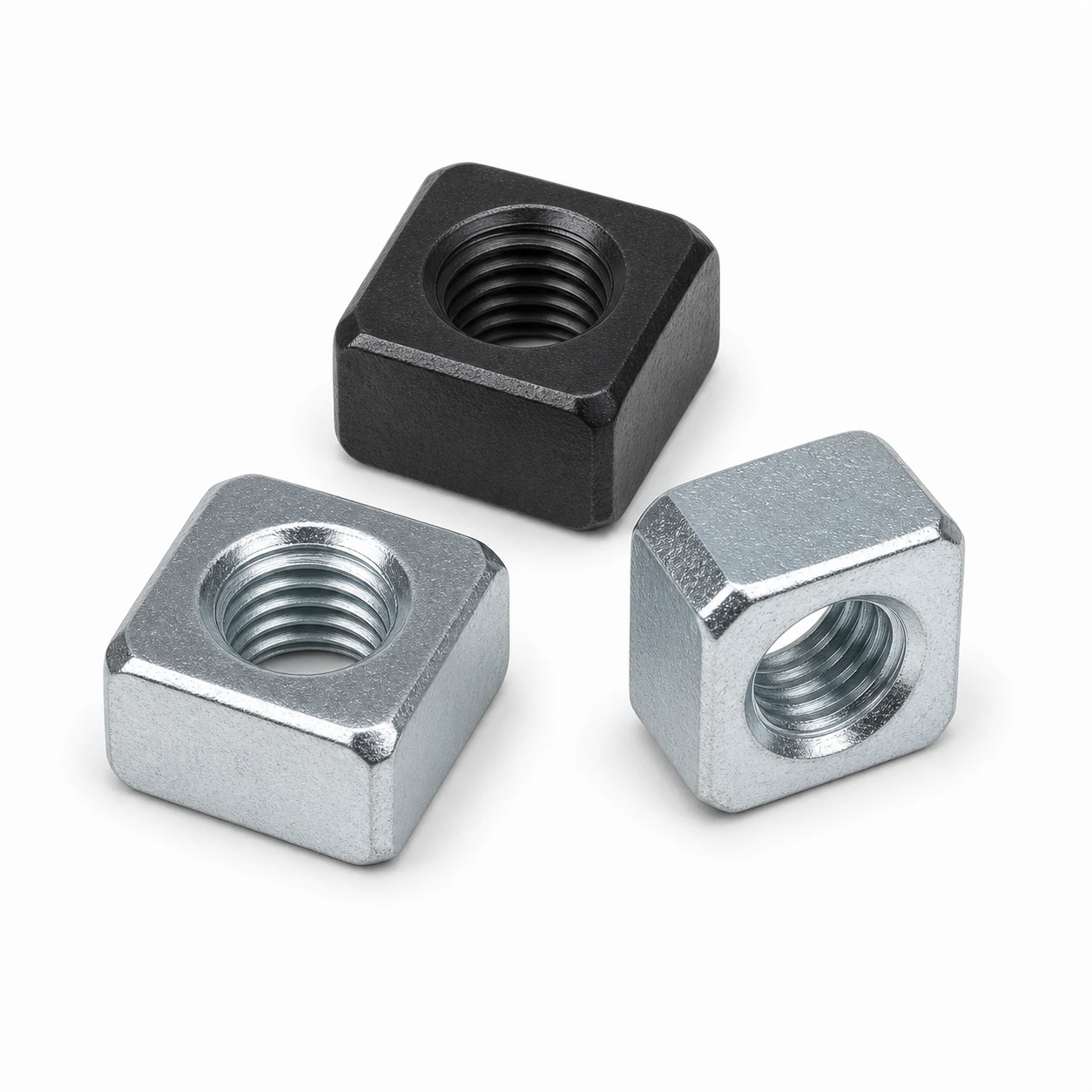
Square Nuts (DIN 557) are specified where the joint requires channel, strut and woodwork where a non-rotating, large-bearing nut is needed. The sections below cover the typical end-uses by industry, the size and material decisions for each, assembly practice, and the applications this fastener type is not suited to. Stocked across roughly M5 to M20, they cover general to heavy-duty work.
Typical Applications for Square Nuts
The most common settings where these are specified:
- Fabrication & metalwork: bench and on-site assembly of steel frames, enclosures and weldments.
- Bolted joints: the clamping counter-face on studs and bolts across every assembly type.
- Vibration-prone equipment: where a locking or flanged style resists loosening.
- Frames & weldments: captive or welded options for repeatable assembly.
- Strut & channel systems: sliding into channel where the flats stop rotation.
How to Specify Square Nuts for Your Application
- Size: Match the nominal size to the mating thread or hole. This product spans M5–M20; check the full table below for the exact dimensions of each size.
- Locking & grade: Match the strength grade to the bolt, and choose a locking style (nyloc, all-metal, serrated flange) if the joint sees vibration.
- Environment: For damp, coastal or chemical exposure prefer A4/316 stainless or a suitable coating; indoors, plated steel or A2 is usually sufficient.
- Standard: This product is supplied to DIN 557. Quoting the standard on your order guarantees interchangeable dimensions between suppliers.
Installation & Assembly Practice
- Run the nut down by hand before applying the wrench to catch cross-threading early.
- Tighten the nut rather than the bolt head where access allows — the torque-to-preload relation is more consistent.
- For locking styles, note that nyloc inserts are single-use in critical joints and lose grip above roughly 120 °C.
Common Selection Mistakes with Square Nuts
- Pairing a high-class bolt with a lower-class nut — the nut strips before the bolt reaches proof load; the nut class must meet or exceed the bolt class.
- Using a plain nut with a spring washer in severe vibration instead of a prevailing-torque locking nut.
- Re-using nyloc nuts in critical joints.
Where Square Nuts Are Not the Right Choice
Not on their own — they need a matching bolt or stud — and a plain nut is not a substitute for a locking type under heavy vibration.
Custom manufacturing · Made to drawing
Need a square nuts outside the standard range?
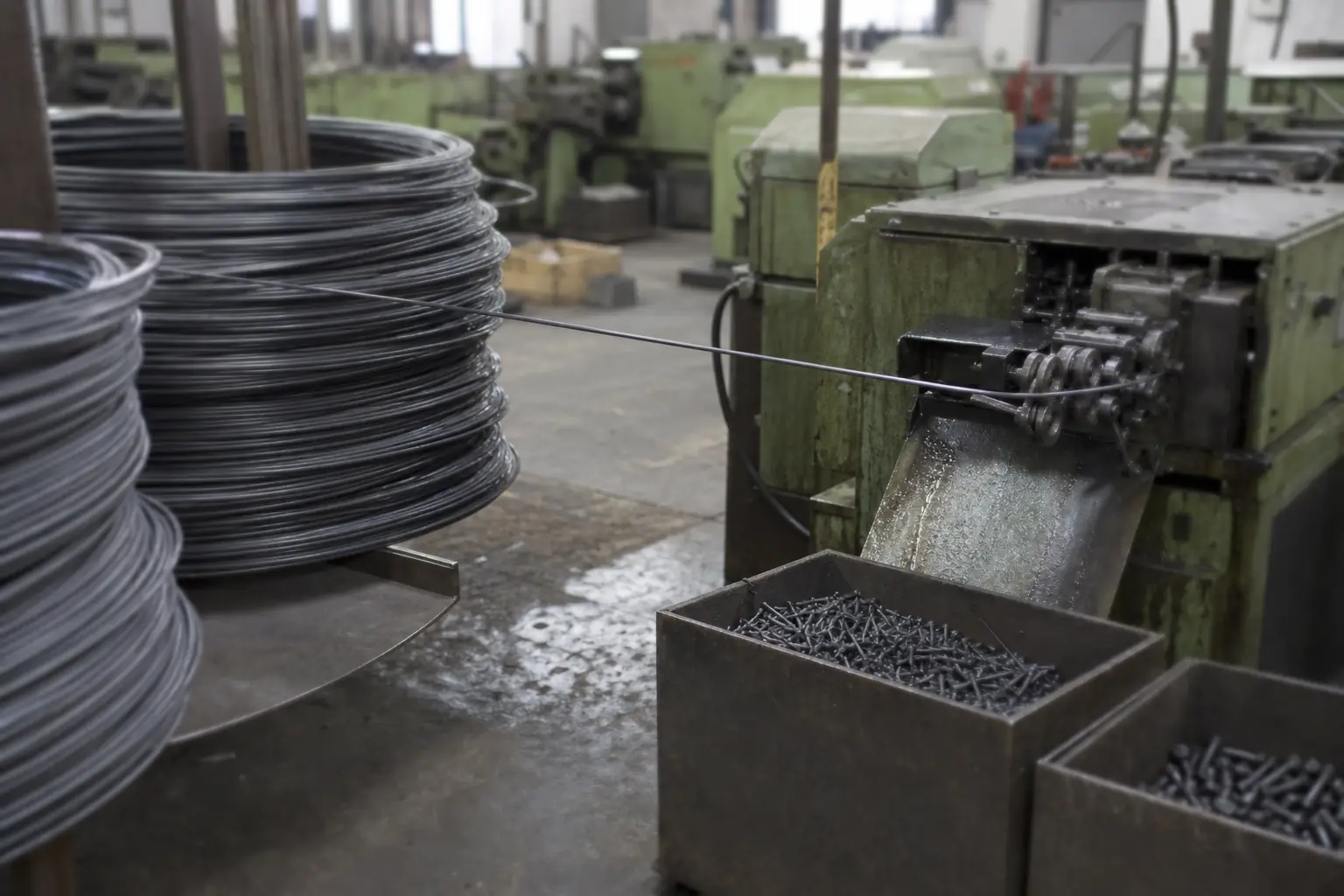
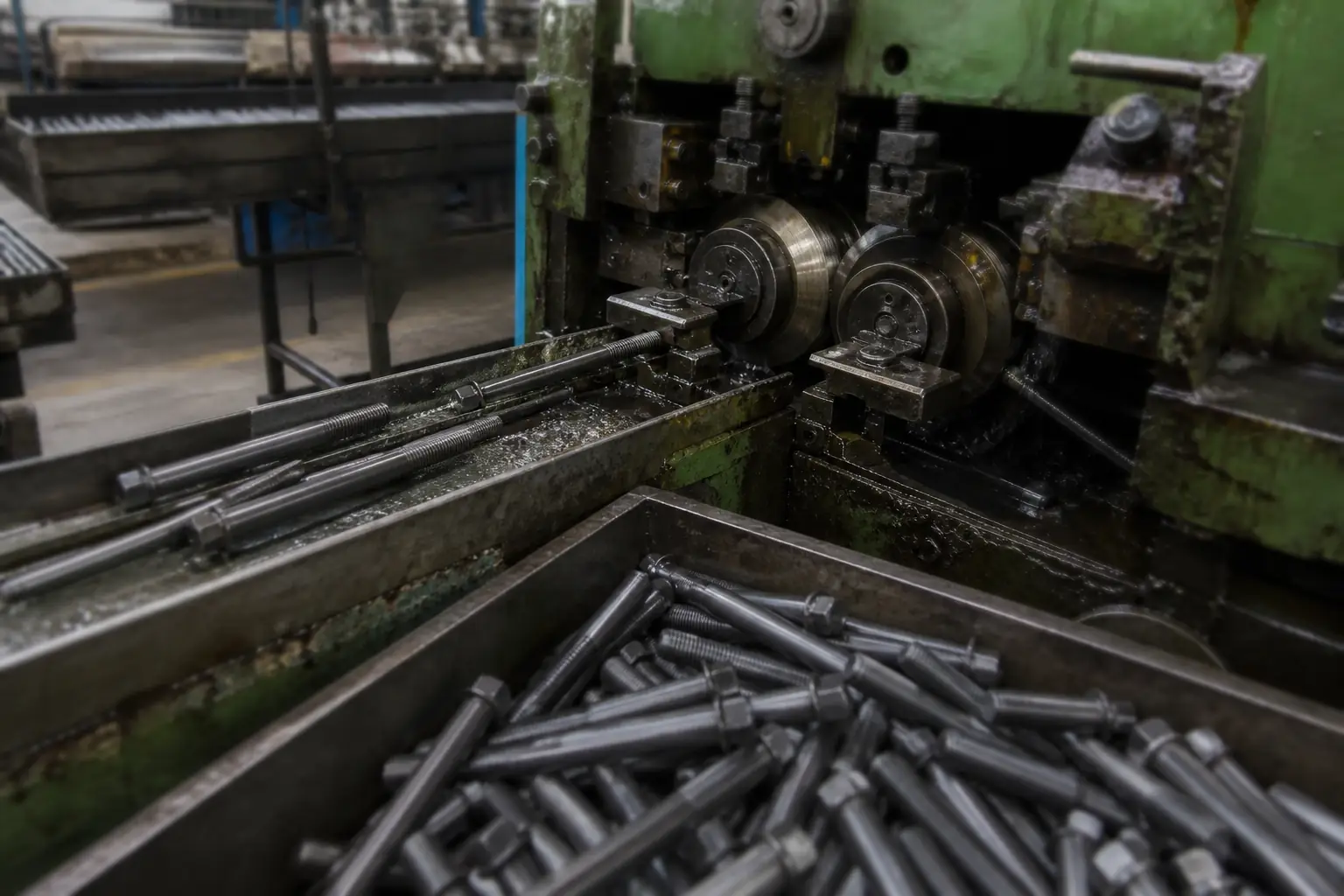
Thread, height, across-flats, property class, locking feature and flange form can all be varied, including thread sizes the standard series does not run to. Made by cold heading or tapping.
Minimum order from 2,000 pieces; samples within 7 days of drawing approval.