
Stainless Knurled Countersunk Blind Rivet Nuts are selected when an assembly calls for flush countersunk blind threads with a knurled body in thin panels. This application guide to the Trade series (Bollhoff RIVKLE stainless-steel series) type covers concrete end-uses, the specification checklist, correct installation, and where an alternative fastener performs better. Stocked across roughly M3 to M4, they cover light-duty and instrument-scale work.
Typical Applications for Stainless Knurled Countersunk Blind Rivet Nuts
The most common settings where these are specified:
- Automotive interiors: flush threaded mounting points behind trim and finished panels.
- Laboratory equipment: stainless blind threads in cleanable covers and guards.
- Electronic housings: serviceable threads in thin sheet where rotation must be controlled.
- Precision fabrication: countersunk blind inserts below the finished panel face.
Related Rivet Nuts (Blind Threaded Inserts) products
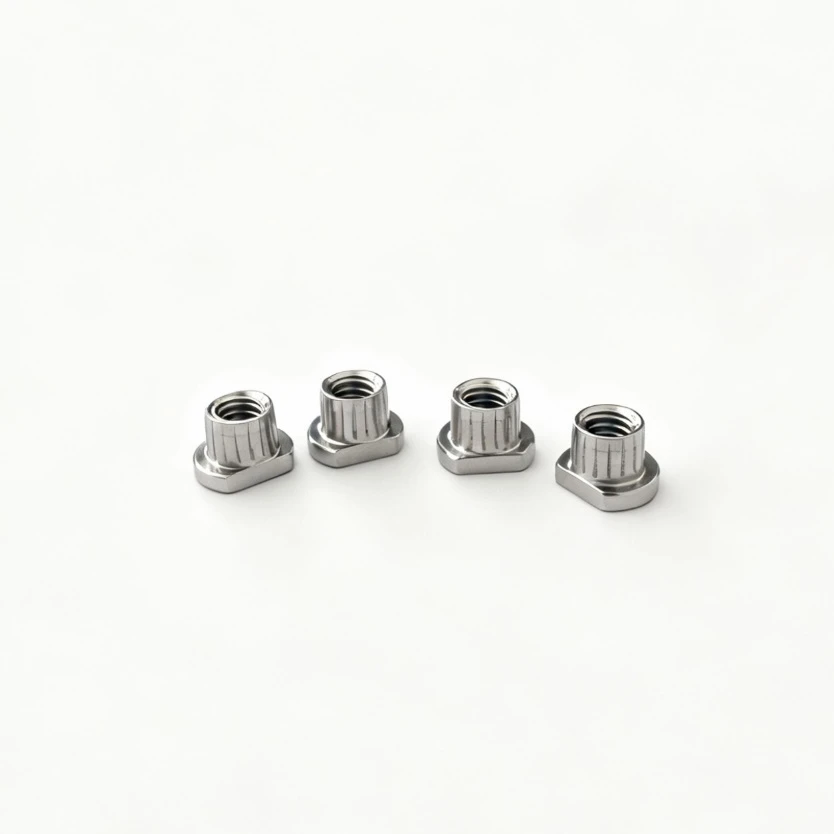
SUS321 Stainless Steel Knurled Rivet Nut M4 CNC Turning Non-Standard Fastener
Hexagon Head · DIN, ANSI, GB, JIS, GOST, BSW
US$0.012 – 0.12MOQ 10,000 pieces
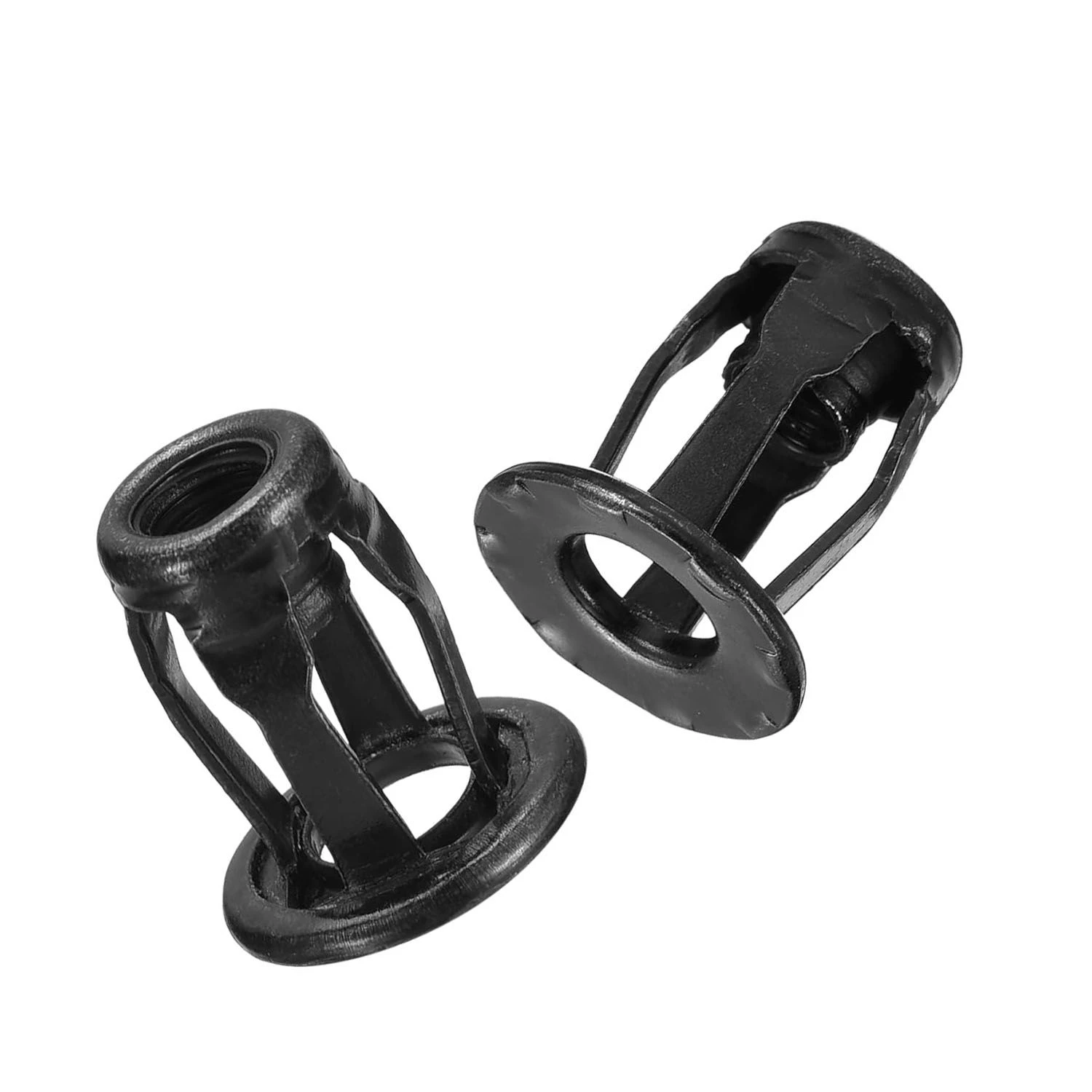
Sealing Screw-to-Install Rivet Nuts Jack Nut
Round Head · DIN, ANSI, GB, GOST
US$0.012 – 0.36MOQ 1,000 pieces
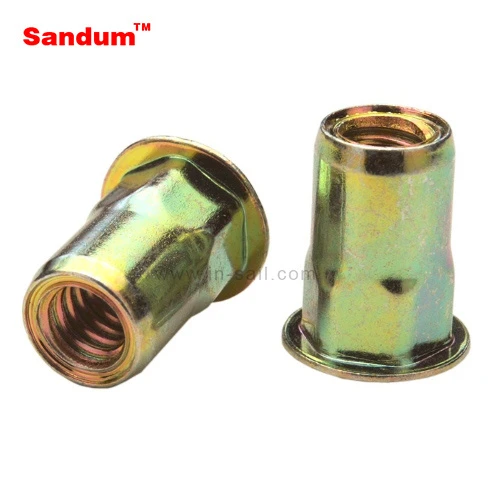
Premium Stainless Steel Flat Head Hex Rivet Nuts for Durability
Hexagon Head · DIN, GB, JIS
US$0.06 – 0.12MOQ 1,000 pieces
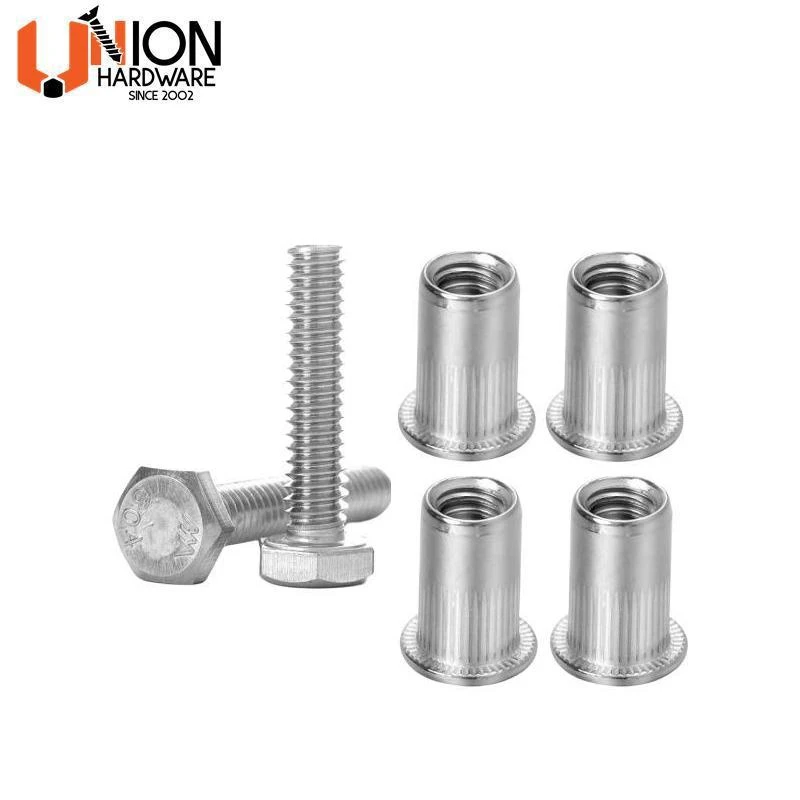
Bolt Rivet Nuts with Threaded Inserts
Round Head · DIN, GB, ANSI, BSW, JIS, GOST
US$0.0036 – 0.16MOQ 200 pieces
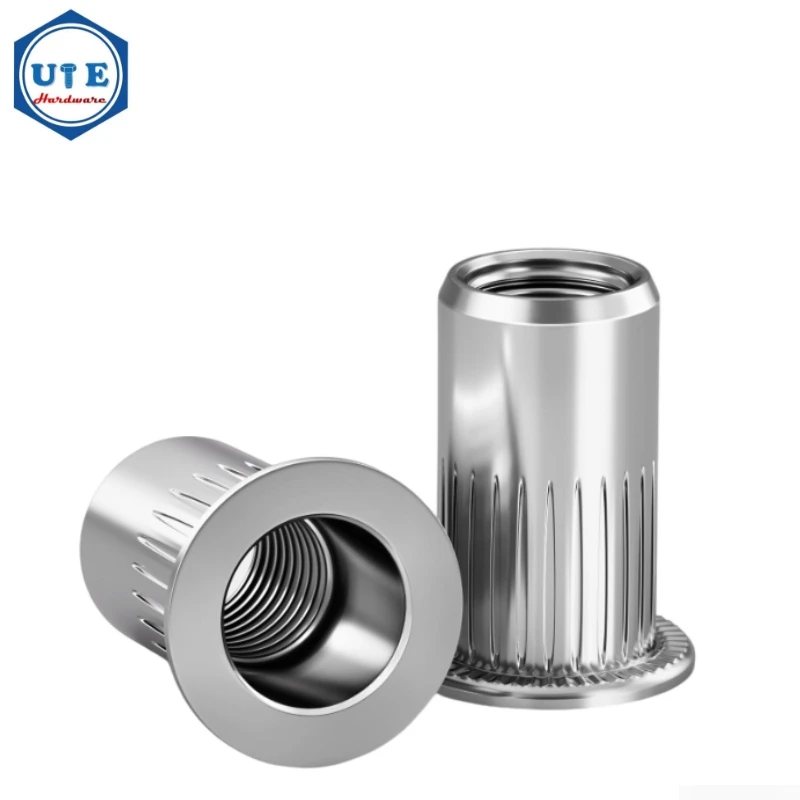
Stainless Steel Blind Insert Rivet Nuts for Metric Standard
Flat Head · DIN, ANSI, GB, BSW
US$0.0012 – 0.0096MOQ 50 pieces

200PCS/Lot M2 M2.5 M3 M4 M5 M6 304 Stainless Steel Cls Self-Clinching Nut Press Insert Rivet Nut
Round Head · DIN, ANSI, GB, JIS
US$0.0024 – 0.0096MOQ 1 piece
View all Rivet Nuts & Threaded Rivet Inserts → Full product catalog
How to Specify Stainless Knurled Countersunk Blind Rivet Nuts for Your Application
- Size: Match the nominal size to the mating thread or hole. This product spans M3–M4; check the full table below for the exact dimensions of each size.
- Locking & grade: Match the strength grade to the bolt, and choose a locking style (nyloc, all-metal, serrated flange) if the joint sees vibration.
- Environment: For damp, coastal or chemical exposure prefer A4/316 stainless or a suitable coating; indoors, plated steel or A2 is usually sufficient.
- Standard: This product is supplied to Trade series (Bollhoff RIVKLE stainless-steel series). Quoting the standard on your order guarantees interchangeable dimensions between suppliers.
Installation & Assembly Practice
- Run the nut down by hand before applying the wrench to catch cross-threading early.
- Tighten the nut rather than the bolt head where access allows — the torque-to-preload relation is more consistent.
- For locking styles, note that nyloc inserts are single-use in critical joints and lose grip above roughly 120 °C.
Common Selection Mistakes with Stainless Knurled Countersunk Blind Rivet Nuts
- Pairing a high-class bolt with a lower-class nut — the nut strips before the bolt reaches proof load; the nut class must meet or exceed the bolt class.
- Using a plain nut with a spring washer in severe vibration instead of a prevailing-torque locking nut.
- Re-using nyloc nuts in critical joints.
Where Stainless Knurled Countersunk Blind Rivet Nuts Are Not the Right Choice
Not on their own — they need a matching bolt or stud — and a plain nut is not a substitute for a locking type under heavy vibration.
Custom manufacturing · Made to drawing
Need a stainless knurled countersunk blind rivet nuts outside the standard range?
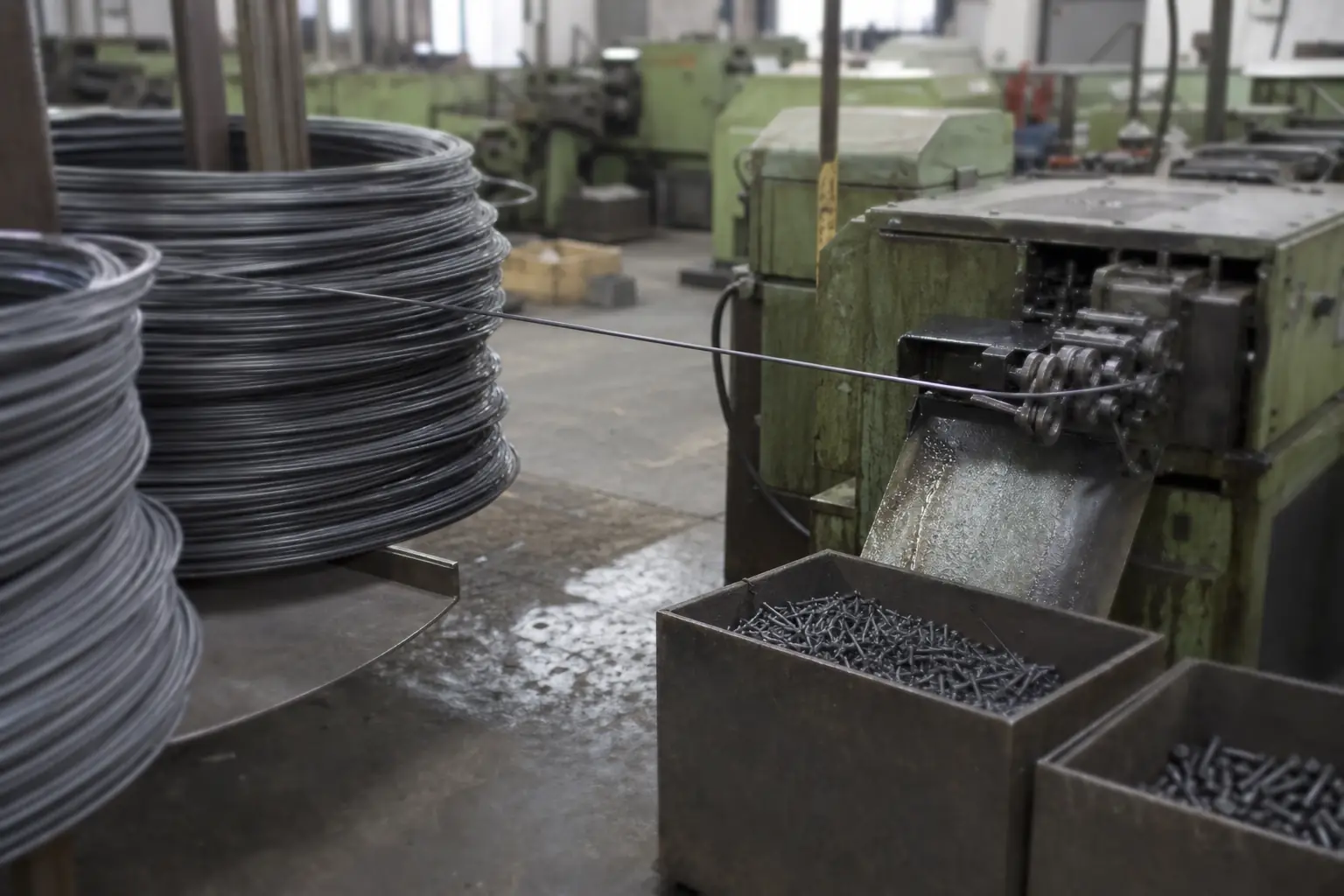
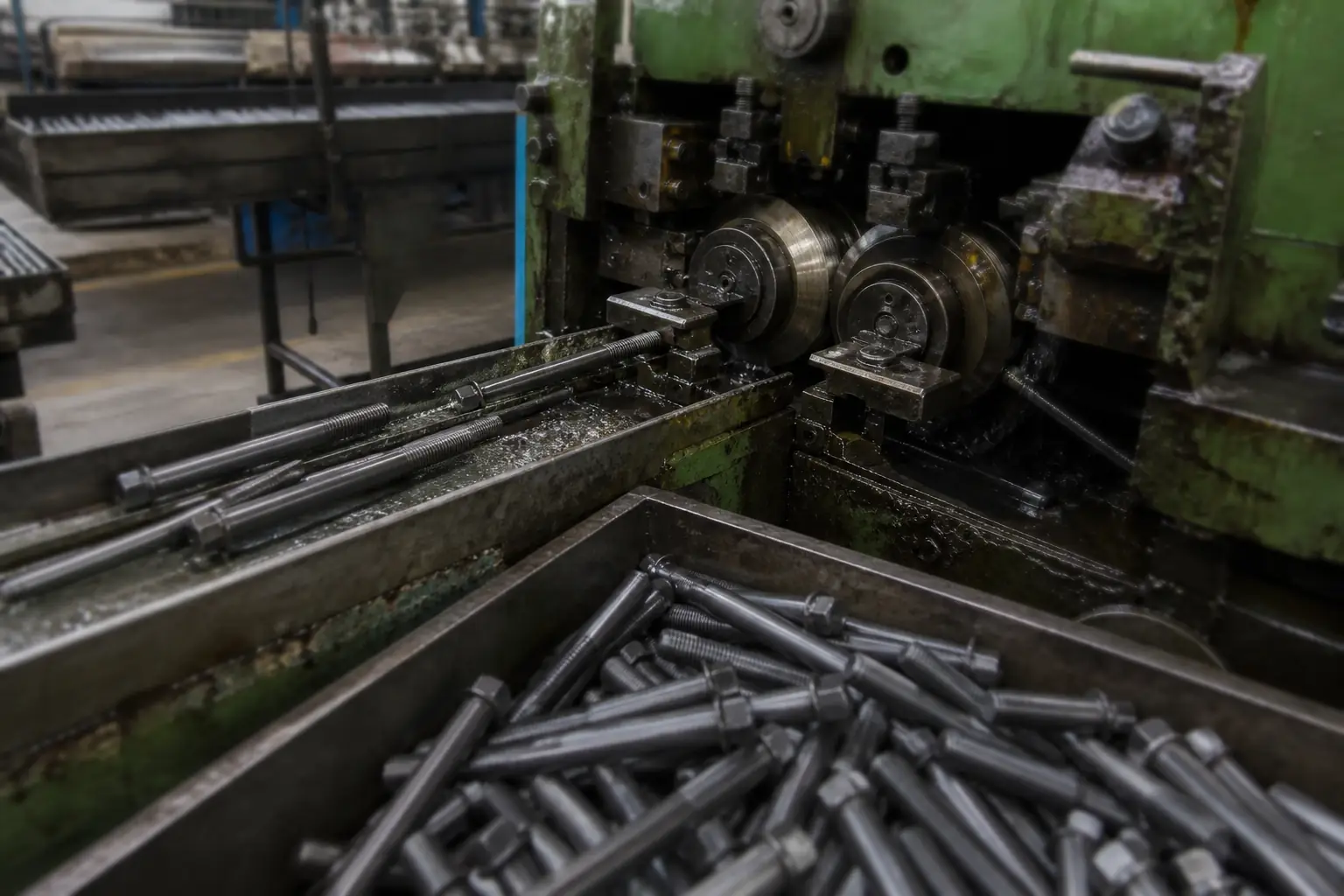
Height and across-flats are the two most often changed — a thinner nut for clearance, a larger hex for a tool that is already on the line. Made by cold heading or tapping.
Minimum order from 2,000 pieces; samples within 7 days of drawing approval.