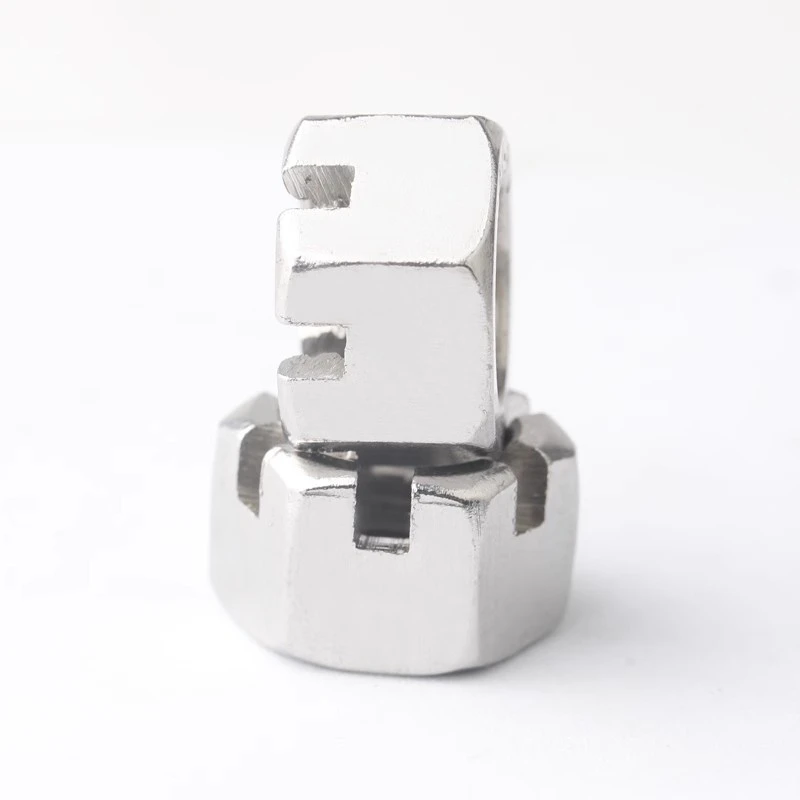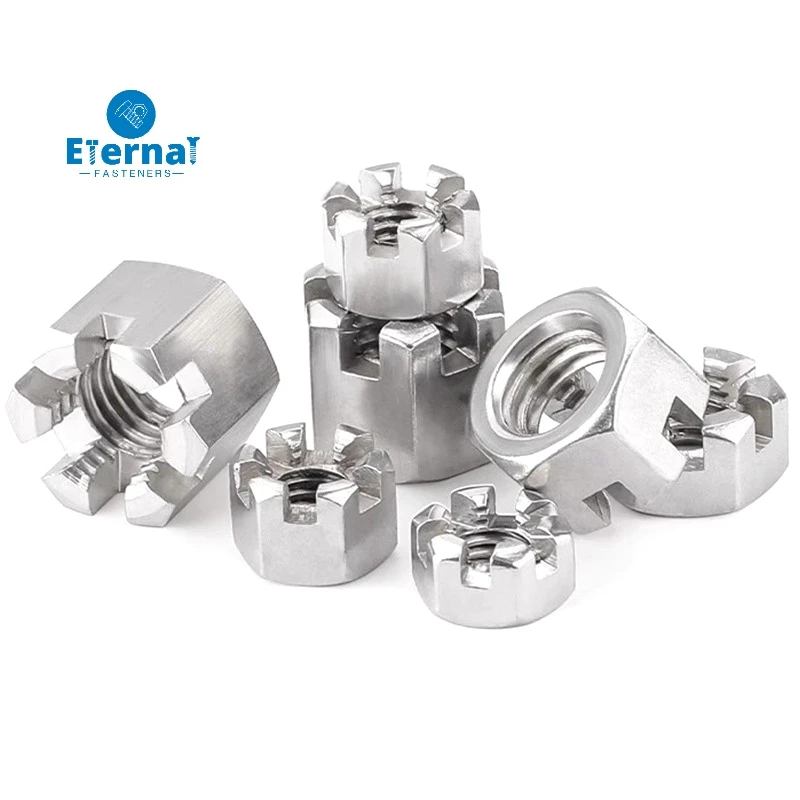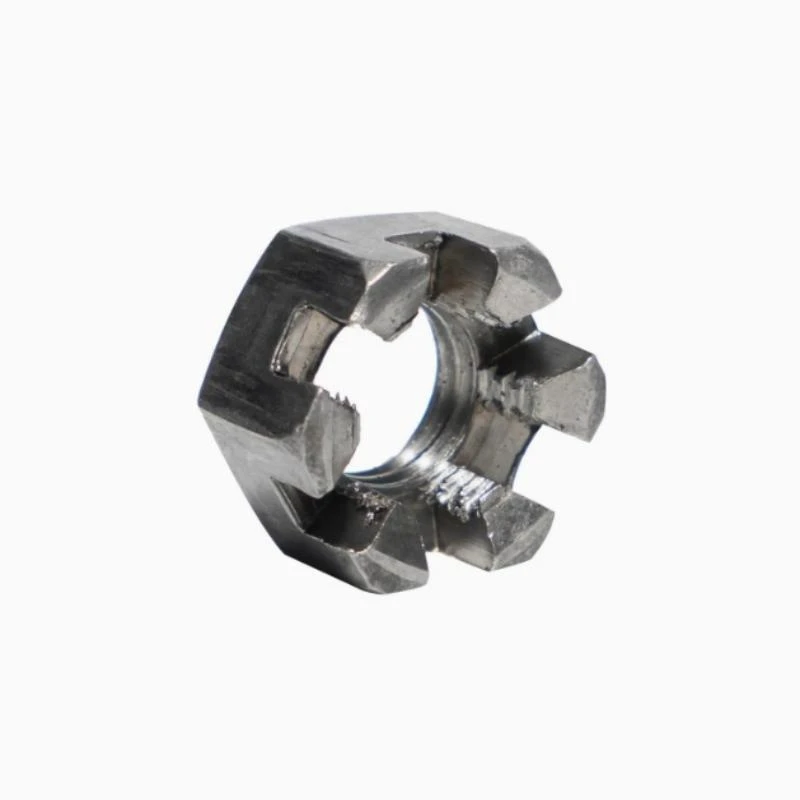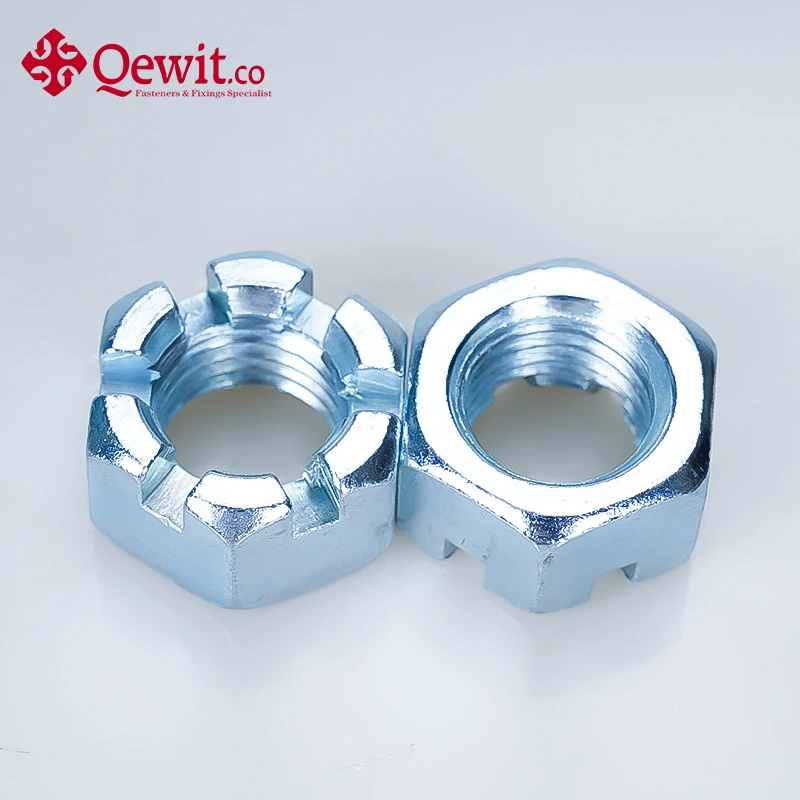
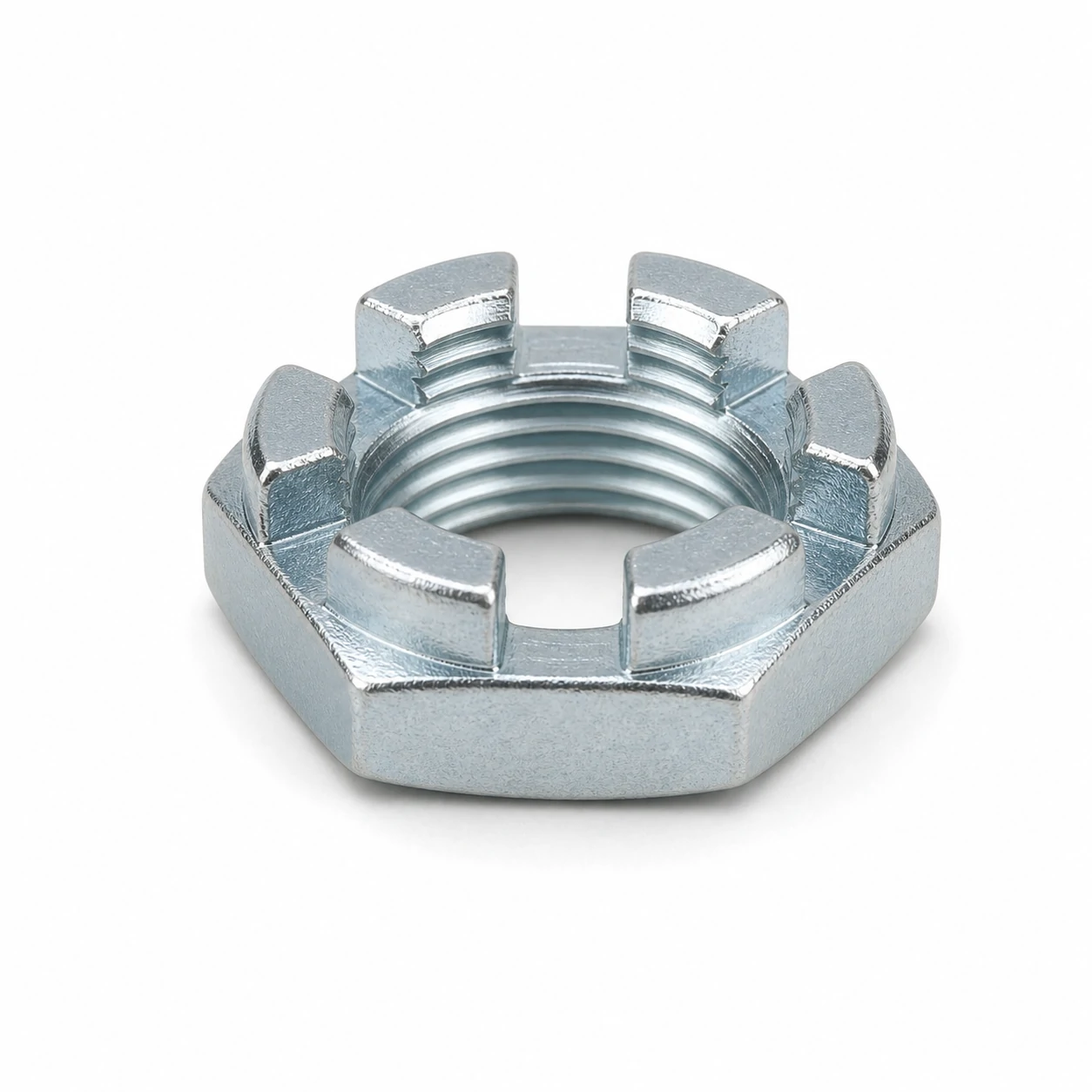
Thin Castle Nuts (DIN 937) manufactured in A4 Stainless Steel (ISO 3506 group A4 (316 / 1.4401), commonly supplied A4-80) are dimensioned to DIN 937. The sections below give the mechanical and physical properties of the grade, its behavior in corrosive and elevated-temperature service, and the full size table.
Why Choose A4 Stainless Steel for Thin Castle Nuts (DIN 937)
Specified for marine, coastal and chemical applications. For thin castle nuts (din 937), this matters when superior, including marine and chloride environments is the primary requirement.
Mechanical & Physical Properties
| Grade designation | ISO 3506 group A4 (316 / 1.4401), commonly supplied A4-80 |
|---|---|
| Magnetic response | Largely non-magnetic |
| Service temperature | approx. -200 °C to +400 °C, subject to the property class and the joint |
| Corrosion characteristic | Superior, including marine and chloride environments |
Corrosion Behavior in Service
A4 (316) adds 2–3% molybdenum to the A2 (304) composition, which dramatically improves resistance to chloride-pitting corrosion. For Thin Castle Nuts (DIN 937) in marine, coastal, swimming-pool or food-processing environments, A4 is the default selection.
Comparable Grades
For Thin Castle Nuts (DIN 937), the alternative stainless grade is A2 (304). Choose A2 (304) for general use and A4 (316) wherever chlorides are present; the molybdenum in A4 is the whole difference. Remember that stainless is the corrosion answer, not the strength answer — for load, look at class 8.8 or 10.9 instead.
Using Stainless Fasteners in Aluminum
Stainless steel is more noble than aluminum, so with an electrolyte present — rain, condensation, salt spray — the aluminum becomes the anode and corrodes at the joint. Area ratio decides how bad it gets: a small stainless fastener in a large aluminum section is normally acceptable, a large stainless fastener in thin aluminum is not. Where the joint gets wet, isolate the metals with a coated or nylon washer and a sealant, or specify an aluminum or coated fastener instead.
Sizes of Thin Castle Nuts (DIN 937) Available in A4 Stainless Steel
| Thread size | Pitch (mm) | Width across flats s (mm) | Total height m (mm) | Height vs DIN 935 | Slot width n (mm) | Split pin size | Reference standard |
|---|---|---|---|---|---|---|---|
| M10 | 1.5 | 17.0 | 8.0 | approx. 70% | 2.8 | 2.5 x 30 | DIN 937 |
| M12 | 1.75 | 19.0 | 10.0 | approx. 71% | 3.5 | 3.2 x 36 | DIN 937 |
| M16 | 2.0 | 24.0 | 13.0 | approx. 76% | 4.5 | 4 x 40 | DIN 937 |
| M20 | 2.5 | 30.0 | 16.0 | approx. 80% | 4.5 | 4 x 50 | DIN 937 |
| M24 | 3.0 | 36.0 | 19.0 | approx. 79% | 5.5 | 5 x 63 | DIN 937 |
Dimensions are independent of the material: every size above is available in A4 Stainless Steel.
Custom manufacturing · Made to drawing
Need this nut in a grade that is not listed?
A4 Stainless Steel is one of the grades the catalog describes. Thread size is the obvious variable and rarely the interesting one — height for clearance, across-flats for the tool already in the cell, and the locking feature for the vibration actually present. Made by cold heading or tapping.
Minimum order from 2,000 pieces; samples within 7 days of drawing approval.