Skip to content
Screws · Industry standard

A4 (316) Stainless Steel Thread Forming Screws for Plastic

Mechanical properties, corrosion behaviour and the full dimensional range for this grade.

A4 Stainless Steel Thread Forming Screws for Plastic are supplied to ISO 3506 group A4 (316 / 1.4401), commonly supplied A4-80. Corrosion behaviour is superior, including marine and chloride environments, the material is largely non-magnetic, and the usable service range is approx. -200 °C to +400 °C, subject to the property class and the joint. In practice this grade is specified for marine, coastal and chemical applications.

Grade
ISO 3506 group A4 (316 / 1.4401), commonly supplied A4-80
Corrosion resistance
Superior, including marine and chloride environments
Magnetic response
Largely non-magnetic
Service temperature
approx. -200 °C to +400 °C, subject to the property class and the joint

Property values are typical for the grade. Certified mechanical test data is available on request for production orders.

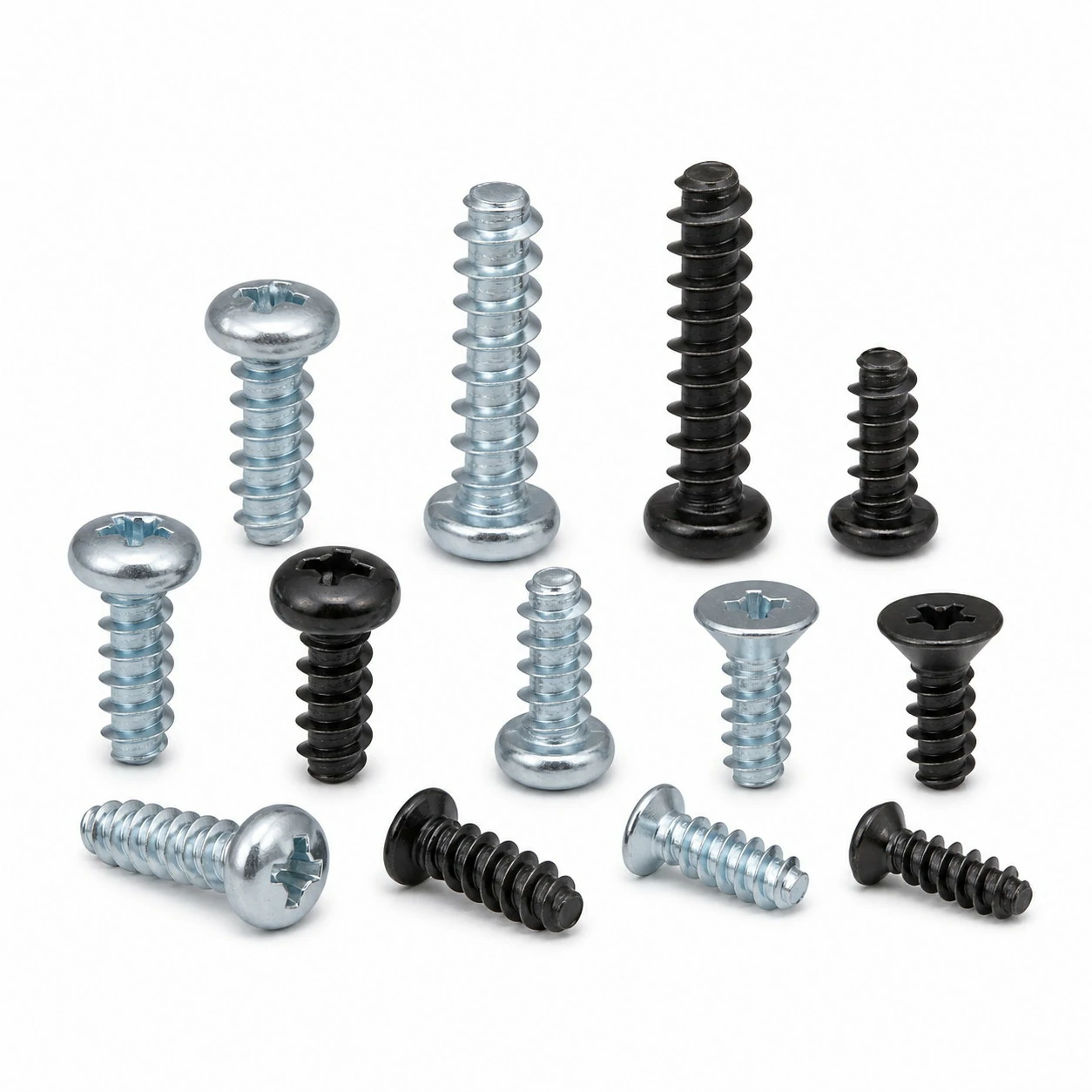
A4 (316) Stainless Steel Thread Forming Screws for Plastic reference image

A4 Stainless Steel Thread Forming Screws for Plastic are supplied to Industry standard. The grade provides superior, including marine and chloride environments and is largely non-magnetic; the practical service range is approx. -200 °C to +400 °C, subject to the property class and the joint. Property data, grade comparison and the full size table follow.

Why Choose A4 Stainless Steel for Thread Forming Screws for Plastic

Specified for marine, coastal and chemical applications. For thread forming screws for plastic, this matters when superior, including marine and chloride environments is the primary requirement.

Mechanical & Physical Properties

Grade designationISO 3506 group A4 (316 / 1.4401), commonly supplied A4-80
Magnetic responseLargely non-magnetic
Service temperatureapprox. -200 °C to +400 °C, subject to the property class and the joint
Corrosion characteristicSuperior, including marine and chloride environments

Corrosion Behavior in Service

A4 (316) adds 2–3% molybdenum to the A2 (304) composition, which dramatically improves resistance to chloride-pitting corrosion. For Thread Forming Screws for Plastic in marine, coastal, swimming-pool or food-processing environments, A4 is the default selection.

Galvanic & Galling Considerations

Two important notes for stainless thread forming screws for plastic: (1) stainless can gall on stainless threads under load — use a thread lubricant or anti-galling compound, especially for M6 and below; (2) when joined to aluminum or galvanized steel, stainless can drive galvanic corrosion of the less-noble metal in wet service — isolate with a coating or sleeve where appropriate.

Using Stainless Fasteners in Aluminum

Stainless steel is more noble than aluminum, so in the presence of an electrolyte — rain, condensation, salt spray — the aluminum becomes the anode and corrodes at the joint. The effect is driven by the area ratio: a small stainless fastener in a large aluminum section is normally acceptable, while a large stainless fastener in thin aluminum is not. Where the joint is wet, isolate the two metals with a coated or nylon washer and a sealant, or specify an aluminum or coated fastener instead.

Sizes of Thread Forming Screws for Plastic Available in A4 Stainless Steel

Thread sizePitch (mm)Head diameter dk (mm)Head height k (mm)Boss hole, amorphous (mm)Boss hole, filled (mm)Common length range (mm)Reference standard
2.00.94.01.61.651.755~16Industry standard
2.51.15.02.02.052.155~20Industry standard
3.01.36.02.42.452.606~25Industry standard
3.51.57.02.82.853.008~30Industry standard
4.01.78.03.13.253.458~35Industry standard
5.02.110.03.84.104.3010~40Industry standard
6.02.512.04.64.905.1512~50Industry standard

Technical Drawing

Customize the parameters below — every spec field is editable, and the drawing redraws to match the values you choose. Changing the size will snap the other fields to that size's standard values; you can then override any individual value.

Sends the selected values to the quote form below.

Request a Quote

The form below follows the current technical drawing configuration. Change the drawing values above and the request details update automatically.

Request a Quotation

Specification
Business Information

Dimensions & Specifications (Industry standard)

Thread sizePitch (mm)Head diameter dk (mm)Head height k (mm)Boss hole, amorphous (mm)Boss hole, filled (mm)Common length range (mm)Reference standard
2.00.94.01.61.651.755~16Industry standard
2.51.15.02.02.052.155~20Industry standard
3.01.36.02.42.452.606~25Industry standard
3.51.57.02.82.853.008~30Industry standard
4.01.78.03.13.253.458~35Industry standard
5.02.110.03.84.104.3010~40Industry standard
6.02.512.04.64.905.1512~50Industry standard
Inside the plant

Manufactured in our own plant

This part is cold-formed, threaded, heat-treated and finished in-house. The stages below are where its class and finish are actually decided.

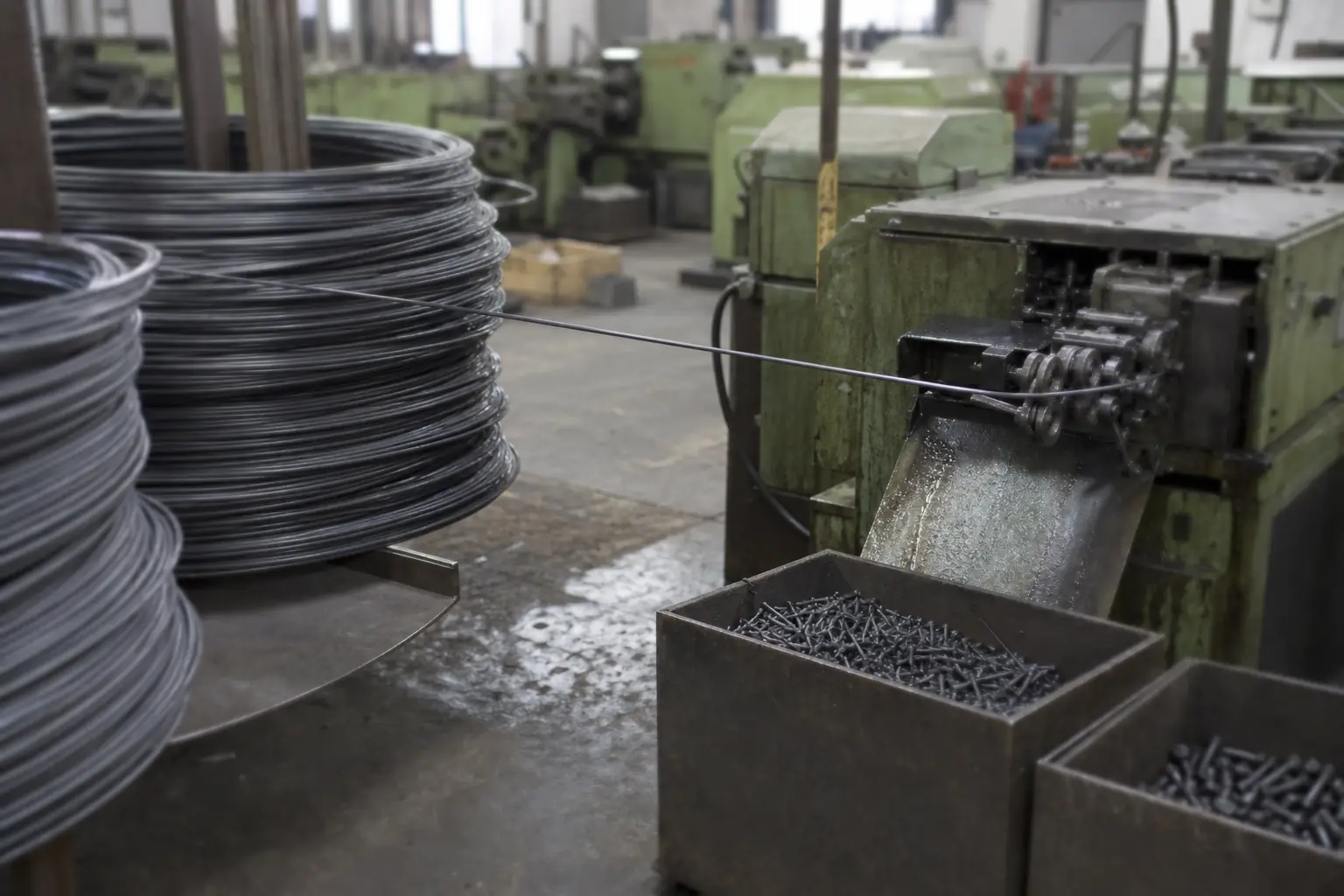
  1. Wire rod feeding into a cold heading machine
    01

    Cold heading

    Wire rod is drawn to size and cold-formed into blanks. Forming rather than cutting keeps the grain flow continuous around the head, which is where a bolt is most likely to fail.

    Head dimensions and under-head radius checked at set-up and per shift.

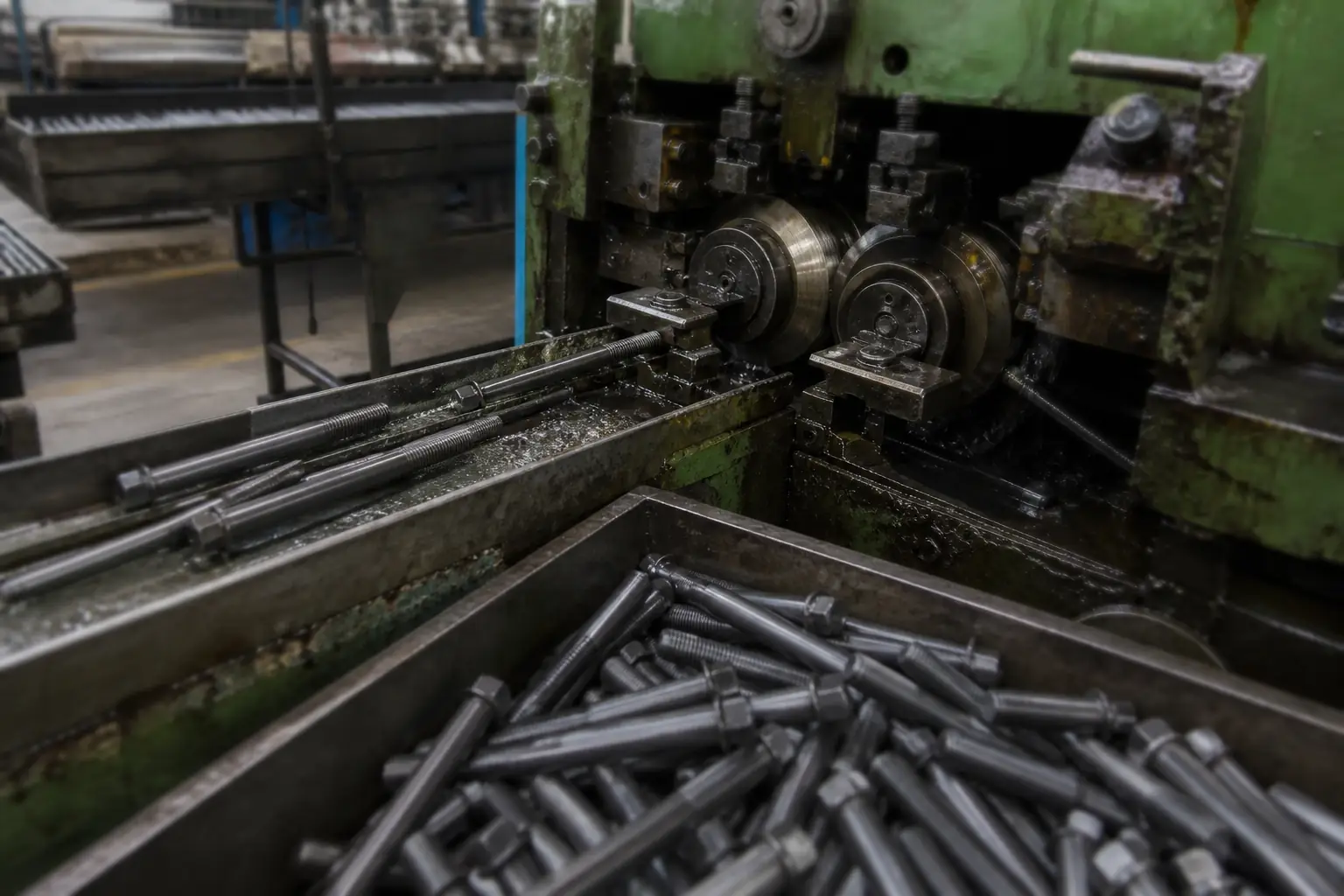
  2. Thread rolling machine producing bolt threads
    02

    Thread rolling

    Threads are rolled between hardened dies rather than cut. Rolled threads are stronger in fatigue than cut threads and hold pitch and flank angle far more consistently across a batch.

    Go / no-go ring gauges to ISO 965 tolerance class 6g.

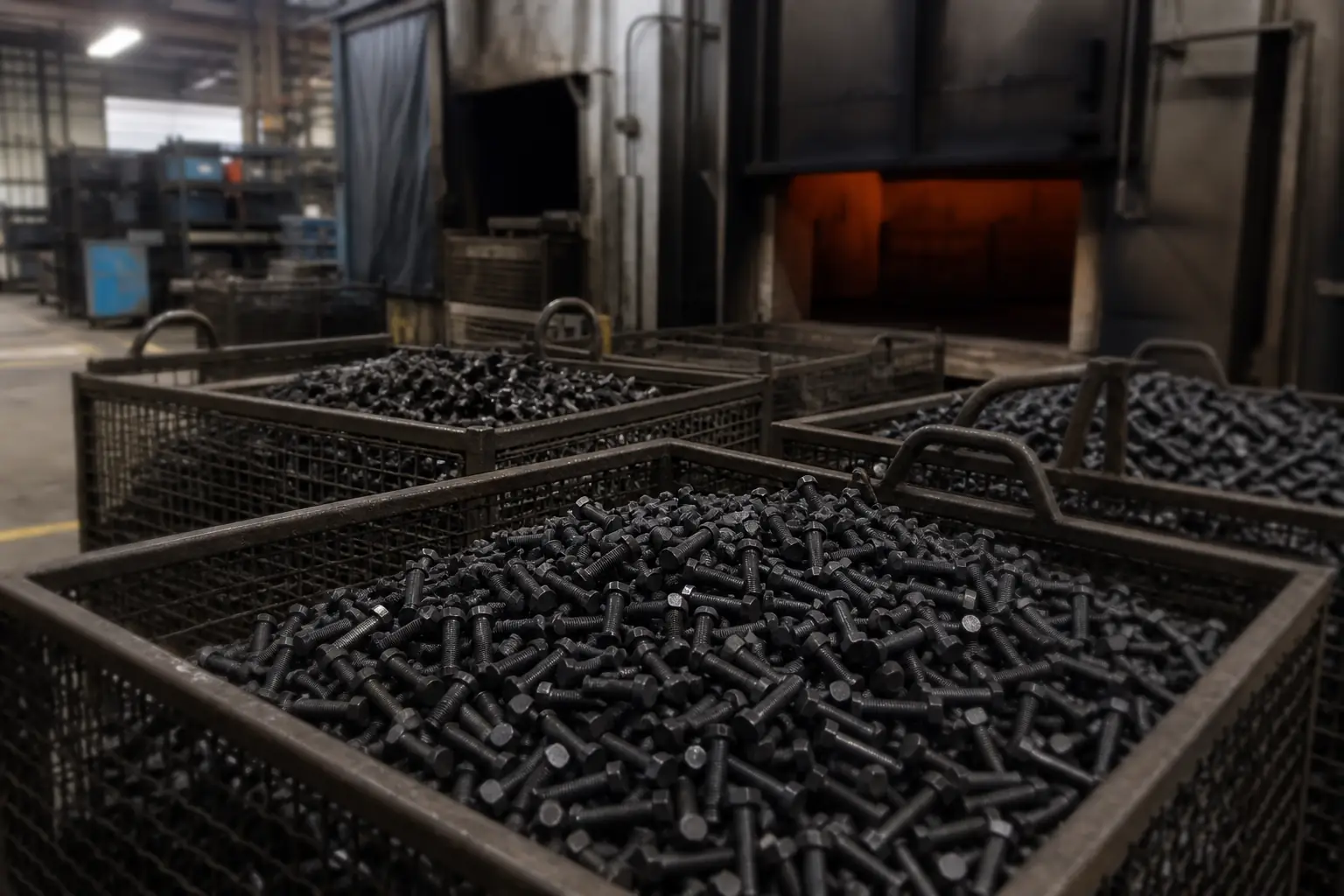
  3. Baskets of bolts staged for heat treatment
    03

    Heat treatment

    Quench-and-temper brings carbon and alloy steel to the property class ordered — 8.8, 10.9 or 12.9 — with the furnace charge tracked so a finished lot can be traced back to it.

    Core hardness and tensile tested per lot to ISO 898-1.

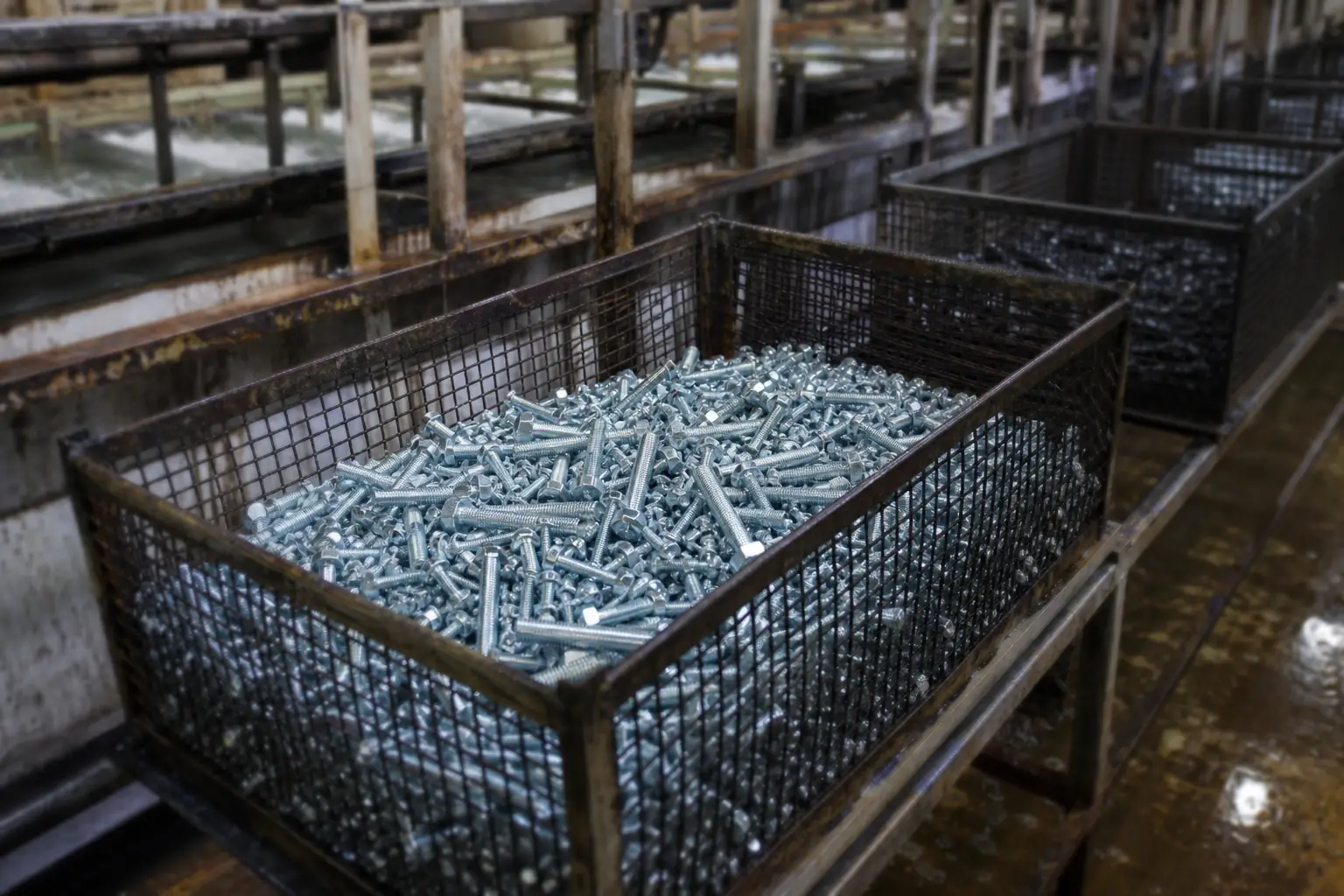
  4. Zinc plated bolts in a treatment basket
    04

    Surface treatment

    Zinc, zinc-nickel, hot-dip galvanizing, black oxide, phosphate and Dacromet, selected against the service environment rather than against the price list.

    Coating thickness and neutral salt spray hours to ISO 9227.

Frequently Asked Questions

Can A4 Stainless Steel replace plated alloy steel structurally?

Only at the standard strength classes — A2-70 / A4-80 are roughly equivalent to class 7 steel; A4-100 reaches class 8.8. For class 10.9 or 12.9 strength, plated alloy steel is required.

Are A4 Stainless Steel Thread Forming Screws for Plastic magnetic?

A4 Stainless Steel Thread Forming Screws for Plastic are largely non-magnetic.

What corrosion resistance do A4 Stainless Steel Thread Forming Screws for Plastic offer?

A4 Stainless Steel Thread Forming Screws for Plastic provide superior, including marine and chloride environments with a service range of approx. -200 °C to +400 °C, subject to the property class and the joint.

Should I choose A4 Stainless Steel or A2 (304) for Thread Forming Screws for Plastic?

For Thread Forming Screws for Plastic, A4 Stainless Steel suits general indoor and outdoor use; A2 (304) is preferred for marine, coastal and chemical environments. Choose by corrosion exposure first.

How do I request a quotation?

Use the technical drawing on this page to pick the exact configuration, then submit it with the quote form. We respond within one business day.