Skip to content
Seals · Trade series (self-centring bonded washers, USIT type)

FKM (Viton®-type) USIT Rings (Self-Centring Bonded Seals)

Temperature range, chemical and fluid compatibility, hardness and the full dimensional range for this compound.

FKM (Viton®-type) USIT Rings (Self-Centring Bonded Seals) are supplied to fluoroelastomer, typically 75 Shore A. Corrosion behaviour is excellent resistance to heat, fuels, and most chemicals; poor with ketones and hot water/steam, the material is non-magnetic, and the usable service range is approx. -20 °C to +200 °C. In practice this grade is specified where temperature or chemical exposure exceeds nitrile.

Grade
fluoroelastomer, typically 75 Shore A
Corrosion resistance
Excellent resistance to heat, fuels, and most chemicals; poor with ketones and hot water/steam
Magnetic response
Non-magnetic
Service temperature
approx. -20 °C to +200 °C

Property values are typical for the grade. Certified mechanical test data is available on request for production orders.

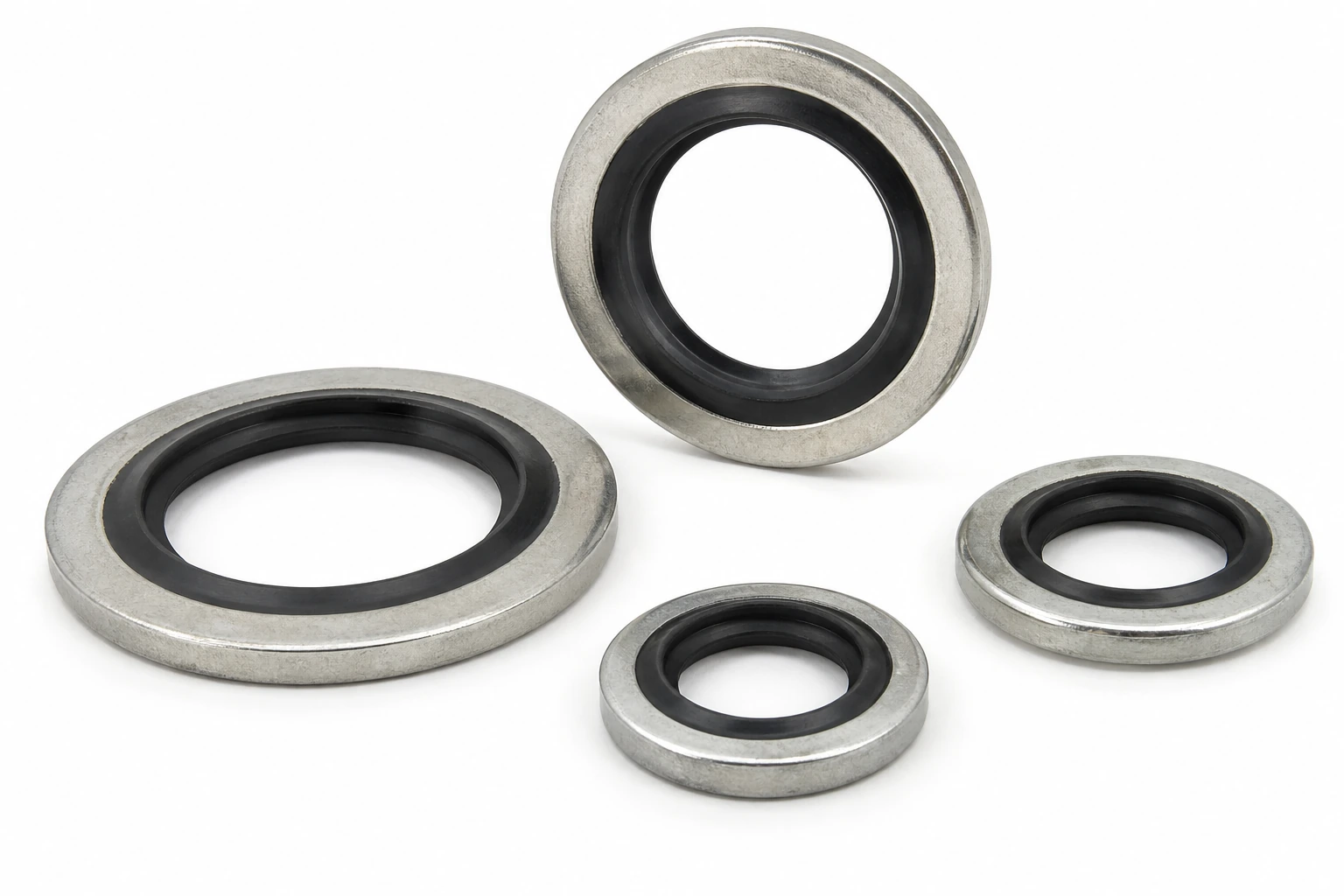
FKM (Viton®-type) USIT Rings (Self-Centring Bonded Seals) reference image

FKM (Viton®-type) USIT Rings (Self-Centring Bonded Seals) are supplied to our own published dimensions — this is a trade-series article rather than one covered by a dimensional standard, so confirm the figures against the part you are replacing. The grade provides excellent resistance to heat, fuels, and most chemicals; poor with ketones and hot water/steam and is non-magnetic; the practical service range is approx. -20 °C to +200 °C.

Why Choose FKM (Viton®-type) for USIT Rings (Self-Centring Bonded Seals)

Specified where temperature or chemical exposure exceeds nitrile. For usit rings (self-centring bonded seals), this matters when excellent resistance to heat, fuels, and most chemicals; poor with ketones and hot water/steam is the primary requirement.

Mechanical & Physical Properties

Grade designationfluoroelastomer, typically 75 Shore A
Magnetic responseNon-magnetic
Service temperatureapprox. -20 °C to +200 °C
Corrosion characteristicExcellent resistance to heat, fuels, and most chemicals; poor with ketones and hot water/steam

Galvanic & Galling Considerations

Galvanic and galling behavior do not apply to usit rings (self-centring bonded seals) in FKM (Viton®-type) — the relevant compatibility questions are chemical: confirm the elastomer against the fluid, the temperature and any cleaning agents in service, and check the gland or groove dimensions give the intended compression on the section.

Comparable Grades

For usit rings (self-centring bonded seals), consider NBR where the service is ordinary mineral oil and the cost matters, or EPDM for hot water and steam, which attacks FKM. Elastomer selection is decided by the medium, the temperature range and whether the seal is static or dynamic — not by strength.

Sizes of USIT Rings (Self-Centring Bonded Seals) Available in FKM (Viton®-type)

ThreadSeal elementMetal carrierTypical service
M6NBR inner lipzinc-plated steelhydraulic ports and plugs
M8NBR inner lipzinc-plated steelhydraulic ports and plugs
M10NBR inner lipzinc-plated steelhydraulic ports and plugs
M12NBR inner lipzinc-plated steelhydraulic ports and plugs
M14NBR or FKM inner lipzinc-plated or stainlesshydraulic and fuel
M16NBR or FKM inner lipzinc-plated or stainlesshydraulic and fuel
M18NBR or FKM inner lipzinc-plated or stainlesshydraulic
M20NBR or FKM inner lipzinc-plated or stainlesshydraulic
M22NBR inner lipzinc-plated steelhydraulic
M27NBR inner lipzinc-plated steelhydraulic

Dimensions are independent of the material: every size above is available in FKM (Viton®-type).

Custom manufacturing · Made to drawing

Need this seal in a grade that is not listed?

Fkm is one of the grades the catalog describes. Inside diameter, cross-section and compound are the three that matter, and the compound is chosen against the fluid and the temperature rather than the dimensions.

Minimum order from 2,000 pieces; samples within 7 days of drawing approval.
Custom seal manufacturingSend a drawing

Technical Drawing

Customize the parameters below — every spec field is editable, and the drawing redraws to match the values you choose. Changing the size will snap the other fields to that size's standard values; you can then override any individual value.

Dimensioned line drawing of M6 USIT Rings (Self-Centring Bonded Seals) to Trade series (self-centring bonded washers, USIT type). Side view and top view, drawn to the dimensions in the table below and redrawn for any size selected.
Seal element
NBR inner lip
Metal carrier
zinc-plated steel
Typical service
hydraulic ports and plugs
Sends the selected values to the quote form below.

Request a Quote

The form below follows the current technical drawing configuration. Change the drawing values above and the request details update automatically.

Request a Quotation

Specification
Business Information

Dimensions & Specifications (Trade series (self-centring bonded washers, USIT type))

ThreadSeal elementMetal carrierTypical service
M6NBR inner lipzinc-plated steelhydraulic ports and plugs
M8NBR inner lipzinc-plated steelhydraulic ports and plugs
M10NBR inner lipzinc-plated steelhydraulic ports and plugs
M12NBR inner lipzinc-plated steelhydraulic ports and plugs
M14NBR or FKM inner lipzinc-plated or stainlesshydraulic and fuel
M16NBR or FKM inner lipzinc-plated or stainlesshydraulic and fuel
M18NBR or FKM inner lipzinc-plated or stainlesshydraulic
M20NBR or FKM inner lipzinc-plated or stainlesshydraulic
M22NBR inner lipzinc-plated steelhydraulic
M27NBR inner lipzinc-plated steelhydraulic

Applications & Industries

USIT Rings are bought for a small number of well-defined jobs. These are the ones we ship them for. Stocked from M6 to M27.

Industries that specify USIT Rings

  • Machine tools Coolant and hydraulic ports.
  • Hydraulics Port plugs and fittings.
  • Mobile plant Vibration-prone joints.
  • Compressors Sealing under pressure cycling.
  • Process & food equipment Sealing at joints that are cleaned and inspected.
  • Hydraulics & pneumatics Static and dynamic sealing in cylinders and valve bodies.

Typical applications

  • seating the ring square before tightening
  • choosing the self-centring form where the seat is imperfect
  • matching the thread size exactly
  • selecting FKM where the fluid or temperature demands it
  • excluding dust and moisture from a housing
  • sealing a joint against fluid or air pressure

Service conditions to specify against

Sealed joints
Used where the fixing has to keep water or air out as well as hold — the elastomer, not the fastener, decides service life.

Where to use something else

  • Do not reuse a bonded or USIT seal after it has been compressed; the elastomer has taken a set and will not seal a second time.

Full application guide: where USIT Rings are used, how to specify them, and the cases they are wrong for

Inside the plant

Manufactured in our own plant

This part is cold-formed, threaded, heat-treated and finished in-house. The stages below are where its class and finish are actually decided.

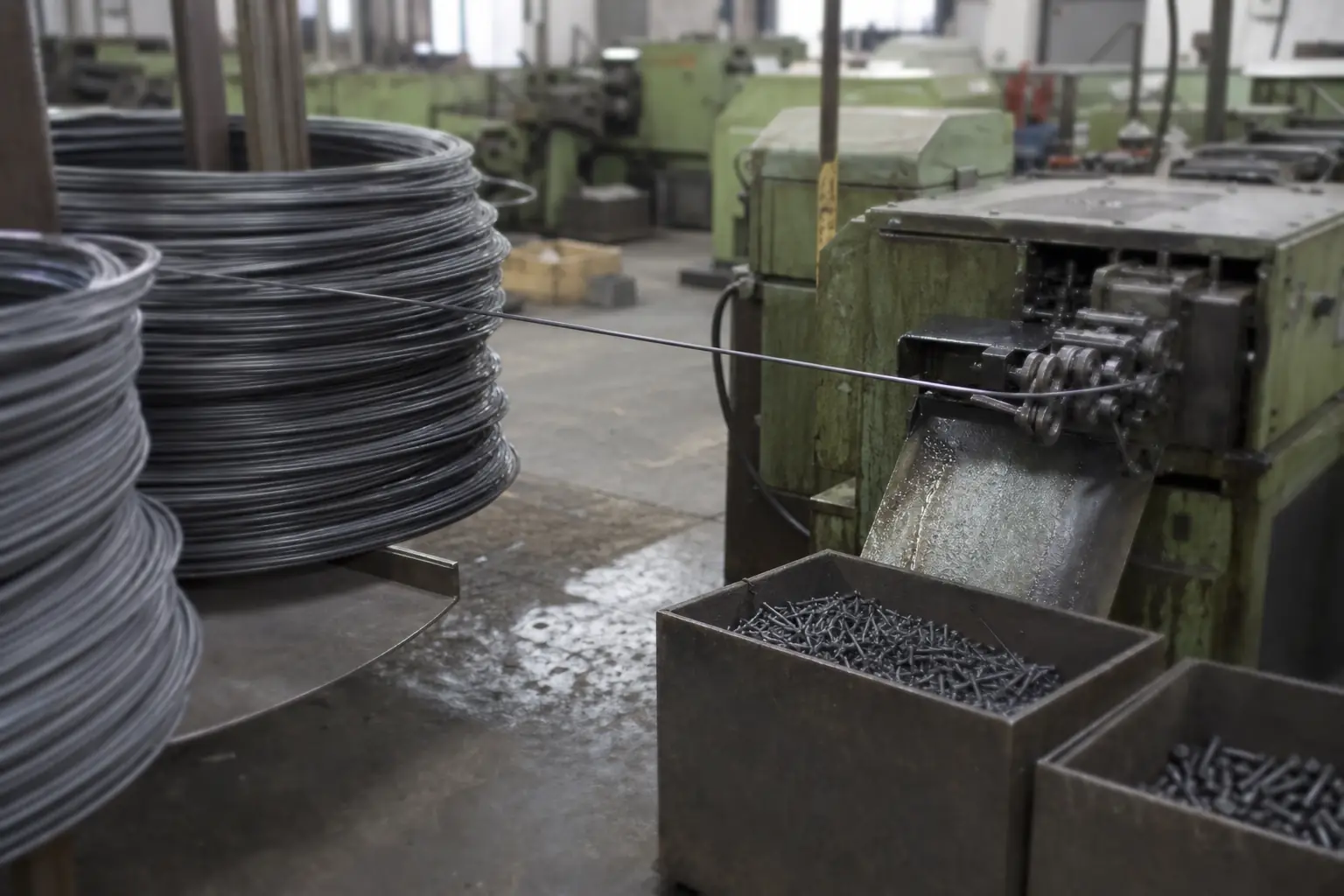
  1. Wire rod feeding into a cold heading machine
    01

    Cold heading

    Wire rod is drawn to size and cold-formed into blanks. Forming rather than cutting keeps the grain flow continuous around the head, which is where a bolt is most likely to fail.

    Head dimensions and under-head radius checked at set-up and per shift.

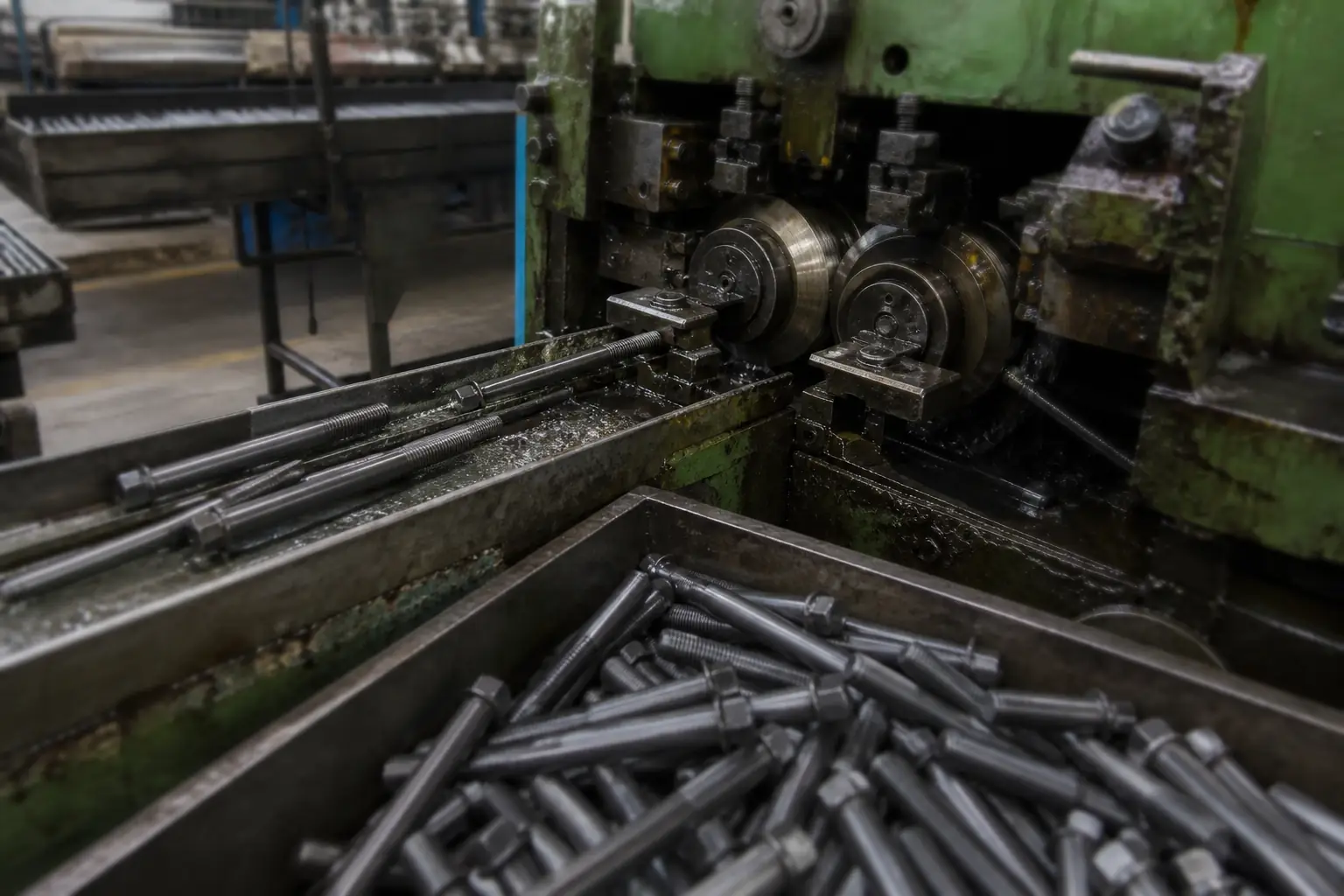
  2. Thread rolling machine producing bolt threads
    02

    Thread rolling

    Threads are rolled between hardened dies rather than cut. Rolled threads are stronger in fatigue than cut threads and hold pitch and flank angle far more consistently across a batch.

    Go / no-go ring gauges to ISO 965 tolerance class 6g.

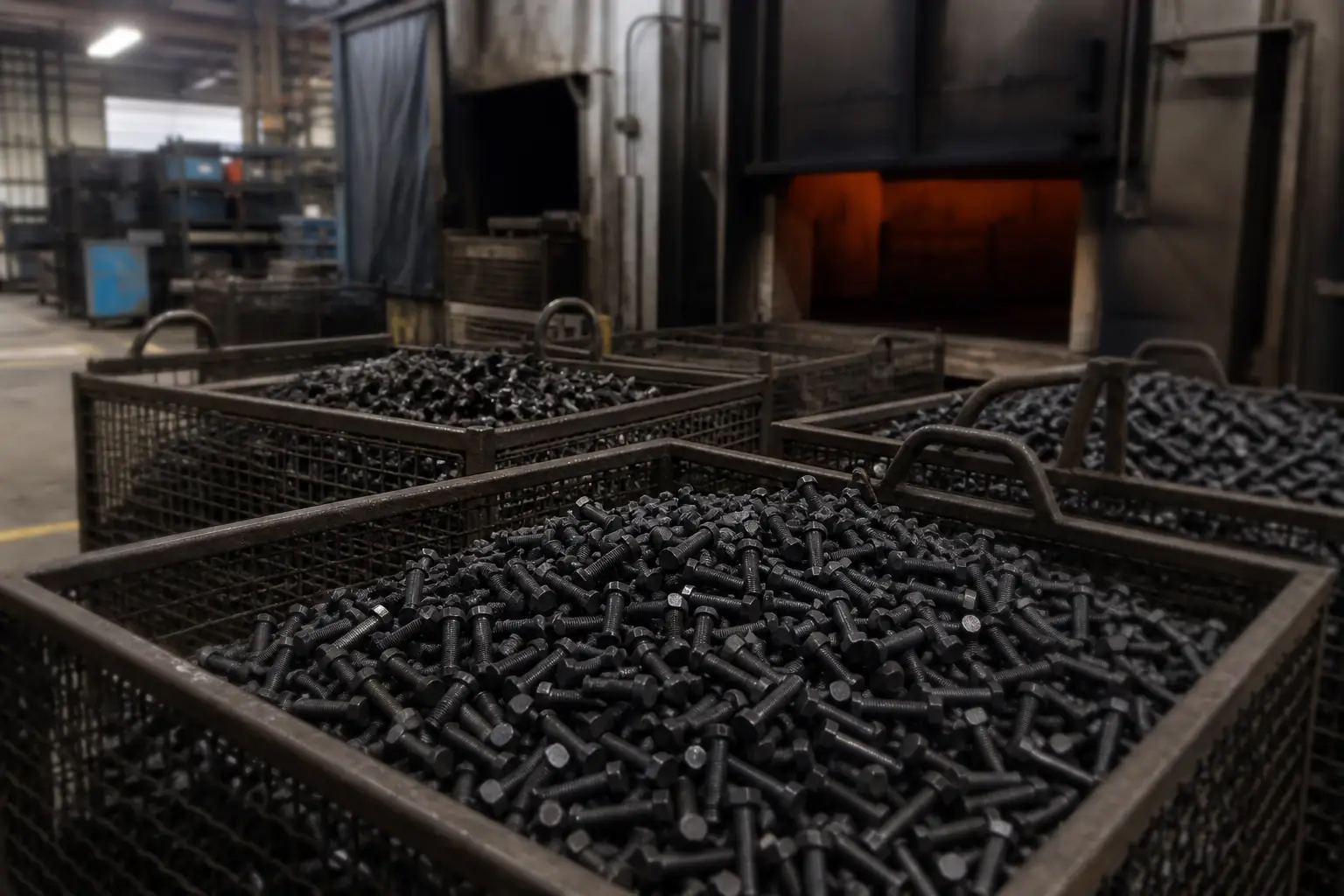
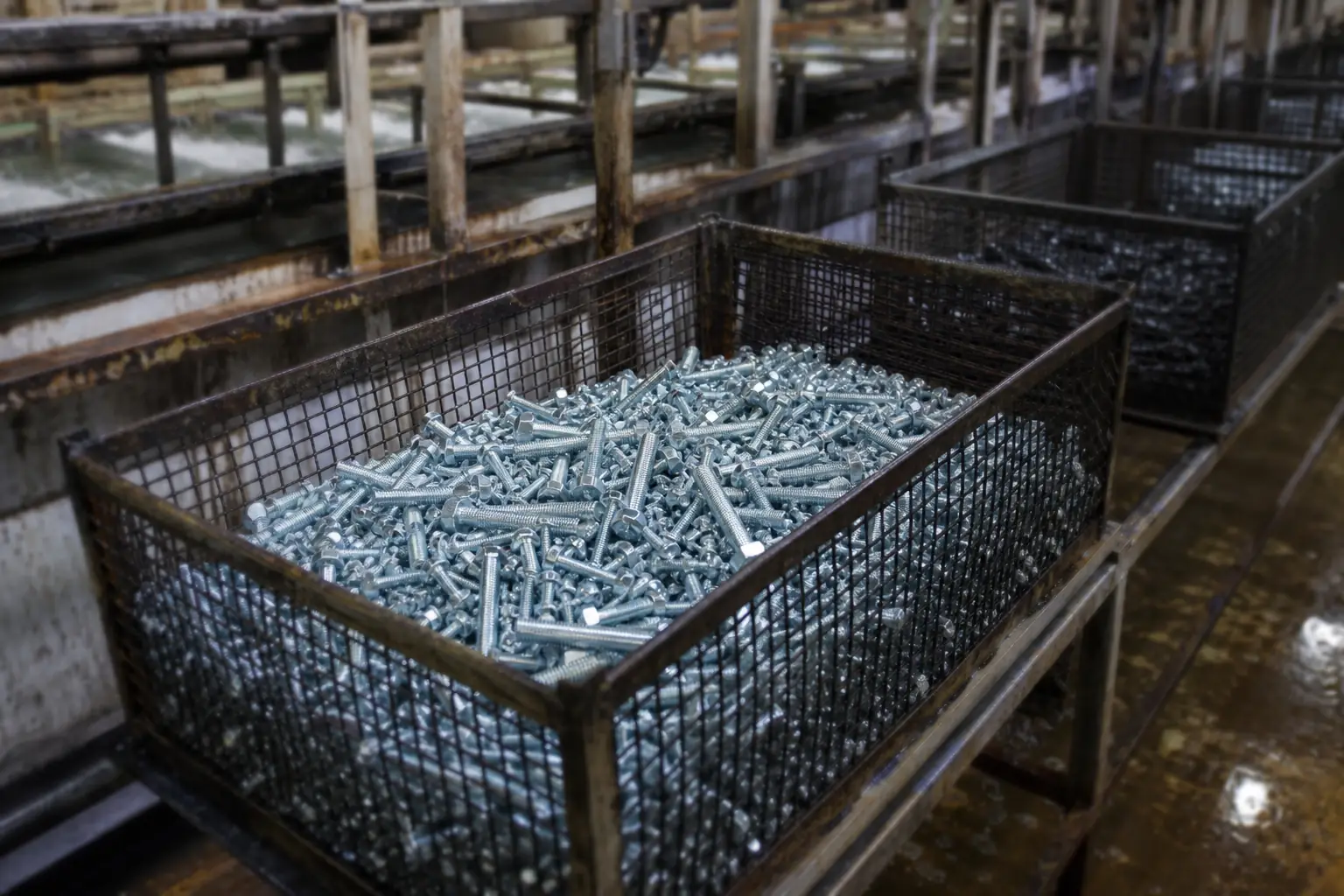
  3. Baskets of bolts staged for heat treatment
    03

    Heat treatment

    Quench-and-temper brings carbon and alloy steel to the property class ordered — 8.8, 10.9 or 12.9 — with the furnace charge tracked so a finished lot can be traced back to it.

    Core hardness and tensile tested per lot to ISO 898-1.

  4. Zinc plated bolts in a treatment basket
    04

    Surface treatment

    Zinc, zinc-nickel, hot-dip galvanizing, black oxide, phosphate and Dacromet, selected against the service environment rather than against the price list.

    Coating thickness and neutral salt spray hours to ISO 9227.

Frequently Asked Questions

What corrosion resistance do FKM (Viton®-type) USIT Rings (Self-Centring Bonded Seals) offer?

FKM (Viton®-type) USIT Rings (Self-Centring Bonded Seals) provide excellent resistance to heat, fuels, and most chemicals; poor with ketones and hot water/steam with a service range of approx. -20 °C to +200 °C.

Which media is FKM (Viton®-type) suitable for?

FKM (Viton®-type) suits fuels, mineral and synthetic oils, and most acids and solvents. It is the wrong choice for hot water and steam, ketones, esters and amines. Elastomer selection is decided by the fluid first, then the temperature, then whether the seal is static or dynamic.

What hardness are FKM (Viton®-type) USIT Rings (Self-Centring Bonded Seals) supplied in?

Shore A 70 is the general-purpose default. A softer compound (around 60) seals better on a rough or slightly out-of-round surface; a harder one (around 80 to 90) resists extrusion at higher pressure or across a wider gap. State the hardness on the order — it is not implied by the material.

Does FKM (Viton®-type) have a shelf life?

Yes. Elastomers age in storage as well as in service — keep them cool, dark, dry and away from ozone sources such as electric motors, and use stock in the order it arrived. PTFE is the exception and does not age this way.

How do I request a quotation?

Use the technical drawing on this page to pick the exact configuration, then submit it with the quote form. We respond within one business day.