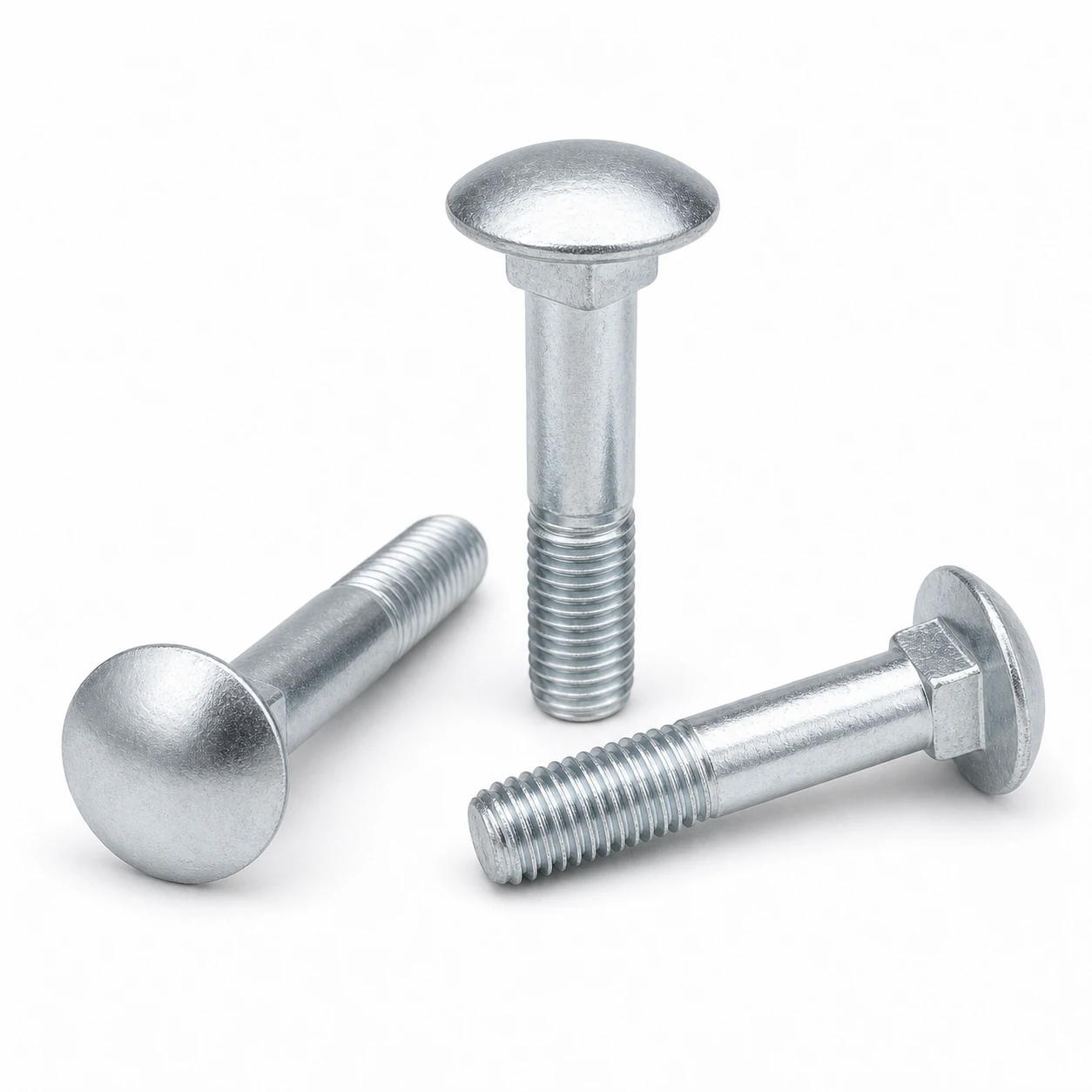
Material specification page for carriage bolts in Property Class 12.9 Steel. Covers the grade designation (ISO 898-1 property class 12.9), corrosion and magnetic behavior, comparable grades and their trade-offs, and the sizes available to DIN 603.
Why Choose Property Class 12.9 Steel for Carriage Bolts
The highest common strength class, for high-load machine assembly. For carriage bolts, this matters when requires plating or black-oxide protection is the primary requirement.
Mechanical & Physical Properties
| Grade designation | ISO 898-1 property class 12.9 |
|---|---|
| Magnetic response | Magnetic |
| Service temperature | commonly limited to approx. +300 °C; confirm against the coating and the load |
| Corrosion characteristic | Requires plating or black-oxide protection |
Corrosion Behavior in Service
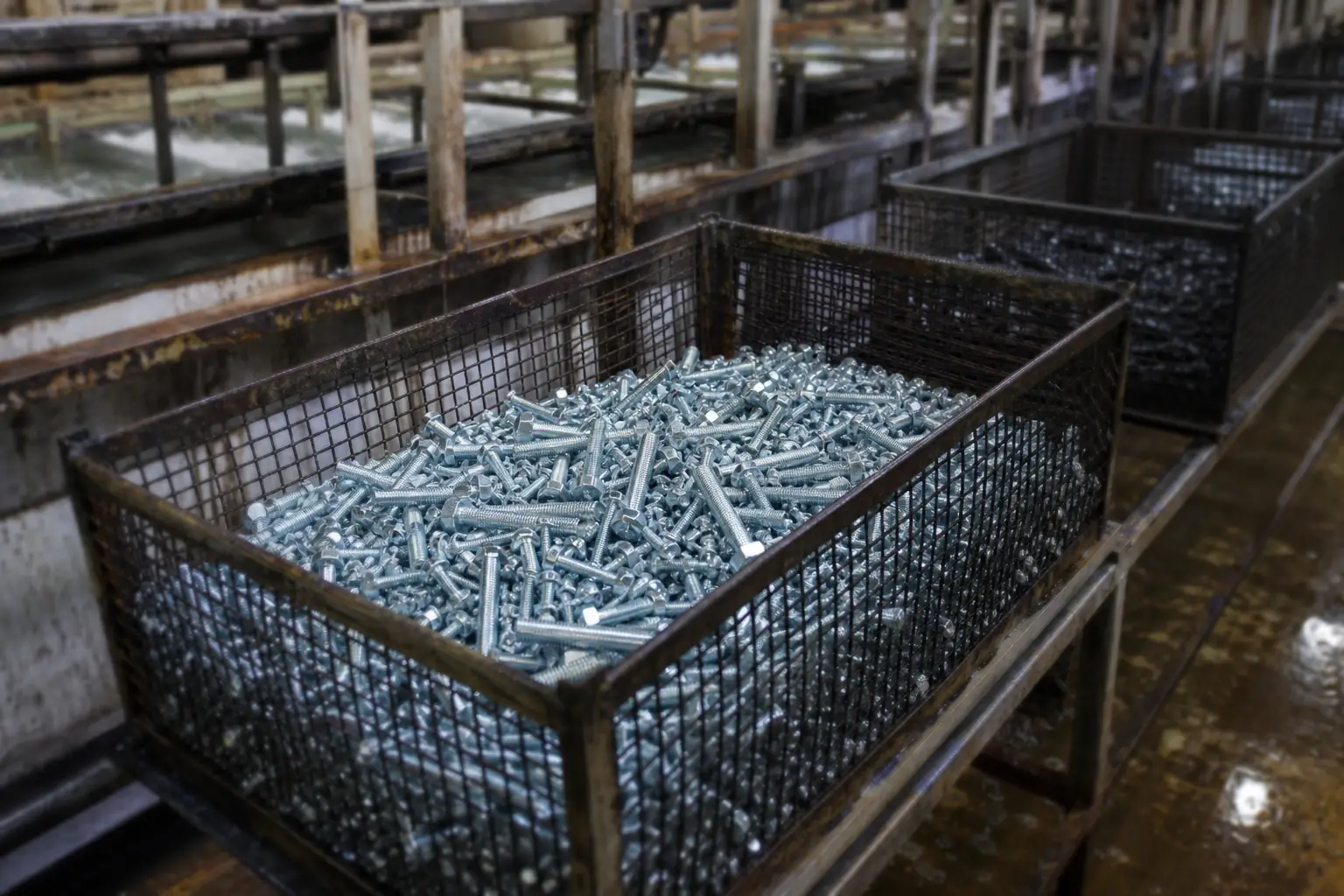
Carbon and alloy steel carriage bolts require a coating for corrosion protection. Zinc plating (with or without passivation) is the most common; hot-dip galvanizing is used for outdoor structural service; black-oxide is mainly a tarnish-prevention finish for tool-room use.
Comparable Grades
For Carriage Bolts, class 8.8 is the comparable strength step. Move up when the joint preload approaches the proof load of the current class; move down when the joint is over-specified. For corrosion-critical service, switch to stainless A2 or A4.
Sizes of Carriage Bolts Available in Property Class 12.9 Steel
| Size | Pitch (mm) | Head diameter dk (mm) | Head height k (mm) | Square neck width (mm) | Square neck depth (mm) | Common length range (mm) | Reference standard |
|---|---|---|---|---|---|---|---|
| M5 | 0.8 | 13.0 | 3.0 | 5.0 | 2.5 | 16~80 | DIN 603 / ISO 8677 |
| M6 | 1.0 | 16.0 | 3.5 | 6.0 | 3.0 | 16~120 | DIN 603 / ISO 8677 |
| M8 | 1.25 | 20.0 | 4.5 | 8.0 | 4.0 | 20~160 | DIN 603 / ISO 8677 |
| M10 | 1.5 | 25.0 | 5.5 | 10.0 | 5.0 | 25~200 | DIN 603 / ISO 8677 |
| M12 | 1.75 | 30.0 | 7.0 | 12.0 | 6.0 | 30~240 | DIN 603 / ISO 8677 |
| M14 | 2.0 | 35.0 | 8.0 | 14.0 | 7.0 | 40~260 | DIN 603 / ISO 8677 |
| M16 | 2.0 | 40.0 | 9.0 | 16.0 | 8.0 | 40~300 | DIN 603 / ISO 8677 |
| M20 | 2.5 | 50.0 | 11.0 | 20.0 | 10.0 | 50~300 | DIN 603 / ISO 8677 |
Dimensions are independent of the material: every size above is available in Property Class 12.9 Steel.
Custom manufacturing · Made to drawing
Need this bolt in a grade that is not listed?
Grade 12 9 Steel is one of the grades the catalog describes. A non-standard bolt is quoted from the drawing; where one already exists in the catalog, the special is usually a variation on its tooling. Made by cold heading or hot forging.
Minimum order from 2,000 pieces; samples within 7 days of drawing approval.