Skip to content
Seals · ISO / DIN

Silicone (VMQ) O-Ring Seal

Temperature range, chemical and fluid compatibility, hardness and the full dimensional range for this compound.

Silicone (VMQ) O-Ring Seal are supplied to vinyl-methyl silicone, typically 70 Shore A. Corrosion behaviour is inert and physiologically neutral; low tear and abrasion strength, the material is non-magnetic, and the usable service range is approx. -60 °C to +200 °C. In practice this grade is used for wide temperature range and food/medical contact, in static seals only.

Grade
vinyl-methyl silicone, typically 70 Shore A
Corrosion resistance
Inert and physiologically neutral; low tear and abrasion strength
Magnetic response
Non-magnetic
Service temperature
approx. -60 °C to +200 °C

Property values are typical for the grade. Certified mechanical test data is available on request for production orders.

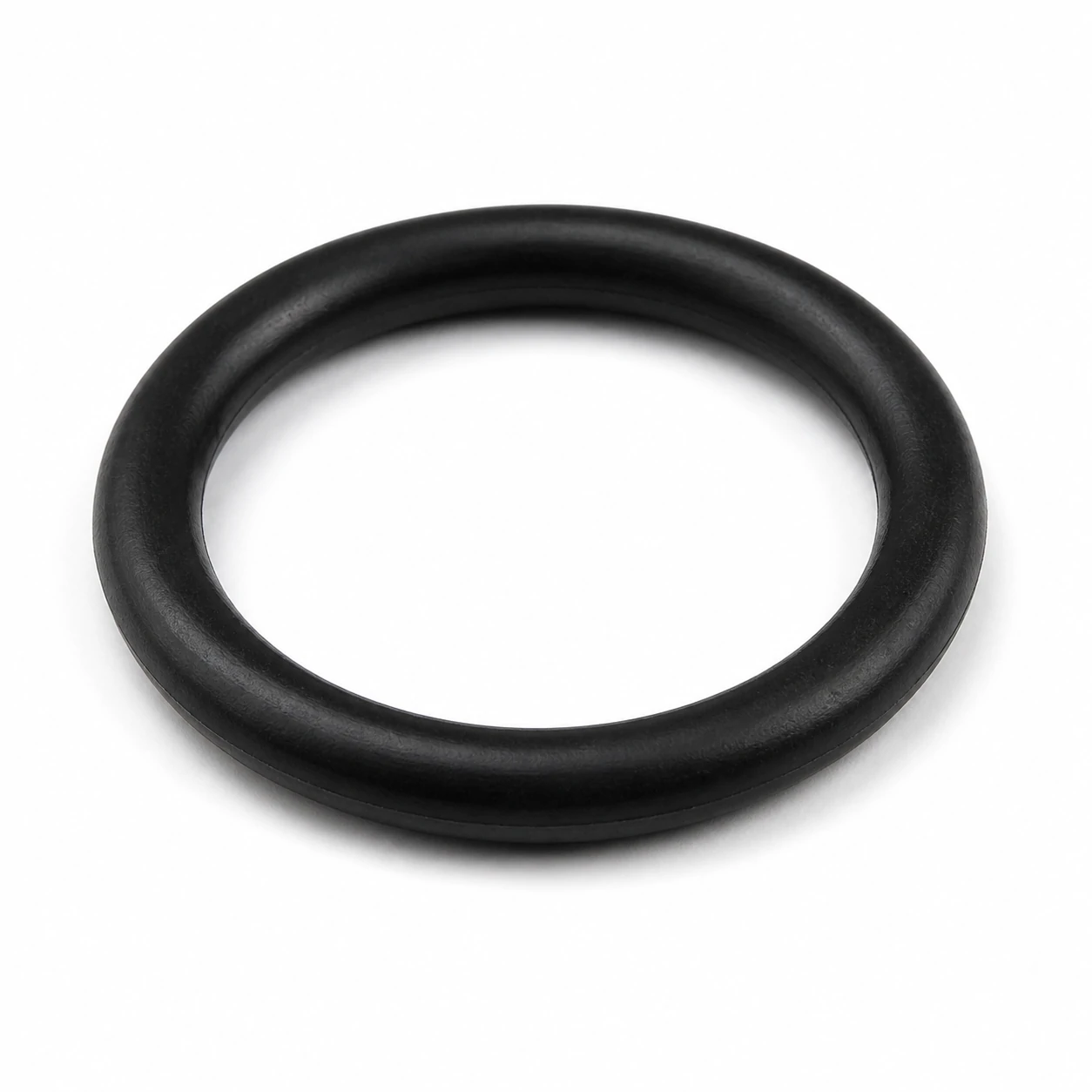
Silicone (VMQ) O-Ring Seal reference image

Material page for o-ring seal in Silicone (VMQ) (vinyl-methyl silicone, typically 70 Shore A). The sizes below are the ones we supply; there is no published dimensional standard for this article, so the table rather than a standard number is what to quote. Corrosion behaviour is inert and physiologically neutral; low tear and abrasion strength and the service range is approx. -60 °C to +200 °C.

Why Choose Silicone (VMQ) for O-Ring Seal — ISO / DIN (Series 159)

Used for wide temperature range and food/medical contact, in static seals only. For o-ring seal — iso / din (series 159), this matters when inert and physiologically neutral; low tear and abrasion strength is the primary requirement.

Mechanical & Physical Properties

Grade designationvinyl-methyl silicone, typically 70 Shore A
Magnetic responseNon-magnetic
Service temperatureapprox. -60 °C to +200 °C
Corrosion characteristicInert and physiologically neutral; low tear and abrasion strength

Corrosion Behavior in Service

Carbon and alloy steel o-ring seal — iso / din (series 159) require a coating for corrosion protection. Zinc plating (with or without passivation) is the most common; hot-dip galvanizing is used for outdoor structural service; black-oxide is mainly a tarnish-prevention finish for tool-room use.

Comparable Grades

For o-ring seal — iso / din (series 159), consider NBR or FKM wherever the seal is dynamic — silicone has low tear and abrasion strength and is a static-seal material. Elastomer selection is decided by the medium, the temperature range and whether the seal is static or dynamic — not by strength.

Sizes of O-Ring Seal — ISO / DIN (Series 159) Available in Silicone (VMQ)

Inner diameter d1 (mm)Outer diameter d2 (mm)Wire dia (mm)Working temp rangeReference standard
592-30 to +110 CISO 3601 / GB/T 3452
8122-30 to +110 CISO 3601 / GB/T 3452
10163-30 to +110 CISO 3601 / GB/T 3452
15213-30 to +110 CISO 3601 / GB/T 3452
20263-30 to +110 CISO 3601 / GB/T 3452
25334-30 to +110 CISO 3601 / GB/T 3452
30384-30 to +110 CISO 3601 / GB/T 3452
40505-30 to +110 CISO 3601 / GB/T 3452
50605-30 to +110 CISO 3601 / GB/T 3452
60726-30 to +110 CISO 3601 / GB/T 3452
80926-30 to +110 CISO 3601 / GB/T 3452
1001147-30 to +110 CISO 3601 / GB/T 3452

Dimensions are independent of the material: the table above lists the sizes supplied, and on this page every one of them is quoted in Silicone (VMQ). The catalogue's default material column has been omitted here so it cannot be read as contradicting that.

Custom manufacturing · Made to drawing

Need this seal in a grade that is not listed?

Silicone is one of the grades the catalog describes. Inside diameter, cross-section and compound are the three that matter, and the compound is chosen against the fluid and the temperature rather than the dimensions.

Minimum order from 2,000 pieces; samples within 7 days of drawing approval.
Custom seal manufacturingSend a drawing

Technical Drawing

Customize the parameters below — every spec field is editable, and the drawing redraws to match the values you choose. Changing the size will snap the other fields to that size's standard values; you can then override any individual value.

Dimensioned line drawing of 5 O-Ring Seal — ISO / DIN (Series 159). Side view and top view, drawn to the dimensions in the table below and redrawn for any size selected.
Outer diameter d2 (mm)
9
Wire dia (mm)
2
Material
NBR 70
Working temp range
-30 to +110 C
Opens a short step to confirm the exact specification before you enter contact details.

Request a Quote

Click “Request this configuration” under the drawing to confirm the exact specification, then add your contact details. You can also send the request without a specification — but only an accurate selection gets an accurate quote.

Request a Quotation

Specification
Business Information

Dimensions & Specifications (ISO / DIN)

Inner diameter d1 (mm)Outer diameter d2 (mm)Wire dia (mm)MaterialWorking temp rangeReference standard
592NBR 70-30 to +110 CISO 3601 / GB/T 3452
8122NBR 70-30 to +110 CISO 3601 / GB/T 3452
10163NBR 70-30 to +110 CISO 3601 / GB/T 3452
15213NBR 70-30 to +110 CISO 3601 / GB/T 3452
20263NBR 70-30 to +110 CISO 3601 / GB/T 3452
25334NBR 70-30 to +110 CISO 3601 / GB/T 3452
30384NBR 70-30 to +110 CISO 3601 / GB/T 3452
40505NBR 70-30 to +110 CISO 3601 / GB/T 3452
50605NBR 70-30 to +110 CISO 3601 / GB/T 3452
60726NBR 70-30 to +110 CISO 3601 / GB/T 3452
80926NBR 70-30 to +110 CISO 3601 / GB/T 3452
1001147NBR 70-30 to +110 CISO 3601 / GB/T 3452

Applications & Industries

O-Ring Seal are bought for a small number of well-defined jobs. These are the ones we ship them for. Stocked from 5 to 100 (inside diameter).

Industries that specify O-Ring Seal

  • Process & food equipment Sealing at joints that are cleaned and inspected.
  • Hydraulics & pneumatics Static and dynamic sealing in cylinders and valve bodies.

Typical applications

  • excluding dust and moisture from a housing
  • sealing a joint against fluid or air pressure

Service conditions to specify against

Sealed joints
Used where the fixing has to keep water or air out as well as hold — the elastomer, not the fastener, decides service life.

Full application guide: where O-Ring Seal are used, how to specify them, and the cases they are wrong for

Video: Silicone (VMQ) O-Ring Seal

Third-party video, selected automatically for this topic. It is not produced by Engineering Hardware and is not a specification source — use the tables on this page for dimensional data.

Inside the plant

Manufactured in our own plant

This part is cold-formed, threaded, heat-treated and finished in-house. The stages below are where its class and finish are actually decided.

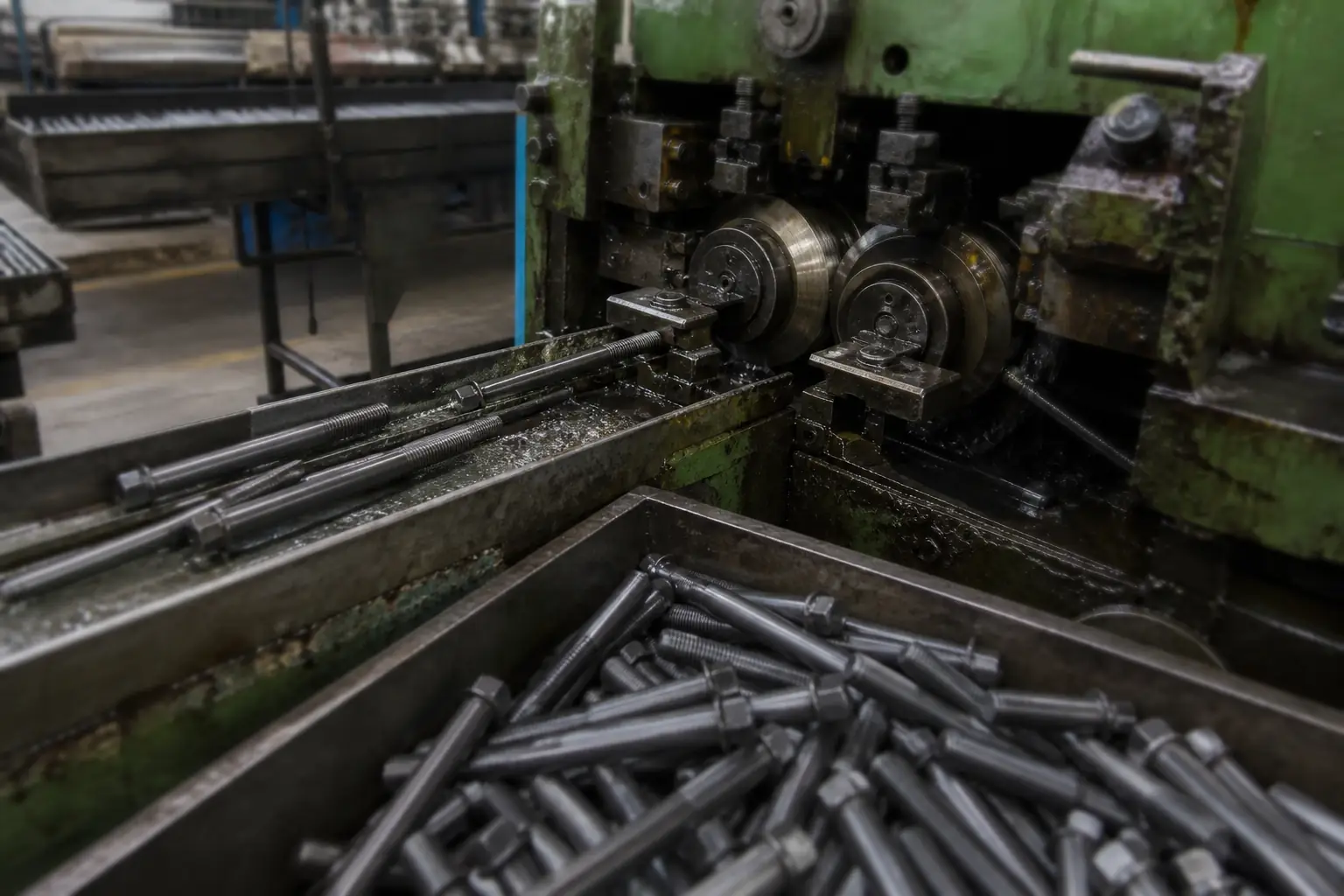
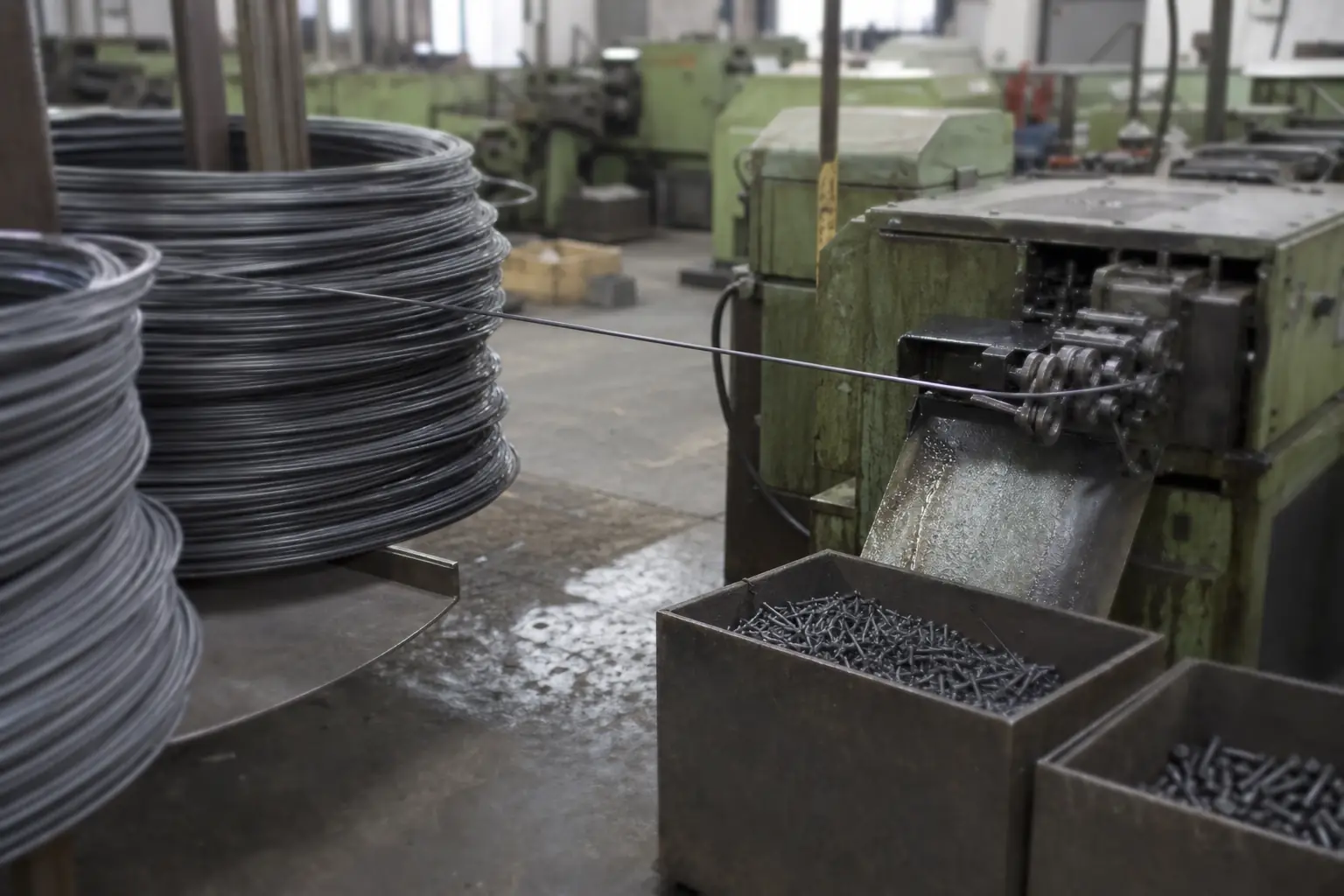
  1. Wire rod feeding into a cold heading machine
    01

    Cold heading

    Wire rod is drawn to size and cold-formed into blanks. Forming rather than cutting keeps the grain flow continuous around the head, which is where a bolt is most likely to fail.

    Head dimensions and under-head radius checked at set-up and per shift.

  2. Thread rolling machine producing bolt threads
    02

    Thread rolling

    Threads are rolled between hardened dies rather than cut. Rolled threads are stronger in fatigue than cut threads and hold pitch and flank angle far more consistently across a batch.

    Go / no-go ring gauges to ISO 965 tolerance class 6g.

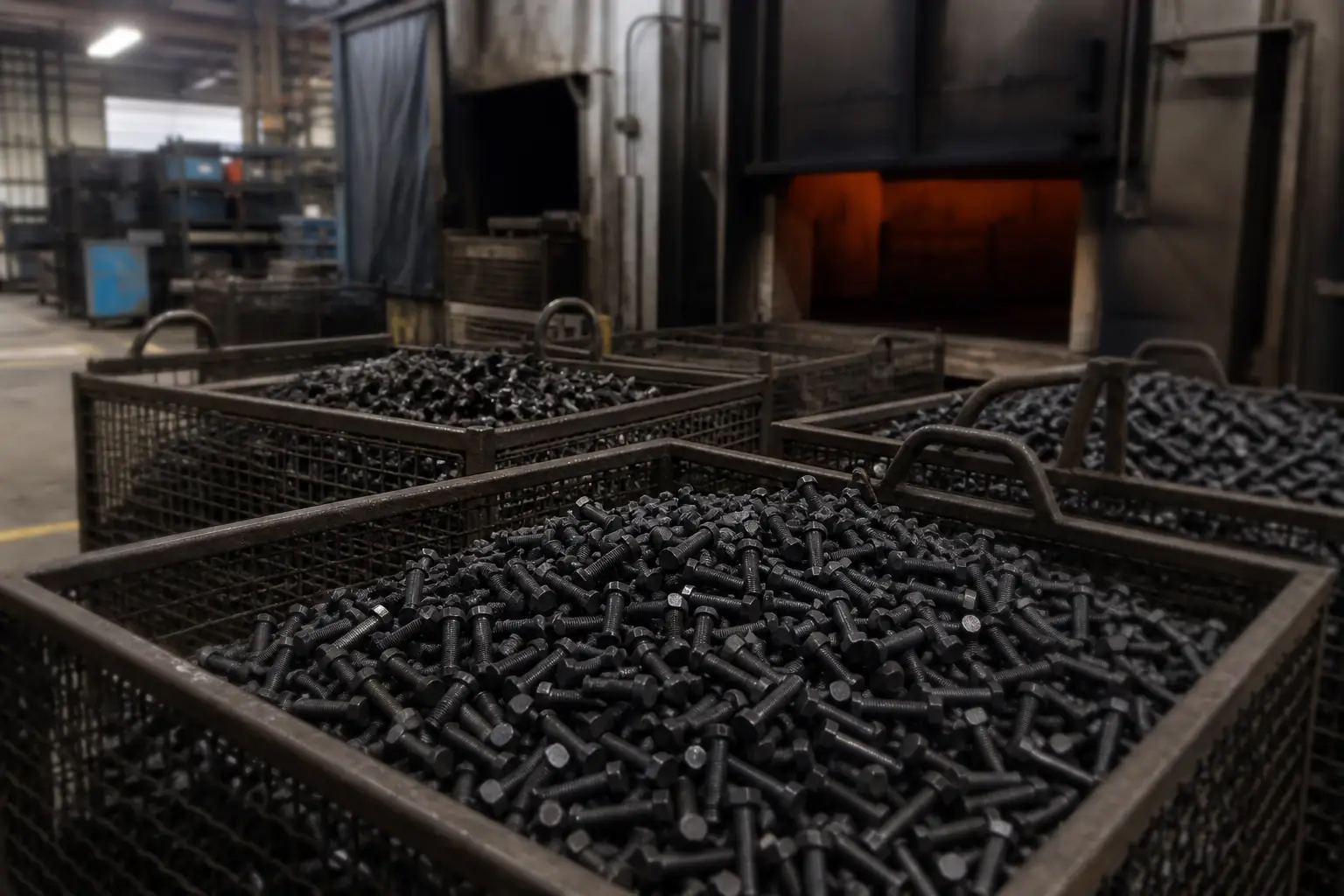
  3. Baskets of bolts staged for heat treatment
    03

    Heat treatment

    Quench-and-temper brings carbon and alloy steel to the property class ordered — 8.8, 10.9 or 12.9 — with the furnace charge tracked so a finished lot can be traced back to it.

    Core hardness and tensile tested per lot to ISO 898-1.

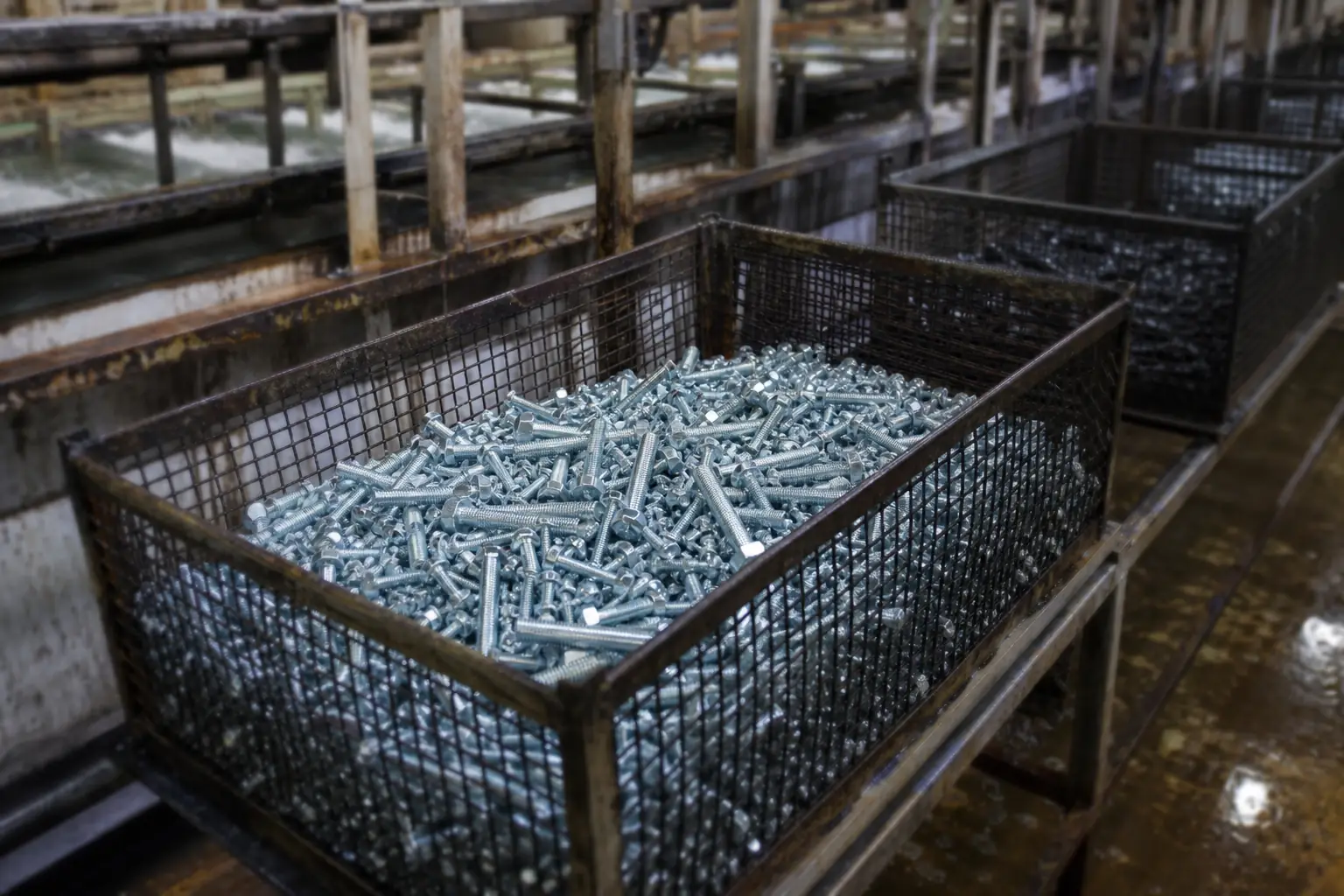
  4. Zinc plated bolts in a treatment basket
    04

    Surface treatment

    Zinc, zinc-nickel, hot-dip galvanizing, black oxide, phosphate and Dacromet, selected against the service environment rather than against the price list.

    Coating thickness and neutral salt spray hours to ISO 9227.

Frequently Asked Questions

What hardness are Silicone (VMQ) O-Ring Seal — ISO / DIN (Series 159) supplied in?

Shore A 70 is the general-purpose default. A softer compound (around 60) seals better on a rough or slightly out-of-round surface; a harder one (around 80 to 90) resists extrusion at higher pressure or across a wider gap. State the hardness on the order — it is not implied by the material.

Does Silicone (VMQ) have a shelf life?

Yes. Elastomers age in storage as well as in service — keep them cool, dark, dry and away from ozone sources such as electric motors, and use stock in the order it arrived. PTFE is the exception and does not age this way.

How much compression should Silicone (VMQ) o-ring seal — iso / din (series 159) see?

The groove or gland decides it, not the seal: a static radial seal is normally designed for roughly 15–30% compression on the section, and a dynamic one for less. Give us the groove dimensions and the pressure and we will confirm the section against them.

What's the service temperature limit for Silicone (VMQ)?

The practical service range is approx. -60 °C to +200 °C.

How do I request a quotation?

Use the technical drawing on this page to pick the exact configuration, then submit it with the quote form. We respond within one business day.