
The M16 size of Countersunk Socket Screws is dimensioned by ISO 10642 / DIN 7991. The tables below give the dimensional row from the standard, the drill and spanner sizes that go with it, and the assembly torque per property class. The technical drawing on this page redraws to the exact values selected.
M16 Dimensional Row (ISO 10642 / DIN 7991)
| Size | Pitch (mm) | Head diameter dk (mm) | Head height k (mm) | Hex key s (mm) | Countersink angle (deg) | Reference standard |
|---|---|---|---|---|---|---|
| M16 | 2.0 | 33.6 | 9.3 | 10.0 | 90 | ISO 10642 / DIN 7991 |
Spanner & Drive for M16 Countersunk Socket Screws
The hex socket for M16 Countersunk Socket Screws is shown in the spec table — use the matching Allen / hex key (an ISO 2936 hex key set covers the full range). For a one-off, a T-handle key and a calibrated arm will do. For a batch, the only way to get the same preload twice is a torque-controlled driver.
Hole Sizes for M16
| Coarse-thread pitch (ISO 724) | 2 mm |
|---|---|
| Through-hole / clearance (ISO 273 medium) | 17.5 mm |
| Tapping drill, coarse thread | 14 mm |
Tightening Torque for M16
| Class 8.8 (dry, ~µ 0.125) | ≈ 209 Nm |
|---|---|
| Class 10.9 (dry, ~µ 0.125) | ≈ 306 Nm |
| Class 12.9 (dry, ~µ 0.125) | ≈ 358 Nm |
Indicative dry-joint values. Lubrication can lower the required torque by 15–25%. Always confirm against the joint design, especially when going up a strength class.
Proof Load & Strength for M16
| Tensile stress area As (ISO 724) | 157 mm² |
|---|---|
| Proof load, class 8.8 | 91 kN |
| Proof load, class 10.9 | 130 kN |
| Proof load, class 12.9 | 152 kN |
| Min. ultimate tensile load, class 8.8 | 125 kN |
Proof load = tensile stress area × the proof stress Sp of the class, per ISO 898-1 — Sp is a lower figure than the yield stress Rp0.2 and the two are not interchangeable. The stress area is computed from this size's own diameter and pitch, so a fine-pitch designation gives the fine-pitch figure. Design the joint so the working preload stays below the proof load of the class selected.
Installation Tips for M16 Countersunk Socket Screws
- Use a quality Allen key fully seated in the socket — partial engagement is the most common cause of stripped sockets at this size.
- For countersunk and button-head variants, chamfer the through-hole to seat the head flush without preloading the head/shank fillet.
When to Step Up or Down from M16
When the joint preload approaches the proof load of M16 class 8.8, step up to M20 class 8.8 (or move to M16 class 10.9). When the joint is over-specified, M12 often saves weight and cost without losing the safety margin.
Custom manufacturing · Made to drawing
Need countersunk socket screws in a size this table does not list?
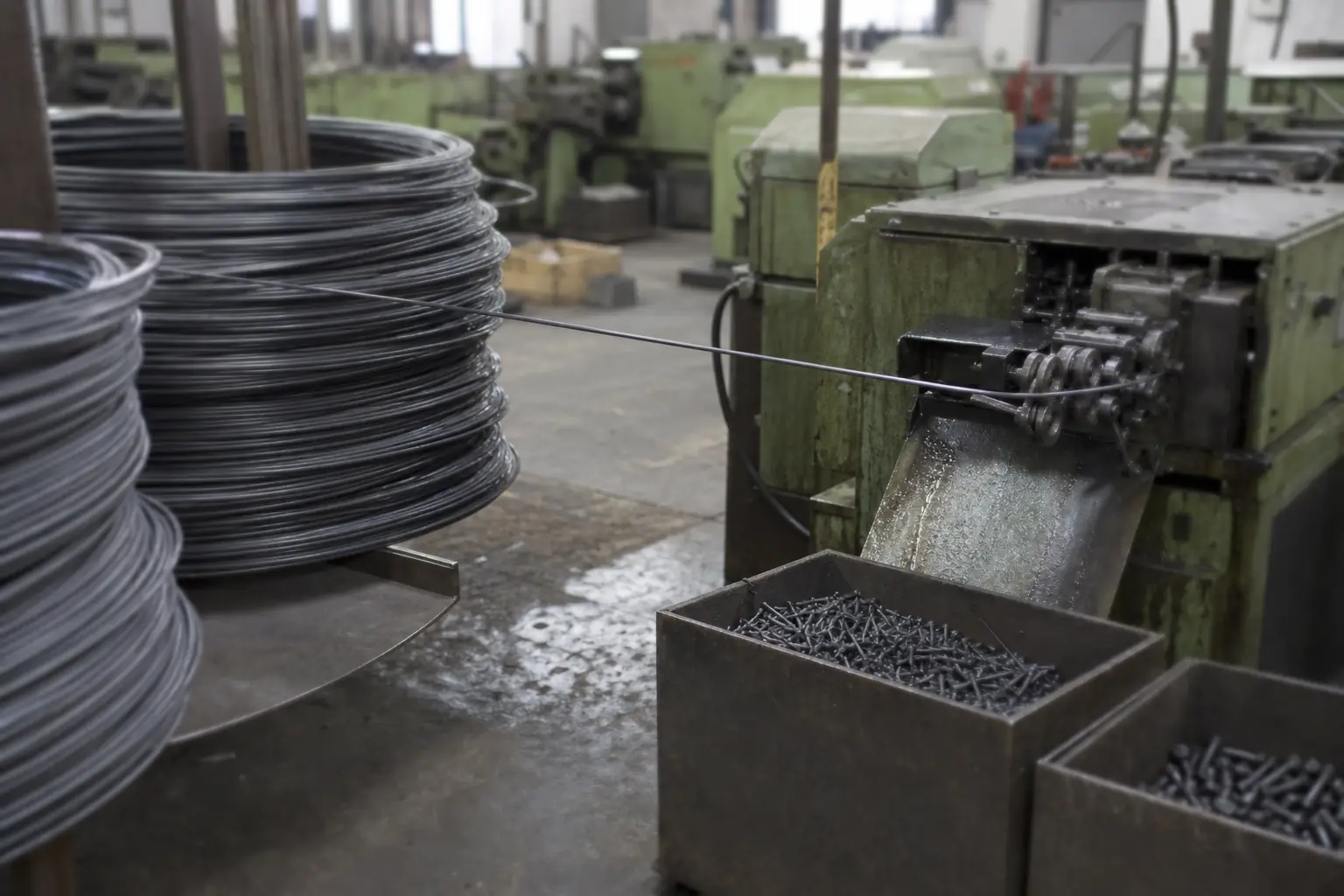
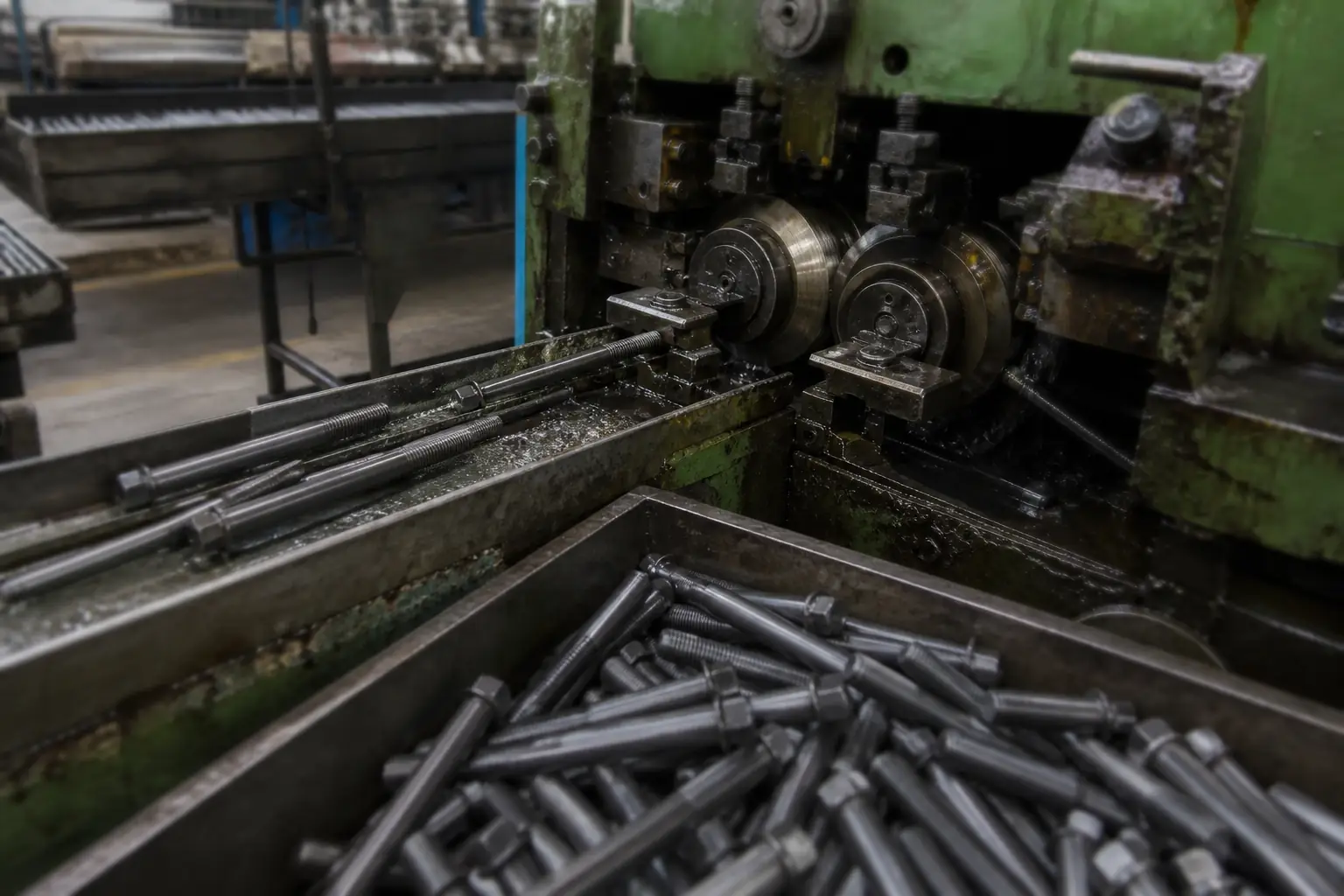
This page covers M16 countersunk socket screws. Head form and drive can be specified to the assembly rather than to a standard: a larger bearing face, a security drive, or a socket sized for the tool already on the bench. Made by cold heading or warm forging.
Minimum order from 2,000 pieces; samples within 7 days of drawing approval.