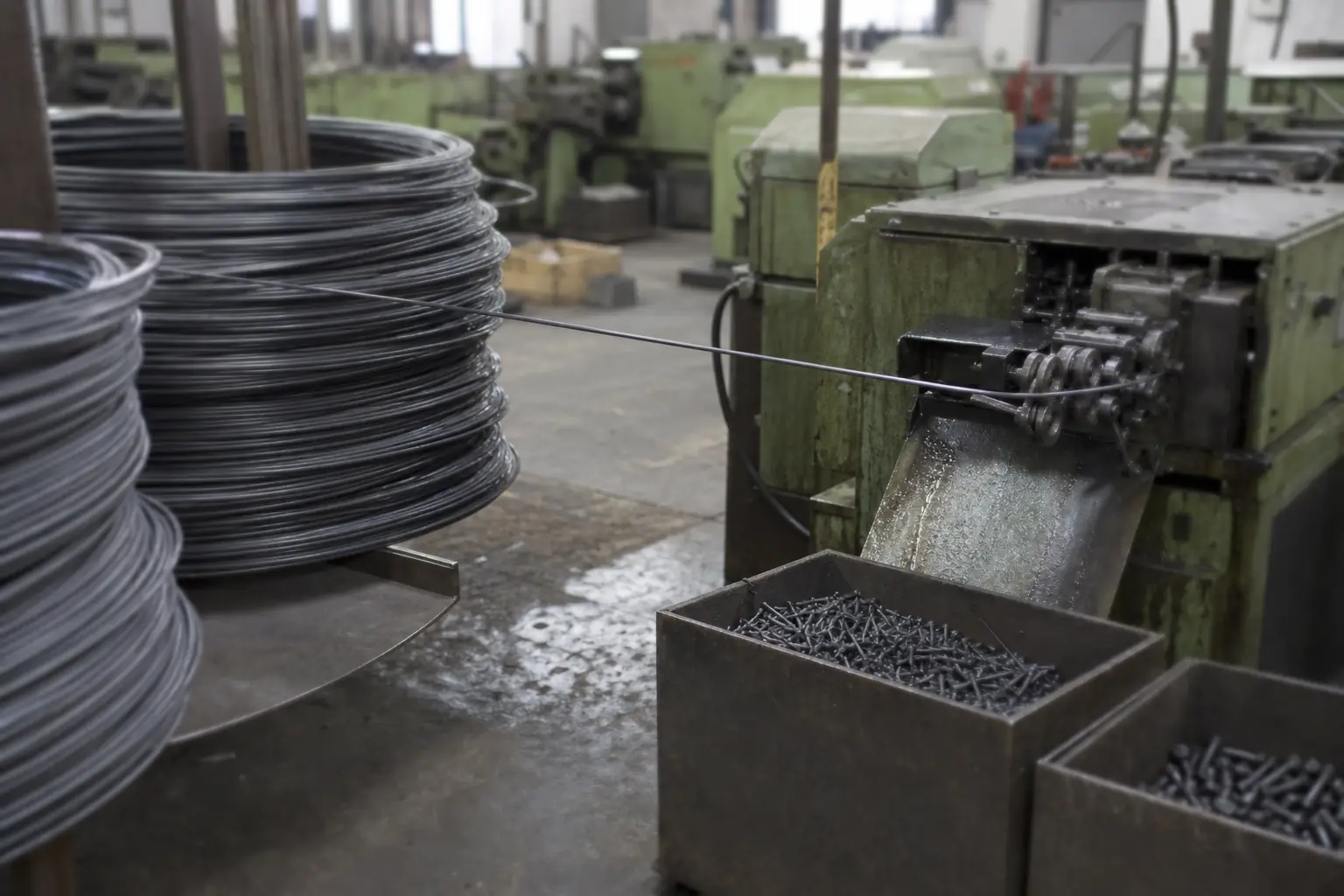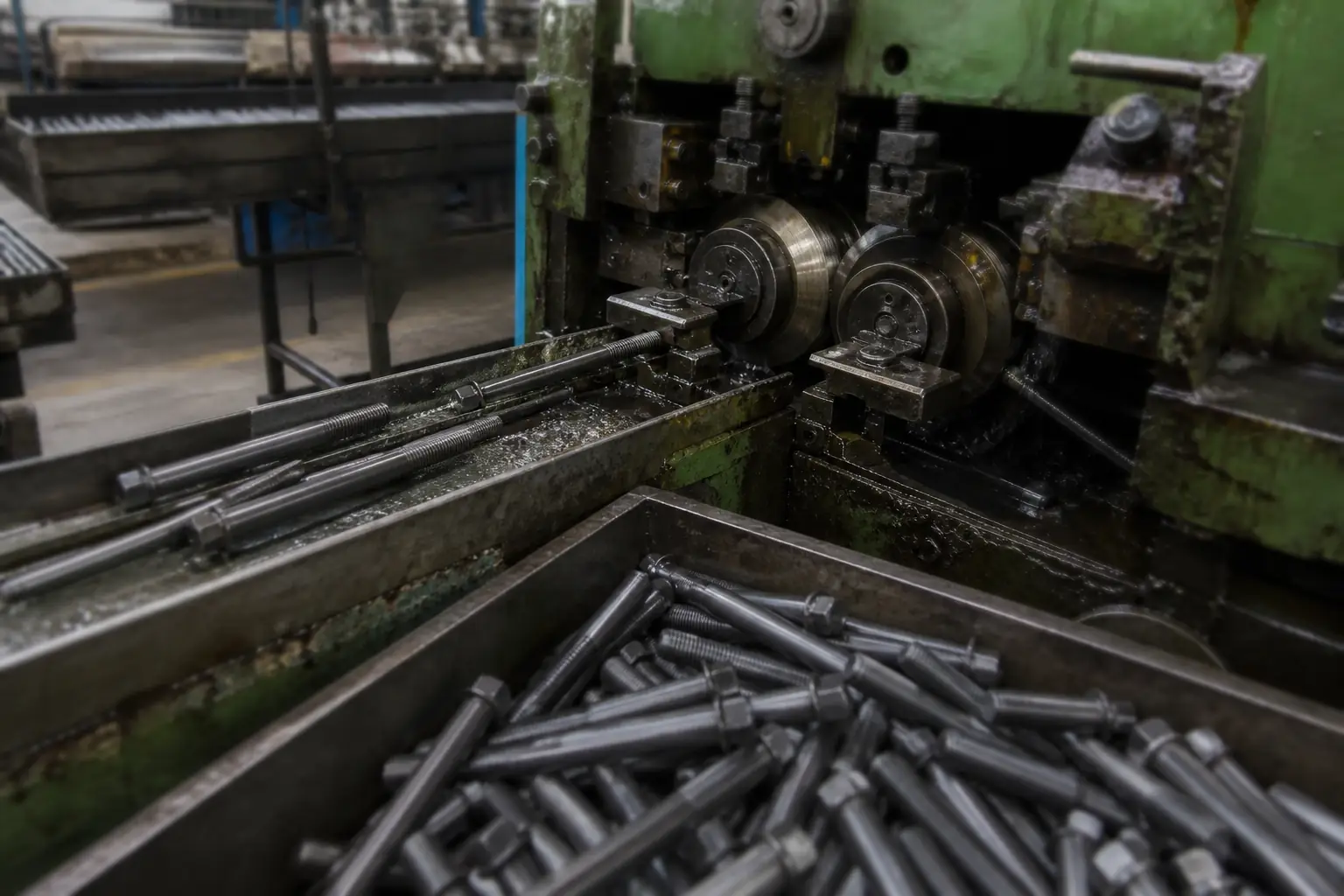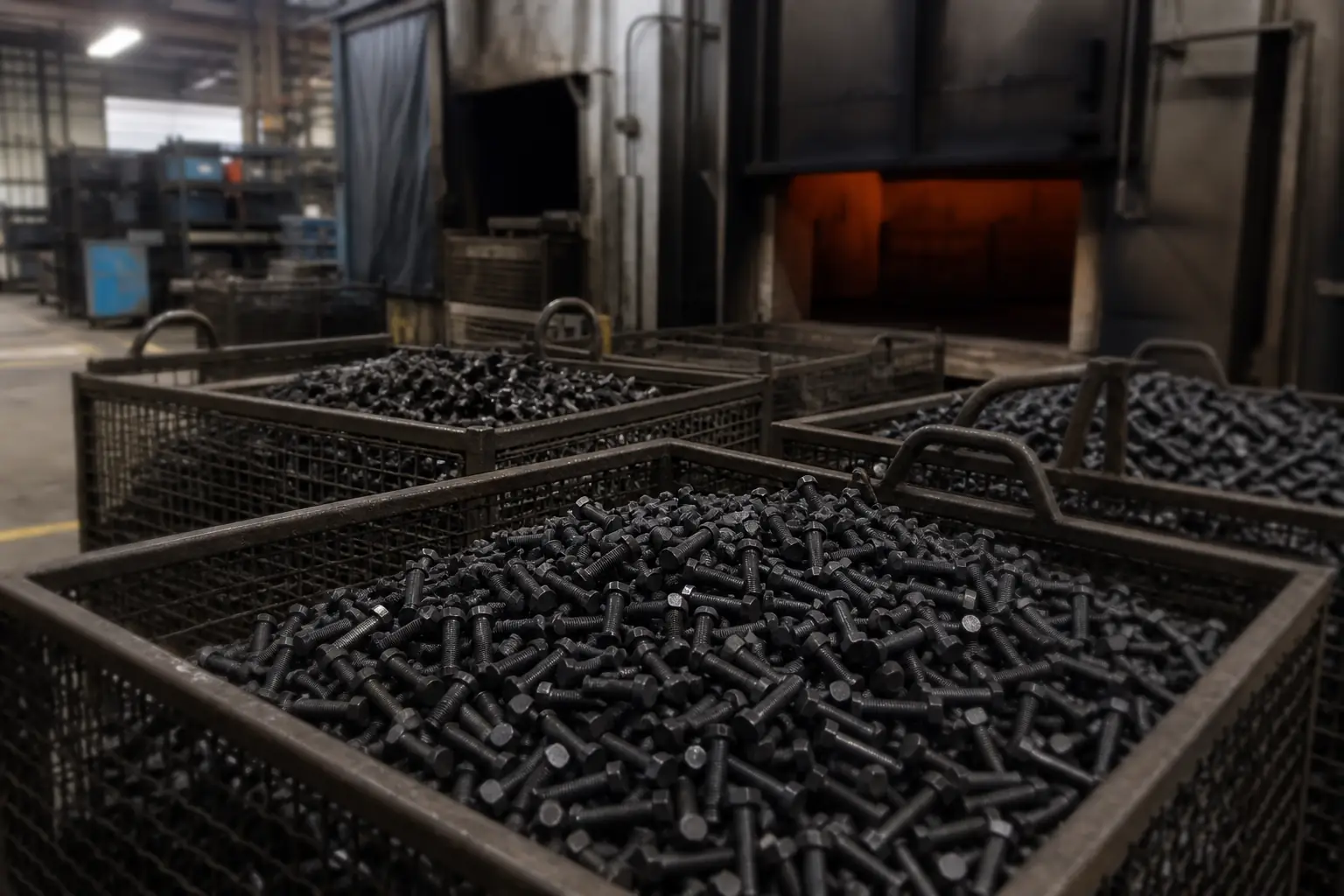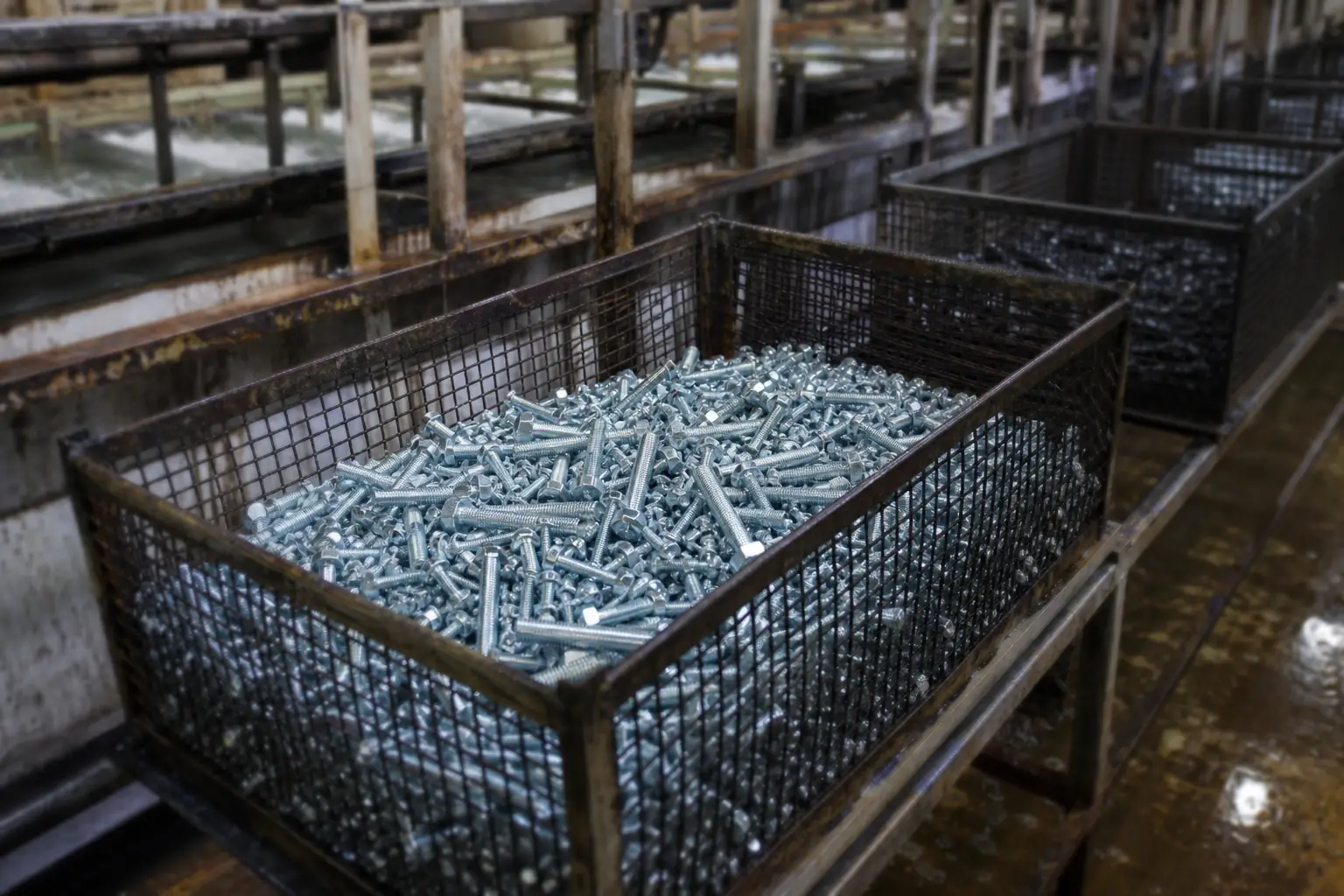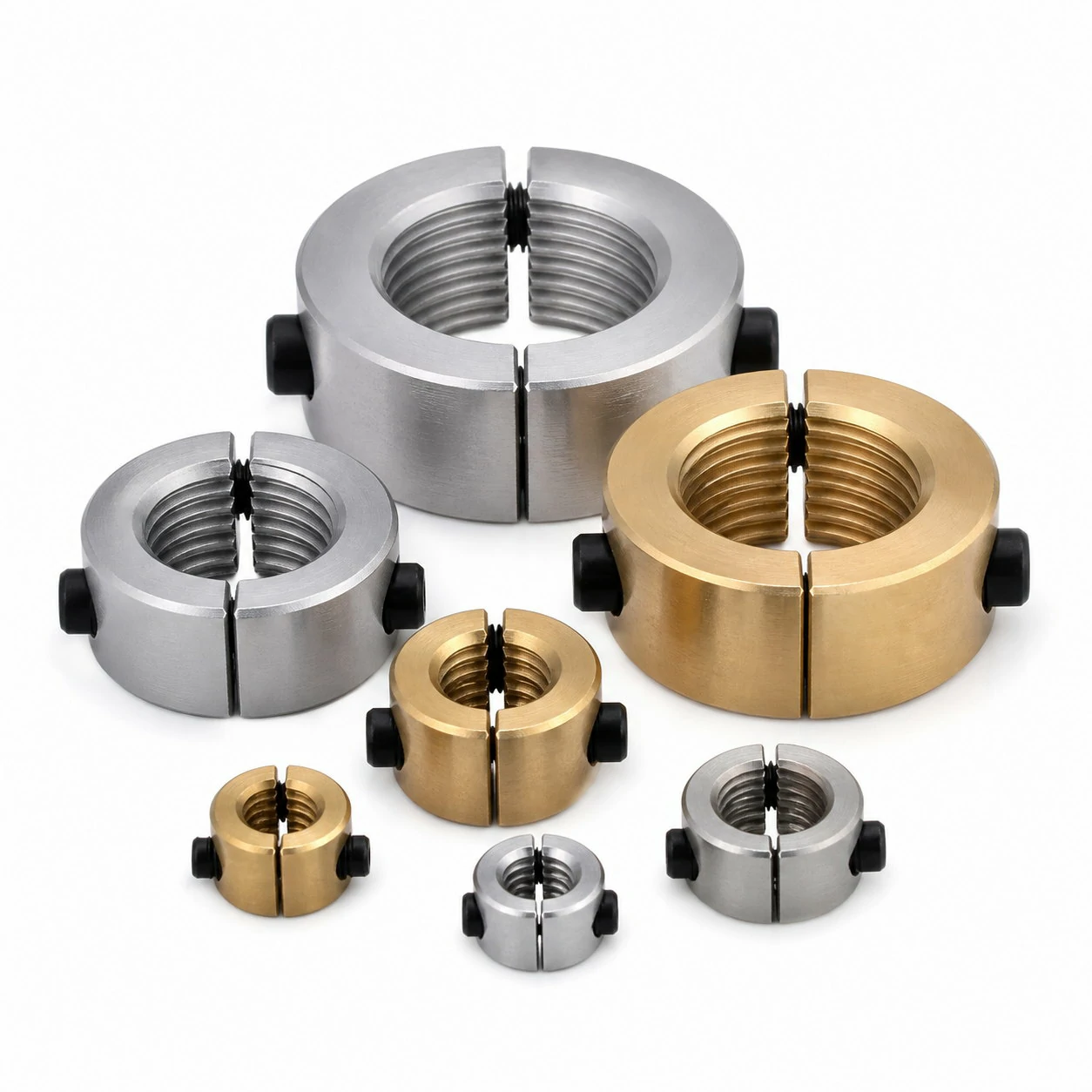
M16 Split Nuts (Axially Slotted) are manufactured to Trade series (split hex nut). This page lists the controlling dimensions for the M16 size together with the drive and the installation notes for this type.
Values are taken from the governing standard rather than from a general machine-thread table, because this type is not selected on one.
M16 Dimensional Row (Trade series (split hex nut))
| Thread size | Pitch (mm) | Width across flats s (mm) | Width across corners e (mm) | Nut height m (mm) | Slot width (mm) | Material | Blank standard |
|---|---|---|---|---|---|---|---|
| M16 | 2.0 | 24.0 | 26.75 | 14.8 | 2.5 | Free-cutting steel | DIN 934 blank |
Spanner & Drive for M16 Split Nuts (Axially Slotted)
The hex socket for M16 Split Nuts (Axially Slotted) is shown in the spec table — use the matching Allen / hex key (an ISO 2936 hex key set covers the full range). A T-handle key gives the most feel when you are judging preload by hand; anything repeated across a batch wants a torque-controlled driver instead.
Tightening Torque for M16
| Class 8.8 (dry, ~µ 0.125) | ≈ 210 Nm |
|---|---|
| Class 10.9 (dry, ~µ 0.125) | ≈ 295 Nm |
| Class 12.9 (dry, ~µ 0.125) | ≈ 355 Nm |
Indicative dry-joint values. Lubrication can lower the required torque by 15–25%. Always confirm against the joint design, especially when going up a strength class.
Proof Load & Strength for M16
| Tensile stress area As (ISO 898-1) | 157 mm² |
|---|---|
| Proof load, class 8.8 | 91 kN |
| Proof load, class 10.9 | 130 kN |
| Proof load, class 12.9 | 152 kN |
| Min. ultimate tensile, class 8.8 | 126 kN |
Proof load = stress area × proof stress per ISO 898-1. Design joints so the working preload stays below the proof load of the selected class.
Mating Parts for M16
Pair M16 with the matching M16 bolt or screw, plus a M16 flat washer where required to distribute load on softer materials.
When to Step Up or Down from M16
When the joint preload approaches the proof load of M16 class 8.8, step up to M20 class 8.8 (or move to M16 class 10.9). When the joint is over-specified, M12 often saves weight and cost without losing the safety margin.