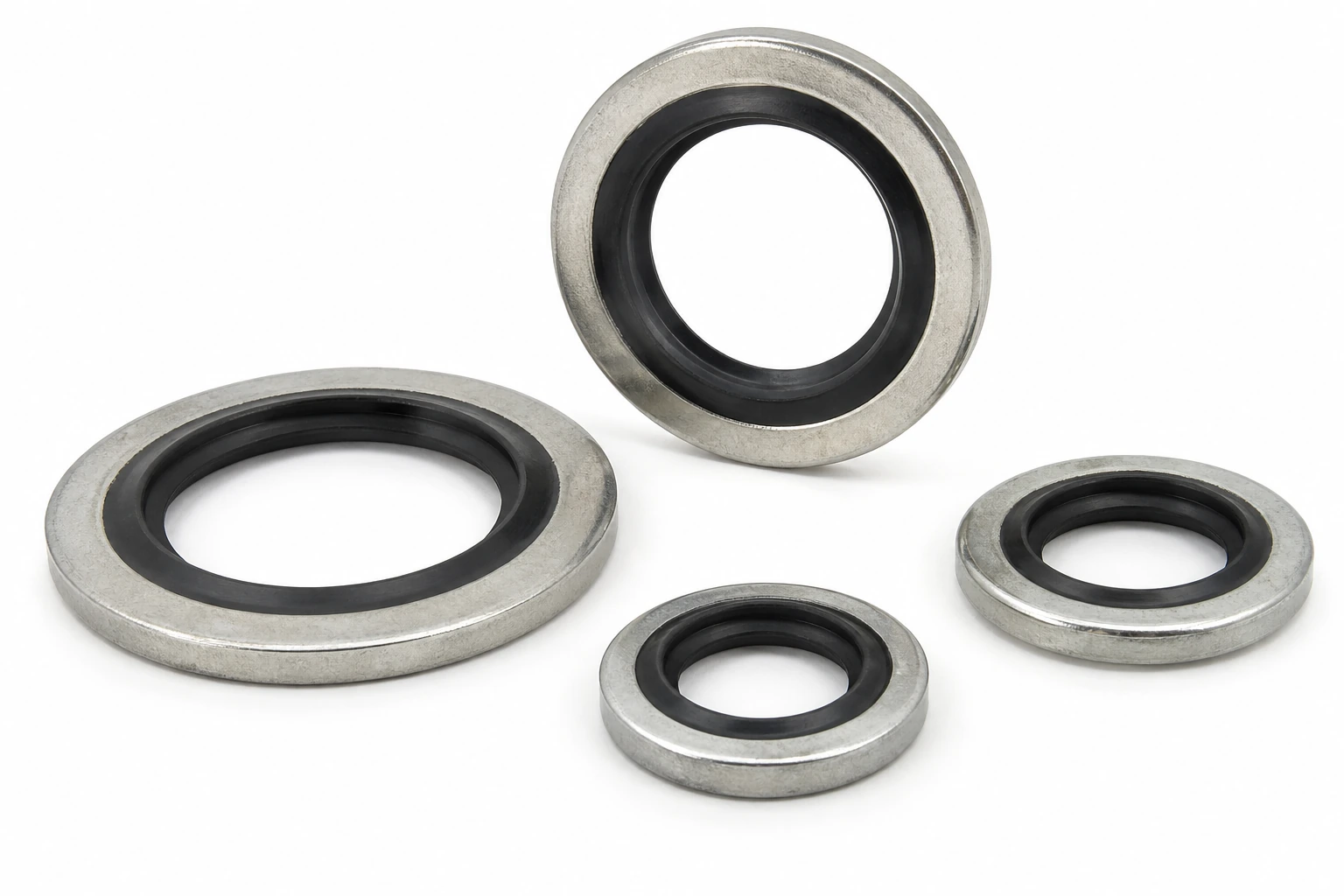
M18 USIT Rings (Self-Centring Bonded Seals) are manufactured to Trade series (self-centring bonded washers, USIT type). This page lists the controlling dimensions for the M18 size together with the installation notes for this type.
Values are taken from the governing standard rather than from a general machine-thread table, because this type is not selected on one.
M18 Dimensional Row (Trade series (self-centring bonded washers, USIT type))
Thread
Seal element
Metal carrier
Typical service
M18
NBR or FKM inner lip
zinc-plated or stainless
hydraulic
Custom manufacturing · Made to drawing
Need USIT rings (self-centring bonded seals) in a size this table does not list?
This page covers M18 USIT rings (self-centring bonded seals). A special seal is almost always a compound change rather than a size change — the same dimensions in a material that survives the medium.
Minimum order from 2,000 pieces; samples within 7 days of drawing approval.
Customize the parameters below — every spec field is editable, and the drawing redraws to match the values you choose. Changing the size will snap the other fields to that size's standard values; you can then override any individual value.
Dimensioned line drawing of M18 USIT Rings (Self-Centring Bonded Seals) to Trade series (self-centring bonded washers, USIT type). Side view and top view, drawn to the dimensions in the table below and redrawn for any size selected.
Seal element
NBR or FKM inner lip
Metal carrier
zinc-plated or stainless
Typical service
hydraulic
Sends the selected values to the quote form below.
Request a Quote
The form below follows the current technical drawing configuration. Change the drawing values above and the request details update automatically.
Dimensions & Specifications (Trade series (self-centring bonded washers, USIT type))
Third-party video, selected automatically for this topic. It is not produced by Engineering Hardware and is not a specification source — use the tables on this page for dimensional data.
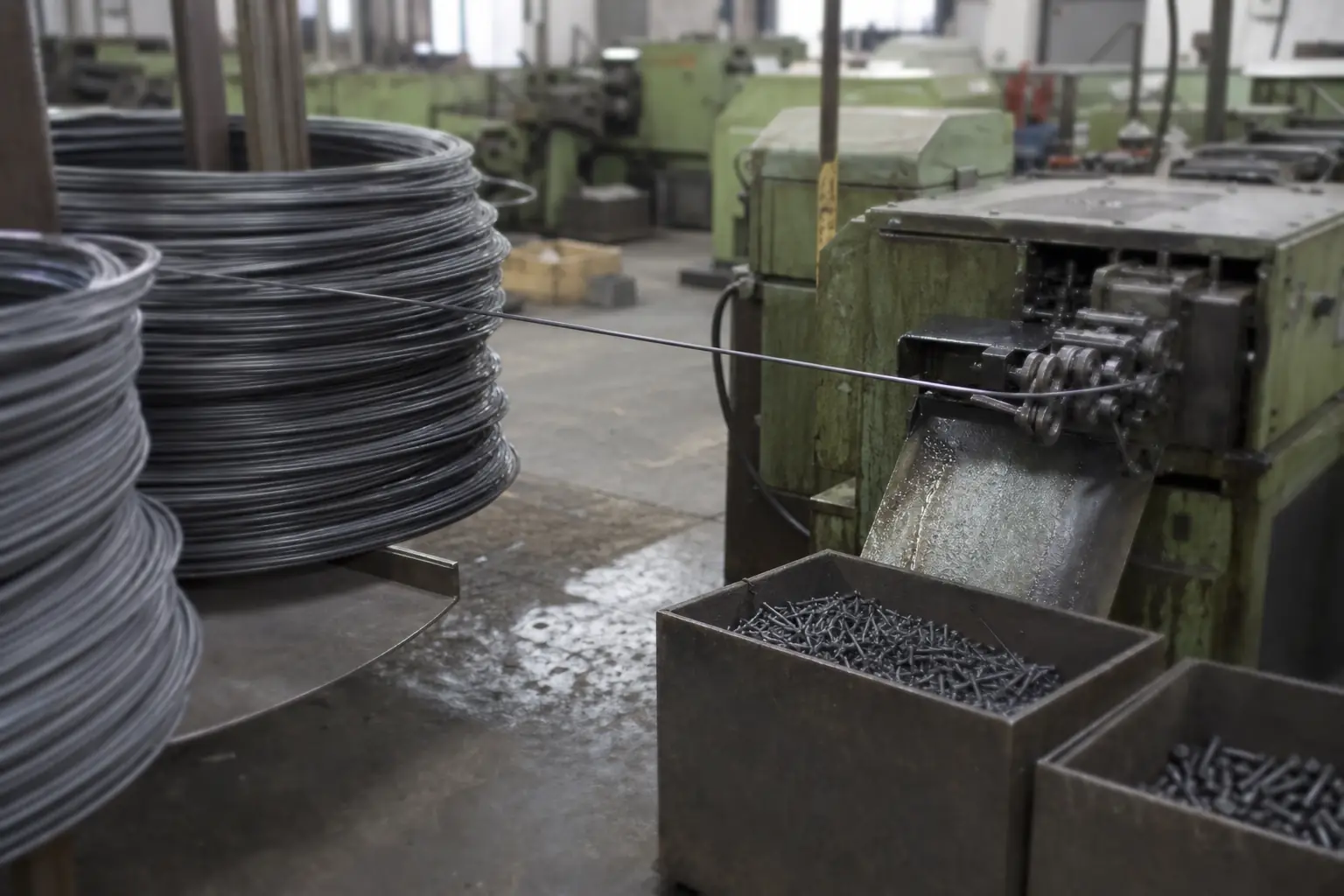
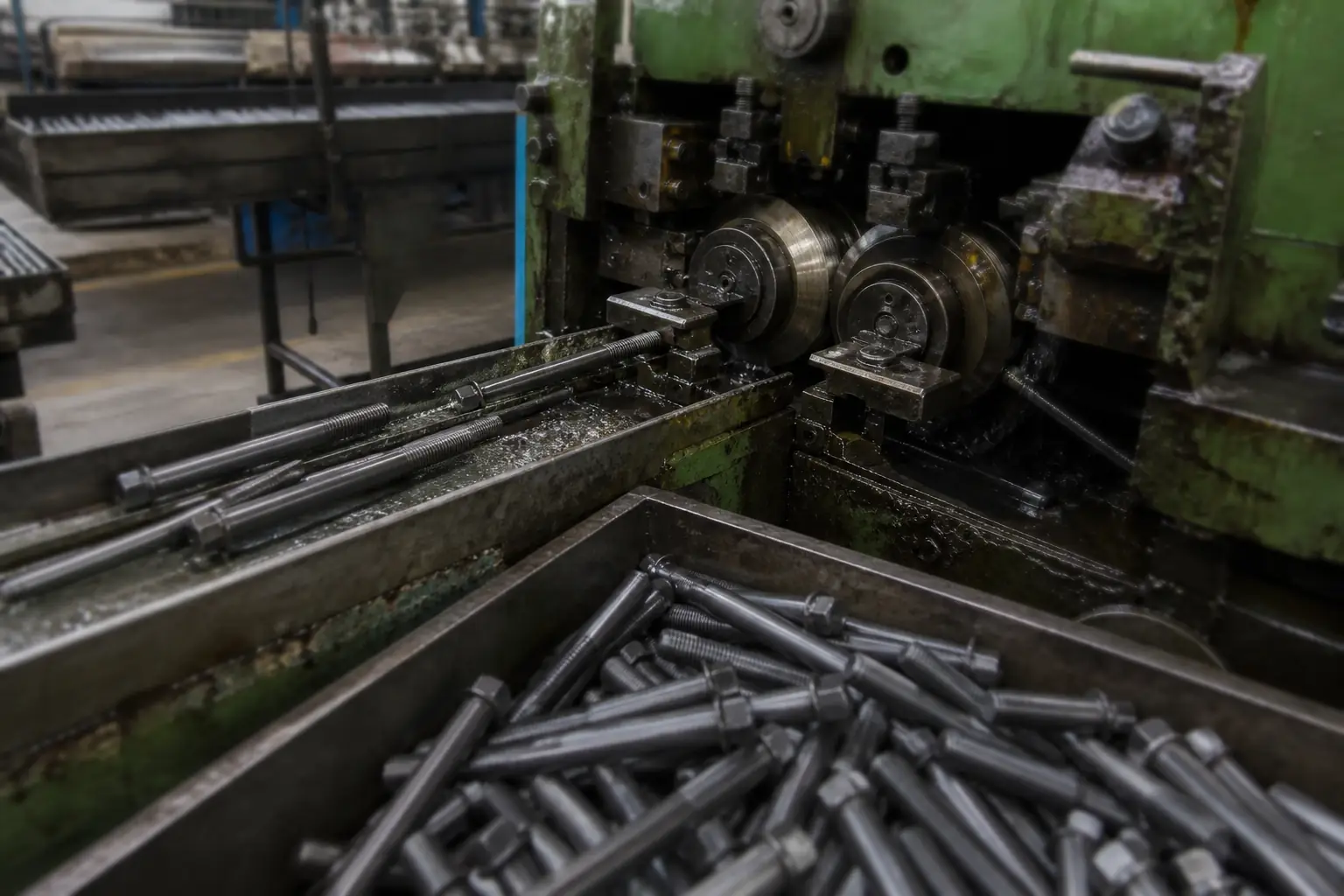
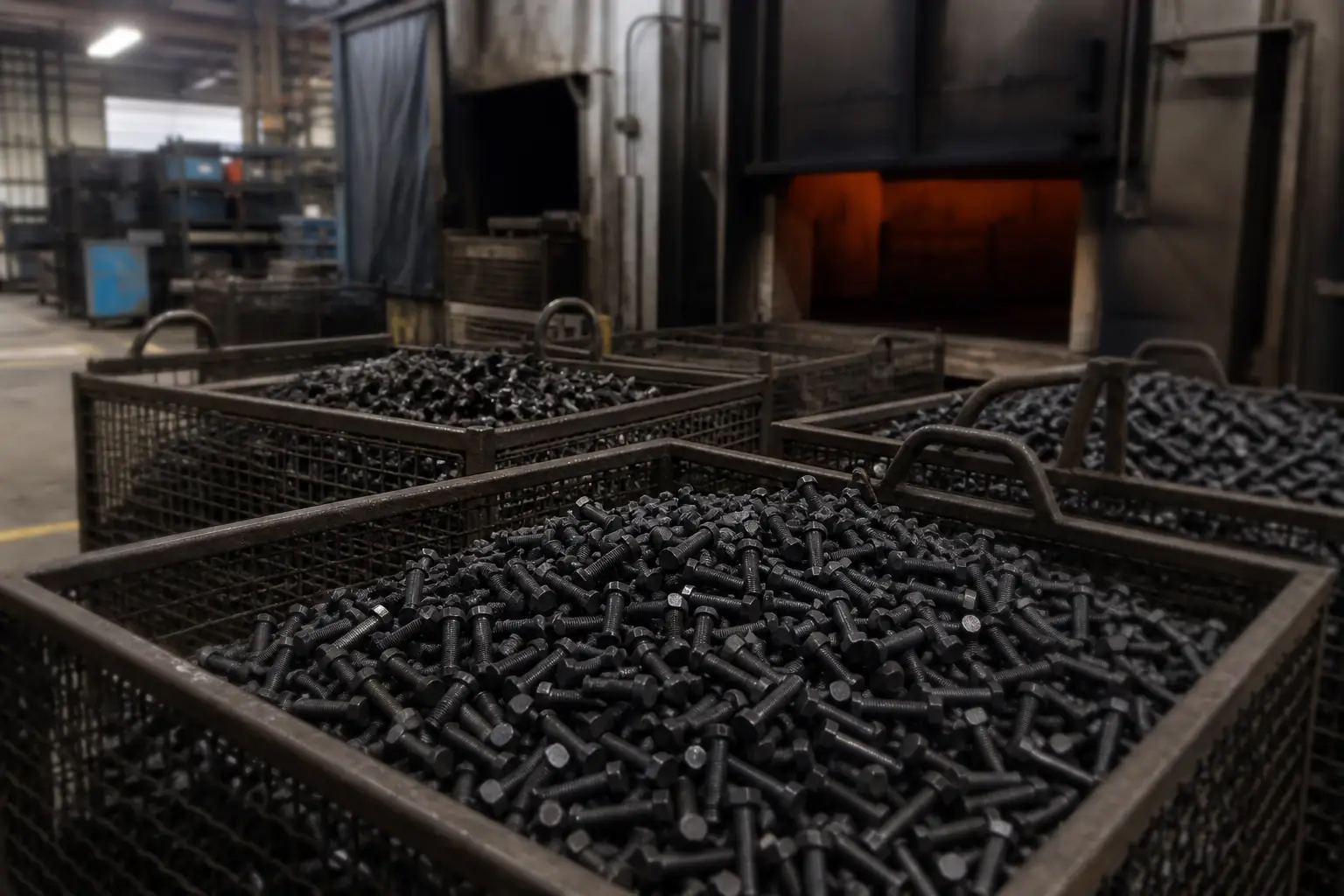
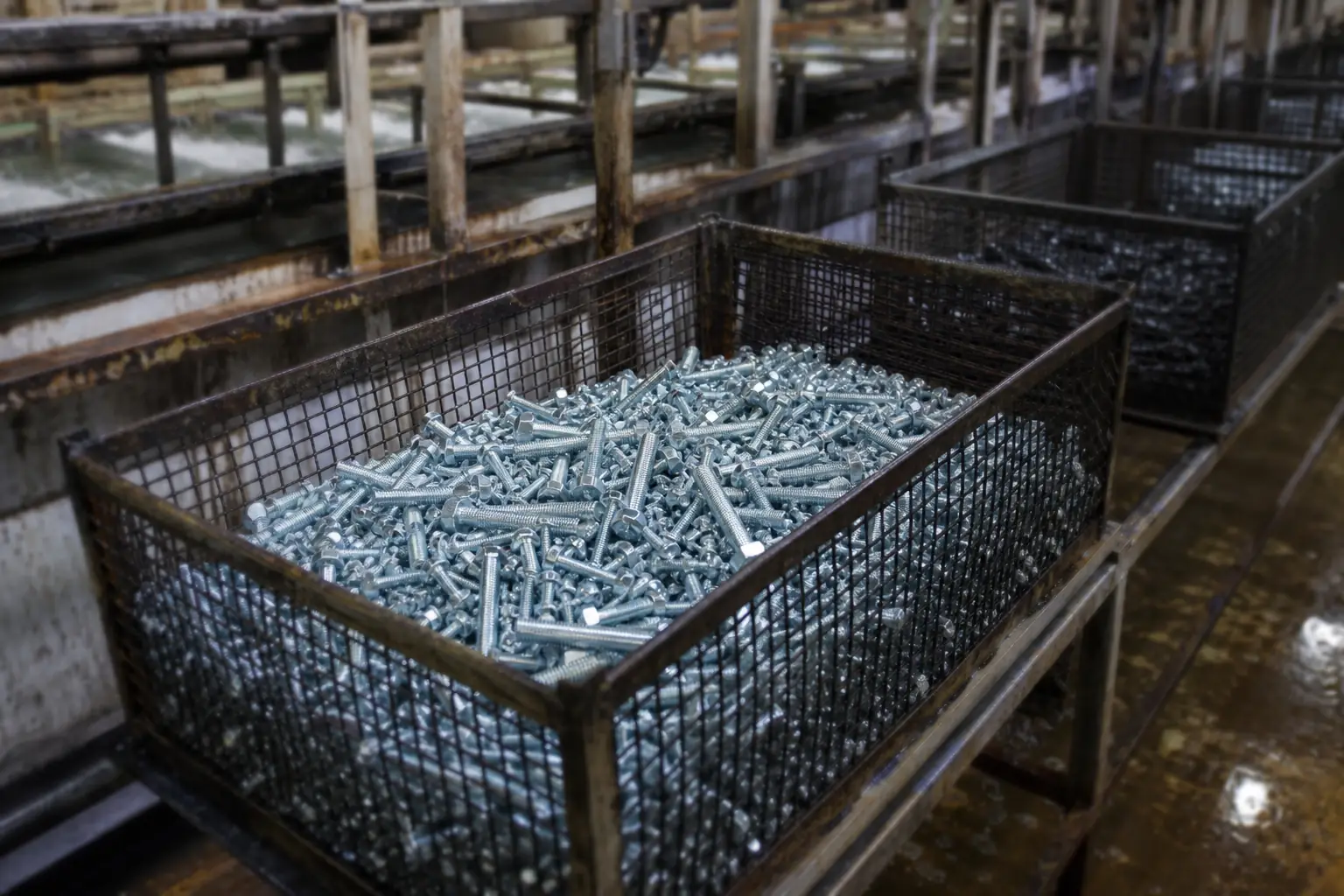
Inside the plant
Manufactured in our own plant
This part is cold-formed, threaded, heat-treated and finished in-house. The stages below are where its class and finish are actually decided.
01
Cold heading
Wire rod is drawn to size and cold-formed into blanks. Forming rather than cutting keeps the grain flow continuous around the head, which is where a bolt is most likely to fail.
Head dimensions and under-head radius checked at set-up and per shift.
02
Thread rolling
Threads are rolled between hardened dies rather than cut. Rolled threads are stronger in fatigue than cut threads and hold pitch and flank angle far more consistently across a batch.
Go / no-go ring gauges to ISO 965 tolerance class 6g.
03
Heat treatment
Quench-and-temper brings carbon and alloy steel to the property class ordered — 8.8, 10.9 or 12.9 — with the furnace charge tracked so a finished lot can be traced back to it.
Core hardness and tensile tested per lot to ISO 898-1.
04
Surface treatment
Zinc, zinc-nickel, hot-dip galvanizing, black oxide, phosphate and Dacromet, selected against the service environment rather than against the price list.
Coating thickness and neutral salt spray hours to ISO 9227.
Frequently Asked Questions
What grip range is typical for M18 structural bolts?
Grip ranges are highly application-dependent at M18. As a guide, choose a length that gives at least 1× the thread diameter engagement in the nut plus 2–3 thread pitches projecting.
What is the coarse-thread pitch of M18 for USIT Rings (Self-Centring Bonded Seals)?
For M18 the standard coarse pitch is 2.5 mm — this is the value used for USIT Rings (Self-Centring Bonded Seals).
What clearance and tapping drill suit M18?
Use a 20 mm clearance hole (ISO 273 medium) for through-fixing, or a 15.5 mm tapping drill for a coarse M18 thread.
Should M18 USIT Rings (Self-Centring Bonded Seals) be tightened by torque or by angle?
For critical structural joints at M18, angle-controlled or stretch-controlled tightening is more repeatable than pure torque — the friction scatter at large diameters can dominate the torque signal.
How do I request a quotation?
Use the technical drawing on this page to pick the exact configuration, then submit it with the quote form. We respond within one business day.
This website uses only necessary and functional cookies to operate, secure, and improve basic website performance.
We do not use advertising cookies, Google Analytics, or cross-site tracking technologies.
Privacy Policy