The M20 size of Hex Head Bolt, Fully Threaded is dimensioned by GB/T 5783 / ISO 4017. The tables below give the dimensional row from the standard, the drill and spanner sizes that go with it, and the assembly torque per property class. The technical drawing on this page redraws to the exact values selected.
M20 Dimensional Row (GB/T 5783 / ISO 4017)
| Size | Pitch (mm) | Nominal diameter d (mm) | Length L (mm) | Width across flats s (mm) | Width across corners e (mm) | Head height k (mm) |
|---|---|---|---|---|---|---|
| M20 | 2.5 | 20 | 120 | 30.0 | 33.53 | 12.5 |
Spanner & Drive for M20 Hex Head Bolt, Fully Threaded — GB/T 5783 / ISO 4017 (Series 012)
M20 Hex Head Bolt, Fully Threaded — GB/T 5783 / ISO 4017 (Series 012) have a width across flats of 30.0 mm — fit a 30.0 mm open-ended spanner or socket. Prefer a 6-point socket over a 12-point: it loads the corners of the 30.0 mm hex far less, which matters on plated heads and on anything that will be re-used. Set preload with a torque wrench rather than by arm.
Hole Sizes for M20
| Coarse-thread pitch (ISO 724) | 2.5 mm |
|---|---|
| Through-hole / clearance (ISO 273 medium) | 22 mm |
| Tapping drill, coarse thread | 17.5 mm |
Tightening Torque for M20
| Class 8.8 (dry, ~µ 0.125) | ≈ 420 Nm |
|---|---|
| Class 10.9 (dry, ~µ 0.125) | ≈ 598 Nm |
| Class 12.9 (dry, ~µ 0.125) | ≈ 700 Nm |
Indicative dry-joint values. Lubrication can lower the required torque by 15–25%. Always confirm against the joint design, especially when going up a strength class.
Proof Load & Strength for M20
| Tensile stress area As (ISO 724) | 245 mm² |
|---|---|
| Proof load, class 8.8 | 147 kN |
| Proof load, class 10.9 | 203 kN |
| Proof load, class 12.9 | 237 kN |
| Min. ultimate tensile load, class 8.8 | 203 kN |
Proof load = tensile stress area × the proof stress Sp of the class, per ISO 898-1 — Sp is a lower figure than the yield stress Rp0.2 and the two are not interchangeable. The stress area is computed from this size's own diameter and pitch, so a fine-pitch designation gives the fine-pitch figure. Design the joint so the working preload stays below the proof load of the class selected.
M20 Hex Head Bolt, Fully Threaded — GB/T 5783 / ISO 4017 (Series 012) Weight
A steel M20 hex head bolt, fully threaded at the listed 120 mm length weighs approximately 372 g each — about 372 kg per 1,000 pieces. Stainless A2/A4 weighs roughly the same (density 7.9–8.0 g/cm³).
Actual weight varies slightly with head form, thread and finish; use this figure for freight estimation only.
Installation Tips for M20 Hex Head Bolt, Fully Threaded — GB/T 5783 / ISO 4017 (Series 012)
- Use a 6-point socket where access allows — 12-point sockets are more prone to rounding the corners on smaller sizes.
- A flanged head is its own washer. Adding a flat one under it lifts the serrations clear of the surface they are meant to bite, which is the whole locking mechanism gone.
- At M20 the stretch in the bolt becomes the controlling factor — for critical joints, use angle-controlled or stretch-controlled tightening instead of pure torque.
When to Step Up or Down from M20
When the joint preload approaches the proof load of M20 class 8.8, step up to M24 class 8.8 (or move to M20 class 10.9). When the joint is over-specified, M16 often saves weight and cost without losing the safety margin.
Custom manufacturing · Made to drawing
Need hex head bolt, fully threaded in a size this table does not list?
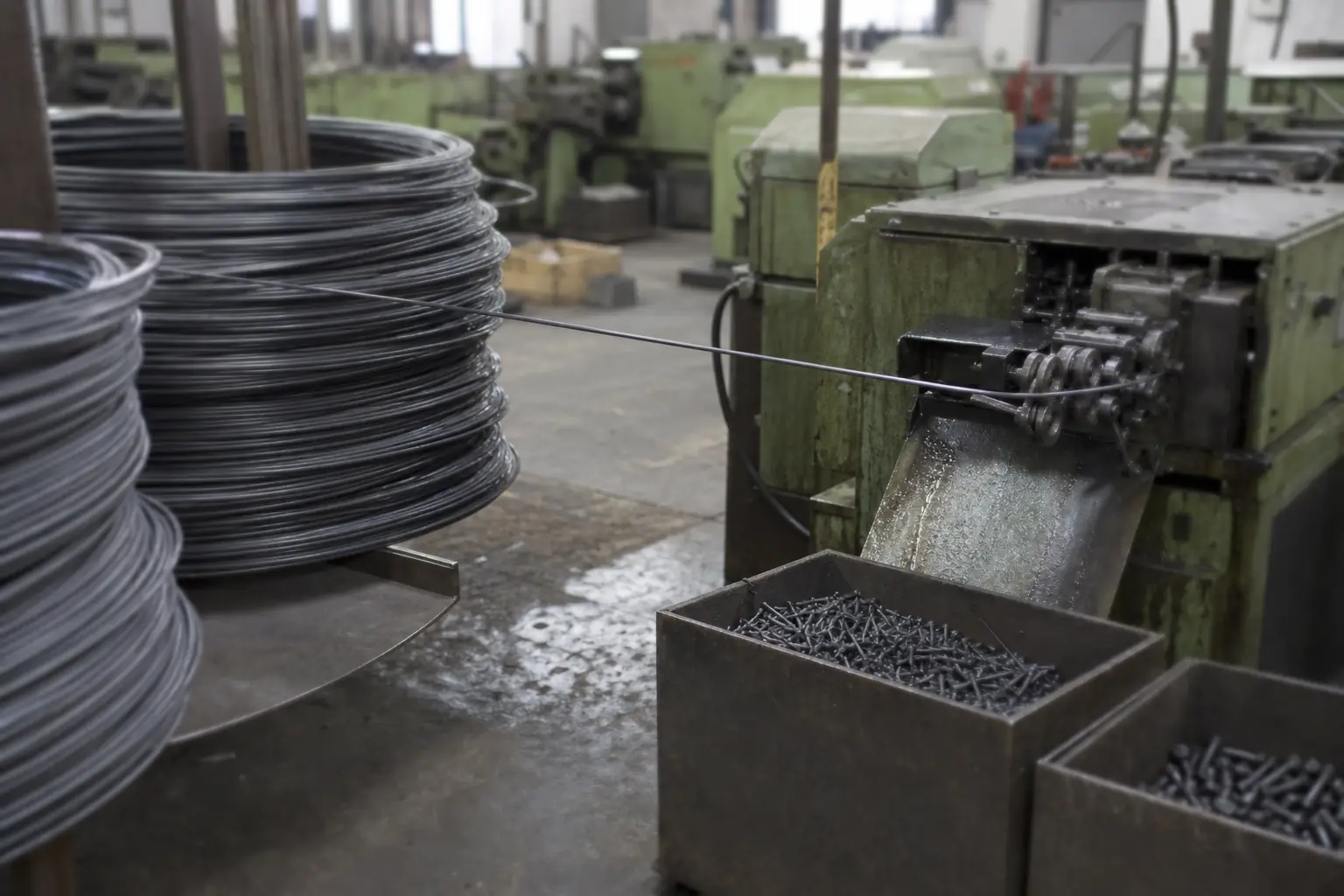
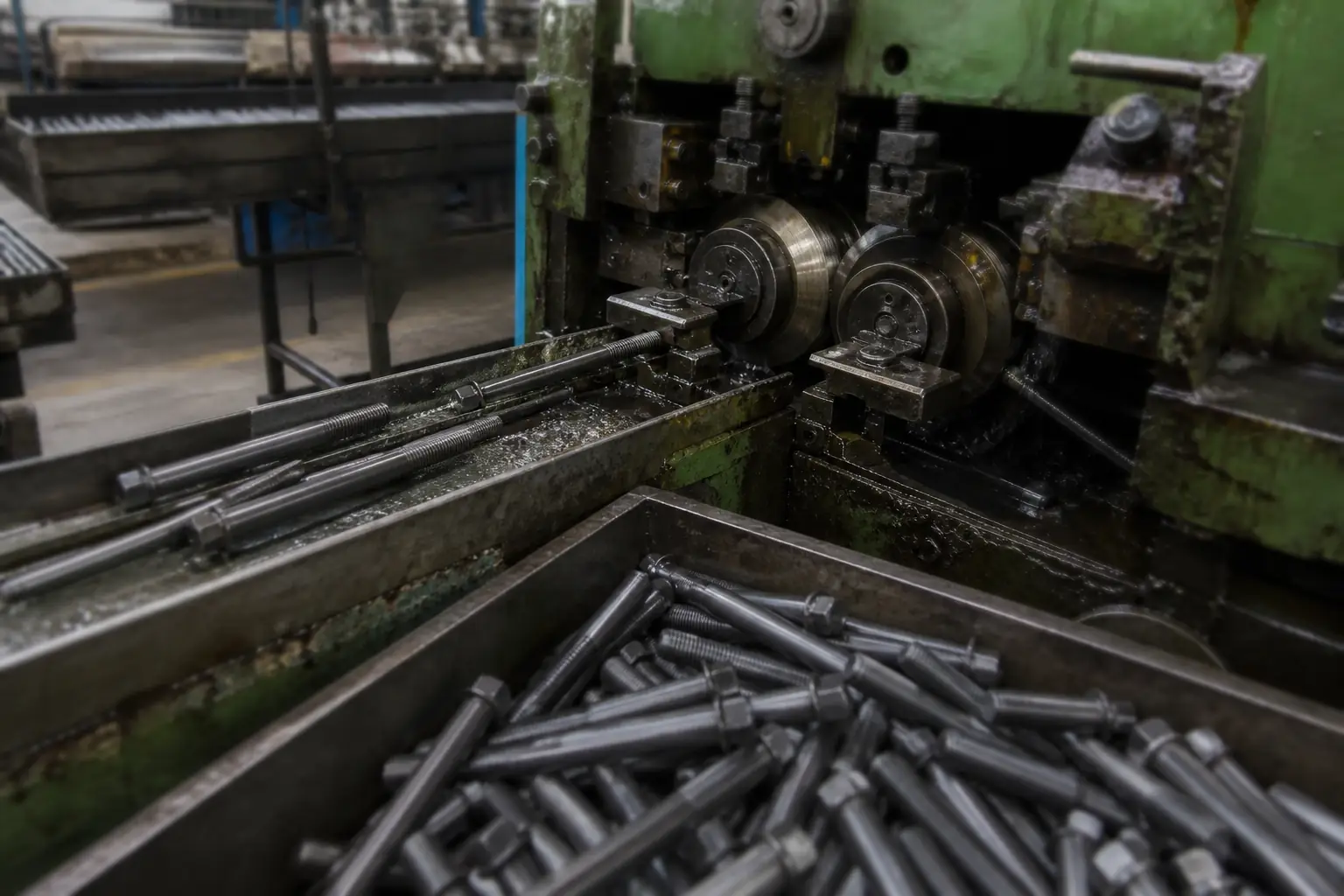
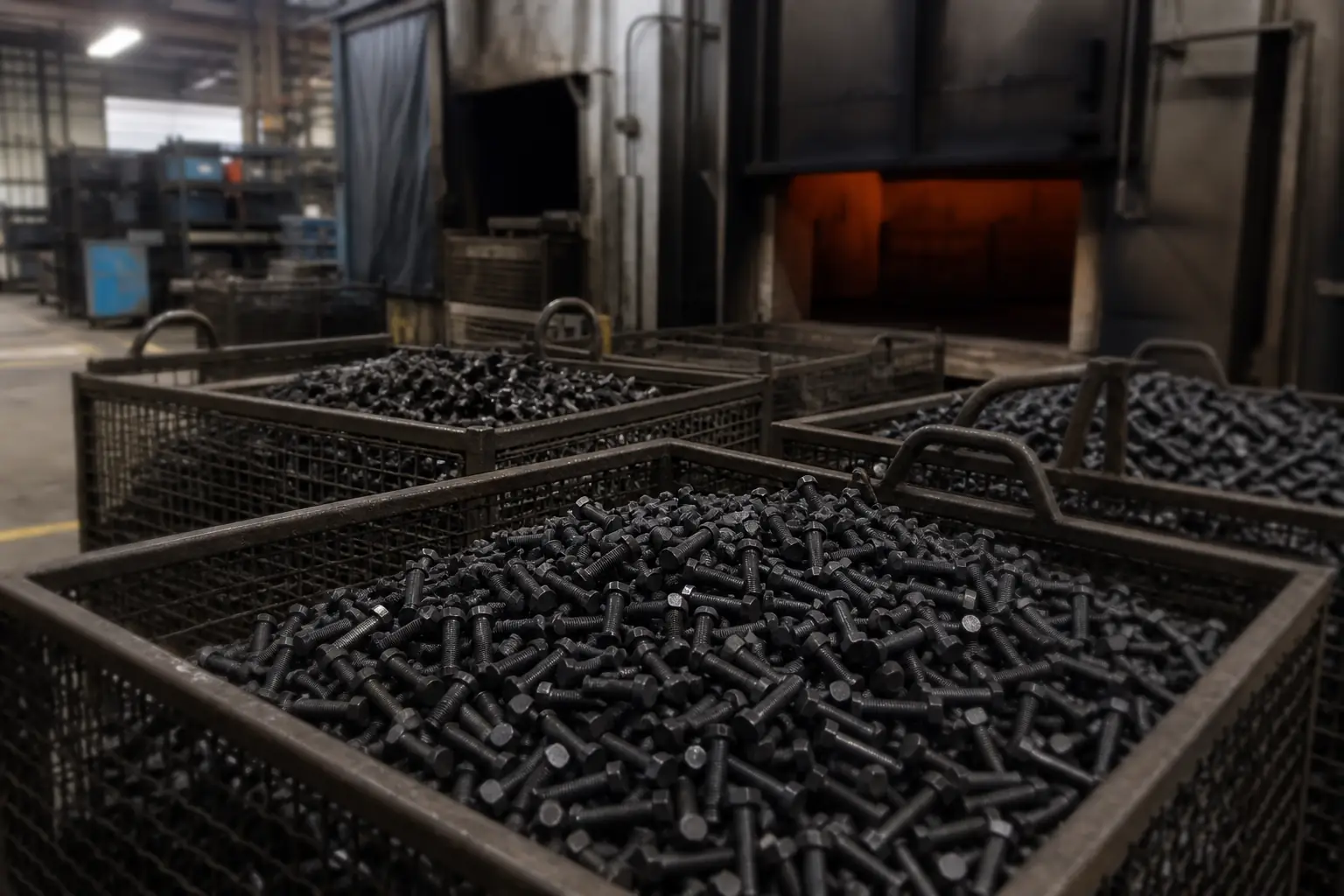
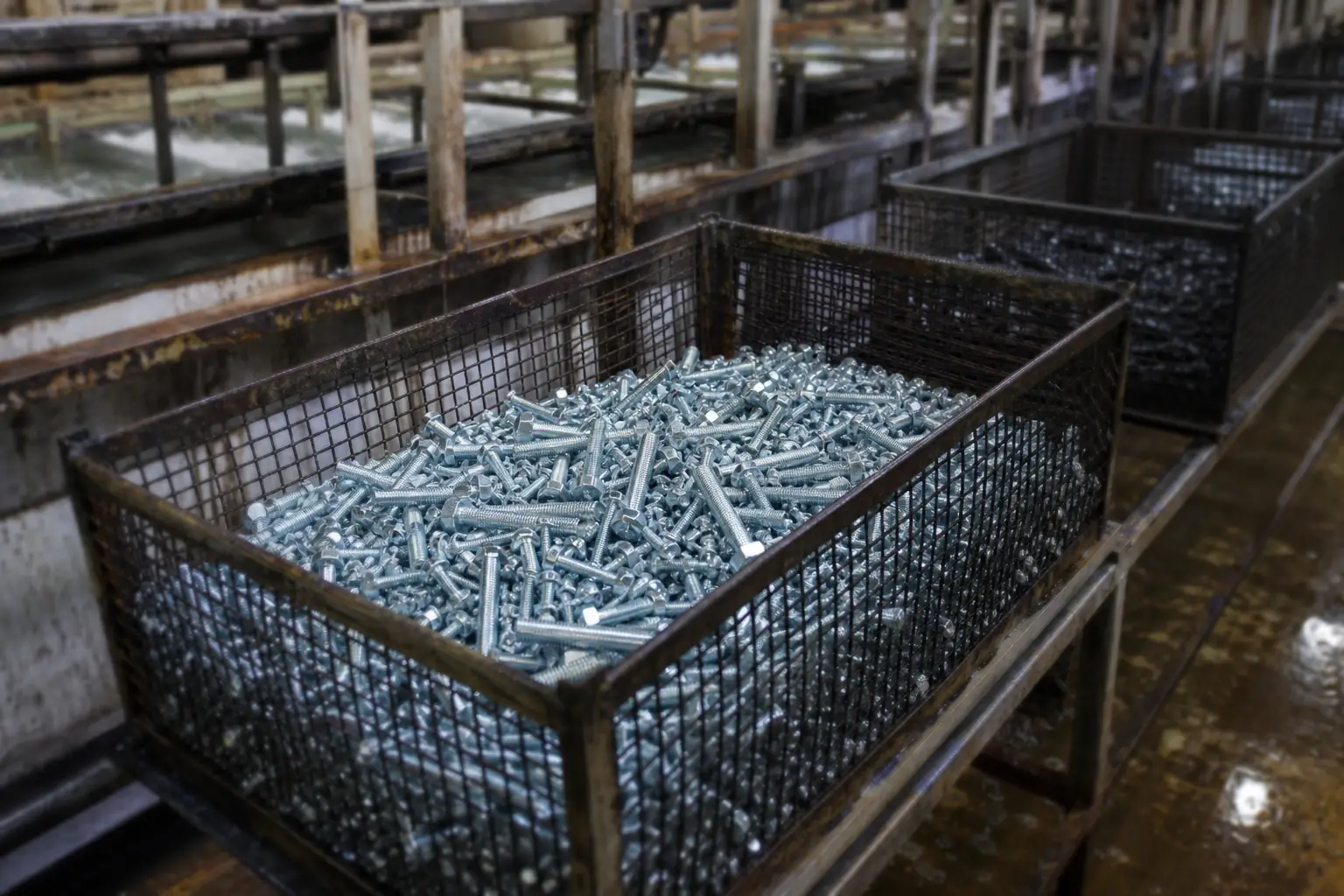
This page covers M20 hex head bolt, fully threaded. Head form and drive can be specified to the assembly rather than to a standard: a larger bearing face, a security drive, or a socket sized for the tool already on the bench. Made by cold heading or hot forging.
Minimum order from 2,000 pieces; samples within 7 days of drawing approval.