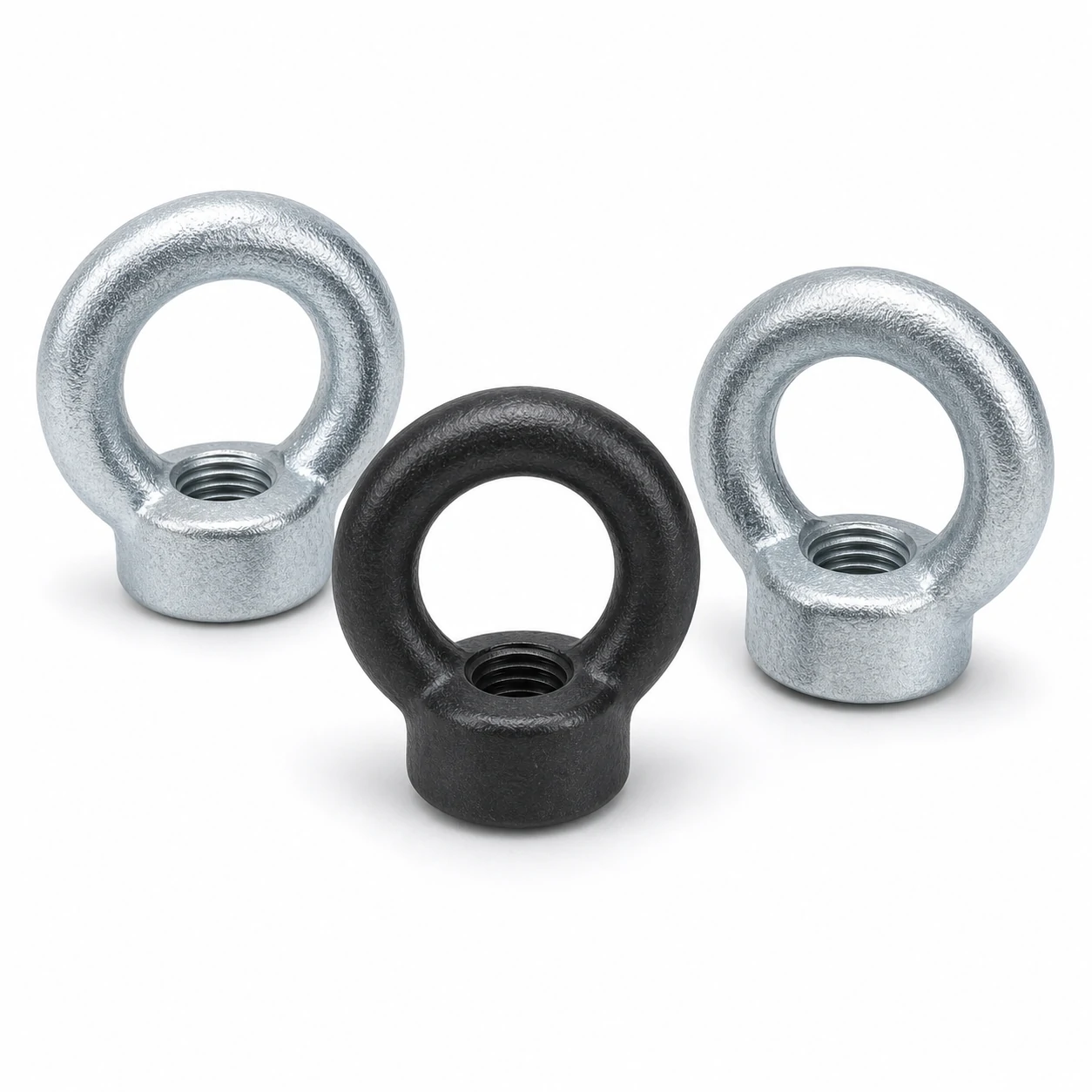
The M20 size of Lifting Eye Nuts is dimensioned by DIN 582. The table below gives the dimensional row from the standard, followed by the rated working load limit and the notes for safe installation.
M20 Dimensional Row (DIN 582)
| Thread size | Pitch (mm) | Ring inside diameter d (mm) | Ring outside diameter (mm) | Total height (mm) | Max load vertical (kg) | Reference standard | Notes |
|---|---|---|---|---|---|---|---|
| M20 | 2.5 | 56 | 99 | 99 | 1200 | DIN 582 / WLL | Drop-forged lifting eye nut, vertical pull |
Common Applications for M20 Lifting Eye Nuts
M20 Lifting Eye Nuts are commonly specified for structural joints, flange connections and heavy equipment foundations.
Mating Parts for M20
Pair M20 with the matching M20 bolt or screw, plus a M20 flat washer where required to distribute load on softer materials.