Skip to content

Bolts · GB/T 15389 / DIN 939

M30 Threaded Rod Dimensions & Specifications

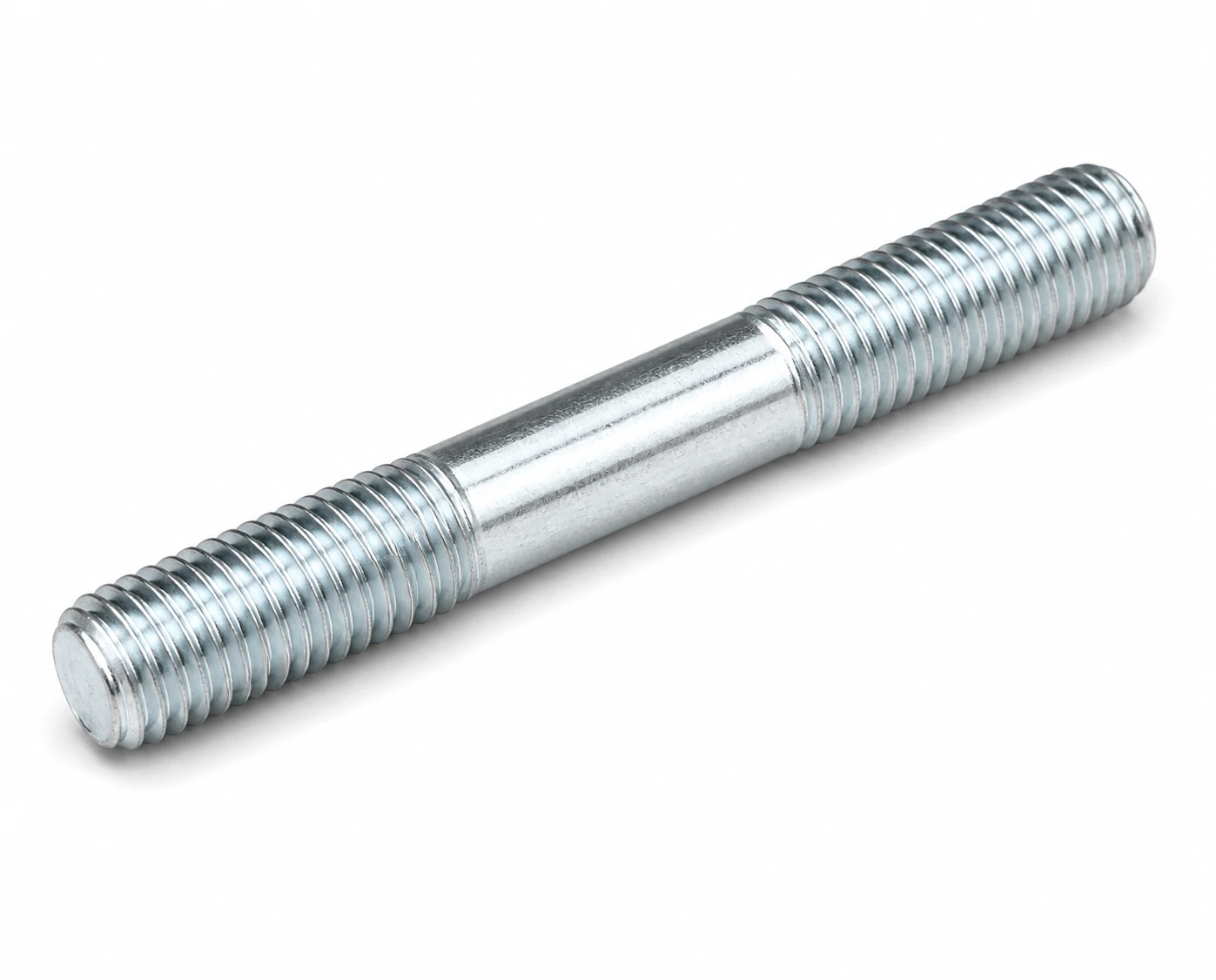
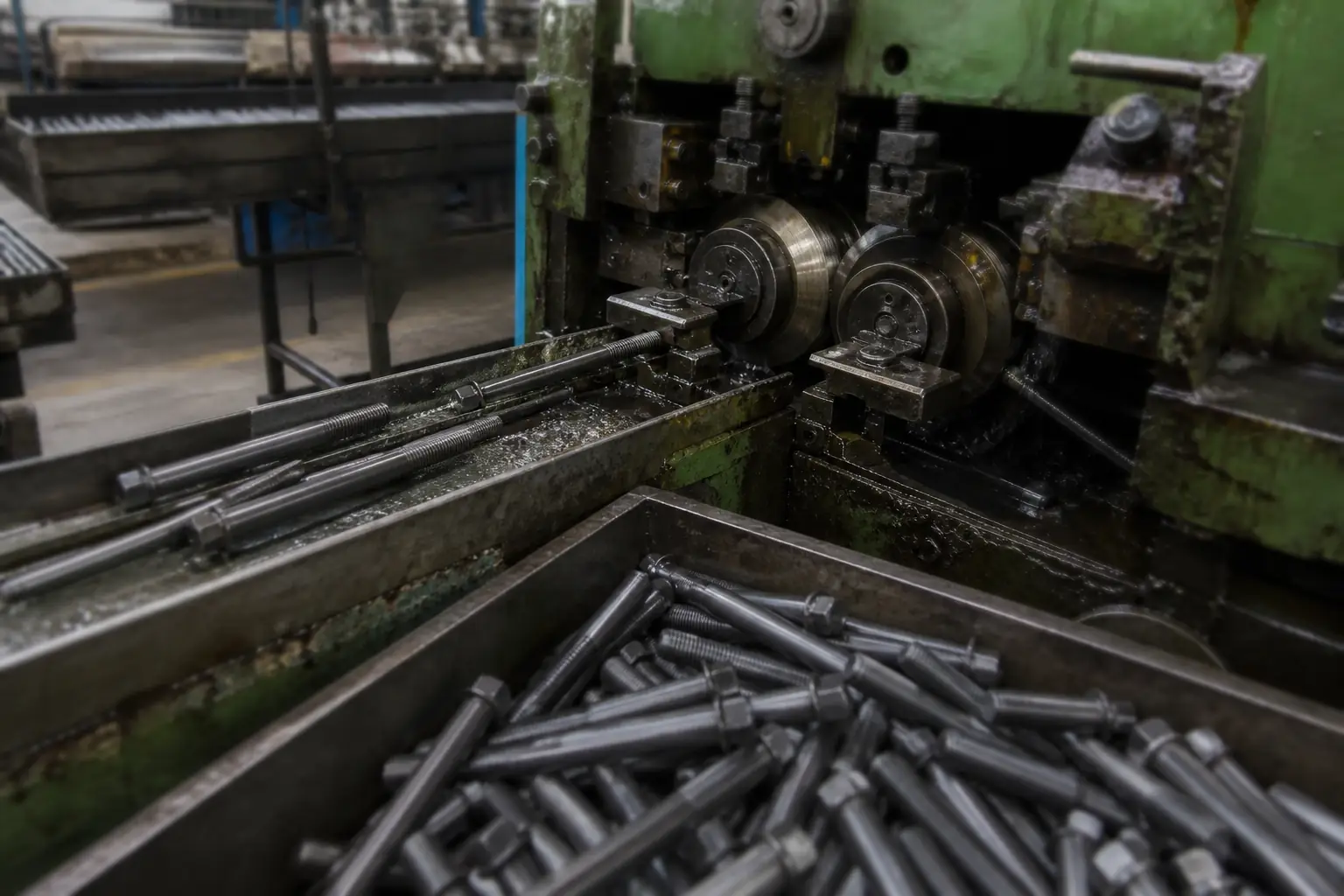
M30 Threaded Rod Dimensions & Specifications reference image

M30 is one of the standard coarse-thread sizes for threaded rod under GB/T 15389 / DIN 939. The sections below reproduce the dimensional row, list the matching tools and hole sizes, and summarize where this size is normally specified.

M30 Dimensional Row (GB/T 15389 / DIN 939)

Thread sizePitch (mm)Length L (mm)Engagement depth bm (mm)MaterialReference standard
M303.524045Cl. 8.8 alloy steelDIN 939 / GB/T 901

Spanner & Drive for M30 Threaded Rod — GB/T 15389 / DIN 939 (Series 095)

Drive geometry for M30 Threaded Rod — GB/T 15389 / DIN 939 (Series 095) is given by the row above; match the tool to the listed values.

Hole Sizes for M30

Coarse-thread pitch (ISO 724)3.5 mm
Through-hole / clearance (ISO 273 medium)33 mm
Tapping drill, coarse thread26.5 mm

Tightening Torque for M30

Class 8.8 (dry, ~µ 0.125)≈ 1400 Nm
Class 10.9 (dry, ~µ 0.125)≈ 2000 Nm
Class 12.9 (dry, ~µ 0.125)≈ 2400 Nm

Indicative dry-joint values. Lubrication can lower the required torque by 15–25%. Always confirm against the joint design, especially when going up a strength class.

Proof Load & Strength for M30

Tensile stress area As (ISO 898-1)561 mm²
Proof load, class 8.8337 kN
Proof load, class 10.9466 kN
Proof load, class 12.9544 kN
Min. ultimate tensile, class 8.8449 kN

Proof load = stress area × proof stress per ISO 898-1. Design joints so the working preload stays below the proof load of the selected class.

M30 Threaded Rod — GB/T 15389 / DIN 939 (Series 095) Weight

A steel M30 threaded rod at the listed 240 mm length weighs approximately 1,332 g each — about 1,332 kg per 1,000 pieces. Stainless A2/A4 weighs roughly the same (density 7.9–8.0 g/cm³). Actual weight varies slightly with head form, thread and finish; use this figure for freight estimation only.

Common Applications for M30 Threaded Rod — GB/T 15389 / DIN 939 (Series 095)

M30 Threaded Rod — GB/T 15389 / DIN 939 (Series 095) are commonly specified for structural steelwork, heavy machinery foundations and large flange joints.

Installation Tips for M30 Threaded Rod — GB/T 15389 / DIN 939 (Series 095)

  • At M30 the stretch in the bolt becomes the controlling factor — for critical joints, use angle-controlled or stretch-controlled tightening instead of pure torque.

Mating Parts for M30

For M30, pair with a M30 hex nut (ISO 4032 / DIN 934) and, where used, a M30 flat washer (ISO 7089 / DIN 125A) under the head and under the nut.
Technical Drawing

Customize the parameters below — every spec field is editable, and the drawing redraws to match the values you choose. Changing the size will snap the other fields to that size's standard values; you can then override any individual value.

Sends the selected values to the quote form below.

Request a Quote

Adjust the parameters in the drawing above and click "Request this configuration" to send the exact specification straight to this form.

Request a Quotation

Specification
Business Information

Dimensions & Specifications (GB/T 15389 / DIN 939)

Thread sizePitch (mm)Length L (mm)Engagement depth bm (mm)MaterialReference standard
M61.0508Cl. 8.8 alloy steelDIN 939 / GB/T 901
M81.256010Cl. 8.8 alloy steelDIN 939 / GB/T 901
M101.58015Cl. 8.8 alloy steelDIN 939 / GB/T 901
M121.7510018Cl. 8.8 alloy steelDIN 939 / GB/T 901
M142.012021Cl. 8.8 alloy steelDIN 939 / GB/T 901
M162.015024Cl. 8.8 alloy steelDIN 939 / GB/T 901
M202.518030Cl. 8.8 alloy steelDIN 939 / GB/T 901
M243.020036Cl. 8.8 alloy steelDIN 939 / GB/T 901
M303.524045Cl. 8.8 alloy steelDIN 939 / GB/T 901
M364.028054Cl. 8.8 alloy steelDIN 939 / GB/T 901

Frequently Asked Questions

What torque do M30 class 8.8 Threaded Rod — GB/T 15389 / DIN 939 (Series 095) take?

A dry M30 class 8.8 joint takes about 1400 Nm (≈ 2000 Nm for 10.9, ≈ 2400 Nm for 12.9). Confirm against your joint design; lubrication reduces these values.

What clearance and tapping drill suit M30?

Use a 33 mm clearance hole (ISO 273 medium) for through-fixing, or a 26.5 mm tapping drill for a coarse M30 thread.

Should M30 Threaded Rod — GB/T 15389 / DIN 939 (Series 095) be tightened by torque or by angle?

For critical structural joints at M30, angle-controlled or stretch-controlled tightening is more repeatable than pure torque — the friction scatter at large diameters can dominate the torque signal.

What grip range is typical for M30 structural bolts?

Grip ranges are highly application-dependent at M30. As a guide, choose a length that gives at least 1× the thread diameter engagement in the nut plus 2–3 thread pitches projecting.

How do I request a quotation?

Use the technical drawing on this page to pick the exact configuration, then submit it with the quote form. We respond within one business day.