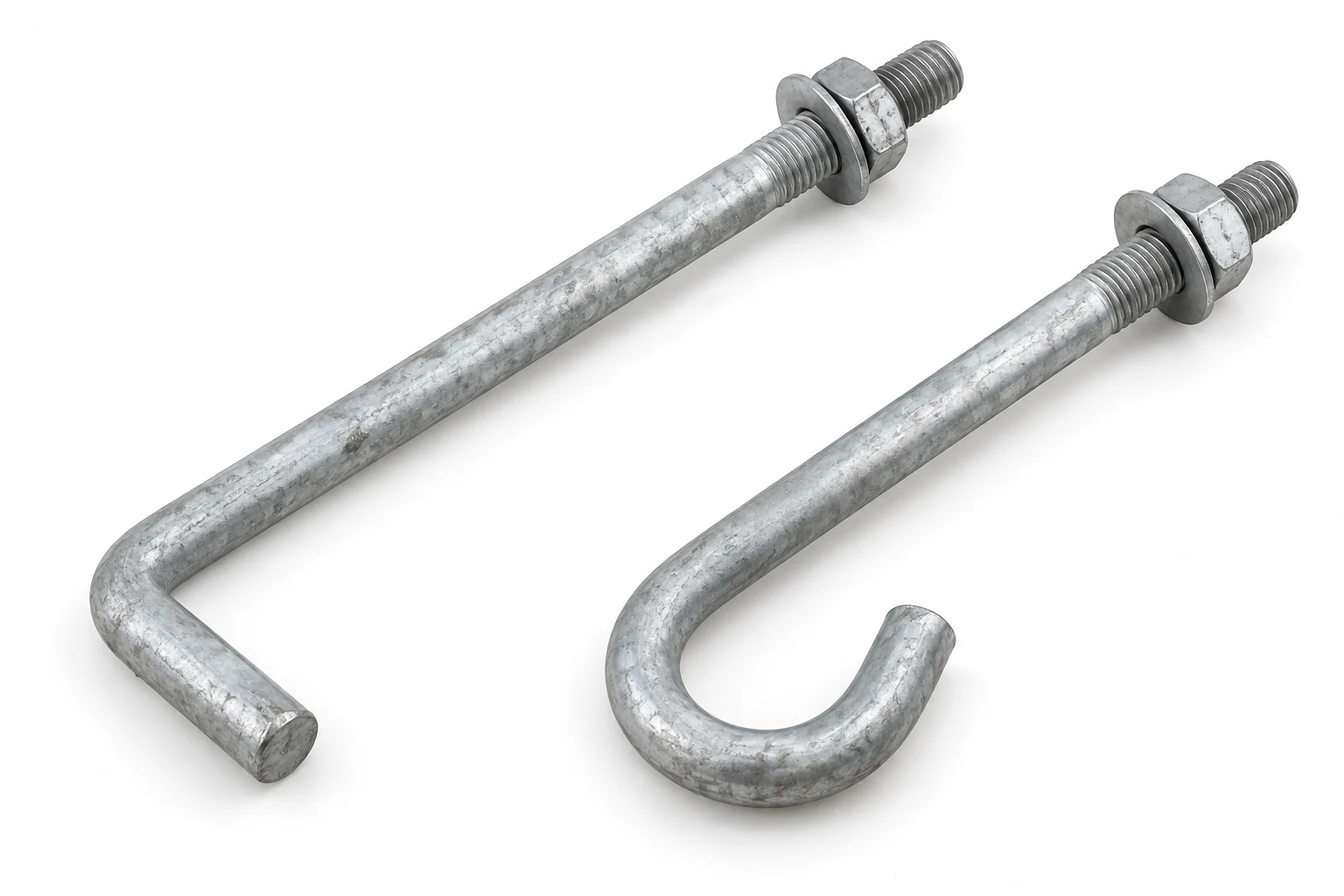
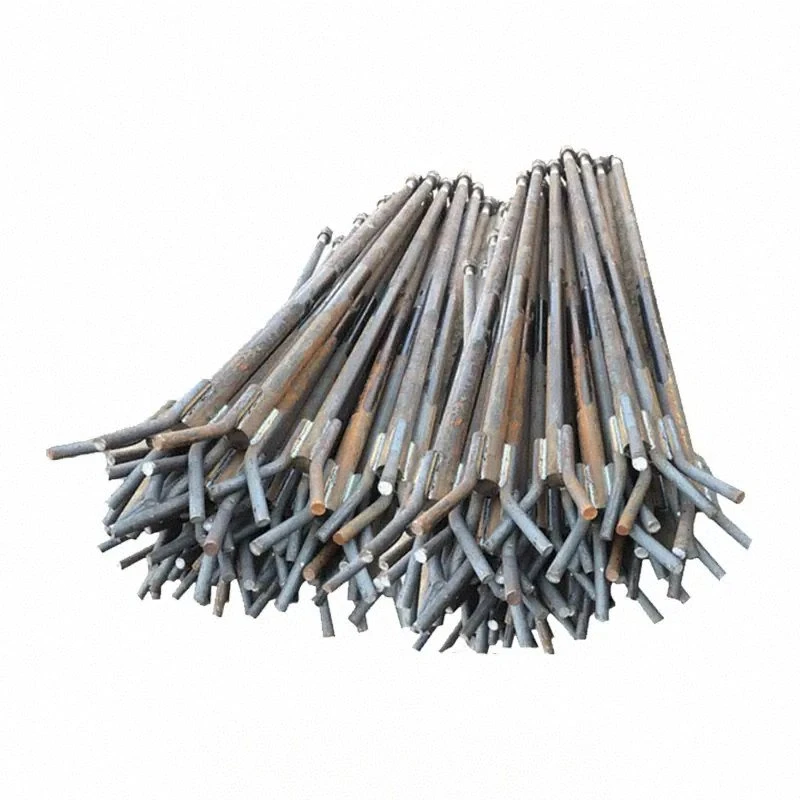
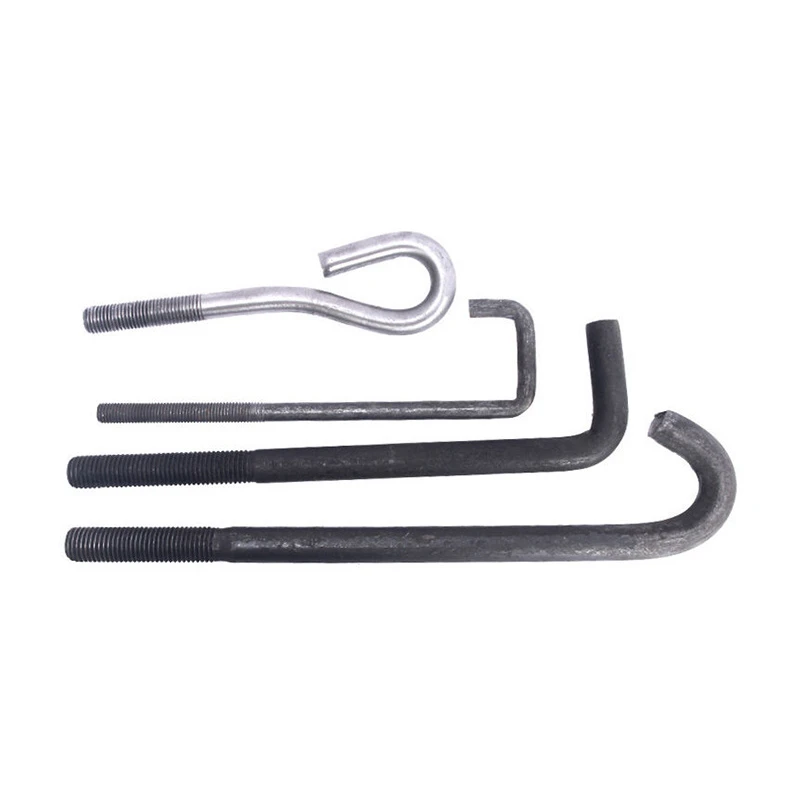
M30 Foundation Bolts, L and J Form dimensions to Trade series (cast-in holding-down bolt): coarse thread pitch 3.5 mm, clearance hole (ISO 273 medium) 33 mm, tapping drill 26.5 mm. Tighten to approximately 1443 Nm at property class 8.8 in a dry, as-supplied condition.
- Coarse thread pitch
- 3.5 mm
- Clearance hole (ISO 273 medium)
- 33 mm
- Tapping drill
- 26.5 mm
- Tightening torque (class 8.8)
- 1443 Nm
Figures are nominal values from the governing standard. Confirm against the tolerance class for your application before machining or ordering.
Dimensional and assembly data for M30 Foundation Bolts, L and J Form to Trade series (cast-in holding-down bolt). Includes head size and width across flats, clearance-hole and tapping-drill diameters, tightening torque per property class, and the sizes to step up or down to when the joint requires it.
M30 Dimensional Row (Trade series (cast-in holding-down bolt))
| Thread size | Form | Overall length L (mm) | Hook length (mm) | Thread length (mm) | Projection above concrete (mm) | Material | Finish |
|---|
| M30 | L | 750 | 120 | 150 | 150 | Class 4.6 steel | Hot-dip galvanised |
Hole Sizes for M30
| Coarse-thread pitch (ISO 724) | 3.5 mm |
|---|
| Through-hole / clearance (ISO 273 medium) | 33 mm |
|---|
| Tapping drill, coarse thread | 26.5 mm |
|---|
Tightening Torque for M30
| Class 8.8 (dry, ~µ 0.125) | ≈ 1443 Nm |
|---|
| Class 10.9 (dry, ~µ 0.125) | ≈ 2055 Nm |
|---|
| Class 12.9 (dry, ~µ 0.125) | ≈ 2405 Nm |
|---|
Indicative dry-joint values. Lubrication can lower the required torque by 15–25%. Always confirm against the joint design, especially when going up a strength class.
Proof Load & Strength for M30
| Tensile stress area As (ISO 724) | 561 mm² |
|---|
| Proof load, class 8.8 | 336 kN |
|---|
| Proof load, class 10.9 | 465 kN |
|---|
| Proof load, class 12.9 | 544 kN |
|---|
| Min. ultimate tensile load, class 8.8 | 465 kN |
|---|
Proof load = tensile stress area × the proof stress Sp of the class, per ISO 898-1 — Sp is a lower figure than the yield stress Rp0.2 and the two are not interchangeable. The stress area is computed from this size's own diameter and pitch, so a fine-pitch designation gives the fine-pitch figure. Design the joint so the working preload stays below the proof load of the class selected.
Mating Parts for M30
For M30, pair with a M30 hex nut (ISO 4032 / DIN 934) and, where used, a M30 flat washer (ISO 7089 / DIN 125A) under the head and under the nut.
Custom manufacturing · Made to drawing
Need foundation bolts, l and j form in a size this table does not list?
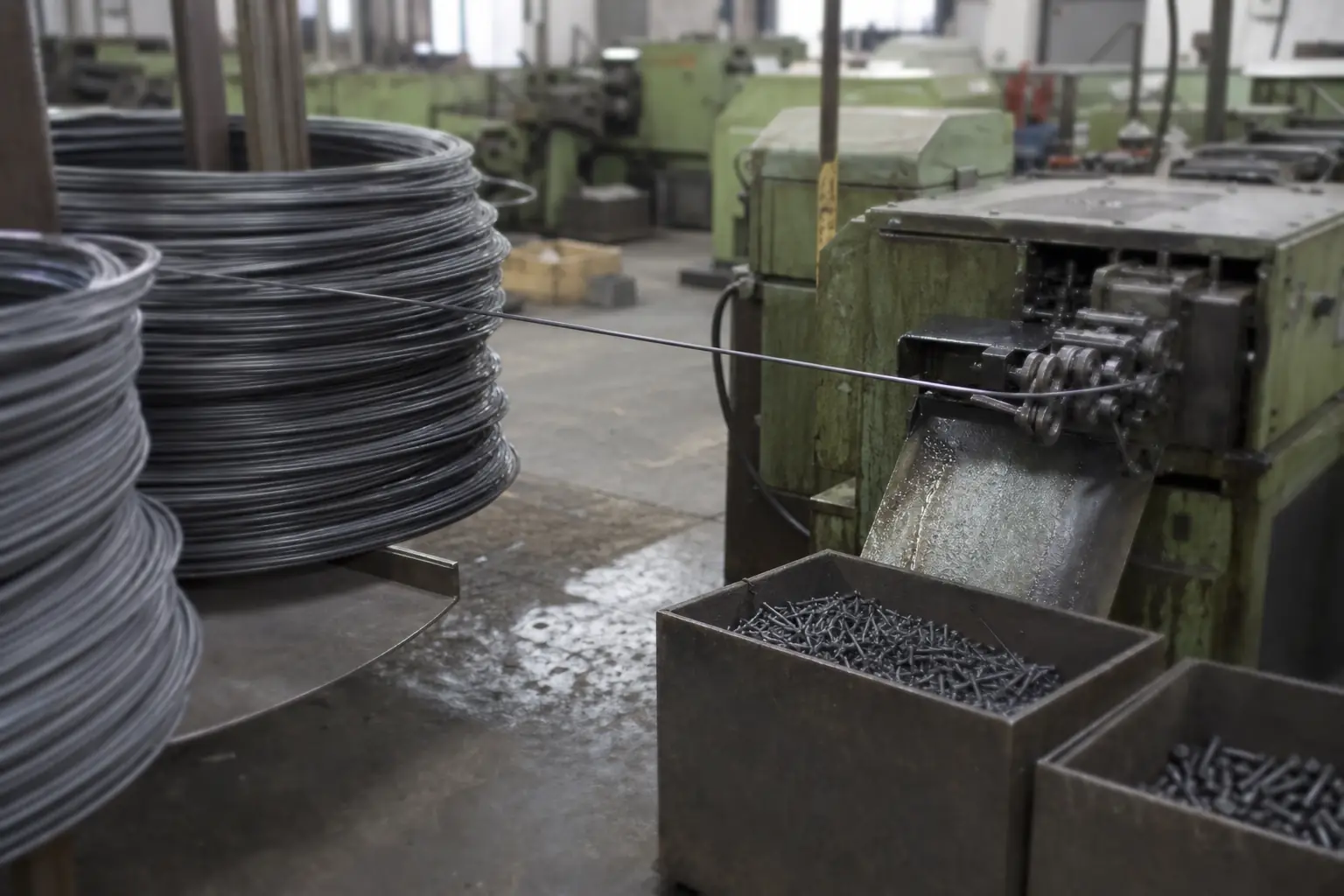
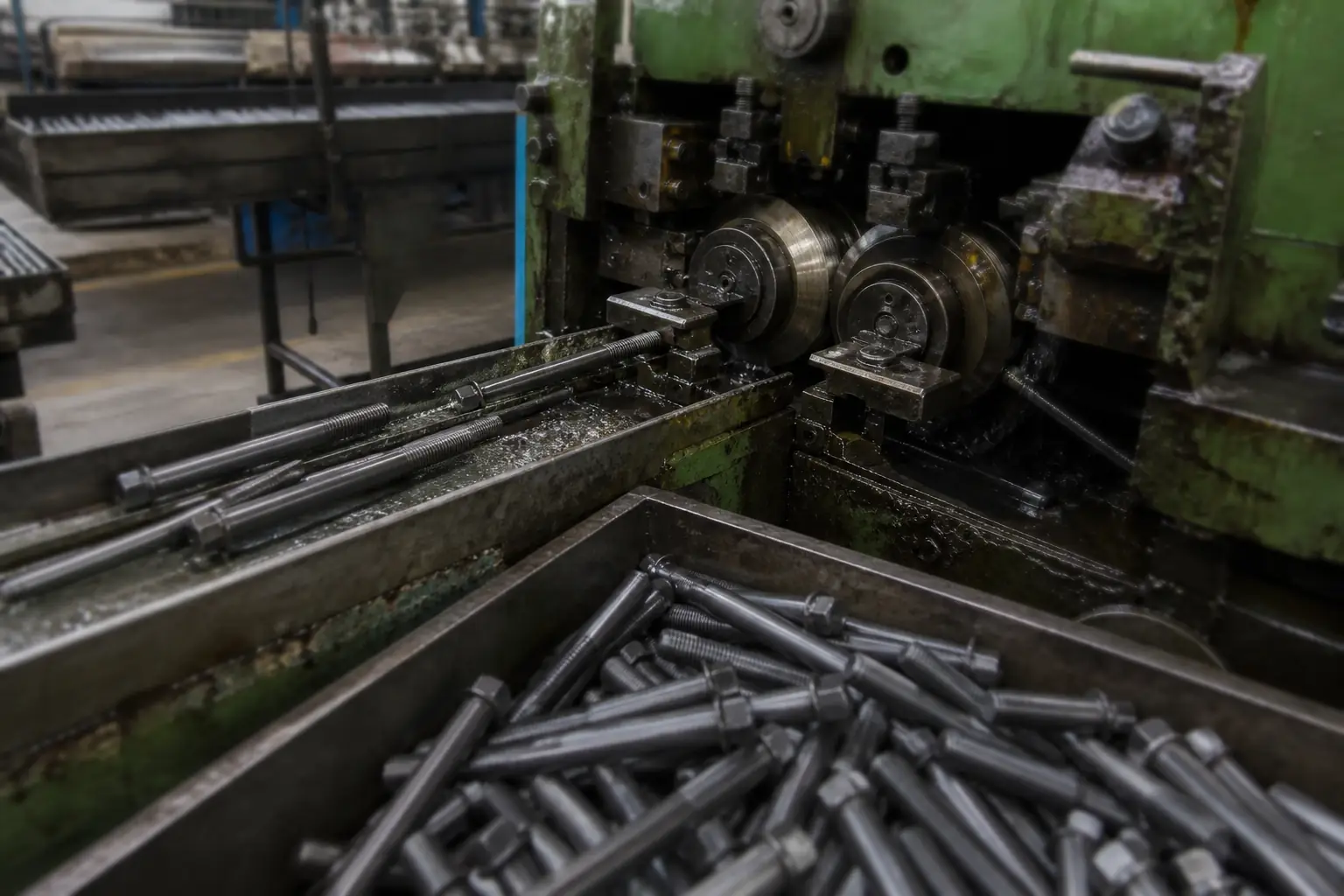
This page covers M30 foundation bolts, l and j form. A non-standard bolt is quoted from the drawing; where one already exists in the catalog, the special is usually a variation on its tooling. Made by cold heading or hot forging.
Minimum order from 2,000 pieces; samples within 7 days of drawing approval.
Custom bolt manufacturingSend a drawing
Applications & Industries for M30 Foundation Bolts
The sectors that buy Foundation Bolts, and the duty each one buys them for. Stocked from M12 to M30.
Industries that specify Foundation Bolts
-
Machine installation
Presses, pumps, compressors and conveyors held down to a concrete base.
-
Structural columns
Column base plates cast into or grouted into the slab.
-
Energy & infrastructure
Masts, gantries and equipment plinths.
-
Plant & machine installation
Anchoring and levelling machines onto bases and frames.
-
Steel fabrication
Hanger rods, tie rods and made-to-length threaded assemblies.
-
Building services
Threaded rod suspension for tray, duct and pipework.
Typical applications
- cast into a concrete pour before the machine arrives
- grouted into a formed pocket and aligned to a template
- holding down plant that transmits vibration into the floor
- clamping a joint from both ends where a headed bolt will not fit
- suspending services from a soffit on threaded rod
- made-to-length assemblies cut and threaded on site
Service conditions to specify against
- Marine and coastal
- Available in A4 (316) stainless for chloride exposure — coastal structures, pool halls, water treatment and deck hardware, where A2 will eventually pit.
- High load
- Supplied in ISO 898-1 property classes, so the joint can be designed to a stated proof load and tightened to a calculated torque rather than by feel.
- Exterior structural
- Hot-dip galvanised options for external steelwork; allow for the thicker coating in the mating thread.
Where to use something else
- Not retrofittable — for an existing slab use a mechanical or chemical anchor instead.
- Not for a joint that must be tightened from one side only — there is no head to hold.
Full application guide: where Foundation Bolts are used, how to specify them, and the cases they are wrong for