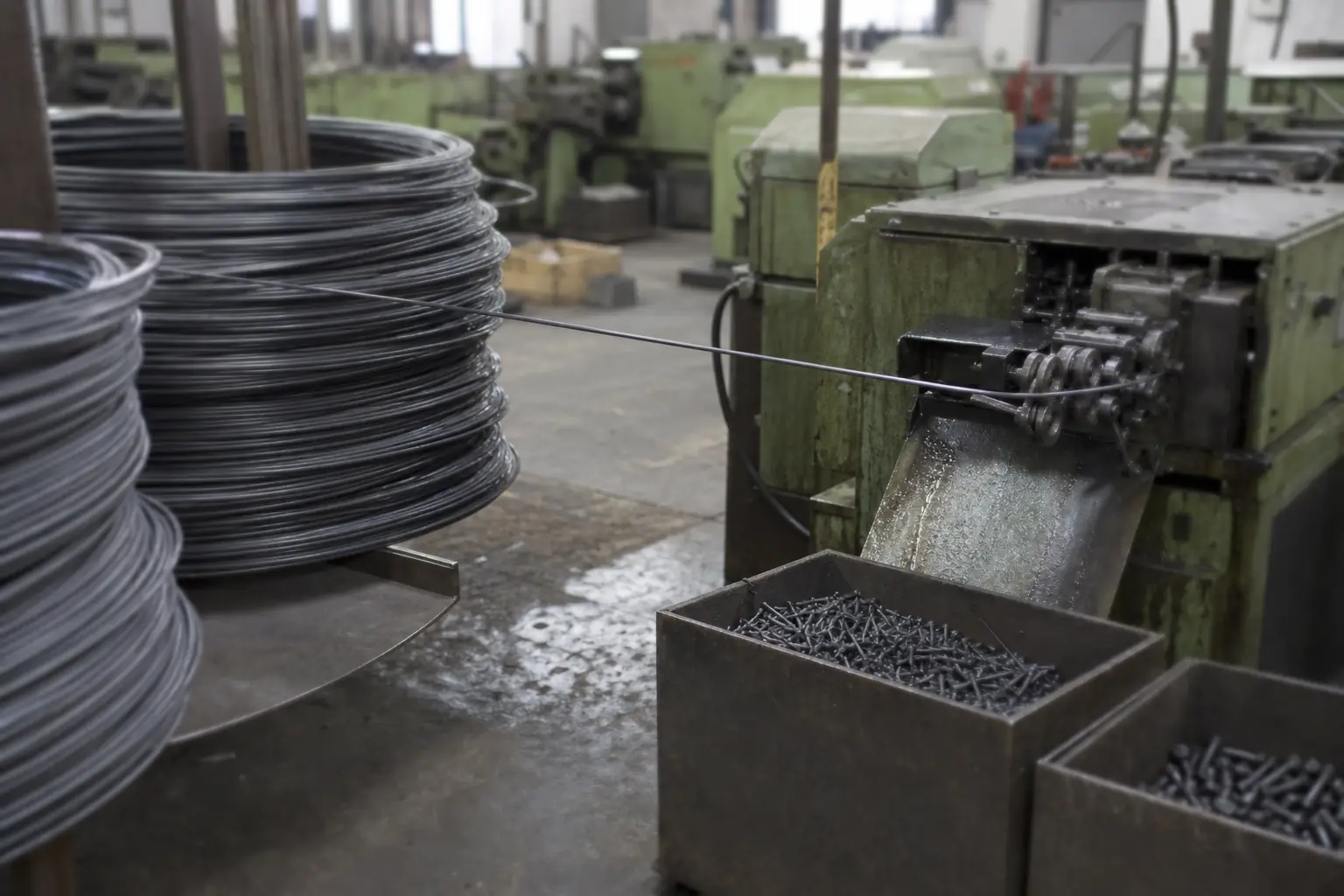
M4 Phillips Pan Head Self-Tapping Screw are manufactured to GB/T 845 / ISO 7049. This page lists the controlling dimensions for the M4 size together with the drive and the installation notes for this type.
M4 Dimensional Row (GB/T 845 / ISO 7049)
| Size | Pitch (mm) | Length L (mm) | Head diameter dk (mm) | Head height k (mm) | Cross recess | Reference standard |
|---|---|---|---|---|---|---|
| M4 | 0.7 | 25 | 8.0 | 2.4 | PH2 | ISO 7045 / GB/T 818 |
Spanner & Drive for M4 Phillips Pan Head Self-Tapping Screw — GB/T 845 / ISO 7049 (Series 032)
M4 Phillips Pan Head Self-Tapping Screw — GB/T 845 / ISO 7049 (Series 032) use a PH2 cross recess. Match the driver bit to the recess (Phillips PH / Pozi PZ are NOT interchangeable).
Common Applications for M4 Phillips Pan Head Self-Tapping Screw — GB/T 845 / ISO 7049 (Series 032)
M4 Phillips Pan Head Self-Tapping Screw — GB/T 845 / ISO 7049 (Series 032) are commonly specified for electronics, PCB hardware, optical mounts and small-scale machinery.
Installation Tips for M4 Phillips Pan Head Self-Tapping Screw — GB/T 845 / ISO 7049 (Series 032)
- Pozidriv (PZ) drivers ride out of Phillips (PH) recesses and vice versa — confirm the recess marking on the head before assembly.
- For automated assembly, an ACR (Anti-Cam-Out Ribs) or torx-equivalent driver gives noticeably longer bit life than plain PH.
- At M4 the joint is sensitive to over-torque — use a torque-limiting driver and check the head doesn't bury into a softer counterpart.
Mating Parts for M4
For M4, pair with a M4 hex nut (ISO 4032 / DIN 934) and, where used, a M4 flat washer (ISO 7089 / DIN 125A) under the head and under the nut.