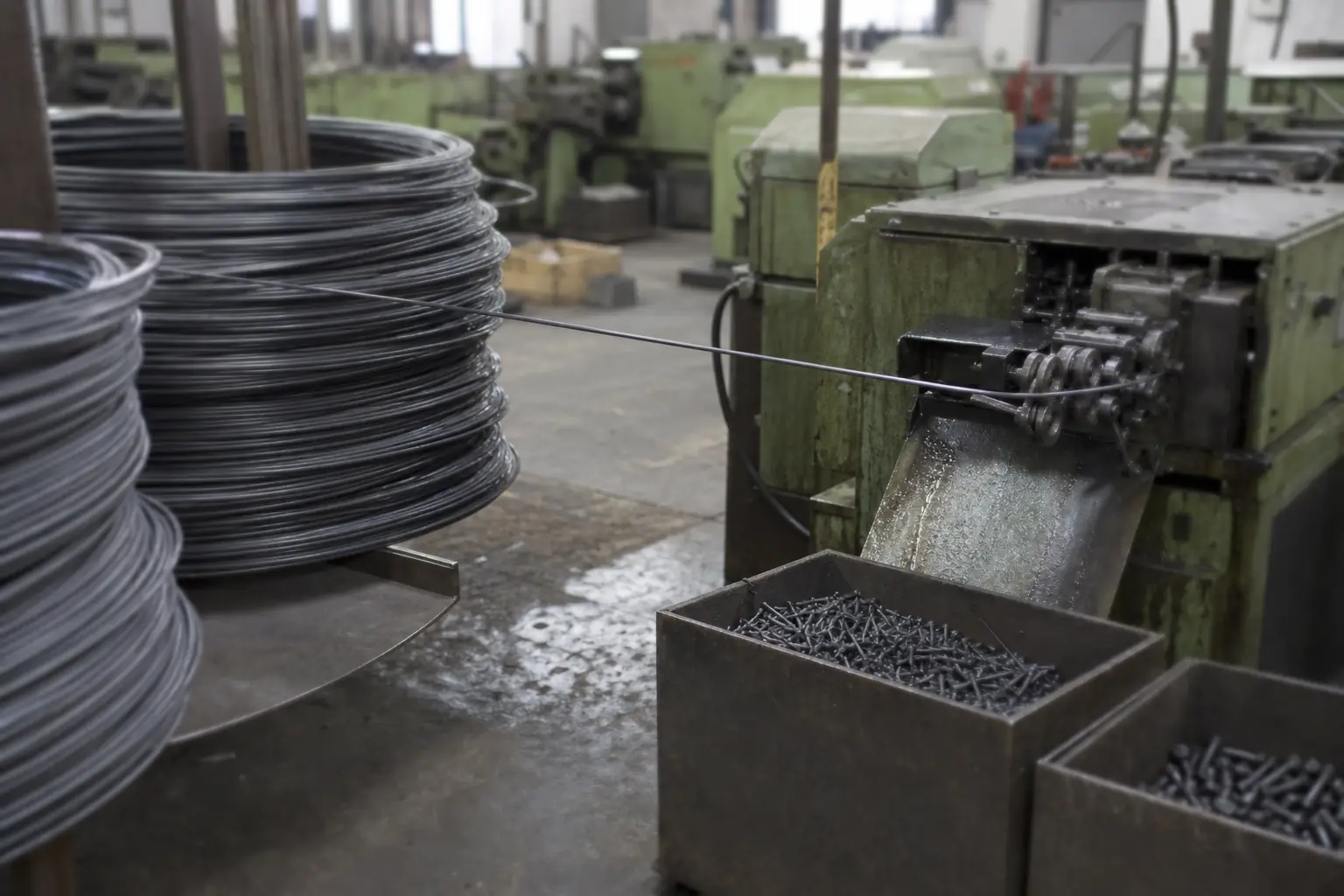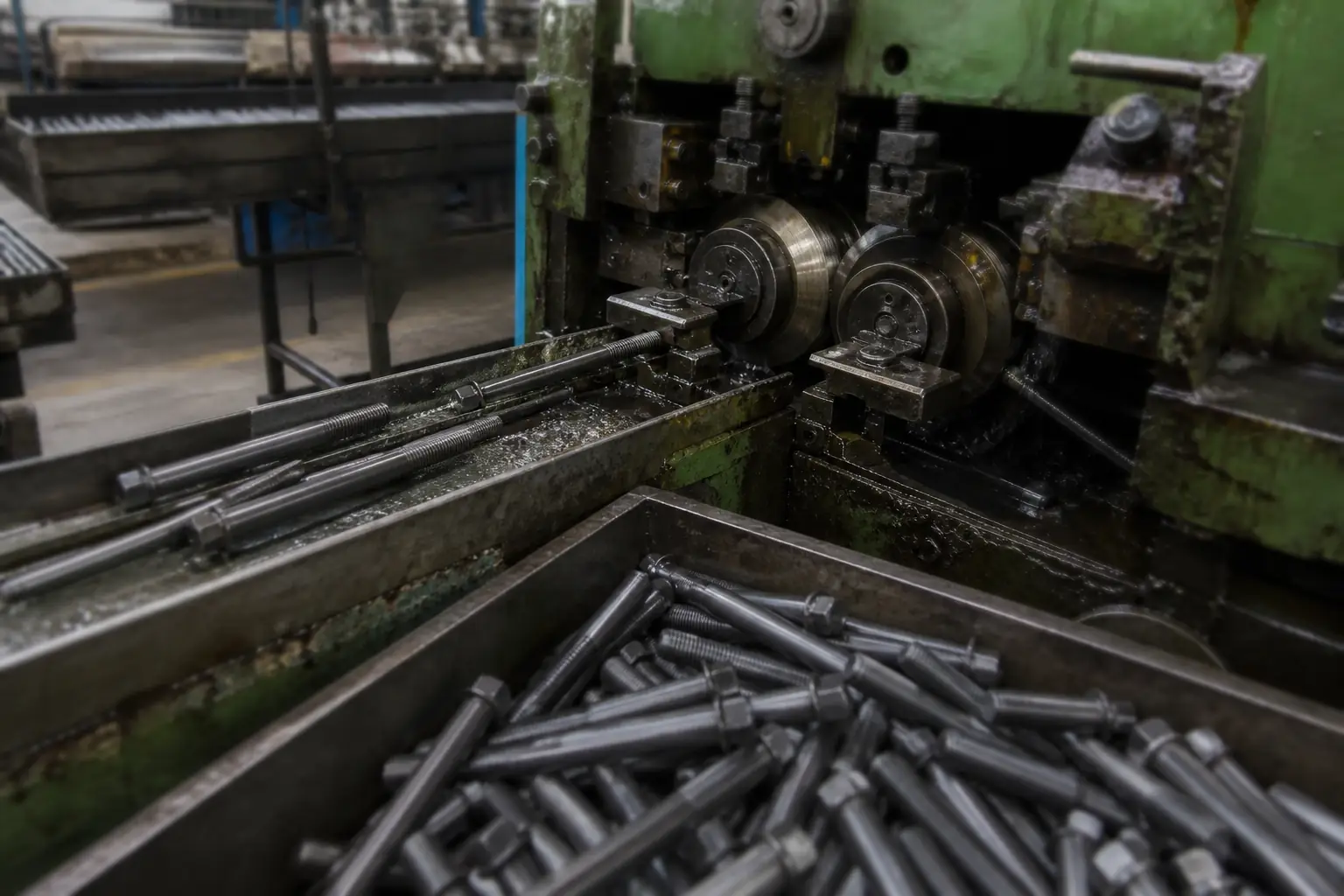

Dimensional data for M5 Hex Flange Nuts to ISO 4161 / DIN 6923, with the drive and the installation notes for this type.
Values are taken from the governing standard rather than from a general machine-thread table, because this type is not selected on one.
M5 Dimensional Row (ISO 4161 / DIN 6923)
| Size | Pitch (mm) | Flange diameter dc (mm) | Nut height m (mm) | Width across flats s (mm) | Reference standard |
|---|---|---|---|---|---|
| M5 | 0.8 | 11.8 | 5.0 | 8.0 | ISO 4161 / DIN 6923 |
Spanner & Drive for M5 Hex Flange Nuts
M5 Hex Flange Nuts have a width across flats of 8.0 mm — fit a 8.0 mm open-ended spanner or socket. A 6-point socket grips all six flats of the 8.0 mm hex and is what to reach for once a fastener has been on and off a few times; a 12-point ring spanner starts rounding a worn head. For repeatable preload, torque rather than feel.
Tightening Torque for M5
| Class 8.8 (dry, ~µ 0.125) | ≈ 5.9 Nm |
|---|---|
| Class 10.9 (dry, ~µ 0.125) | ≈ 8.7 Nm |
| Class 12.9 (dry, ~µ 0.125) | ≈ 10 Nm |
Indicative dry-joint values. Lubrication can lower the required torque by 15–25%. Always confirm against the joint design, especially when going up a strength class.
Proof Load & Strength for M5
Nuts are graded to ISO 898-2 by the proof load the nut itself will hold (classes 04, 05, 5, 6, 8, 10 and 12), not by the 8.8 / 10.9 / 12.9 scale used for bolts. A class-8 nut is the correct mate for a class-8.8 bolt, and the joint is designed on the bolt, so no bolt-tension figure is quoted here.
Installation Tips for M5 Hex Flange Nuts
- Use a 6-point socket where access allows — 12-point sockets are more prone to rounding the corners on smaller sizes.
- On flanged or serrated variants, do NOT add a separate flat washer — the flange already spreads the load and the washer can defeat the locking serrations.
- At M5 the joint is sensitive to over-torque — use a torque-limiting driver and check the head doesn't bury into a softer counterpart.
Mating Parts for M5
Pair M5 with the matching M5 bolt or screw, plus a M5 flat washer where required to distribute load on softer materials.
Custom manufacturing · Made to drawing
Need hex flange nuts in a size this table does not list?
This page covers M5 hex flange nuts. Height and across-flats are the two most often changed — a thinner nut for clearance, a larger hex for a tool that is already on the line. Made by cold heading or tapping.
Minimum order from 2,000 pieces; samples within 7 days of drawing approval.