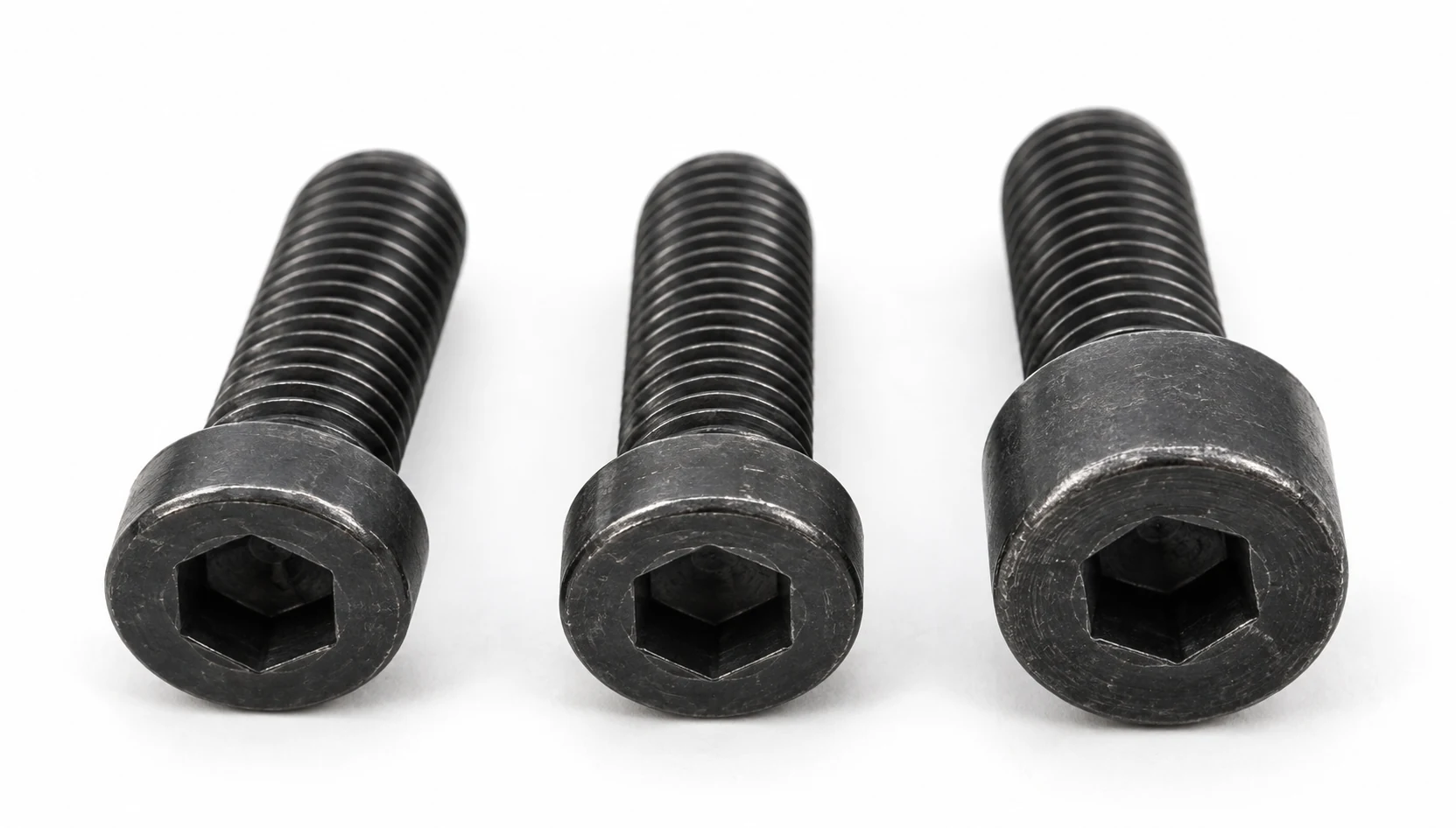
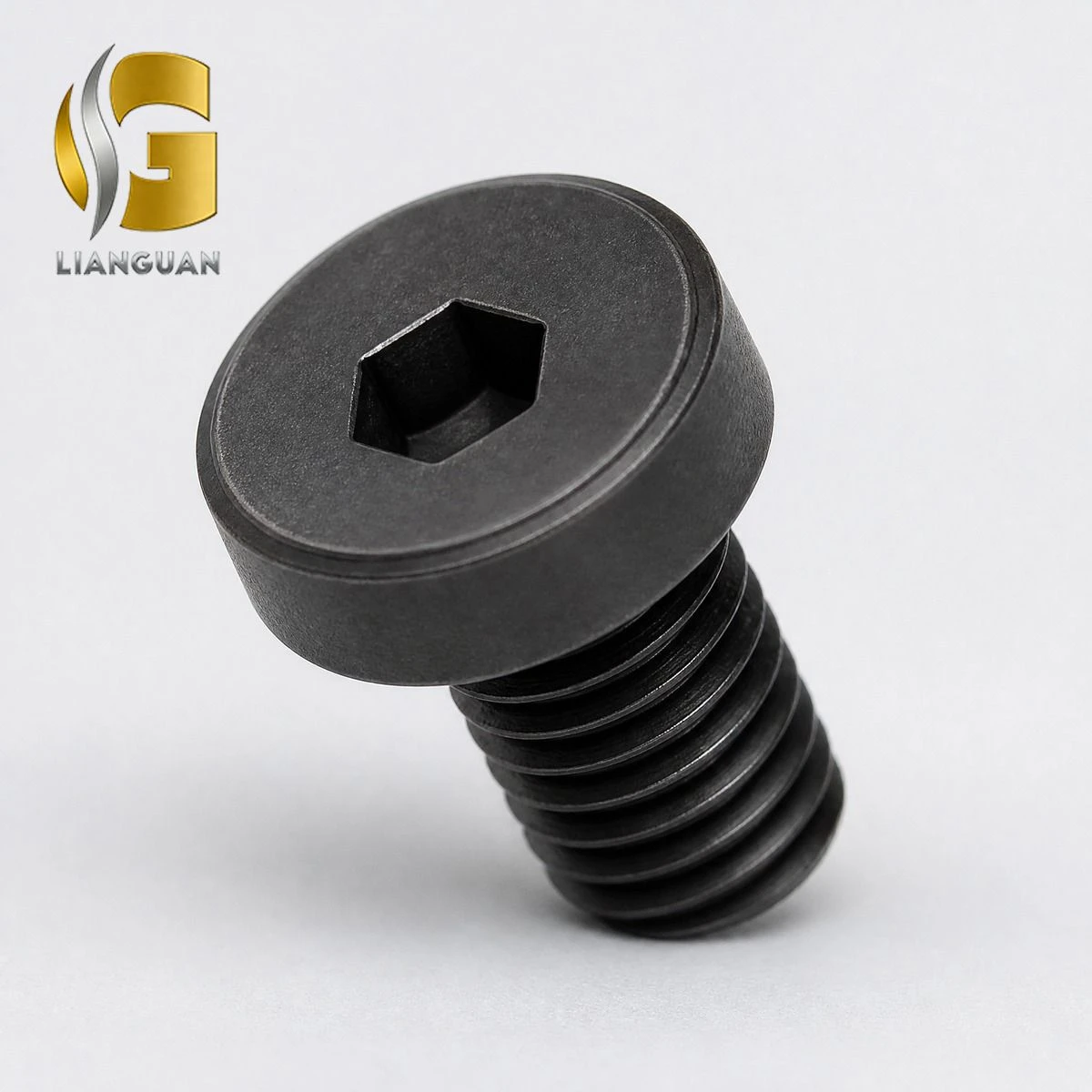
M8 Low Head Socket Cap Screws (DIN 6912) dimensions to DIN 6912: head diameter 13 mm, head height 5 mm, coarse thread pitch 1.25 mm, clearance hole (ISO 273 medium) 9 mm. Tighten to approximately 24 Nm at property class 8.8 in a dry, as-supplied condition.
- Head diameter
- 13 mm
- Head height
- 5 mm
- Coarse thread pitch
- 1.25 mm
- Clearance hole (ISO 273 medium)
- 9 mm
- Tightening torque (class 8.8)
- 24 Nm
Figures are nominal values from the governing standard. Confirm against the tolerance class for your application before machining or ordering.
M8 Low Head Socket Cap Screws (DIN 6912) are manufactured to DIN 6912 with a coarse thread pitch of 1.25 mm. This page lists the controlling dimensions for the M8 size — head geometry, width across flats, matching spanner size — together with the clearance hole, tapping drill and tightening torque used at assembly.
M8 Dimensional Row (DIN 6912)
| Thread size | Pitch (mm) | Head diameter dk (mm) | Head height k (mm) | Hex socket s (mm) | Socket depth t (mm) | Max torque vs DIN 912 | Reference standard |
|---|
| M8 | 1.25 | 13.0 | 5.0 | 5.0 | 2.8 | approx. 65% | DIN 6912 |
Spanner & Drive for M8 Low Head Socket Cap Screws (DIN 6912)
The hex socket for M8 Low Head Socket Cap Screws (DIN 6912) is shown in the spec table — use the matching Allen / hex key (an ISO 2936 hex key set covers the full range). Ball-end keys are for reaching the screw, not for tightening it — finish on the plain end, and on production work use a torque-controlled driver.
Hole Sizes for M8
| Coarse-thread pitch (ISO 724) | 1.25 mm |
|---|
| Through-hole / clearance (ISO 273 medium) | 9 mm |
|---|
| Tapping drill, coarse thread | 6.75 mm |
|---|
Tightening Torque for M8
| Class 8.8 (dry, ~µ 0.125) | ≈ 24 Nm |
|---|
| Class 10.9 (dry, ~µ 0.125) | ≈ 36 Nm |
|---|
| Class 12.9 (dry, ~µ 0.125) | ≈ 42 Nm |
|---|
Indicative dry-joint values. Lubrication can lower the required torque by 15–25%. Always confirm against the joint design, especially when going up a strength class.
Proof Load & Strength for M8
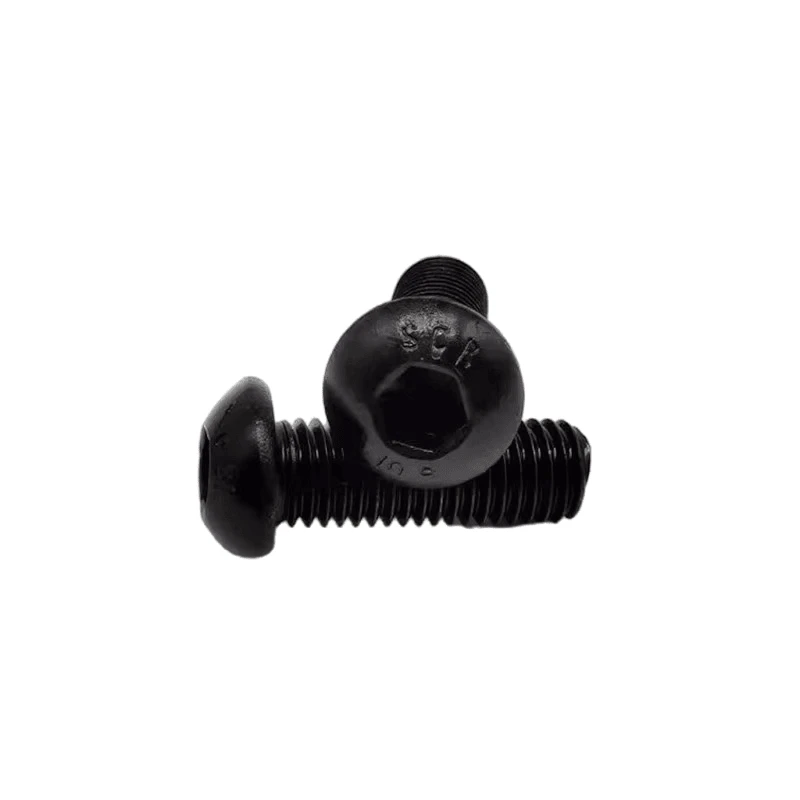
This is a reduced-height head. The head, not the thread, limits what the screw will carry — ISO 7380-1 caps a button head at roughly 80% of the thread's capacity — so the thread's proof load overstates the assembly. Size the joint on the head, or use a cap screw where the full class strength is needed.
Mating Parts for M8
For M8, pair with a M8 hex nut (ISO 4032 / DIN 934) and, where used, a M8 flat washer (ISO 7089 / DIN 125A) under the head and under the nut.
When to Step Up or Down from M8
When the joint preload approaches the proof load of M8 class 8.8, step up to M10 class 8.8 (or move to M8 class 10.9). When the joint is over-specified, M6 often saves weight and cost without losing the safety margin.
Custom manufacturing · Made to drawing
Need low head socket cap screws (din 6912) in a size this table does not list?
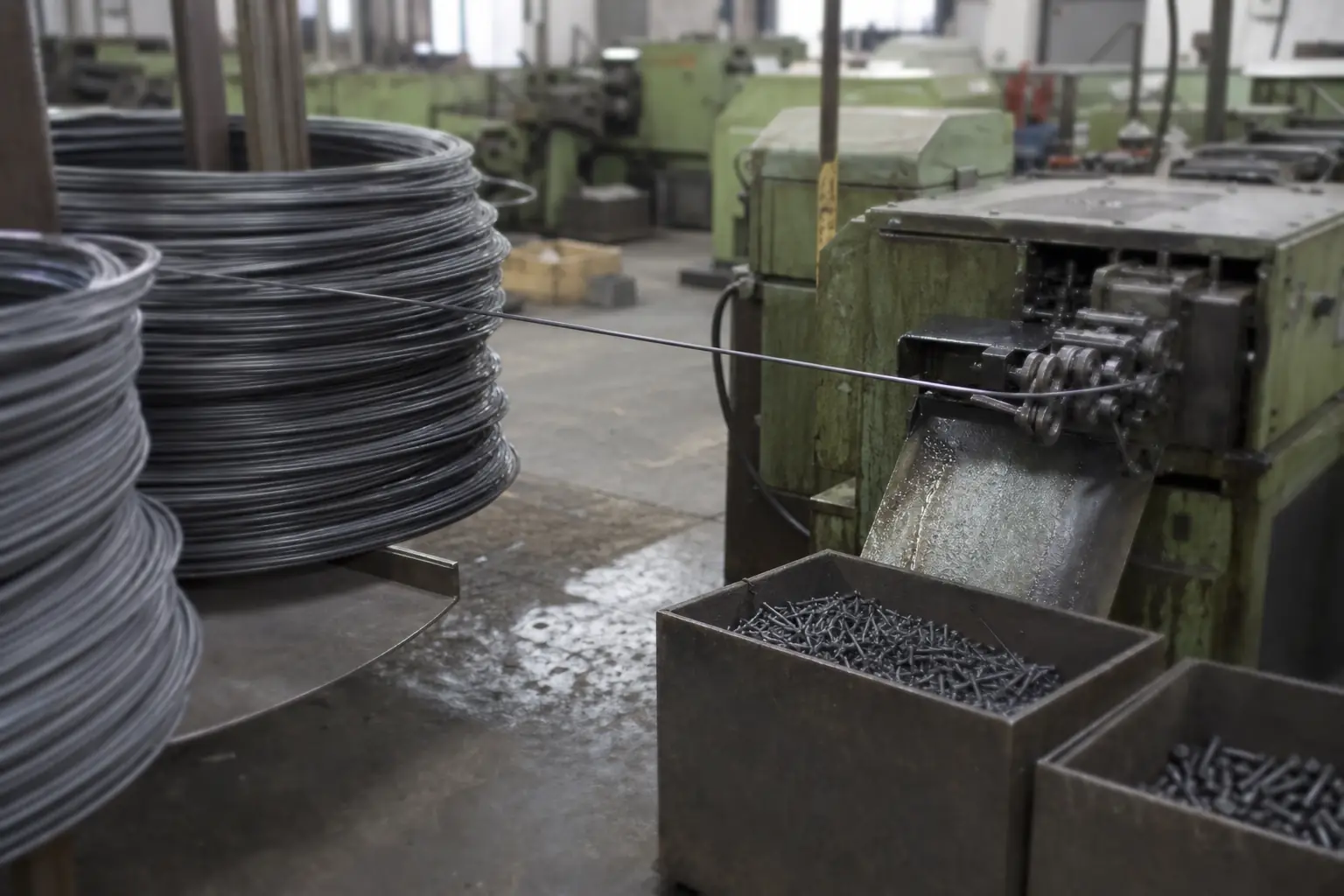
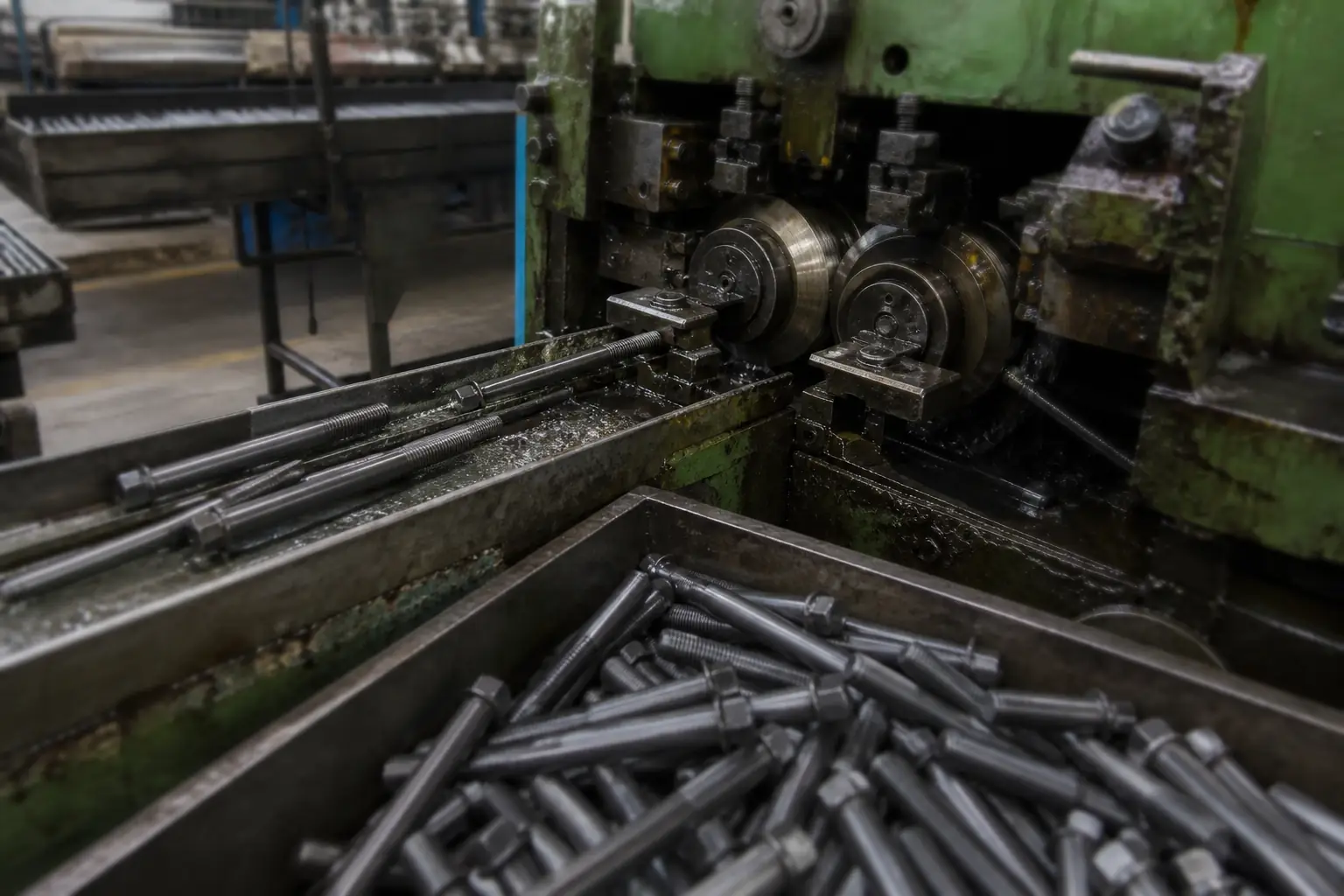
This page covers M8 low head socket cap screws (din 6912). Lengths and thread lengths outside the standard table are the commonest request, followed by a drive the standard does not offer and a head marked with your own part number. Made by cold heading or warm forging.
Minimum order from 2,000 pieces; samples within 7 days of drawing approval.
Custom screw manufacturingSend a drawing
Applications & Industries for M8 Low Head Socket Cap Screws
Low Head Socket Cap Screws are bought for a small number of well-defined jobs. These are the ones we ship them for. Stocked from M3 to M12.
Industries that specify Low Head Socket Cap Screws
-
Machine tools & fixtures
Counterbores too shallow for a standard cap screw.
-
Mould & die making
Fixings in plates where depth is at a premium.
-
Robotics & automation
Compact joints in moving assemblies.
-
Energy & infrastructure
Tower, pipework, switchgear and plant fixings specified for long service life and inspectable joints.
-
Maintenance & MRO
Stocked replacements matched to an existing property class, thread and finish.
-
Food, pharma & cleanroom
Stainless assemblies that are washed down, where the finish matters as much as the strength.
Typical applications
- where a standard DIN 912 head would stand proud
- fixings in a shallow counterbore
- joints where the property class is stated on the drawing
- clamping two machined faces to a calculated preload
- bolting brackets, motors and gearboxes to a frame
- assemblies that are dismantled for service and re-torqued
Service conditions to specify against
- Marine and coastal
- Available in A4 (316) stainless for chloride exposure — coastal structures, pool halls, water treatment and deck hardware, where A2 will eventually pit.
- High load
- Supplied in ISO 898-1 property classes, so the joint can be designed to a stated proof load and tightened to a calculated torque rather than by feel.
- Torque and preload
- The joint is designed around bolt tension, so lubrication, coating and the friction coefficient all change the torque figure — state them together.
Where to use something else
- The smaller socket takes less torque than a standard cap screw — do not substitute one into a joint torqued for DIN 912.
- Do not use a machine thread into unthreaded sheet or timber; use a tapping screw, rivet nut or insert made for that parent material.
Full application guide: where Low Head Socket Cap Screws are used, how to specify them, and the cases they are wrong for