
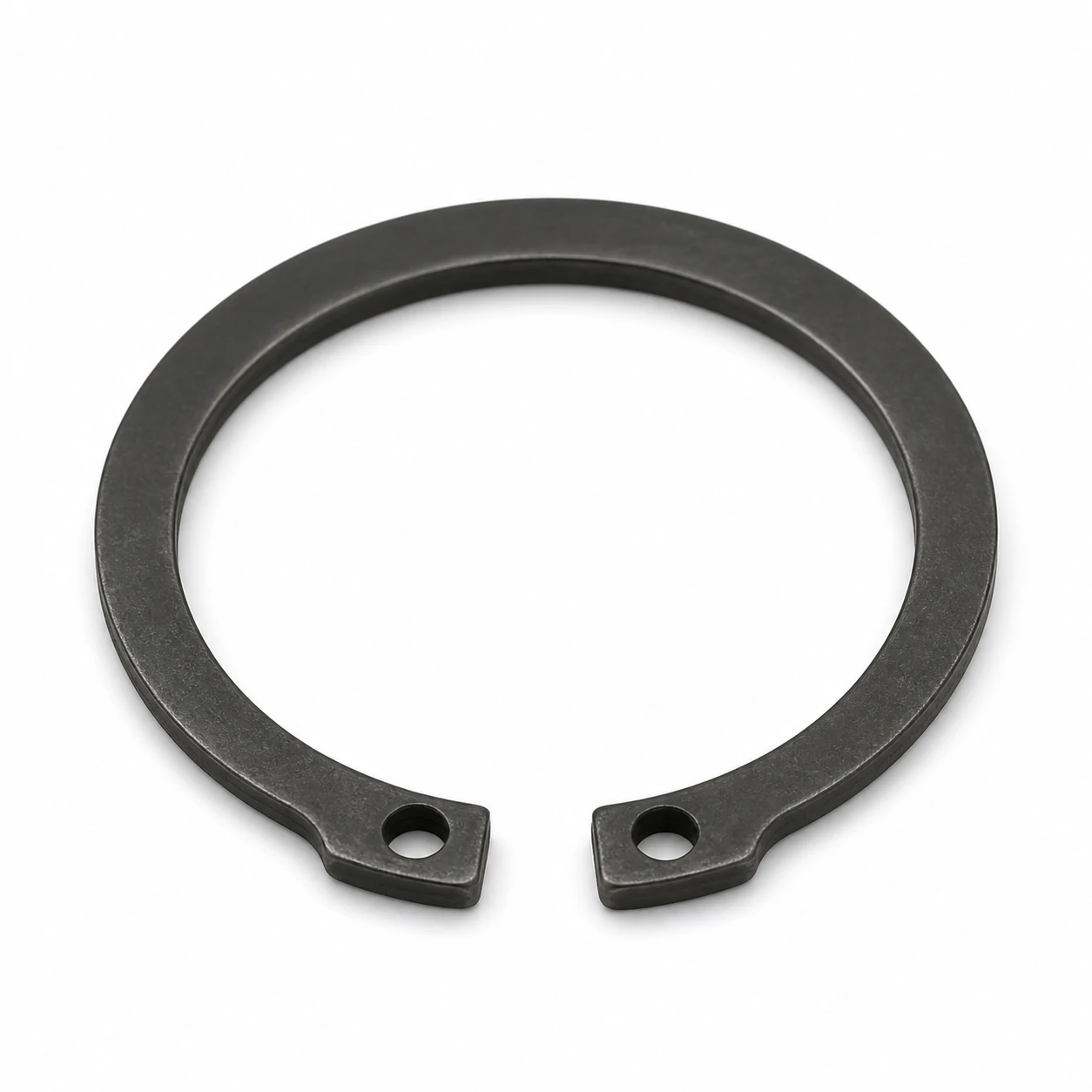
Specification summary of DIN as applied to retaining ring (circlip): the dimensions the standard controls, the tolerance and product grades it defines, the full specified size range, and the equivalent DIN/ISO/ASME designations.
DIN — Scope
DIN specifies the dimensions and tolerances of retaining ring (circlip) — iso / din (series 147). Material, property class, surface finish and packaging are governed by separate documents in the same standards family (for example ISO 898-1 for the mechanical property classes of bolts and screws).
Tolerance & Product Grades
DIN, alongside the related ISO / DIN entries on this site, specifies product grades (typically A or B for fine work and C for general engineering) and tolerance classes for the controlling dimensions. Choose the grade against the precision your application requires.
Dimensions Specified by DIN
| Nominal diameter (mm) | Ring diameter d1 (mm) | Groove diameter d2 (mm) | Thickness s (mm) | Type | Reference standard |
|---|---|---|---|---|---|
| 8 | 7.4 | 7.1 | 0.8 | External | DIN 471 / GB/T 894 |
| 10 | 9.3 | 9.0 | 1.0 | External | DIN 471 / GB/T 894 |
| 12 | 11.1 | 10.8 | 1.0 | External | DIN 471 / GB/T 894 |
| 16 | 15.0 | 14.7 | 1.0 | External | DIN 471 / GB/T 894 |
| 20 | 19.0 | 18.7 | 1.2 | External | DIN 471 / GB/T 894 |
| 25 | 23.9 | 23.6 | 1.2 | External | DIN 471 / GB/T 894 |
| 30 | 28.9 | 28.6 | 1.5 | External | DIN 471 / GB/T 894 |
| 40 | 38.5 | 38.2 | 1.75 | External | DIN 471 / GB/T 894 |
| 50 | 48.5 | 48.2 | 2.0 | External | DIN 471 / GB/T 894 |
| 60 | 58.3 | 58.0 | 2.0 | External | DIN 471 / GB/T 894 |
| 80 | 78.0 | 77.7 | 2.5 | External | DIN 471 / GB/T 894 |
| 100 | 98.0 | 97.7 | 3.0 | External | DIN 471 / GB/T 894 |
Equivalent Standards
Where direct equivalents exist (ISO ↔ DIN, ISO ↔ ASME), they are listed on the parent Retaining Ring (Circlip) — ISO / DIN (Series 147) page. Always confirm against the dimensions on this page, since some "equivalent" standards differ in tolerances and head geometry.
When to Specify DIN
DIN is still widely used in European mechanical engineering and as a cross-reference on legacy drawings; its ISO equivalent is preferred for new designs.