Skip to content
Seals · ISO 3601-1 (fluid power — O-rings, inside diameters and cross-sections)

ISO 3601-1 Metric O-Rings (ISO 3601) Specification

Dimensional table, tolerance classes and the DIN / ISO / ASME parts that supersede or match this standard.

ISO 3601-1 specifies the dimensions and tolerances for metric o-rings (iso 3601). The full dimensional table is reproduced below, followed by the DIN, ISO and ASME parts that match or supersede it.

Standard
ISO 3601-1
Product
Metric O-Rings (ISO 3601)
Governing standards
ISO 3601-1 (fluid power — O-rings, inside diameters and cross-sections)

Equivalence between national standards is dimensional, not always metallurgical. Check the property class separately when substituting.

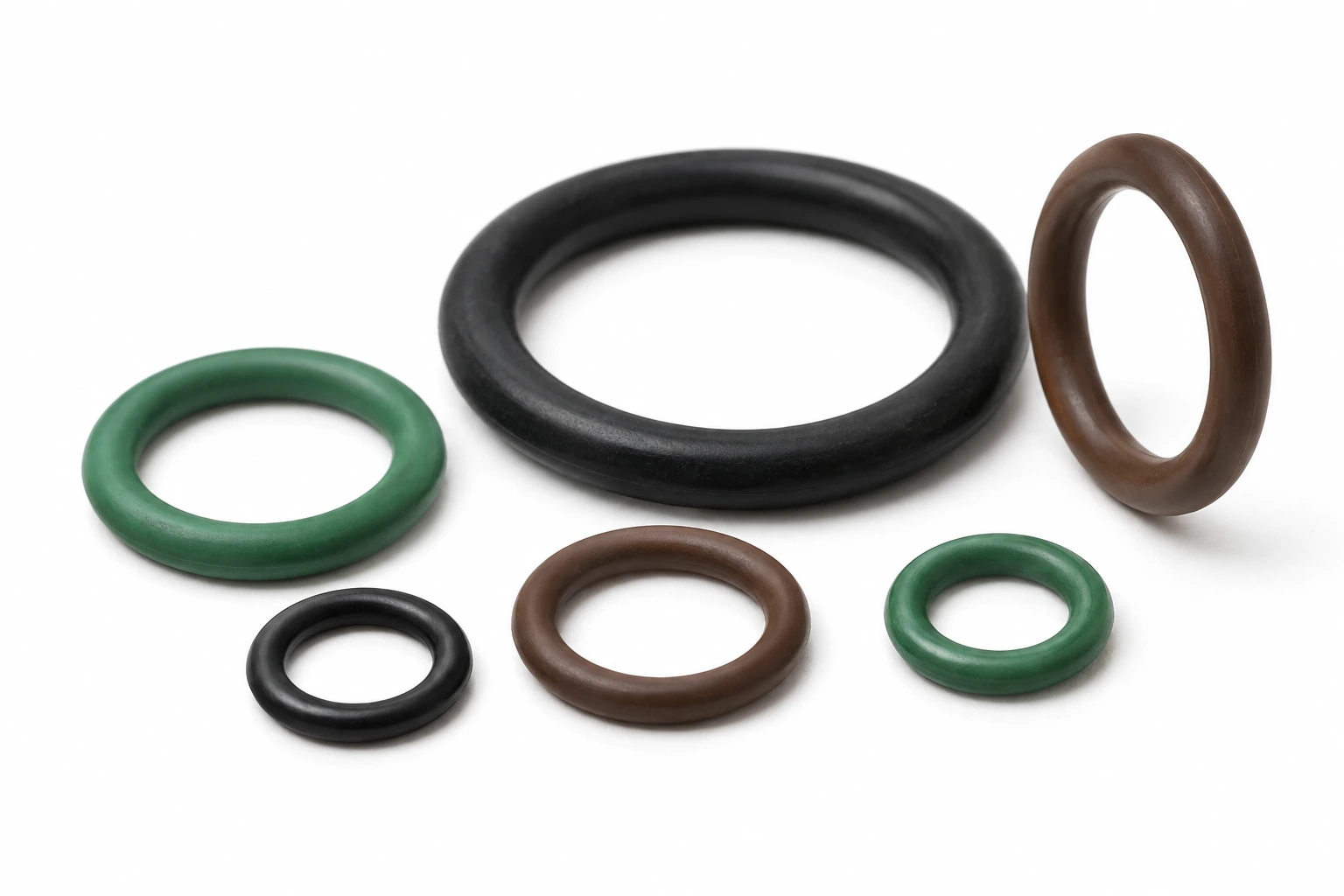
ISO 3601-1 Metric O-Rings (ISO 3601) Specification reference image

Specification summary of ISO 3601-1 as applied to metric o-rings (iso 3601): the dimensions the standard fixes, the full size range supplied, and the related designations commonly cross-referenced.

ISO 3601-1 — Scope

ISO 3601-1 specifies the dimensional requirements for metric o-rings (iso 3601).

Material, surface condition and any performance rating are set by separate documents specific to this part family — ISO 898-1 and ISO 898-2, which govern bolt and nut property classes, do not apply here.

Tolerance & Product Grades

Tolerances for metric o-rings (iso 3601) are given as limits on the individual dimensions in the table rather than as a fastener product grade.

Where a general-tolerance class is cited on the drawing instead, it applies to the dimensions not otherwise toleranced.

Dimensions Specified by ISO 3601-1

Cross-section (mm)Typical inside-diameter range (mm)Common compoundsNotes
1.01.0 u2013 20NBR, FKM, EPDM, siliconeminiature and pneumatic
1.52.0 u2013 40NBR, FKM, EPDM, siliconesmall pneumatic and instrument
1.781.78 u2013 50NBR, FKM, EPDMnearest metric equivalent to the 1/16 in section
2.03.0 u2013 100NBR, FKM, EPDM, siliconegeneral hydraulic and pneumatic
2.55.0 u2013 150NBR, FKM, EPDMgeneral hydraulic
3.06.0 u2013 200NBR, FKM, EPDMgeneral hydraulic
3.510 u2013 250NBR, FKMhydraulic
4.012 u2013 300NBR, FKMhydraulic and larger flanges
5.020 u2013 400NBR, FKMlarge flanges and covers
5.3320 u2013 400NBR, FKMnearest metric equivalent to the 3/16 in section
6.025 u2013 500NBR, FKMlarge covers and housings

Equivalent Standards

Where direct equivalents exist (ISO ↔ DIN, ISO ↔ ASME), they are listed on the parent Metric O-Rings (ISO 3601) page.

Always confirm against the dimensions on this page, since some "equivalent" standards differ in tolerances and head geometry.

Companion Standards

ISO 3601-1 controls only the geometry of metric o-rings (iso 3601). Surface finish is governed by separate finish standards (for example ISO 4042 for electroplating), and corrosion testing by ISO 9227 (neutral salt spray). Mechanical performance is set by the standards specific to this part family, not by ISO 898-1 or ISO 898-2, which apply to bolts, screws and nuts.
Technical Drawing

Customize the parameters below — every spec field is editable, and the drawing redraws to match the values you choose. Changing the size will snap the other fields to that size's standard values; you can then override any individual value.

Sends the selected values to the quote form below.

Request a Quote

The form below follows the current technical drawing configuration. Change the drawing values above and the request details update automatically.

Request a Quotation

Specification
Business Information

Dimensions & Specifications (ISO 3601-1 (fluid power — O-rings, inside diameters and cross-sections))

Cross-section (mm)Typical inside-diameter range (mm)Common compoundsNotes
1.01.0 u2013 20NBR, FKM, EPDM, siliconeminiature and pneumatic
1.52.0 u2013 40NBR, FKM, EPDM, siliconesmall pneumatic and instrument
1.781.78 u2013 50NBR, FKM, EPDMnearest metric equivalent to the 1/16 in section
2.03.0 u2013 100NBR, FKM, EPDM, siliconegeneral hydraulic and pneumatic
2.55.0 u2013 150NBR, FKM, EPDMgeneral hydraulic
3.06.0 u2013 200NBR, FKM, EPDMgeneral hydraulic
3.510 u2013 250NBR, FKMhydraulic
4.012 u2013 300NBR, FKMhydraulic and larger flanges
5.020 u2013 400NBR, FKMlarge flanges and covers
5.3320 u2013 400NBR, FKMnearest metric equivalent to the 3/16 in section
6.025 u2013 500NBR, FKMlarge covers and housings

Applications & Industries

Where Metric O-Rings are used, and what decides the specification in each case. Stocked from 1.0 to 6.0 (inside diameter).

Industries that specify Metric O-Rings

  • Hydraulics Port, cover and piston seals.
  • Pneumatics Cylinder and valve seals.
  • Food and beverage EPDM and silicone compounds.
  • Chemical plant FKM for aggressive media.
  • Hydraulics & pneumatics Static and dynamic sealing in cylinders and valve bodies.
  • Process & food equipment Sealing at joints that are cleaned and inspected.

Typical applications

  • specifying inside diameter, cross-section and compound together
  • matching the compound to the fluid and the temperature
  • checking the groove dimensions give the right squeeze
  • using a back-up ring at high pressure
  • sealing a joint against fluid or air pressure
  • excluding dust and moisture from a housing

Service conditions to specify against

Sealed joints
Used where the fixing has to keep water or air out as well as hold — the elastomer, not the fastener, decides service life.

Where to use something else

  • Do not substitute an NBR ring for an FKM one because the dimensions match; the size fits and the compound fails, which looks like a leak with no cause.

Full application guide: where Metric O-Rings are used, how to specify them, and the cases they are wrong for

Inside the plant

Manufactured in our own plant

This part is cold-formed, threaded, heat-treated and finished in-house. The stages below are where its class and finish are actually decided.

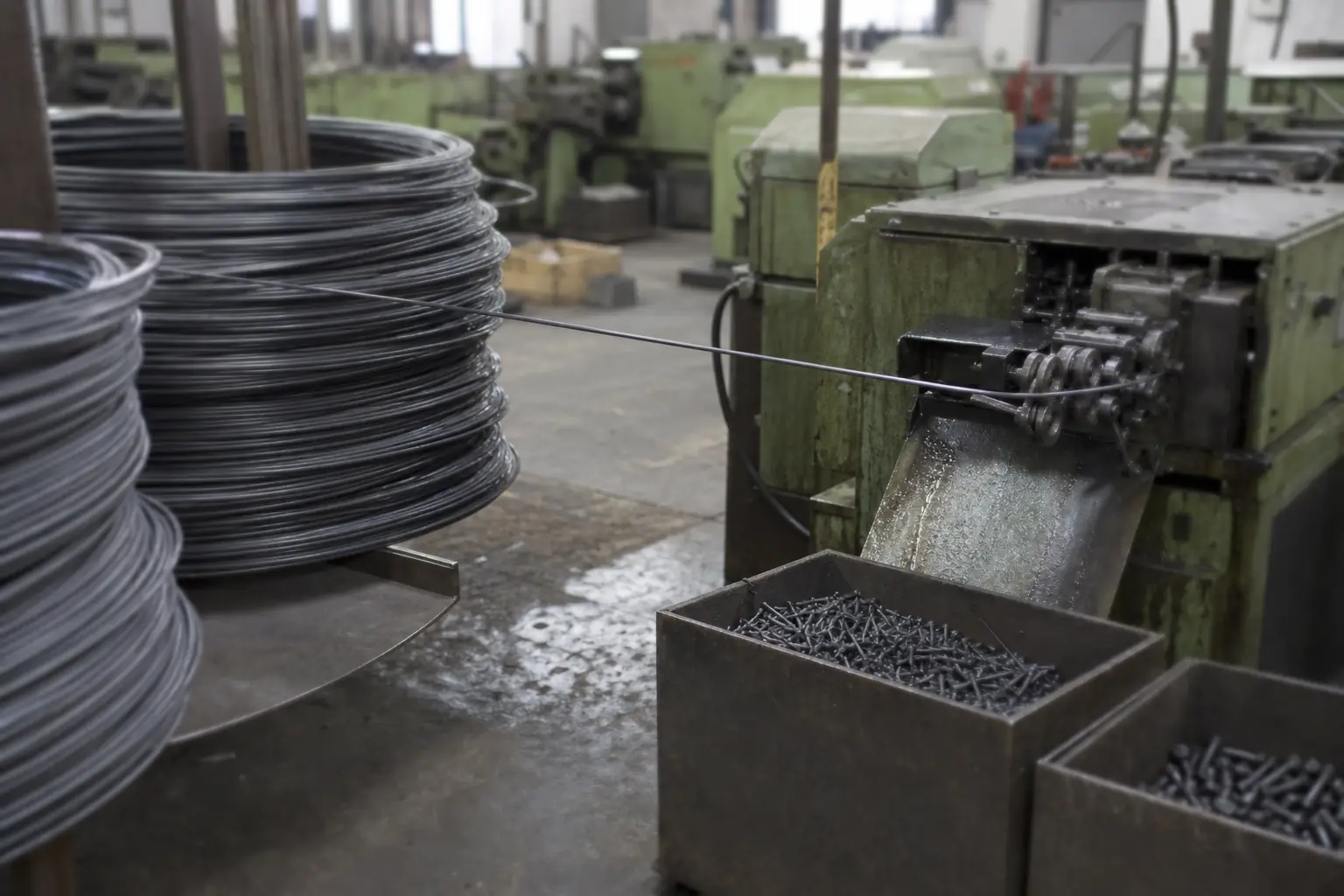
  1. Wire rod feeding into a cold heading machine
    01

    Cold heading

    Wire rod is drawn to size and cold-formed into blanks. Forming rather than cutting keeps the grain flow continuous around the head, which is where a bolt is most likely to fail.

    Head dimensions and under-head radius checked at set-up and per shift.

  2. Thread rolling machine producing bolt threads
    02

    Thread rolling

    Threads are rolled between hardened dies rather than cut. Rolled threads are stronger in fatigue than cut threads and hold pitch and flank angle far more consistently across a batch.

    Go / no-go ring gauges to ISO 965 tolerance class 6g.

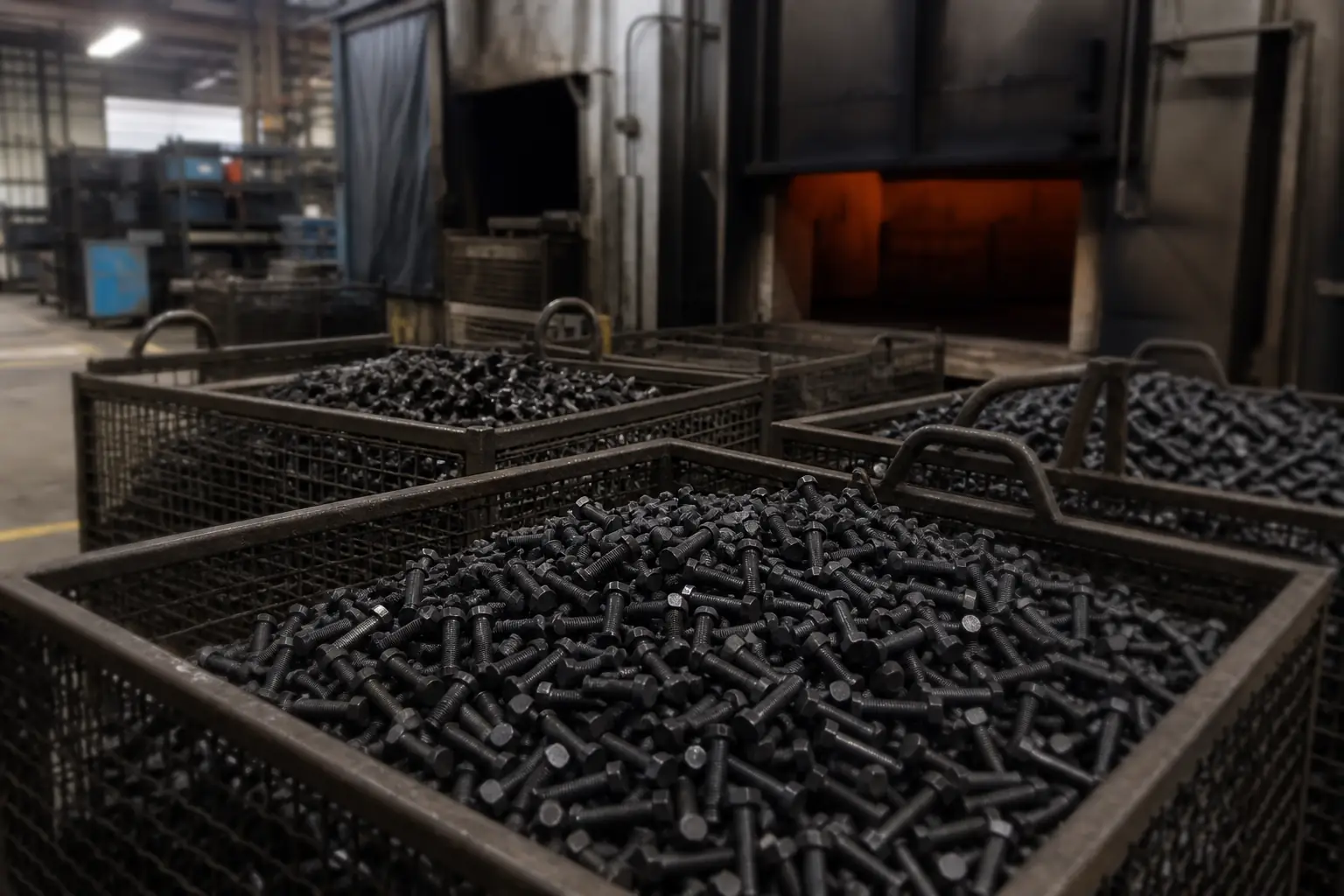
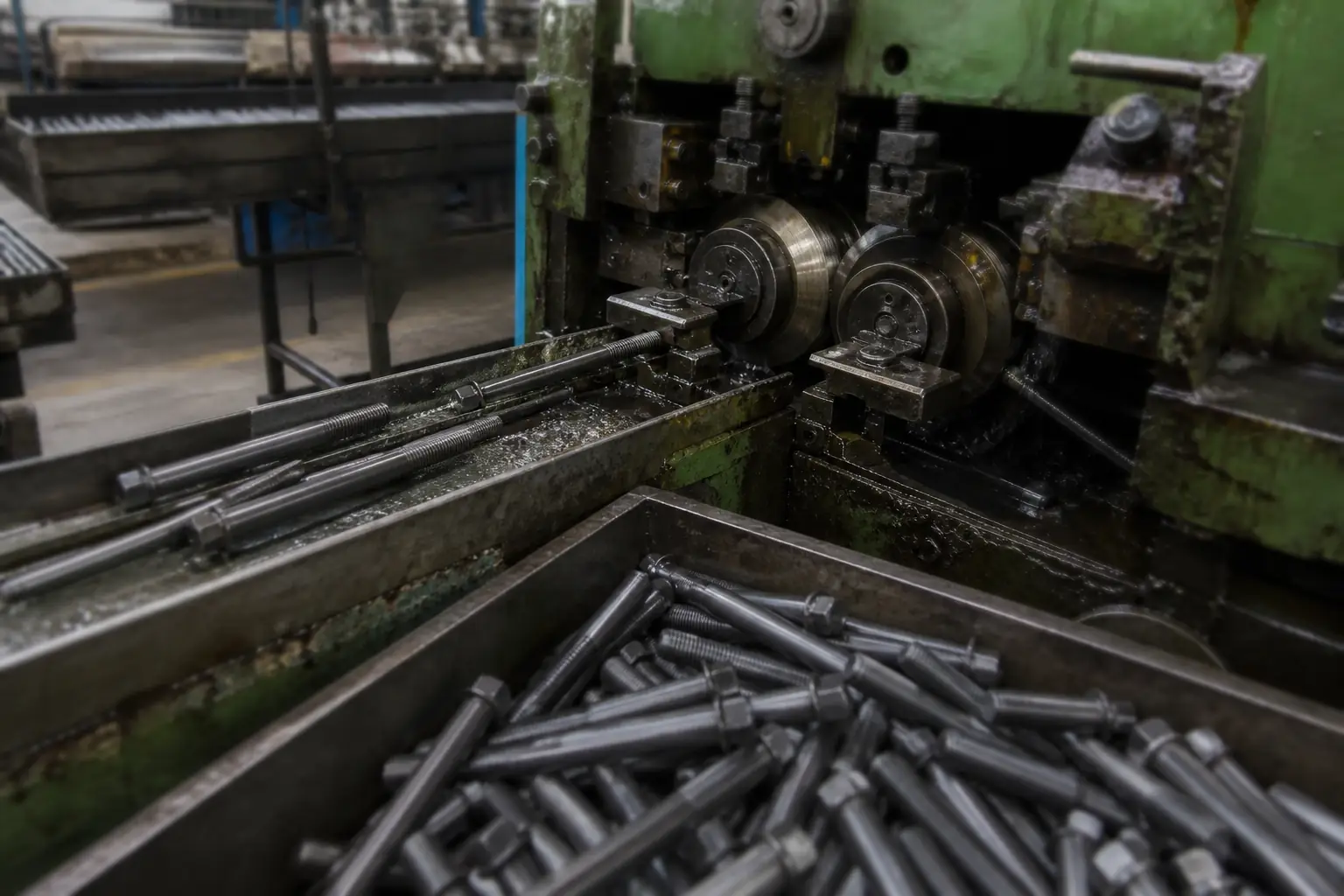
  3. Baskets of bolts staged for heat treatment
    03

    Heat treatment

    Quench-and-temper brings carbon and alloy steel to the property class ordered — 8.8, 10.9 or 12.9 — with the furnace charge tracked so a finished lot can be traced back to it.

    Core hardness and tensile tested per lot to ISO 898-1.

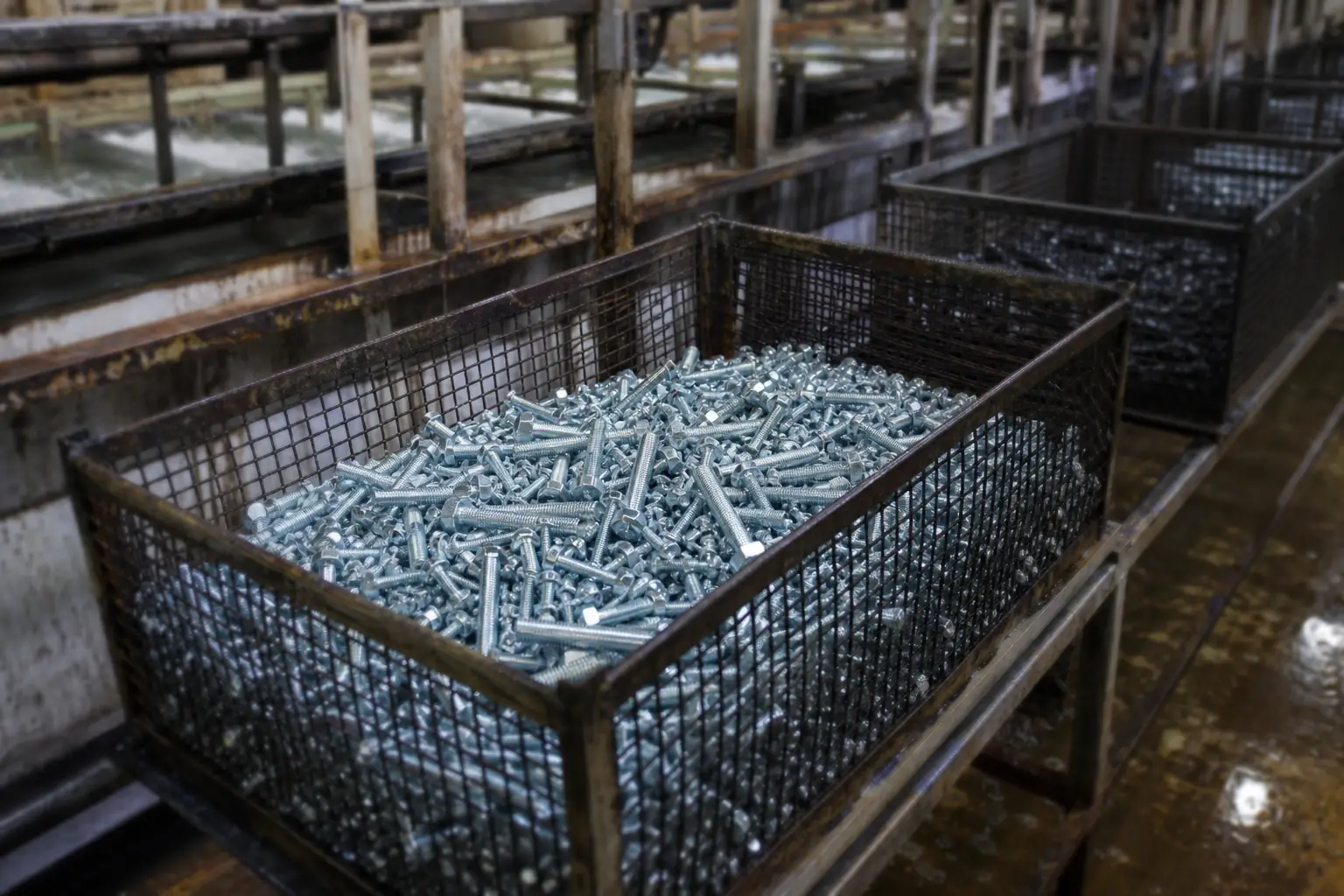
  4. Zinc plated bolts in a treatment basket
    04

    Surface treatment

    Zinc, zinc-nickel, hot-dip galvanizing, black oxide, phosphate and Dacromet, selected against the service environment rather than against the price list.

    Coating thickness and neutral salt spray hours to ISO 9227.

Frequently Asked Questions

Which edition of ISO 3601-1 does this table follow?

The table reproduces the dimensions we supply metric o-rings (iso 3601) to. We do not publish an edition year against it, so where the edition is contractually significant, cite the edition you require on the enquiry and we will confirm it against the table before quoting.

What does ISO 3601-1 specify for Metric O-Rings (ISO 3601)?

ISO 3601-1 specifies the dimensions and tolerances of metric o-rings (iso 3601). Material and property class are governed by separate standards in the same family.

Does ISO 3601-1 specify the mechanical strength?

No. ISO 3601-1 controls the dimensional requirements for metric o-rings (iso 3601). Mechanical performance is set by the standards specific to this part family — ISO 898-1 and ISO 898-2 apply to bolts, screws and nuts and do not cover this product.

Can I substitute ISO 3601-1 for the corresponding DIN standard on a drawing?

On modern drawings the ISO standard is the master reference; the older DIN equivalent is a cross-reference. For most dimensional purposes the parts are interchangeable, but check tolerance grades and the head height — these are the most common points of divergence.

How do I request a quotation?

Use the technical drawing on this page to pick the exact configuration, then submit it with the quote form. We respond within one business day.