
316 Stainless Steel Gains Edge Over 304 for Marine Fasteners
FastenMaster's new MarineLOK line utilizes 316 stainless steel to combat corrosion in marine environments, offering a high-strength alternative to conventional coated fasteners. The molybdenum-bearing alloy significantly outperforms standard 304 stainless in chloride resistance, making it ideal for docks, piers, and coastal construction.
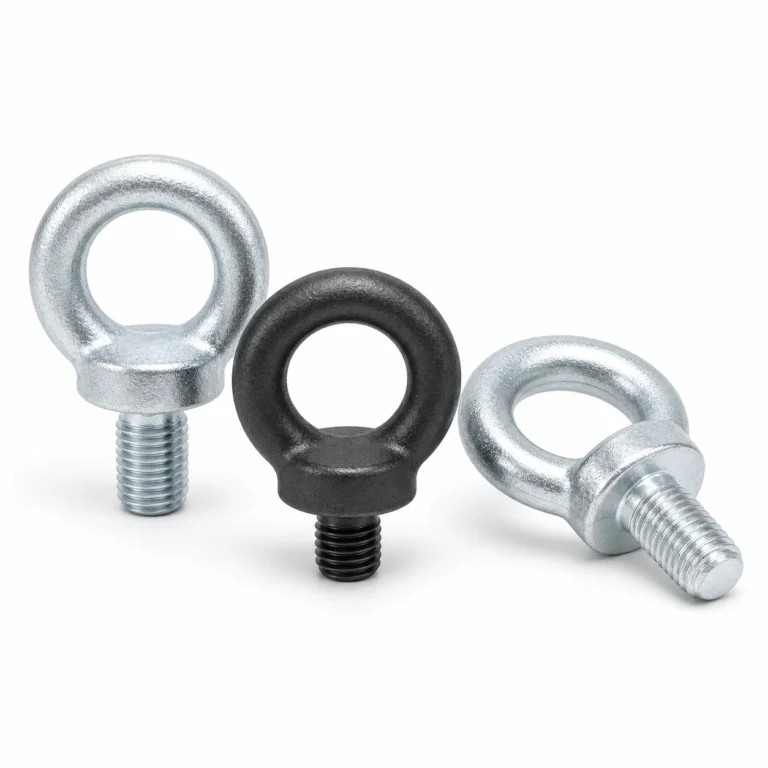
FastenMaster recently expanded its structural fastener lineup with MarineLOK, a 316 stainless steel range designed for docks, piers, and seawalls, as reported by Red Book Lumber Data. This heavy-duty series from FastenMaster targets the corrosive demands of saltwater and high-humidity settings, where durability directly affects safety and maintenance costs.
Why 316 Stainless Outperforms 304 in Marine Environments
Selecting fasteners for waterfront construction requires understanding how alloy composition dictates corrosion behavior. 316 stainless contains 2–3% molybdenum, an element absent in standard 304 grades. This addition dramatically improves the material’s resistance to pitting and crevice corrosion—the two most common failure modes in chloride-rich marine atmospheres. While 304 stainless performs adequately in many architectural and food-processing applications, its passive chromium-oxide film breaks down more readily when exposed to salt spray or cyclic wet-dry conditions. Over time, 304 fasteners can develop rust-colored staining, surface roughening, and eventual cross-section loss that compromises structural capacity. In contrast, 316 stainless, often referred to as “marine grade,” maintains a stable passive layer even when continuously immersed in seawater, making it the material of choice for submerged or splash-zone hardware.
Mechanical Integrity Under Harsh Conditions
Beyond corrosion, fasteners in marine structures must withstand high shear and withdrawal loads. Products like MarineLOK are engineered with aggressive thread forms and optimized head geometries to maximize grip in treated timber. Standard alternatives such as Lag Screws (Hex Wood Screws) — DIN 571 may deliver sufficient pull-out resistance in dry, interior settings but lack the durability required for constant moisture exposure. Similarly, general-purpose Hex Bolts — ISO 4014 / ISO 4017, when made from carbon steel with zinc plating, are vulnerable to coating breakdown and galvanic corrosion. The 316 stainless alloy used in MarineLOK not only resists environmental attack but also provides consistent tensile and shear strength over decades, reducing the need for inspections and replacements. This strength reliability is especially critical in dynamic waterfront structures subject to wave action, ice flows, and heavy pedestrian or vehicular traffic.
Standards Guiding Marine Fastener Selection
Specifying fasteners for marine construction is not a matter of guesswork. International standards bodies have developed performance benchmarks that engineers can reference. ASTM International publishes ASTM F593, which covers mechanical requirements for stainless steel bolts, hex cap screws, and studs in diameters from ¼ inch upward. Similarly, ISO 3506 establishes property classes for corrosion-resistant stainless steel fasteners, categorizing them by alloy group and strength level. For 316 stainless, the typical ISO designation is A4, with common strength grades A4‑70 (cold-worked) and A4‑80 (high-strength). Fasteners made from 304 fall under the A2 group. While FastenMaster has not yet released detailed compliance documentation for MarineLOK, products targeting this market segment are expected to conform to such widely accepted standards. Additionally, the American Wood Council’s National Design Specification (NDS) provides design values for timber connectors, and the International Code Council’s (ICC) building codes often require third-party listing for fasteners used in pressure-treated wood. Since many marine timbers are treated with ACQ or CA preservatives, it’s essential to verify that 316 stainless fasteners remain compatible without accelerated corrosion—a property generally confirmed by manufacturers’ technical data sheets.
Installation Best Practices and Code Compliance
Even the best fastener material can underperform if not installed correctly. For marine fasteners, proper driving torque prevents both under-tightening and strip-out. Overdriving can fracture wood fibers or damage threads, while insufficient torque leaves connections loose, inviting moisture ingress and movement. FastenMaster’s prior product lines, such as the TimberLOK series, have earned a reputation for minimizing on-site labor by eliminating predrilling in many wood-to-wood applications; MarineLOK may follow a similar approach, though specific installation instructions remain pending. Contractors should always refer to the manufacturer’s published guidance for torque values and embedment depths. In terms of code compliance, jurisdictions along coastlines increasingly reference ICC Evaluation Service reports (ESR) as proof of a fastener’s fitness for use. Therefore, obtaining and retaining the latest ESR documentation for any marine-grade structural fastener is a prudent step for both designers and building officials.
| Aspect | 316 Stainless | 304 Stainless |
|---|---|---|
| Molybdenum content | 2–3% | None |
| Corrosion resistance | Excellent in chlorides | Moderate; prone to pitting |
| Typical marine use | Submerged, splash zones | Above water only |
| Relevant standards | ASTM F593, ISO 3506 | ASTM F593, ISO 3506 |
| Strength class (ISO) | A4-70, A4-80 | A2-70, A2-80 |
What to Verify from Suppliers
Project teams evaluating MarineLOK or similar 316 stainless fasteners should request several critical data points directly from FastenMaster or authorized distributors: full load capacity tables for common lumber species and sizes, third-party salt spray test results per ASTM B117, compliance statements to ASTM F593 or ISO 3506, and any valid ICC-ES evaluation report. Confirming these details ensures that the specified fasteners will meet the structural and corrosion-resistance demands of the intended marine environment, ultimately safeguarding both the investment and public safety.
Key Figures
This story includes concrete figures such as 2-3%. The points below pull out the key numbers so the reporting is easier to scan and verify.
- Molybdenum content in 316 stainless: 2-3% Enhances pitting and crevice corrosion resistance in chloride-rich marine environments.
Why This Matters
The launch of a 316 stainless fastener line like MarineLOK responds to the marine construction sector's growing demand for components that withstand saltwater degradation. By offering superior molybdenum-enhanced corrosion resistance, such products can extend service life, reduce maintenance, and improve structural reliability in coastal infrastructure, aligning with tightening durability requirements in modern building codes.
Sources
- FastenMaster (fastenmaster.com)
- Red Book Lumber Data (redbooklumberdata.com)
- ASTM International (astm.org)
- ISO (iso.org)
Related news: 316 Stainless MarineLOK Fasteners Arrive for Heavy-Duty Structural Marine Use
FAQ
How current is this 316 Stainless Steel Gains Edge information?
This article was published on July 31, 2026. News changes quickly, so use it as a starting point and check the named source for later corrections, revised figures or follow-up reporting.
Is this 316 Stainless Steel Gains Edge report confirmed?
It reflects what the cited reporting stated at the time, which can be preliminary. For anything consequential, comparing two or more independent reports is the most reliable way to confirm the details.
Who and where is involved in this 316 Stainless Steel Gains Edge story?
The article identifies the main organisations, people and locations tied to the development. Those named entities are the anchors for following how the story evolves across later coverage.
Should readers rely on a single source for this 316 Stainless Steel Gains Edge story?
No. Comparing the story with other independent reports gives a fuller and more reliable picture before relying on any single account.
What are the key figures in this 316 Stainless Steel Gains Edge story?
The article cites figures such as 2-3%. Numbers like these convey the scale and direction of what happened; for the exact amount and the context around it, the original report is the reference.
What is this 316 Stainless Steel Gains Edge story about?
It summarises a recent development in 316 Stainless Steel Gains Edge, drawing on the original reporting. The key facts — who is involved, what changed and any figures or dates attached — are highlighted so the story is quick to grasp.