
Certification Maze: How Fastener Standards Fragment Global Trade
Global trade in fasteners faces a compliance puzzle as ISO, ASTM, DIN, JIS and GB/T standards impose overlapping but distinct requirements. Testing backlogs, regional markings, and limited mutual recognition inflate lead times and inventory costs across borders.
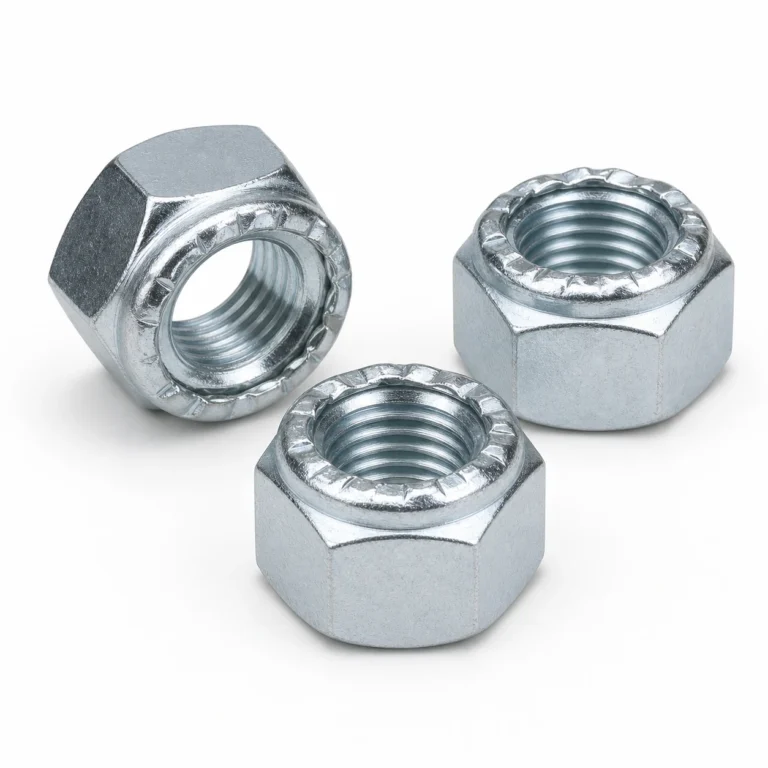
Industrial fasteners—bolts, nuts, screws and washers—hold together automobiles, skyscrapers, machinery and countless everyday products. A reliable, uniform framework for their design and performance should, in theory, lubricate international trade. Reality is far more tangled. Export-oriented manufacturers navigate a labyrinth of national and regional standards, each with its own dimensional, mechanical and testing demands. This patchwork has intensified as supply chains globalise and regulatory bodies update their rulebooks, forcing the industry to juggle overlapping certifications, duplicate testing and region-specific product markings.
Divergent Standards Create Compliance Burden
A single metric hex bolt may be defined by at least five distinct systems: ISO, ASTM, DIN, JIS and GB/T. While these specifications often appear interchangeable, critical differences lurk in thread forms, head dimensions, tolerance bands and material grades. For instance, a Hex Bolts designed to ISO 4014 does not automatically satisfy DIN 931, even where nominal sizes match. Similarly, Bolt Property Classes set out in ISO 898-1 may require separate verification under ASTM F606 or JIS B 1051. This multiplicity compels manufacturers to run parallel production batches and stock variant inventories, inflating both complexity and cost.

Testing adds another layer. Certification typically demands accredited third-party evaluation of tensile strength, hardness, proof load, surface finish and corrosion resistance. Laboratories such as TÜV, SGS or Bureau Veritas must issue detailed reports, and each test cycle consumes time and money. Backlogs at recognised facilities can push shipment dates back by weeks. Any non-conformance triggers rework, re-testing and fresh paperwork. Small and medium-sized distributors, often lacking in-house compliance teams, bear a disproportionate administrative burden.
Regional Markings Fragment Market Access
Product marks further splinter the landscape. Europe’s Construction Products Regulation requires CE marking for structural fasteners, while the United Kingdom now mandates UKCA marking post-Brexit. China enforces CCC for certain categories, and North American markets lean on voluntary listings from bodies like UL or Intertek within code-driven approvals. Because mutual recognition remains limited, a bolt certified for the EU cannot be sold into the UK or China without additional testing and factory audits. Companies end up with region-locked stockpiles, eroding supply chain flexibility.
Industry Pushes for Harmonization
Trade associations actively work to pare back redundant testing. The European Fastener Distributor Association (EFDA) and the Industrial Fasteners Institute (IFI) champion harmonised standards and cross-acceptance of test reports. The International Laboratory Accreditation Cooperation (ILAC) arrangement allows some cross-border recognition of lab results, but its scope remains uneven. At the standards-writing level, ISO committees and ASTM International task groups occasionally align specifications. Still, full convergence is a multi-year ambition constrained by diverging technical philosophies and regulatory inertia.
Impact on Supply Chains and Costs
Certification delays ripple through procurement and logistics. Lead times stretch when every new market entry demands fresh testing. Inventory carrying costs climb, as safety stock must now cover multiple certified variants of essentially the same component. Administrative overhead rises with the need to track and renew certificates—many of which expire after a set period. Just-in-time manufacturing systems, common in automotive and industrial assembly, are acutely sensitive to such disruptions. Fastener certification has thus moved from a back-office concern to a strategic priority for production planners and supply chain managers.
Affected stakeholders span the entire value chain. Fastener manufacturers grapple with split production lines and extended time-to-market. Distributors wrestle with working capital tied up in region-specific inventory. Original equipment manufacturers in automotive, construction and machinery face assembly line stoppages when certified parts are held at customs. Ultimately, end customers bear higher costs and longer lead times. Smoother cross-border recognition of fastener certifications would reduce frictional costs, accelerate trade and strengthen the resilience of global industrial supply—but reaching that goal demands sustained cooperation among standards bodies, regulators and industry actors.
| Region/Market | Dominant Standard Bodies | Typical Product Marking | Main Hurdle |
|---|---|---|---|
| International/Europe | ISO, CEN | CE marking (structural) | Overlap with DIN; no single global equivalence |
| Germany & DACH | DIN | Often referenced with ISO | Divergent dimensional details vs. ISO |
| North America | ASTM, SAE | UL/Intertek (voluntary) | Separate mechanical testing under ASTM F606 |
| China | GB/T | CCC (certain categories) | Additional factory audits for market access |
| Japan | JIS | JIS mark (voluntary) | Parallel testing to ISO equivalent |
| United Kingdom | BSI (ISO adopted) | UKCA (post-Brexit) | Loss of mutual recognition with CE |
Why This Matters
Fasteners are invisible but indispensable across construction, automotive and machinery. The current certification mosaic introduces friction that directly affects production schedules, working capital and market access—especially for smaller suppliers. Achieving broader mutual recognition would lower redundant testing, cut lead times, and bolster supply-chain resilience in an era of just-in-time manufacturing.
Sources
- ISO (iso.org)
- ASTM International (astm.org)
- European Fastener Distributor Association (EFDA) (efda.eu)
- Industrial Fasteners Institute (IFI) (indfast.org)
Related news: Fastener Industry Navigates Complex Global Certification Maze
FAQ
Is this Certification Maze: How Fastener Standards report confirmed?
It reflects what the cited reporting stated at the time, which can be preliminary. For anything consequential, comparing two or more independent reports is the most reliable way to confirm the details.
Who and where is involved in this Certification Maze: How Fastener Standards story?
The article identifies the main organisations, people and locations tied to the development. Those named entities are the anchors for following how the story evolves across later coverage.
Should readers rely on a single source for this Certification Maze: How Fastener Standards story?
No. Comparing the story with other independent reports gives a fuller and more reliable picture before relying on any single account.
What is this Certification Maze: How Fastener Standards story about?
It summarises a recent development in Certification Maze: How Fastener Standards, drawing on the original reporting. The key facts — who is involved, what changed and any figures or dates attached — are highlighted so the story is quick to grasp.
Why does this Certification Maze: How Fastener Standards development matter?
The significance lies in what it signals: a notable figure, a decision, or a shift that affects the people, places or organisations named. Those are the points worth following as the story continues.
How current is this Certification Maze: How Fastener Standards information?
This article was published on July 31, 2026. News changes quickly, so use it as a starting point and check the named source for later corrections, revised figures or follow-up reporting.