
Why Plastic Fasteners Are Replacing Metal in Modern Assembly
Plastic fasteners are increasingly replacing metal in automotive, electronics and marine applications, driven by weight reduction, corrosion resistance and electrical insulation requirements. This evergreen guide examines the trade-offs, standards and sustainability factors engineers must weigh when selecting between polymer and metal fasteners.
Key Data Points
This story cites quantities or scale figures such as 3,000. They give a sense of magnitude that a headline alone usually leaves out.
- Scale / volume: 3,000 Around 3,000 plastic fasteners are now found in a typical passenger car—four times the number used just two decades ago.
Around 3,000 plastic fasteners are now found in a typical passenger car—four times the number used just two decades ago. That quiet substitution reflects a broader industrial recalibration, where polymer clips, screws and bolts are shouldering loads once reserved for steel. Weight targets, corrosion headaches and the rise of electrified systems are rewriting the fastener rulebook, pulling engineered thermoplastics into the spotlight.
The Material Trade‑off: Strength Versus Resistance
Metal fasteners deliver high tensile and shear strength, predictable thermal stability and a century of codified data. Steel, stainless steel and aluminium remain the go‑to for structural joints, high‑temperature zones and heavy machinery. Yet they bring liabilities: galvanic corrosion when dissimilar metals contact, electrical conductivity that can disrupt sensitive electronics, and considerable mass.

Plastic fasteners flip that equation. Advanced grades such as glass‑filled nylon 66, polypropylene and polycarbonate provide strength‑to‑weight ratios that rival some metals while adding innate corrosion immunity, dielectric isolation and vibration damping. Glass‑ or carbon‑fibre reinforcement lifts load capacity further. Injection moulding enables complex geometries—integrated washers, captive screws and snap‑fit features—that cut part count and assembly time. The trade‑off is a narrower thermal window: most unfilled thermoplastics soften above 120 °C, limiting their use near engines or industrial ovens.
Driving Forces Across Industries
Vehicle lightweighting mandates have made plastic fasteners indispensable. Trimming a few grams per clip may seem trivial, but multiplied across thousands of fasteners it meaningfully reduces kerb weight, improving fuel efficiency and EV range. Interior trim, under‑bonnet covers, battery enclosures and sensor brackets increasingly rely on polymer fasteners that also dampen noise and resist chemical splash.
Consumer electronics push the same logic further. Non‑magnetic, insulating screws and standoffs prevent short circuits and signal interference in tightly packed devices. Thread‑forming plastic screws tap directly into housing bosses, ditching metal inserts and speeding production. Marine, chemical‑processing and outdoor infrastructure designers have leaned on plastic to sidestep rust for decades; today’s UV‑stabilised, salt‑water‑ready grades have stretched that envelope to solar‑farm mounts and coastal cladding.
Design and Standards Compatibility
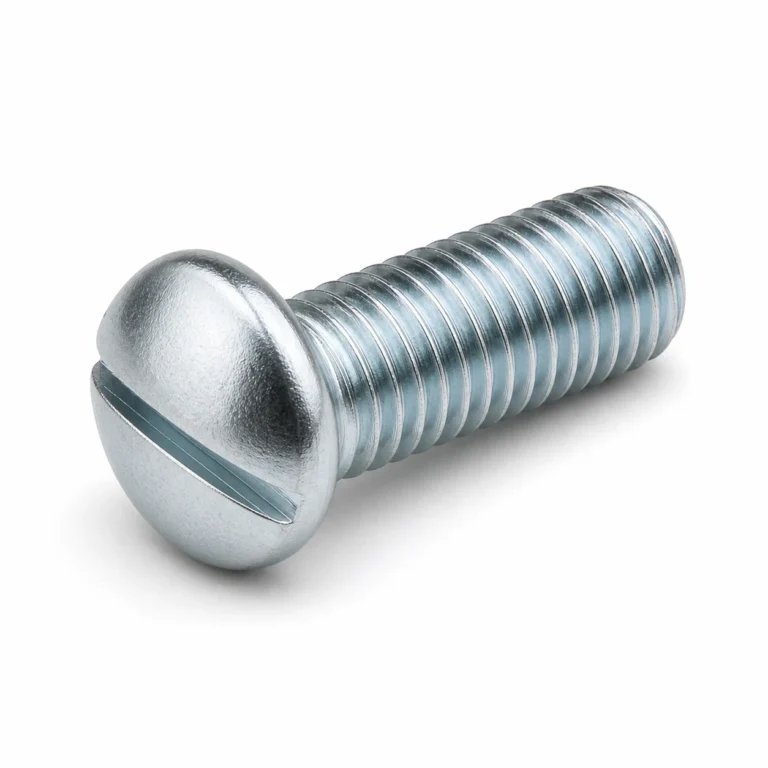
A key enabler is dimensional compatibility. Plastic fasteners mirror traditional profiles—standard hex bolts, hex nuts and Pan Head Screws — ISO 1207 / ISO 7045 / DIN 7985 are all available in polymer equivalents. This allows drop‑in substitution where load and temperature allow, avoiding costly assembly redesigns. Standards bodies such as the International Organization for Standardization (ISO) have published mechanical‑property specifications for plastic fasteners, covering tensile strength, creep behaviour and environmental resistance. Many manufacturers also follow DIN testing protocols adapted from metallic counterparts, ensuring reliability data that engineers can trust.
Sustainability Pushes Plastic Forward
Environmental regulation is increasingly shaping material decisions. The EU’s End‑of‑Life Vehicle Directive and Circular Economy Action Plan reward lighter, reusable components. Plastic fasteners can be moulded from bio‑based or post‑consumer recycled feedstock, shrinking carbon footprint relative to energy‑intensive metals. Single‑polymer assemblies simplify recycling by avoiding mixed‑material separation. Some producers are piloting take‑back schemes for high‑value nylon parts, though the fragmented nature of disassembly still challenges closed‑loop recovery. Automatic sorting technologies are improving, but the economic equation hinges on clear part marking and accessible collection streams.
| Aspect | Metal (Steel, Stainless, Aluminium) | Plastic (Nylon, PP, PC, etc.) |
|---|---|---|
| Weight | High | 60‑80 % lighter on average |
| Tensile strength | High to very high | Moderate; glass‑fibre grades approach low‑grade steel |
| Corrosion resistance | Stainless good, steel poor without coating | Excellent; inert to most chemicals |
| Electrical insulation | Conductive | Dielectric; no galvanic reaction |
| Continuous temperature limit | 300 °C+ for steel | 80‑150 °C (unfilled); 250 °C with speciality grades |
| Recyclability | Readily recycled via scrap stream | Mechanical recycling possible; challenges in separation |
| Cost per piece | Generally lower for standard sizes | Higher raw material cost; part‑count reduction may offset |
The steady creep of plastic into traditional metal territory is likely to accelerate as material science delivers higher‑temperature grades and as circular‑economy mandates tighten. Updated market data from trade bodies, expected in the coming quarters, will quantify just how far the pendulum has swung—and which applications are next in line for a polymer makeover.
Why This Matters
The shift to plastic fasteners signals a fundamental materials transition in manufacturing, touching supply chains, design codes and end‑of‑life strategies. As regulators push lighter, recyclable assemblies, engineers who master the plastic‑metal trade‑off gain a decisive edge in cost, compliance and product performance.
Sources
- Fastener + Fixing Magazine (fastenerandfixing.com)
- International Organization for Standardization (ISO) (iso.org)
Related news: Plastic Fasteners See Steady Adoption in Global Manufacturing
FAQ
Who and where is involved in this Why Plastic Fasteners Are Replacing story?
The article identifies the main organisations, people and locations tied to the development. Those named entities are the anchors for following how the story evolves across later coverage.
Should readers rely on a single source for this Why Plastic Fasteners Are Replacing story?
No. Comparing the story with other independent reports gives a fuller and more reliable picture before relying on any single account.
What are the key figures in this Why Plastic Fasteners Are Replacing story?
The article cites figures such as 80 % and 3,000. Numbers like these convey the scale and direction of what happened; for the exact amount and the context around it, the original report is the reference.
What does the reported change in this Why Plastic Fasteners Are Replacing story mean?
A percentage or rate of change shows direction and momentum, but its meaning depends on the baseline and period being measured. The original report explains what the figure is compared against.
How significant is the scale reported in this Why Plastic Fasteners Are Replacing story?
Quantities such as volumes, units or people affected give a sense of how large the development is. Read them alongside the source for the full context, since headline totals can be rounded or preliminary.
What is this Why Plastic Fasteners Are Replacing story about?
It summarises a recent development in Why Plastic Fasteners Are Replacing, drawing on the original reporting. The key facts — who is involved, what changed and any figures or dates attached — are highlighted so the story is quick to grasp.