
Zinc-Nickel Coatings: Superior Corrosion Defense for Fasteners
Zinc-nickel alloy coatings deliver up to five times the corrosion resistance of conventional zinc plating without toxic hexavalent chromium, meeting modern environmental standards while extending fastener service life in demanding environments.
By the Numbers
This story reports a measured change such as 16% and 1,000. Figures like this show direction and scale, so it helps to keep them separate from the surrounding commentary.
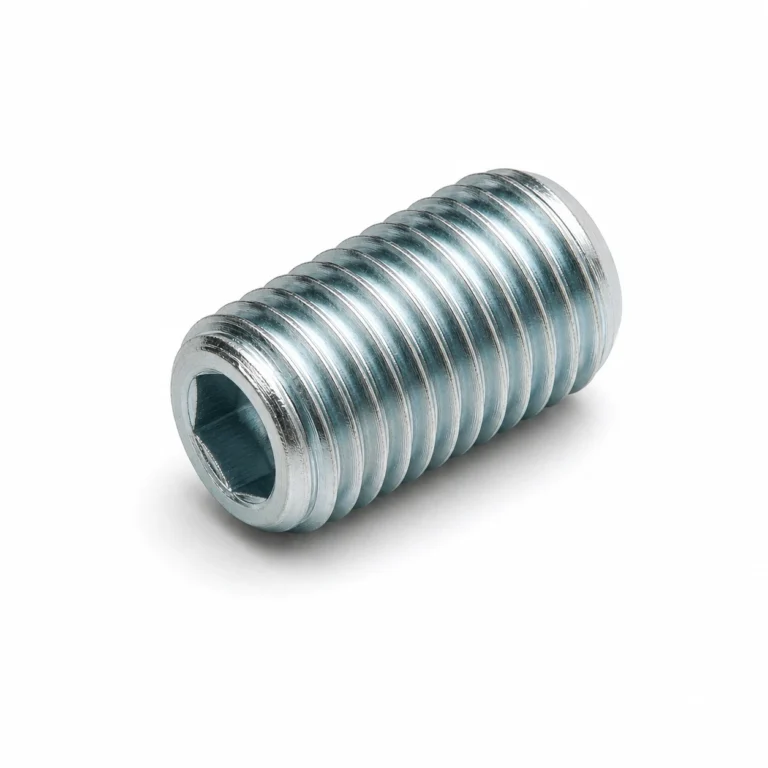
- Change / rate: 16% How Zinc-Nickel Alloy Coatings Work 083 - Hex Socket Cone Point Set Screw — GB/T 77 / ISO 4026 (Series 022) — GB/T 77 / ISO 4026 A zinc‑nickel coating typically contains…
- Scale / volume: 1,000 In standardized salt‑spray tests (ASTM B117), zinc‑nickel can withstand over 1,000 hours to white rust, compared to 72–200 hours for conventional zinc plating.
For decades, hexavalent chromium-based coatings were the default choice for protecting fasteners in harsh environments. Their strong corrosion resistance came at a steep environmental and health cost, with regulatory pressure mounting globally. Today, zinc‑nickel alloy coatings are rapidly becoming the preferred alternative, offering a balance of performance and sustainability that earlier options could not match.
The Shift Away from Hexavalent Chromium
Traditional electroplated zinc with hexavalent chromium passivation provided reliable barrier protection. However, hexavalent chromium is a known carcinogen, and its use has been heavily restricted under regulations such as the EU’s REACH and the End-of-Life Vehicles Directive. These rules pushed manufacturers to seek alternatives that maintain corrosion protection without toxic by‑products. Zinc‑nickel alloy coatings emerged as the leading candidate, combining exceptional salt‑spray resistance with compliance to modern environmental standards.

How Zinc-Nickel Alloy Coatings Work
A zinc‑nickel coating typically contains 12–16% nickel, electrodeposited onto the fastener surface. The nickel content modifies the corrosion mechanism, creating a passive layer that is significantly more stable than pure zinc. This alloy offers sacrificial protection, where the coating corrodes preferentially to the base steel, but at a much slower rate. In standardized salt‑spray tests (ASTM B117), zinc‑nickel can withstand over 1,000 hours to white rust, compared to 72–200 hours for conventional zinc plating. Even after the coating is scratched, the surrounding alloy continues to protect exposed steel through galvanic action.
Advantages Over Other Coating Systems
Compared to pure zinc electroplating, zinc‑nickel provides four to five times greater corrosion resistance in saline environments. Unlike cadmium plating, another high‑performance option, it avoids the toxicity issues that have largely phased out cadmium in many industries. Zinc‑nickel also exhibits better ductility and less hydrogen embrittlement risk than some high‑strength plating processes, making it suitable for high‑hardness fasteners. Additionally, the coating’s hardness (up to 400 HV) improves wear resistance during assembly, reducing galling and thread damage.
Environmental and Regulatory Compliance
Compliance with directives like RoHS (Restriction of Hazardous Substances) and ELV (End-of-Life Vehicles) is a primary driver for zinc‑nickel adoption. The coating is completely free of hexavalent chromium, and trivalent chromium passivates applied on top further enhance corrosion resistance without reintroducing toxic compounds. Many manufacturers now publish International Organization for Standardization (ISO) 14025-based Environmental Product Declarations (EPDs) for their coated fasteners, quantifying the reduced environmental footprint. This transparency helps builders earn points toward green building certifications such as LEED and BREEAM.
Standards and Specification in Practice
Procurement teams must navigate a maze of coating specifications to ensure proper performance. Key standards include ISO 4042 for electroplated coatings, ASTM B841 for zinc‑nickel alloy deposits, and ISO 9227 for salt‑spray testing. The Industrial Fasteners Institute offers technical guides that correlate coating thickness with service life in various environments. Builders should specify the coating designation clearly, including nickel percentage, thickness, and passivation type, to avoid substitutions that compromise durability. Regular supplier audits and batch testing are becoming standard practice on large infrastructure projects.
Adoption Challenges and Future Outlook
Despite its benefits, zinc‑nickel plating involves higher upfront costs than conventional zinc, and the electroplating process requires closer bath control to maintain consistent nickel content. Smaller workshops may lack the necessary equipment and expertise, creating a quality gap between suppliers. However, as more automotive and construction specifications mandate chromium‑free coatings, economies of scale are closing the cost differential. Industry publications like Fastener + Fixing Magazine regularly highlight these trends, helping builders stay informed about material innovations and supply‑chain developments. Over the next decade, zinc‑nickel is expected to become the default coating for high‑reliability fasteners across marine, infrastructure, and industrial applications.
| Aspect | Traditional Zinc + Hex Cr | Zinc-Nickel Alloy | Builder Impact |
|---|---|---|---|
| Corrosion resistance (salt spray) | 72–200 hours to white rust | 1,000+ hours to white rust | Longer maintenance intervals |
| Environmental compliance | Restricted (Cr6+) | RoHS/ELV compliant | Meets green building codes |
| Coating hardness | ~100 HV | Up to 400 HV | Reduced galling during assembly |
| Hydrogen embrittlement risk | Moderate | Low with proper processing | Safer for high‑strength bolts |
| Cost premium | Low | Moderate, declining | Lifecycle cost savings offset |
Wider adoption of zinc‑nickel coatings signals a maturing industry where performance and sustainability are no longer trade‑offs. Builders who incorporate these materials early can future‑proof projects against tightening regulations while reducing on‑site failures and long‑term maintenance burdens.
Why This Matters
As global regulations phase out hexavalent chromium and infrastructure demands push for longer service life, zinc‑nickel coatings bridge the gap between high performance and environmental responsibility. Early adoption helps builders avoid costly callbacks, align with green certifications, and secure reliable supply chains as this coating becomes the industry norm.
Sources
- International Organization for Standardization (iso.org)
- Industrial Fasteners Institute (indfast.org)
- Fastener + Fixing Magazine (fastenerandfixing.com)
Related news: Evolving Fastener Standards Reshape Construction Practices
FAQ
Why does this Zinc-Nickel Coatings: Superior Corrosion Defense development matter?
The significance lies in what it signals: a notable figure, a decision, or a shift that affects the people, places or organisations named. Those are the points worth following as the story continues.
How current is this Zinc-Nickel Coatings: Superior Corrosion Defense information?
This article was published on July 31, 2026. News changes quickly, so use it as a starting point and check the named source for later corrections, revised figures or follow-up reporting.
Is this Zinc-Nickel Coatings: Superior Corrosion Defense report confirmed?
It reflects what the cited reporting stated at the time, which can be preliminary. For anything consequential, comparing two or more independent reports is the most reliable way to confirm the details.
Who and where is involved in this Zinc-Nickel Coatings: Superior Corrosion Defense story?
The article identifies the main organisations, people and locations tied to the development. Those named entities are the anchors for following how the story evolves across later coverage.
Should readers rely on a single source for this Zinc-Nickel Coatings: Superior Corrosion Defense story?
No. Comparing the story with other independent reports gives a fuller and more reliable picture before relying on any single account.
What are the key figures in this Zinc-Nickel Coatings: Superior Corrosion Defense story?
The article cites figures such as 16% and 1,000. Numbers like these convey the scale and direction of what happened; for the exact amount and the context around it, the original report is the reference.