
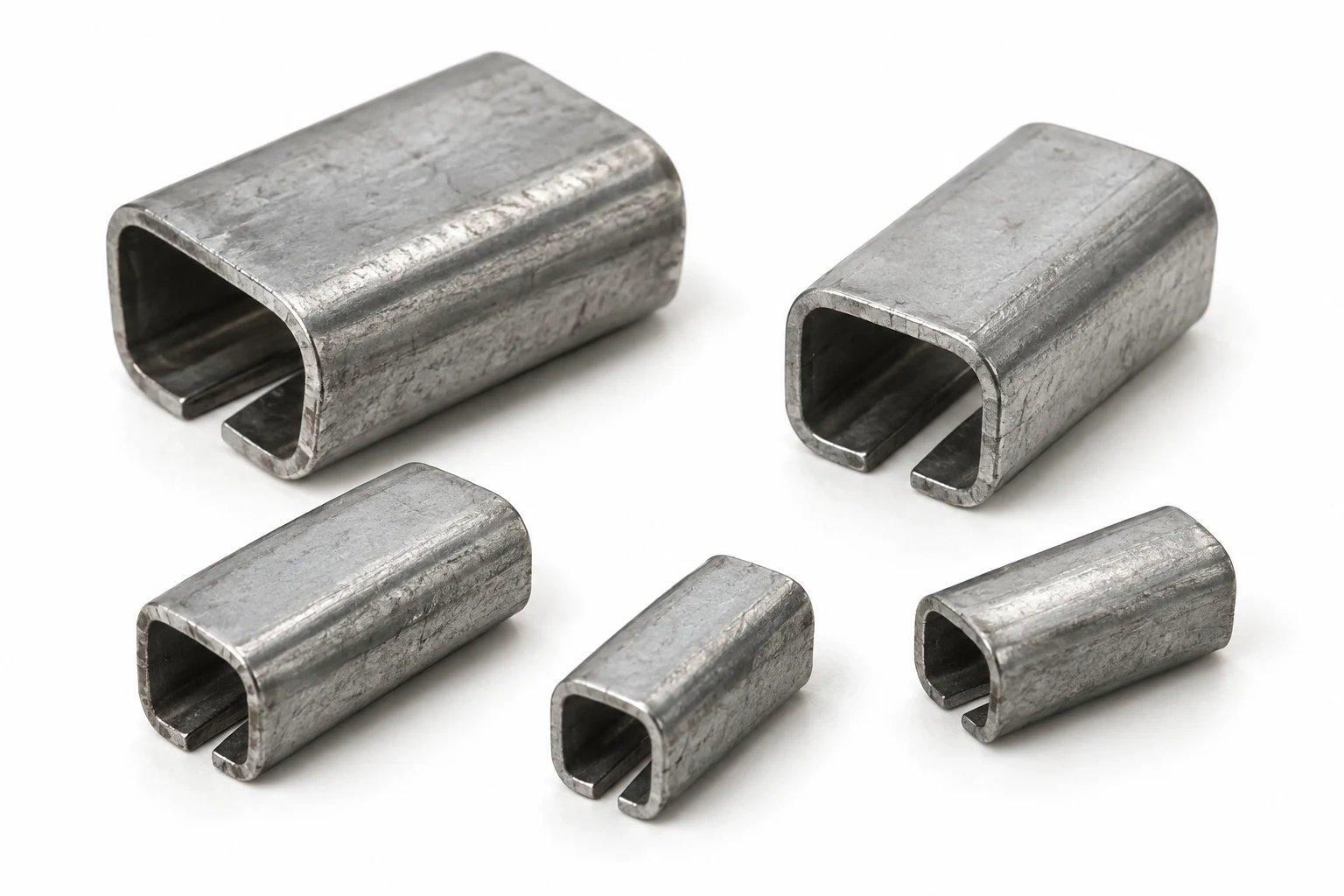
Clinch Clips (Trade series (wire-mesh clinch clips)) are specified where the joint requires joining or retaining wire mesh by squeezing a formed clip around the panel wires. The sections below cover the typical end-uses by industry, the size and material decisions for each, assembly practice, and the applications this fastener type is not suited to. Stocked across roughly 90 to 135, they cover heavy and structural work.
Typical Applications for Clinch Clips
The most common settings where these are specified:
- Wire fencing: Clinch clips close around mesh intersections and fence wire.
- Animal enclosures: Cold-rolled clips provide repeatable field attachment.
- Safety guards: The squeezed form retains mesh without a protruding bolt.
- Panel fabrication: Height, width and depth are selected from the mesh and edge.
How to Specify Clinch Clips for Your Application
- Size: Select on size designation, and confirm it against the mating feature in the assembly. This product spans 90–135; check the full table below for the exact dimensions of each size.
- Material: Choose the material and finish for the service environment — plated steel for general use, stainless for corrosion resistance.
- Environment: For damp, coastal or chemical exposure prefer A4/316 stainless or a suitable coating; indoors, plated steel or A2 is usually sufficient.
- Standard: This product is supplied to Trade series (wire-mesh clinch clips). Quoting the standard on your order guarantees interchangeable dimensions between suppliers.
Installation & Assembly Practice
- Drill the hole 0.1 mm over the nominal rivet diameter and deburr both sides before setting.
- Grip range must match the total joint thickness — a rivet set outside its grip range clamps poorly and works loose.
Common Selection Mistakes with Clinch Clips
- Setting a rivet outside its grip range, which leaves the joint loose from day one.
- Using aluminum rivets on steel sheet outdoors — galvanic corrosion eats the rivet.
Where Clinch Clips Are Not the Right Choice
Not where the joint must later be disassembled, and not for high-tension structural connections.



