
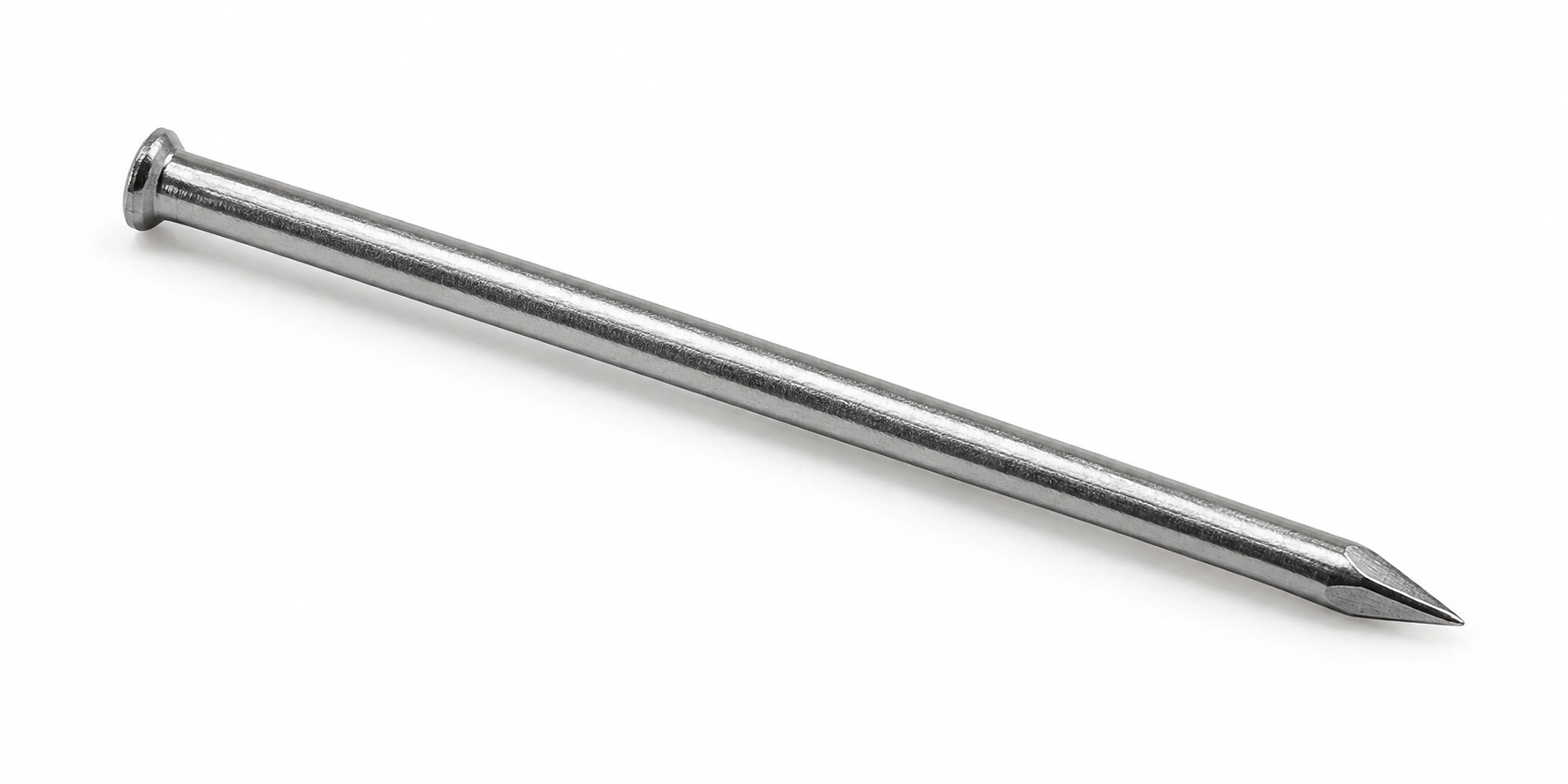
The primary duty of Lost Head Wire Nails is round wire nails with a small lost head that can be punched below the surface. Below: the sectors that specify them in volume, the checklist used to select the right size and material for the application, installation notes, and the known limits of the type. Stocked across roughly 10 mm to 38 mm, they cover general to heavy-duty work.
Typical Applications for Lost Head Wire Nails
The most common settings where these are specified:
- Joinery: trim and moldings.
- Furniture: concealed nailing.
- Flooring: floorboards.
- Carpentry: finish work.
How to Specify Lost Head Wire Nails for Your Application
- Size: Select on nominal diameter, then on the hole tolerance and fit class — the fit, not the diameter alone, determines whether the part locates or slips. This product spans 10 mm–38 mm; check the full table below for the exact dimensions of each size.
- Material: Choose the material and finish for the service environment — plated steel for general use, stainless for corrosion resistance.
- Environment: For damp, coastal or chemical exposure prefer A4/316 stainless or a suitable coating; indoors, plated steel or A2 is usually sufficient.
- Standard: This product is supplied to DIN 1152. Quoting the standard on your order guarantees interchangeable dimensions between suppliers.
Where Lost Head Wire Nails Are Not the Right Choice
Not for joints needing later removal or high withdrawal resistance — a screw holds far better in tension.
Custom manufacturing · Made to drawing
Need a lost head wire nails outside the standard range?
Dimensions, material, finish and form are specified from the drawing — a nail outside the standard range is a variation on existing tooling rather than a new design.
Minimum order from 2,000 pieces; samples within 7 days of drawing approval.



