
Skip to content
Bolts · DIN 609 · Application guide

What Are Fitted (Reamer) Bolts, DIN 609 Used For?

Typical applications, the industries that specify fitted (reamer) bolts, din 609, and how to choose the right size, material and finish for the joint.

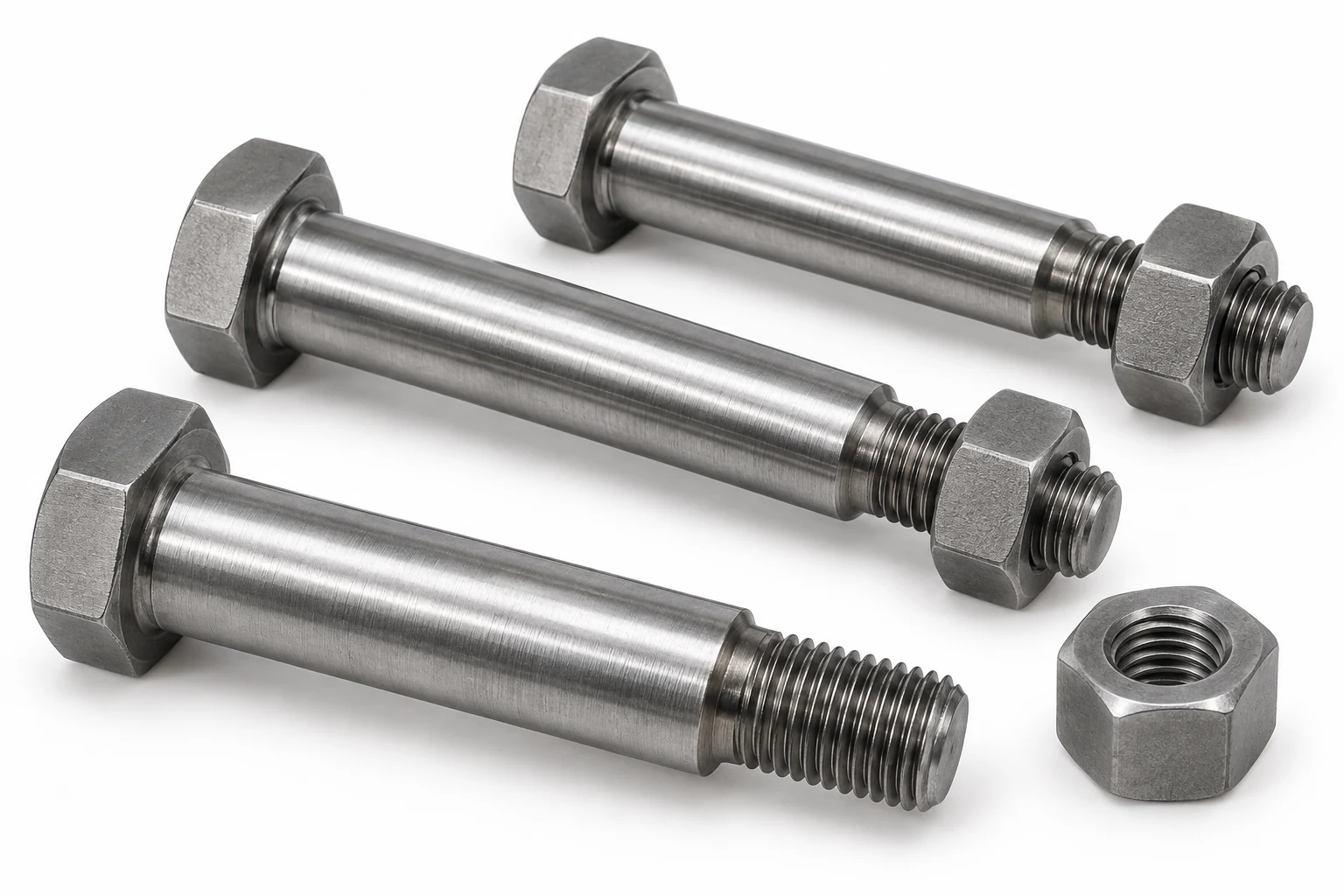
Fitted (Reamer) Bolts, DIN 609 are used for joints where the bolt itself locates the two parts and carries the shear, in a reamed hole rather than a clearance one. They are manufactured to DIN 609, and the choice of size, property class and finish is driven by the load in the joint and the environment it sits in.

Primary duty
Joints where the bolt itself locates the two parts and carries the shear, in a reamed hole rather than a clearance one
Governing standard
DIN 609
Thread size range
M8 to M24
Category
Bolts

Application notes are general engineering guidance. Verify the property class and any approval requirement against your own design calculation.

What Are Fitted (Reamer) Bolts, DIN 609 Used For? application image

Fitted (Reamer) Bolts, DIN 609 are selected when an assembly calls for joints where the bolt itself locates the two parts and carries the shear, in a reamed hole rather than a clearance one. This application guide to the DIN 609 type covers concrete end-uses, the specification checklist, correct installation, and where an alternative fastener performs better. Stocked across roughly M8 to M24, they cover general to heavy-duty work.

Typical Applications for Fitted (Reamer) Bolts, DIN 609

The most common settings where these are specified:

  • Heavy machinery: securing gearboxes, frames and guarding on plant that sees shock loads.
  • Energy & infrastructure: tower, pylon and pipework supports exposed to weather and long service life.
  • General machine building: fastening covers, brackets, motors and sub-assemblies on production equipment.
  • Maintenance & repair (MRO): a stocked size for servicing existing plant where the original fastener spec must be matched.
  • Fabrication & metalwork: bench and on-site assembly of steel frames, enclosures and weldments.

How to Specify Fitted (Reamer) Bolts, DIN 609 for Your Application

  • Size: Match the nominal size to the mating thread or hole. This product spans M8–M24; check the full table below for the exact dimensions of each size.
  • Strength class: Choose the property class (e.g. 8.8, 10.9, 12.9 or A2/A4 stainless) for the load and environment, and tighten to the matching torque so the joint relies on preload, not friction.
  • Environment: For damp, coastal or chemical exposure prefer A4/316 stainless or a suitable coating; indoors, plated steel or A2 is usually sufficient.
  • Standard: This product is supplied to DIN 609. Quoting the standard on your order guarantees interchangeable dimensions between suppliers.

Installation & Assembly Practice

  • Tighten to the torque for the size and property class with a calibrated wrench — the joint is held by preload, not by the thread friction alone.
  • Ensure at least one full thread projects beyond the nut after tightening, and never re-use a bolt that has been tightened into yield.
  • Under slotted or oversized holes, fit a hardened washer so the preload does not relax into the hole edge.

Common Selection Mistakes with Fitted (Reamer) Bolts, DIN 609

  • Specifying class 12.9 "to be safe" in a corrosive environment — high classes are more sensitive to hydrogen embrittlement and stress corrosion; 8.8 hot-dip galvanized often outlasts them outdoors.
  • Choosing a length that puts the shear plane through the threaded portion when a plain shank (partially threaded bolt) was available.
  • Mixing stainless bolts with plated-steel nuts: the joint loses its corrosion logic and can gall or seize.

Where Fitted (Reamer) Bolts, DIN 609 Are Not the Right Choice

Not for permanent joints that will never be opened (a rivet or weld is cheaper), and not where the head must sit flush — use a countersunk screw instead.


Technical Drawing

Customize the parameters below — every spec field is editable, and the drawing redraws to match the values you choose. Changing the size will snap the other fields to that size's standard values; you can then override any individual value.

Sends the selected values to the quote form below.

Request a Quote

The form below follows the current technical drawing configuration. Change the drawing values above and the request details update automatically.

Request a Quotation

Specification
Business Information

Dimensions & Specifications (DIN 609)

Thread sizeShank diameter ds k6 (mm)Reamed hole H7 (mm)Width across flats s (mm)Head height k (mm)Common length range (mm)Property classReference standard
M899135.330~808.8DIN 609
M101111176.435~1008.8DIN 609
M121313197.540~1208.8DIN 609
M1617172410.050~1508.8DIN 609
M2021213012.560~1808.8DIN 609
M2425253615.070~2008.8DIN 609
Inside the plant

Manufactured in our own plant

This part is cold-formed, threaded, heat-treated and finished in-house. The stages below are where its class and finish are actually decided.

  1. Wire rod feeding into a cold heading machine
    01

    Cold heading

    Wire rod is drawn to size and cold-formed into blanks. Forming rather than cutting keeps the grain flow continuous around the head, which is where a bolt is most likely to fail.

    Head dimensions and under-head radius checked at set-up and per shift.

  2. Thread rolling machine producing bolt threads
    02

    Thread rolling

    Threads are rolled between hardened dies rather than cut. Rolled threads are stronger in fatigue than cut threads and hold pitch and flank angle far more consistently across a batch.

    Go / no-go ring gauges to ISO 965 tolerance class 6g.

  3. Baskets of bolts staged for heat treatment
    03

    Heat treatment

    Quench-and-temper brings carbon and alloy steel to the property class ordered — 8.8, 10.9 or 12.9 — with the furnace charge tracked so a finished lot can be traced back to it.

    Core hardness and tensile tested per lot to ISO 898-1.

  4. Zinc plated bolts in a treatment basket
    04

    Surface treatment

    Zinc, zinc-nickel, hot-dip galvanizing, black oxide, phosphate and Dacromet, selected against the service environment rather than against the price list.

    Coating thickness and neutral salt spray hours to ISO 9227.

Frequently Asked Questions

Are Fitted (Reamer) Bolts, DIN 609 made to a recognized standard?

Yes — they are manufactured to DIN 609, so dimensions are interchangeable between suppliers when you quote the standard on your order.

What are Fitted (Reamer) Bolts, DIN 609 used for?

Joints where the bolt itself locates the two parts and carries the shear, in a reamed hole rather than a clearance one. They are supplied to DIN 609.

Which industries use Fitted (Reamer) Bolts, DIN 609?

They are commonly specified in structural steel, automotive & transport and heavy machinery, among other sectors.

How do I choose the right size of Fitted (Reamer) Bolts, DIN 609?

Match the nominal size to the mating thread or hole. This product is available from M8 to M24; the full dimension table on this page lists each size.

Can I get a quote for Fitted (Reamer) Bolts, DIN 609 in the size and material I need?

Yes. Use the technical drawing and quote form on this page to set the size and options, then send the exact configuration to our team for pricing and lead time.

