
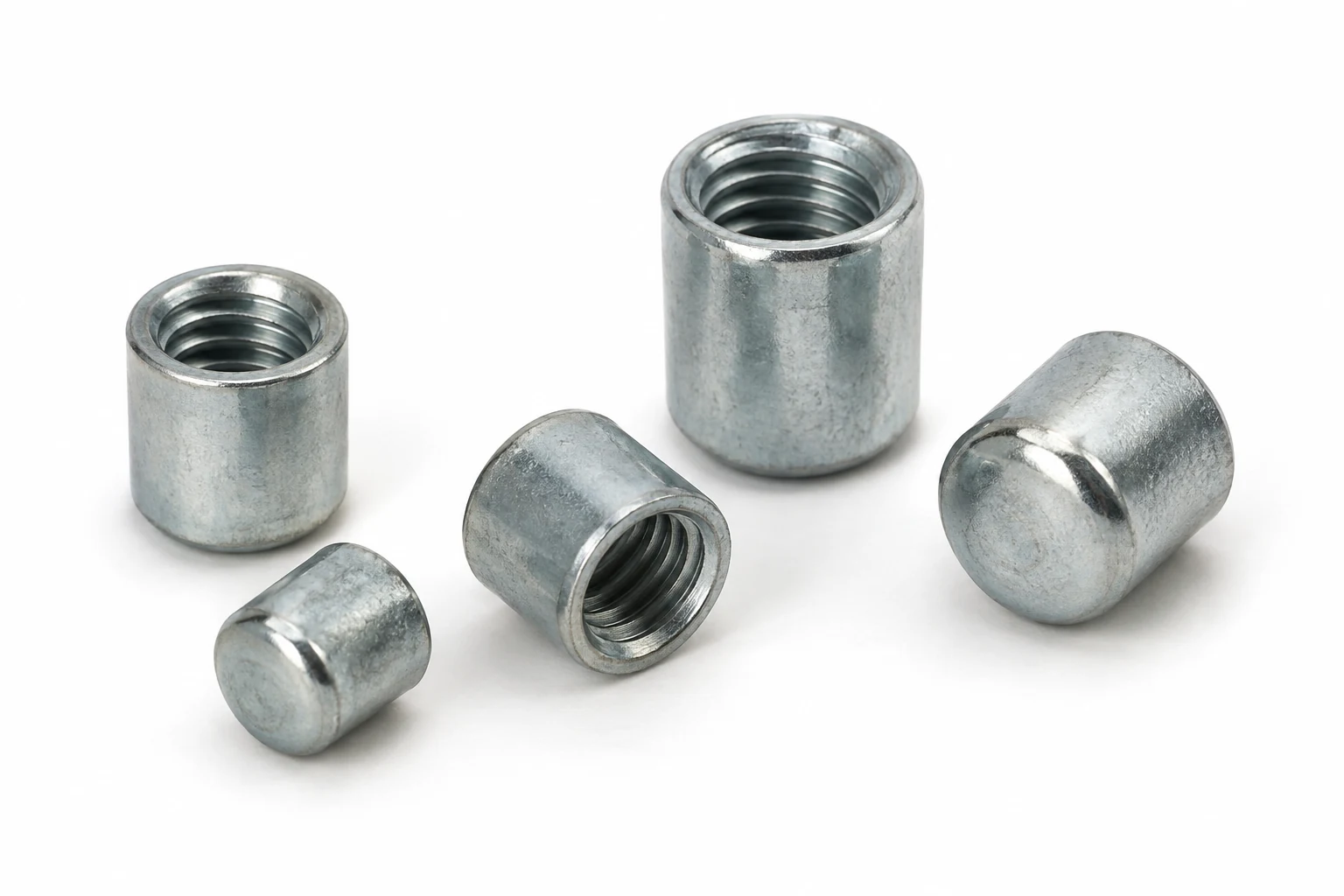
Fully-Threaded Standoff Caps are used primarily for holding a board or panel above a mating surface with a fully threaded standoff body. This page lists the industries and assemblies where they are specified, the selection criteria that matter for each application, installation practice, and the cases where a different fastener type is the correct choice. Parts are supplied to Trade series (fully threaded standoff caps). Stocked across roughly 4 mm to 10 mm, they cover general to heavy-duty work.
Typical Applications for Fully-Threaded Standoff Caps
The most common settings where these are specified:
- Electronics enclosures: Threaded caps finish a standoff and protect the open thread.
- Instrument panels: Zinc-plated brass covers a small exposed thread without adding a large head.
- Display hardware: The cap form keeps debris out of a spacer assembly.
- Prototype fixtures: 4-40 through 10-32 sizes close off unused standoff ends.
How to Specify Fully-Threaded Standoff Caps for Your Application
- Size: Match the nominal size to the mating thread or hole. This product spans 4 mm–10 mm; check the full table below for the exact dimensions of each size.
- Material: Choose the material and finish for the service environment — plated steel for general use, stainless for corrosion resistance.
- Environment: For damp, coastal or chemical exposure prefer A4/316 stainless or a suitable coating; indoors, plated steel or A2 is usually sufficient.
- Standard: This product is supplied to Trade series (fully threaded standoff caps). Quoting the standard on your order guarantees interchangeable dimensions between suppliers.
Where Fully-Threaded Standoff Caps Are Not the Right Choice
Match the fastener to the load, environment and whether the joint must be reopened; the wrong class or style is the usual cause of joint failure.



