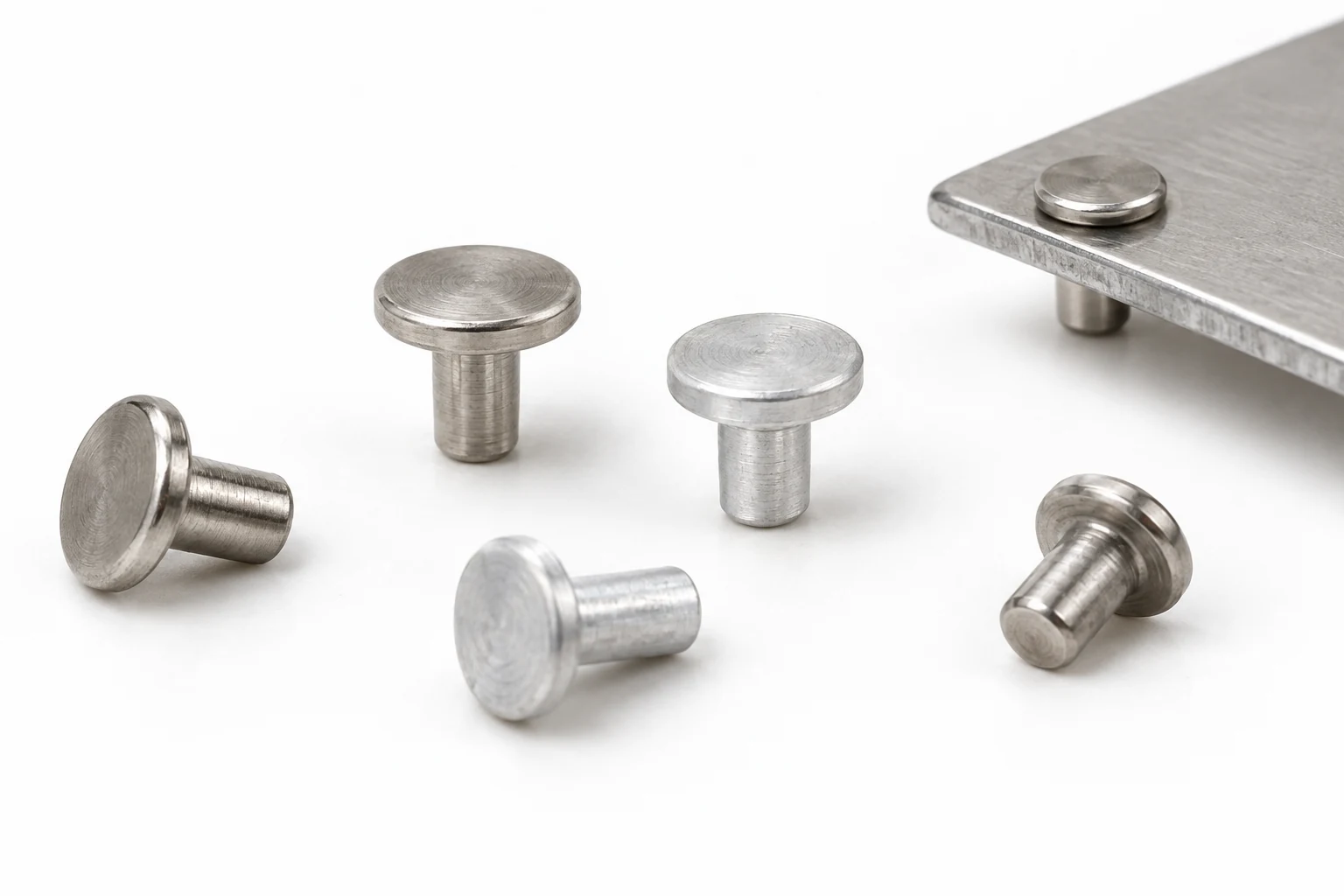
Low-Profile Captive Pins (Trade series (captive tack pins)) are specified where the joint requires providing a permanently captive locating pin in a thin panel without losing the low-profile head. The sections below cover the typical end-uses by industry, the size and material decisions for each, assembly practice, and the applications this fastener type is not suited to. Stocked across roughly 4 to 10, they cover general to heavy-duty work.
Typical Applications for Low-Profile Captive Pins
The most common settings where these are specified:
- Thin sheet panels: Low-profile captive pins stay attached to panels only a few thousandths of an inch thick.
- Circuit boards: Small stainless or aluminum pins support repeatable positioning.
- Electronics housings: The head height leaves minimal projection above the panel.
- Instrument assemblies: Captive hardware prevents a pin from being lost during service.
How to Specify Low-Profile Captive Pins for Your Application
- Size: Match the nominal size to the mating thread or hole. This product spans 4–10; check the full table below for the exact dimensions of each size.
- Material: Choose the material and finish for the service environment — plated steel for general use, stainless for corrosion resistance.
- Environment: For damp, coastal or chemical exposure prefer A4/316 stainless or a suitable coating; indoors, plated steel or A2 is usually sufficient.
- Standard: This product is supplied to Trade series (captive tack pins). Quoting the standard on your order guarantees interchangeable dimensions between suppliers.
Where Low-Profile Captive Pins Are Not the Right Choice
Match the fastener to the load, environment and whether the joint must be reopened; the wrong class or style is the usual cause of joint failure.