
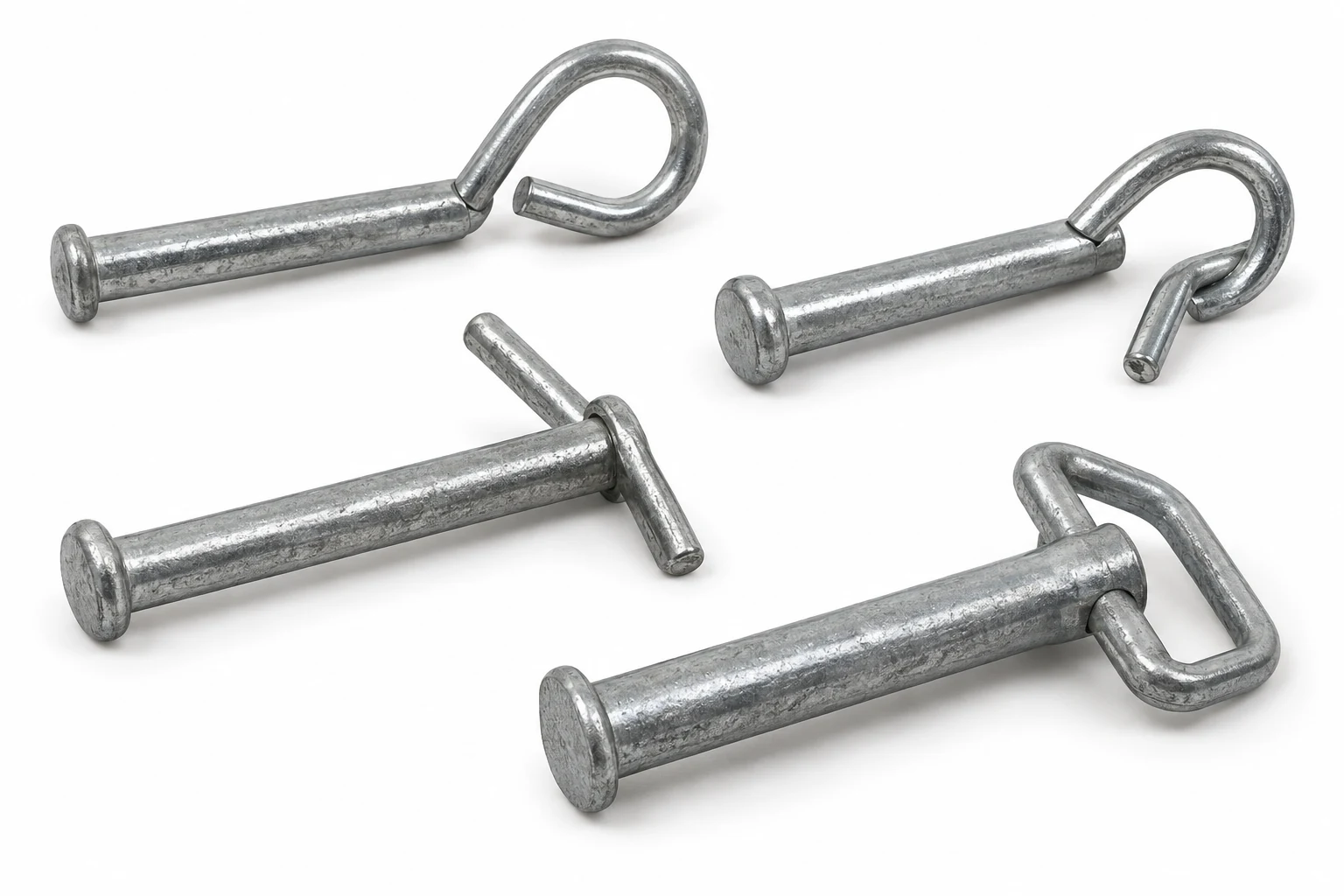
Gravity Pins are selected when an assembly calls for locating a tube or frame connection with a pin held in position by its gravity stop. This application guide to the Trade series (gravity pins) type covers concrete end-uses, the specification checklist, correct installation, and where an alternative fastener performs better.
Typical Applications for Gravity Pins
The most common settings where these are specified:
- Scaffolding: Gravity pins secure tube sections while allowing rapid removal.
- Adjustable frames: Pig-tail and toggle forms stay with the tubing assembly.
- Temporary works: Galvanized pins suit repeated setup and teardown.
- Field equipment: Hole diameter and usable length define the connection.
How to Specify Gravity Pins for Your Application
- Size: Match the size to the mating part — see the dimension table below for each option.
- Material: Choose the material and finish for the service environment — plated steel for general use, stainless for corrosion resistance.
- Environment: For damp, coastal or chemical exposure prefer A4/316 stainless or a suitable coating; indoors, plated steel or A2 is usually sufficient.
- Standard: This product is supplied to Trade series (gravity pins). Quoting the standard on your order guarantees interchangeable dimensions between suppliers.
Installation & Assembly Practice
- Ream the hole to the specified fit class; a dowel pressed into a drilled-only hole will not locate accurately.
- Press pins in with steady force rather than hammer blows where possible, and chamfer the hole entry.
Common Selection Mistakes with Gravity Pins
- Using a dowel pin as a load-carrying shear bolt — dowels locate, they are not sized for sustained shear.
- Ignoring the fit class: a locational fit and an interference fit need different hole tolerances.
Where Gravity Pins Are Not the Right Choice
Not for carrying significant tensile or repeated heavy shear loads — use a bolt or a keyed joint for that.



