Skip to content

Nuts · ISO 4032 / ISO 4033 · Application guide

What Are Hex Nuts Used For?

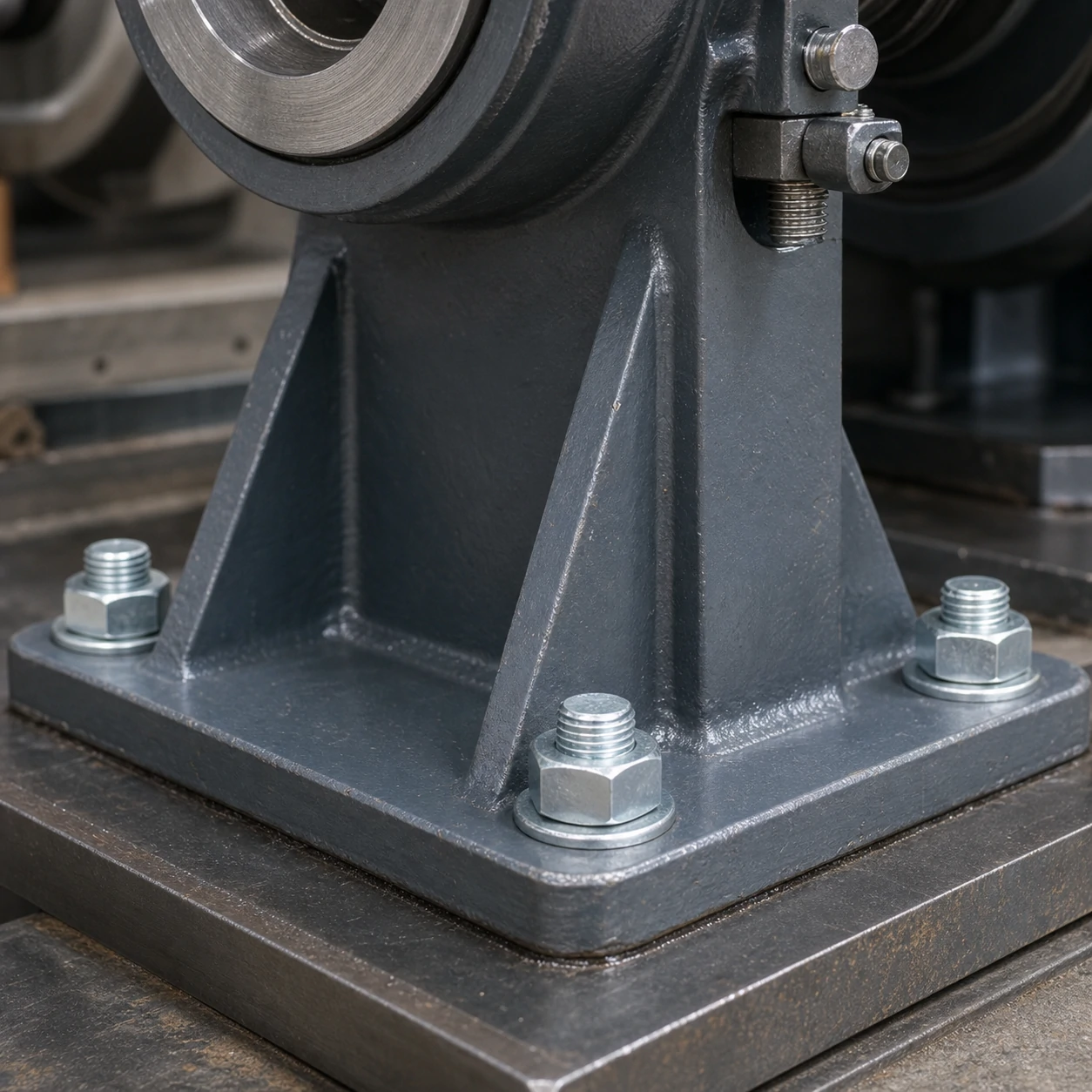
What Are Hex Nuts Used For? application image

Hex Nuts are selected when an assembly calls for the clamped counter-face of a bolted joint. This application guide to the ISO 4032 / ISO 4033 type covers concrete end-uses, the specification checklist, correct installation, and where an alternative fastener performs better. Stocked across roughly M1 to M64, they cover general to heavy-duty work.

Typical Applications for Hex Nuts

The most common settings where these are specified:

  • Frames & weldments: captive or welded options for repeatable assembly.
  • General machine building: fastening covers, brackets, motors and sub-assemblies on production equipment.
  • Maintenance & repair (MRO): a stocked size for servicing existing plant where the original fastener spec must be matched.
  • Fabrication & metalwork: bench and on-site assembly of steel frames, enclosures and weldments.
  • Bolted joints: the clamping counter-face on studs and bolts across every assembly type.

How to Specify Hex Nuts for Your Application

  • Size: Match the nominal size to the mating thread or hole. This product spans M1–M64; check the full table below for the exact dimensions of each size.
  • Locking & grade: Match the strength grade to the bolt, and choose a locking style (nyloc, all-metal, serrated flange) if the joint sees vibration.
  • Environment: For damp, coastal or chemical exposure prefer A4/316 stainless or a suitable coating; indoors, plated steel or A2 is usually sufficient.
  • Standard: This product is supplied to ISO 4032 / ISO 4033. Quoting the standard on your order guarantees interchangeable dimensions between suppliers.

Installation & Assembly Practice

  • Run the nut down by hand before applying the wrench to catch cross-threading early.
  • Tighten the nut rather than the bolt head where access allows — the torque-to-preload relation is more consistent.
  • For locking styles, note that nyloc inserts are single-use in critical joints and lose grip above roughly 120 °C.

Common Selection Mistakes with Hex Nuts

  • Pairing a high-class bolt with a lower-class nut — the nut strips before the bolt reaches proof load; the nut class must meet or exceed the bolt class.
  • Using a plain nut with a spring washer in severe vibration instead of a prevailing-torque locking nut.
  • Re-using nyloc nuts in critical joints.

Where Hex Nuts Are Not the Right Choice

Not on their own — they need a matching bolt or stud — and a plain nut is not a substitute for a locking type under heavy vibration.

Technical Drawing

Customize the parameters below — every spec field is editable, and the drawing redraws to match the values you choose. Changing the size will snap the other fields to that size's standard values; you can then override any individual value.

Sends the selected values to the quote form below.

Request a Quote

Set the size and options in the drawing above, then send the exact configuration straight to this form.

Request a Quotation

Specification
Business Information

Dimensions & Specifications (ISO 4032 / ISO 4033)

SizePitch (mm)Width across flats s (mm)Width across corners e min (mm)Nut height m style 1 (mm)Nut height m style 2 (mm)Reference standard
M10.252.52.710.8-ISO 4032 (Style1) / ISO 4033 (Style2)
M1.20.253.03.281.0-ISO 4032 (Style1) / ISO 4033 (Style2)
M1.40.33.03.281.2-ISO 4032 (Style1) / ISO 4033 (Style2)
M1.60.353.23.481.3-ISO 4032 (Style1) / ISO 4033 (Style2)
M20.44.04.321.6-ISO 4032 (Style1) / ISO 4033 (Style2)
M2.50.455.05.452.0-ISO 4032 (Style1) / ISO 4033 (Style2)
M30.55.56.012.4-ISO 4032 (Style1) / ISO 4033 (Style2)
M3.50.66.06.582.8-ISO 4032 (Style1) / ISO 4033 (Style2)
M40.77.07.663.2-ISO 4032 (Style1) / ISO 4033 (Style2)
M50.88.08.794.05.0ISO 4032 (Style1) / ISO 4033 (Style2)
M61.010.011.055.06.0ISO 4032 (Style1) / ISO 4033 (Style2)
M81.2513.014.386.58.0ISO 4032 (Style1) / ISO 4033 (Style2)
M101.516.017.778.010.0ISO 4032 (Style1) / ISO 4033 (Style2)
M121.7518.020.0310.012.0ISO 4032 (Style1) / ISO 4033 (Style2)
M142.021.023.3611.014.0ISO 4032 (Style1) / ISO 4033 (Style2)
M162.024.026.7513.016.0ISO 4032 (Style1) / ISO 4033 (Style2)
M182.527.029.5615.018.0ISO 4032 (Style1) / ISO 4033 (Style2)
M202.530.032.9516.020.0ISO 4032 (Style1) / ISO 4033 (Style2)
M222.532.035.0318.022.0ISO 4032 (Style1) / ISO 4033 (Style2)
M243.036.039.5519.024.0ISO 4032 (Style1) / ISO 4033 (Style2)
M273.041.045.222.027.0ISO 4032 (Style1) / ISO 4033 (Style2)
M303.546.050.8524.030.0ISO 4032 (Style1) / ISO 4033 (Style2)
M333.550.055.3726.033.0ISO 4032 (Style1) / ISO 4033 (Style2)
M364.055.060.7929.036.0ISO 4032 (Style1) / ISO 4033 (Style2)
M394.060.066.4431.039.0ISO 4032 (Style1) / ISO 4033 (Style2)
M424.565.071.334.042.0ISO 4032 (Style1) / ISO 4033 (Style2)
M454.570.076.9536.045.0ISO 4032 (Style1) / ISO 4033 (Style2)
M485.075.082.638.048.0ISO 4032 (Style1) / ISO 4033 (Style2)
M525.080.088.2542.052.0ISO 4032 (Style1) / ISO 4033 (Style2)
M565.585.093.5645.056.0ISO 4032 (Style1) / ISO 4033 (Style2)
M605.590.099.2148.060.0ISO 4032 (Style1) / ISO 4033 (Style2)
M646.095.0104.8651.064.0ISO 4032 (Style1) / ISO 4033 (Style2)

Frequently Asked Questions

Are Hex Nuts made to a recognized standard?

Yes — they are manufactured to ISO 4032 / ISO 4033, so dimensions are interchangeable between suppliers when you quote the standard on your order.

What are Hex Nuts used for?

The clamped counter-face of a bolted joint. They are supplied to ISO 4032 / ISO 4033.

Which industries use Hex Nuts?

They are commonly specified in bolted joints, vibration-prone equipment and frames & weldments, among other sectors.

How do I choose the right size of Hex Nuts?

Match the nominal size to the mating thread or hole. This product is available from M1 to M64; the full dimension table on this page lists each size.

Can I get a quote for Hex Nuts in the size and material I need?

Yes. Use the technical drawing and quote form on this page to set the size and options, then send the exact configuration to our team for pricing and lead time.