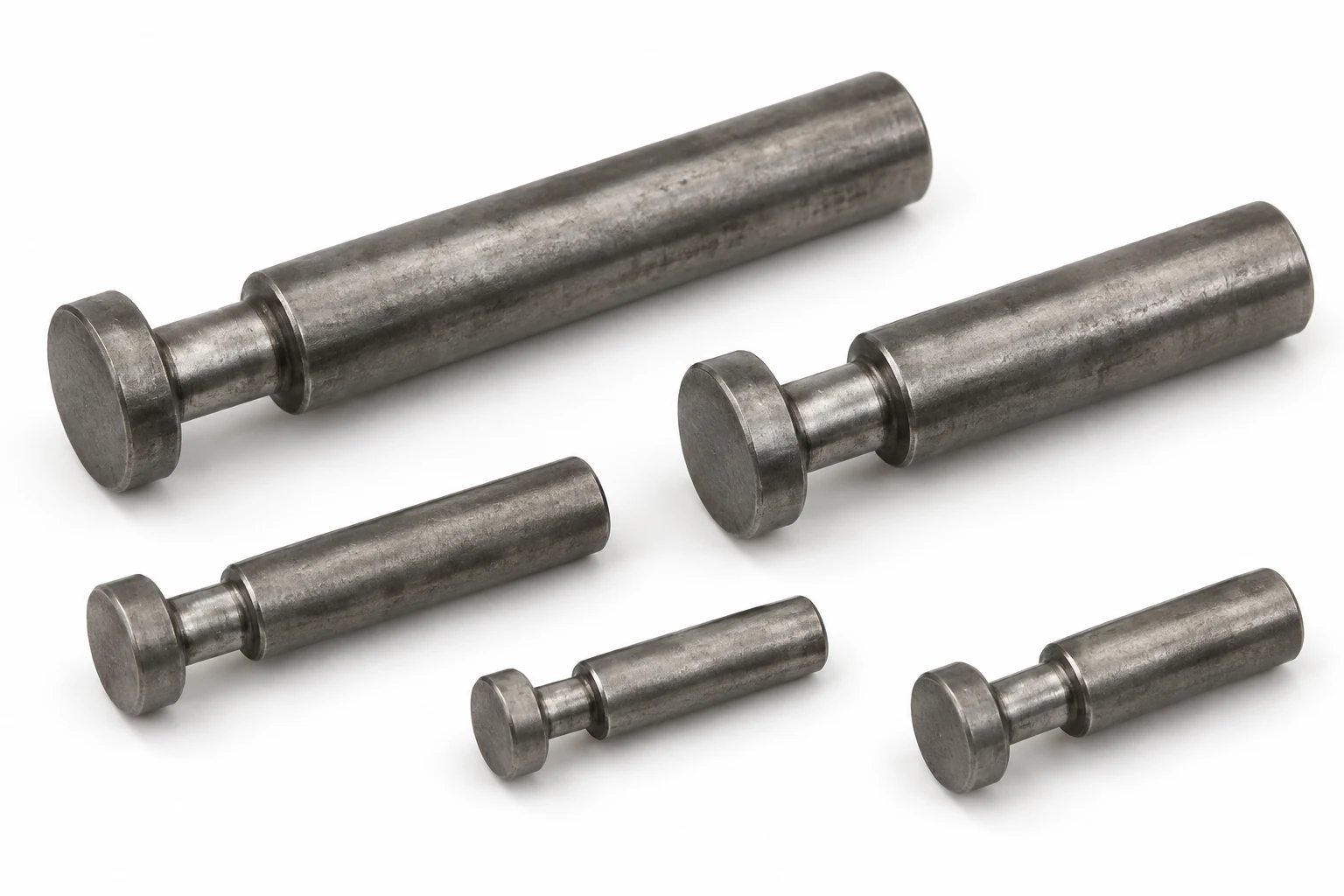
Hub Shear Pins are used primarily for protecting a hub or drive by failing at a specified shear neck and replacement torque. This page lists the industries and assemblies where they are specified, the selection criteria that matter for each application, installation practice, and the cases where a different fastener type is the correct choice. Parts are supplied to Trade series (shear-hub pins). Stocked across roughly 1 to 3, they cover light-duty and instrument-scale work.
Typical Applications for Hub Shear Pins
The most common settings where these are specified:
- Power transmission: Hub shear pins protect a shaft train by failing at a selected torque.
- Agricultural machinery: Replaceable pins protect implements from overload.
- Conveyors and drives: Neck diameter sets the intended sacrificial point.
- Maintenance shops: Stock lengths and torque examples support field replacement.
How to Specify Hub Shear Pins for Your Application
- Size: Select on screw size, and confirm it against the mating feature in the assembly. This product spans 1–3; check the full table below for the exact dimensions of each size.
- Material: Choose the material and finish for the service environment — plated steel for general use, stainless for corrosion resistance.
- Environment: For damp, coastal or chemical exposure prefer A4/316 stainless or a suitable coating; indoors, plated steel or A2 is usually sufficient.
- Standard: This product is supplied to Trade series (shear-hub pins). Quoting the standard on your order guarantees interchangeable dimensions between suppliers.
Installation & Assembly Practice
- Ream the hole to the specified fit class; a dowel pressed into a drilled-only hole will not locate accurately.
- Press pins in with steady force rather than hammer blows where possible, and chamfer the hole entry.
Common Selection Mistakes with Hub Shear Pins
- Using a dowel pin as a load-carrying shear bolt — dowels locate, they are not sized for sustained shear.
- Ignoring the fit class: a locational fit and an interference fit need different hole tolerances.
Where Hub Shear Pins Are Not the Right Choice
Not for carrying significant tensile or repeated heavy shear loads — use a bolt or a keyed joint for that.