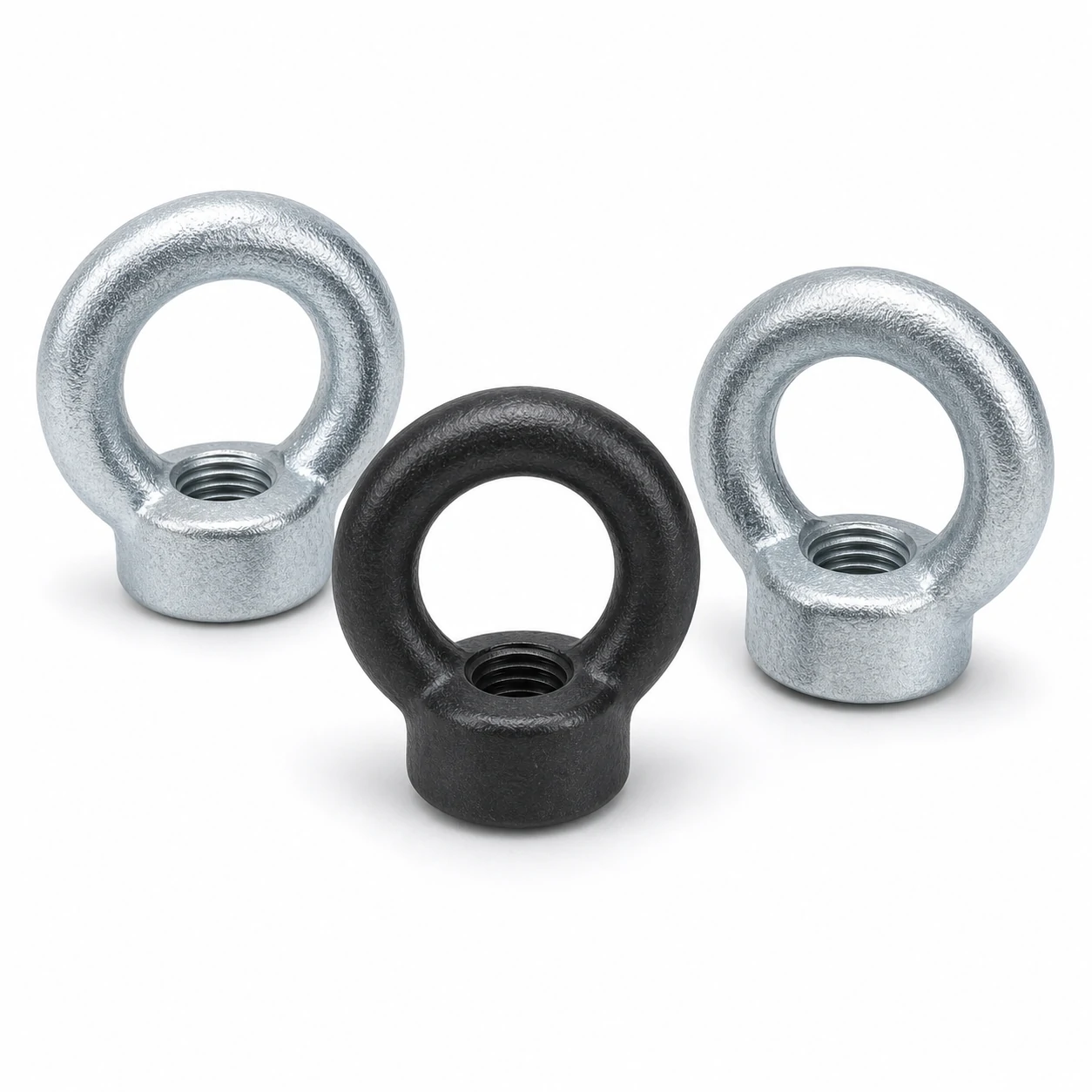
Application guide for Lifting Eye Nuts to DIN 582. The core duty of the type is providing a rated lifting or anchoring point on a threaded hole or stud, within a stated working load limit. The typical industries, the how-to-specify checklist, assembly practice and the exclusion cases are set out below. Stocked across roughly M6 to M36, they cover general to heavy-duty work.
Typical Applications for Lifting Eye Nuts
The most common settings where these are specified:
- Frames & weldments: captive or welded options for repeatable assembly.
- Overhead lifting: threaded lifting points on studs and shafts.
- Tensioning: anchor points for turnbuckles and tie rods.
- General machine building: fastening covers, brackets, motors and sub-assemblies on production equipment.
- Maintenance & repair (MRO): a stocked size for servicing existing plant where the original fastener spec must be matched.
How to Specify Lifting Eye Nuts for Your Application
- Size: Match the nominal size to the mating thread or hole. This product spans M6–M36; check the full table below for the exact dimensions of each size.
- Locking & grade: Match the strength grade to the bolt, and choose a locking style (nyloc, all-metal, serrated flange) if the joint sees vibration.
- Environment: For damp, coastal or chemical exposure prefer A4/316 stainless or a suitable coating; indoors, plated steel or A2 is usually sufficient.
- Standard: This product is supplied to DIN 582. Quoting the standard on your order guarantees interchangeable dimensions between suppliers.
Installation & Assembly Practice
- Run the nut down by hand before applying the wrench to catch cross-threading early.
- Tighten the nut rather than the bolt head where access allows — the torque-to-preload relation is more consistent.
- For locking styles, note that nyloc inserts are single-use in critical joints and lose grip above roughly 120 °C.
Common Selection Mistakes with Lifting Eye Nuts
- Pairing a high-class bolt with a lower-class nut — the nut strips before the bolt reaches proof load; the nut class must meet or exceed the bolt class.
- Using a plain nut with a spring washer in severe vibration instead of a prevailing-torque locking nut.
- Re-using nyloc nuts in critical joints.
Where Lifting Eye Nuts Are Not the Right Choice
Not on their own — they need a matching bolt or stud — and a plain nut is not a substitute for a locking type under heavy vibration.
Custom manufacturing · Made to drawing
Need a lifting eye nuts outside the standard range?
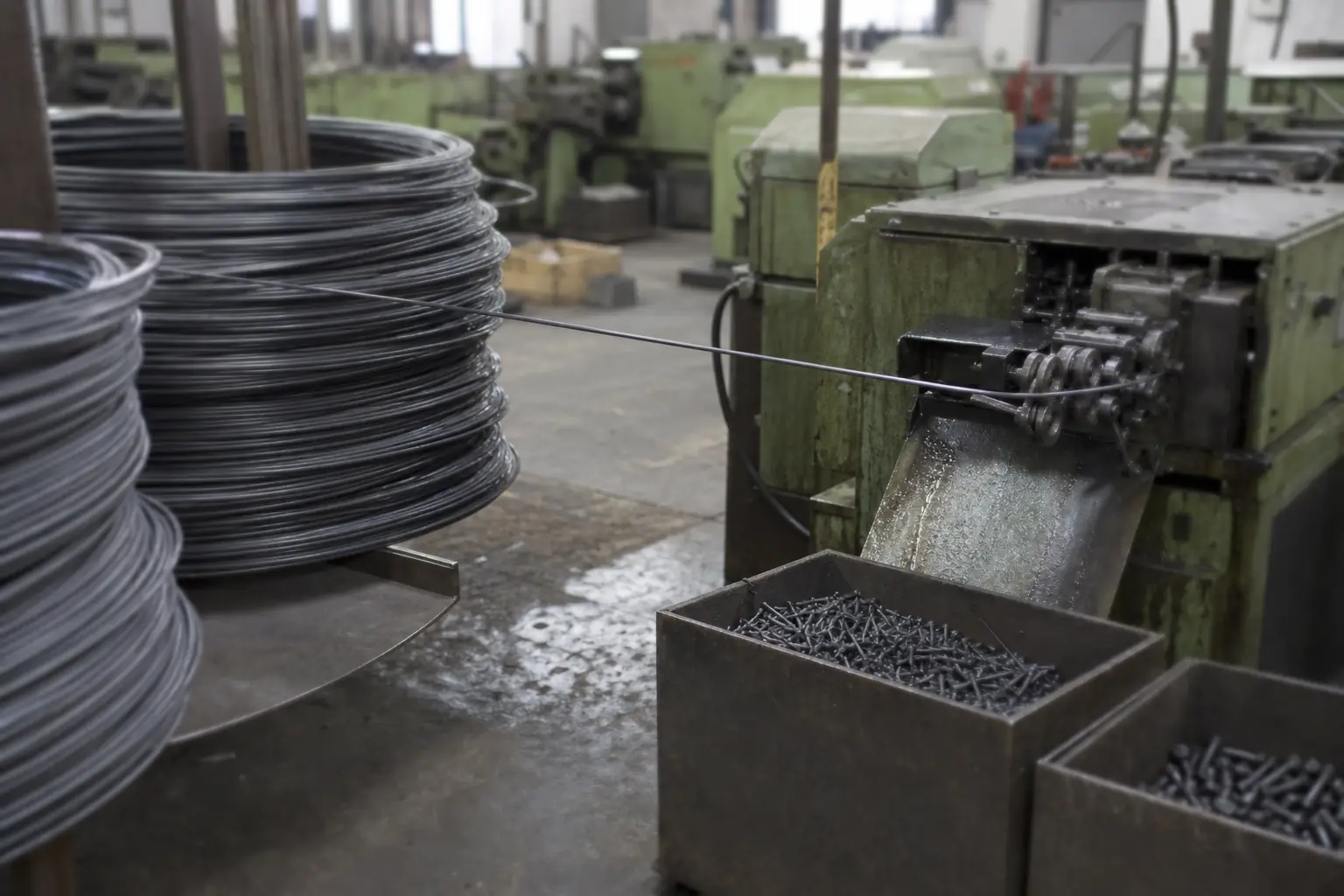
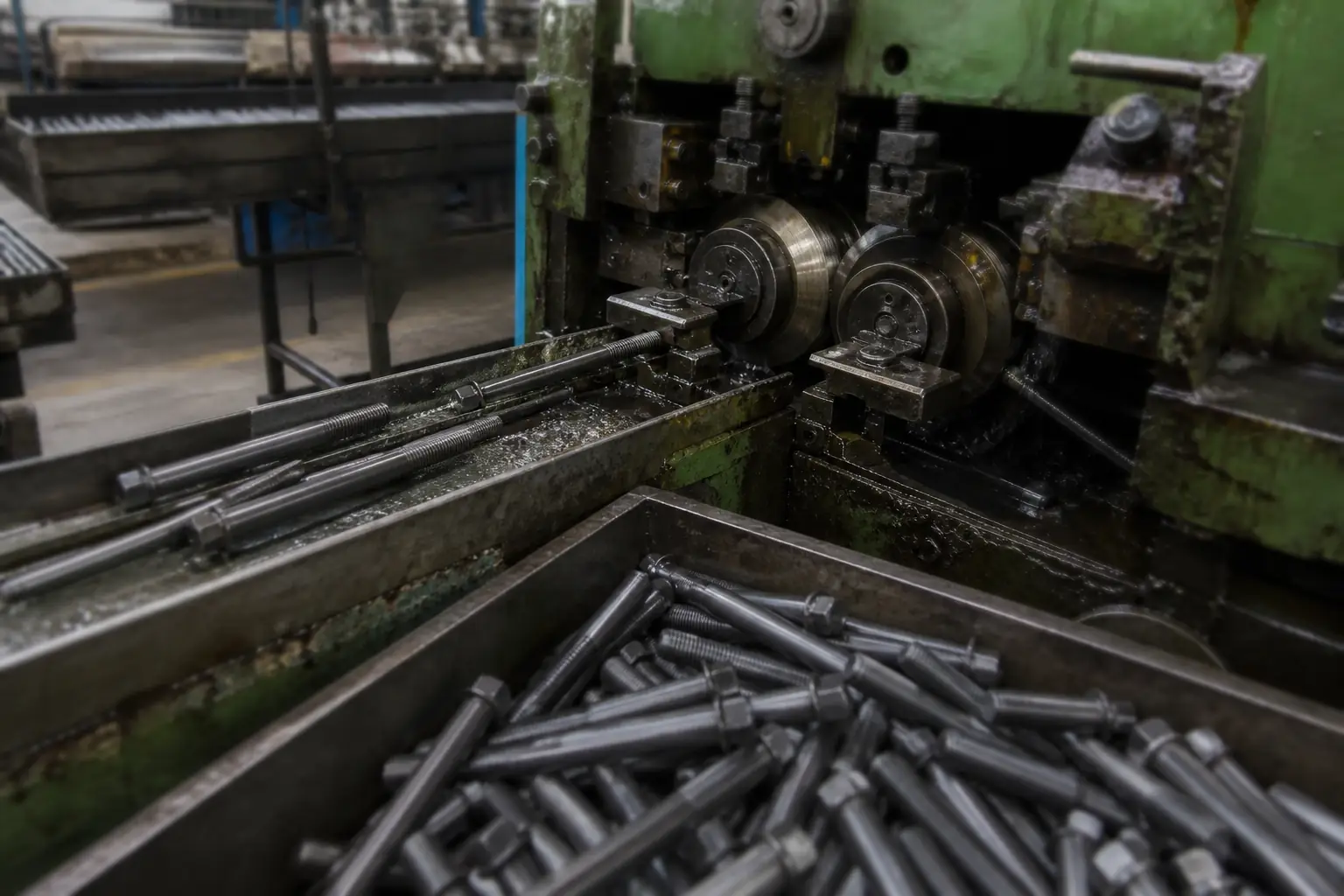
Dimensions, material, finish and form are specified from the drawing — a nut outside the standard range is a variation on existing tooling rather than a new design. Made by cold heading or tapping.
Minimum order from 2,000 pieces; samples within 7 days of drawing approval.