

Slotted Pan Head Screw — GB/T 67 / ISO 1580 (Series 040) (GB/T 67 / ISO 1580) are a type of screws used across industrial assembly. Below is the complete size table together with material, standard and application guidance.
What Are Slotted Pan Head Screw — GB/T 67 / ISO 1580 (Series 040)?
Slotted Pan Head Screw — GB/T 67 / ISO 1580 (Series 040) are screws defined by GB/T 67 / ISO 1580. They are selected by thread size and the dimensional characteristics shown below, and are available in a range of materials and finishes to suit the application and environment.
CAD Source Reference
This page is generated from an original native CAD part model (SolidWorks .SLDPRT) of the slotted pan head screw — gb/t 67 / iso 1580 (series 040) family maintained by our engineering team, covering 11 recorded size configurations. The technical drawing shown above is rebuilt parametrically from the dimensional table, so it always reflects the exact size and configuration you select. Native CAD files (STEP / SLDPRT) can be supplied with your quotation on request.
Materials & Finishes
Common materials include carbon steel (typically zinc plated or hot-dip galvanized), alloy steel in property classes 8.8, 10.9 and 12.9, and stainless steel A2 (304) or A4 (316) for corrosion resistance. Specify the material, property class and surface finish appropriate to your load and environment.
Typical Applications
Machine assembly, tooling, enclosures and precision equipment where a clean, controllable drive and head form are needed.
Pricing
Slotted Pan Head Screw — GB/T 67 / ISO 1580 (Series 040) are supplied to order. Pricing starts from approximately US$0.050 per piece for standard sizes in carbon steel; final pricing depends on size, material, finish and order quantity (MOQ applies). Submit your exact configuration with the quote form above.
Manufactured in our own plant
This part is cold-formed, threaded, heat-treated and finished in-house. The stages below are where its class and finish are actually decided.
-
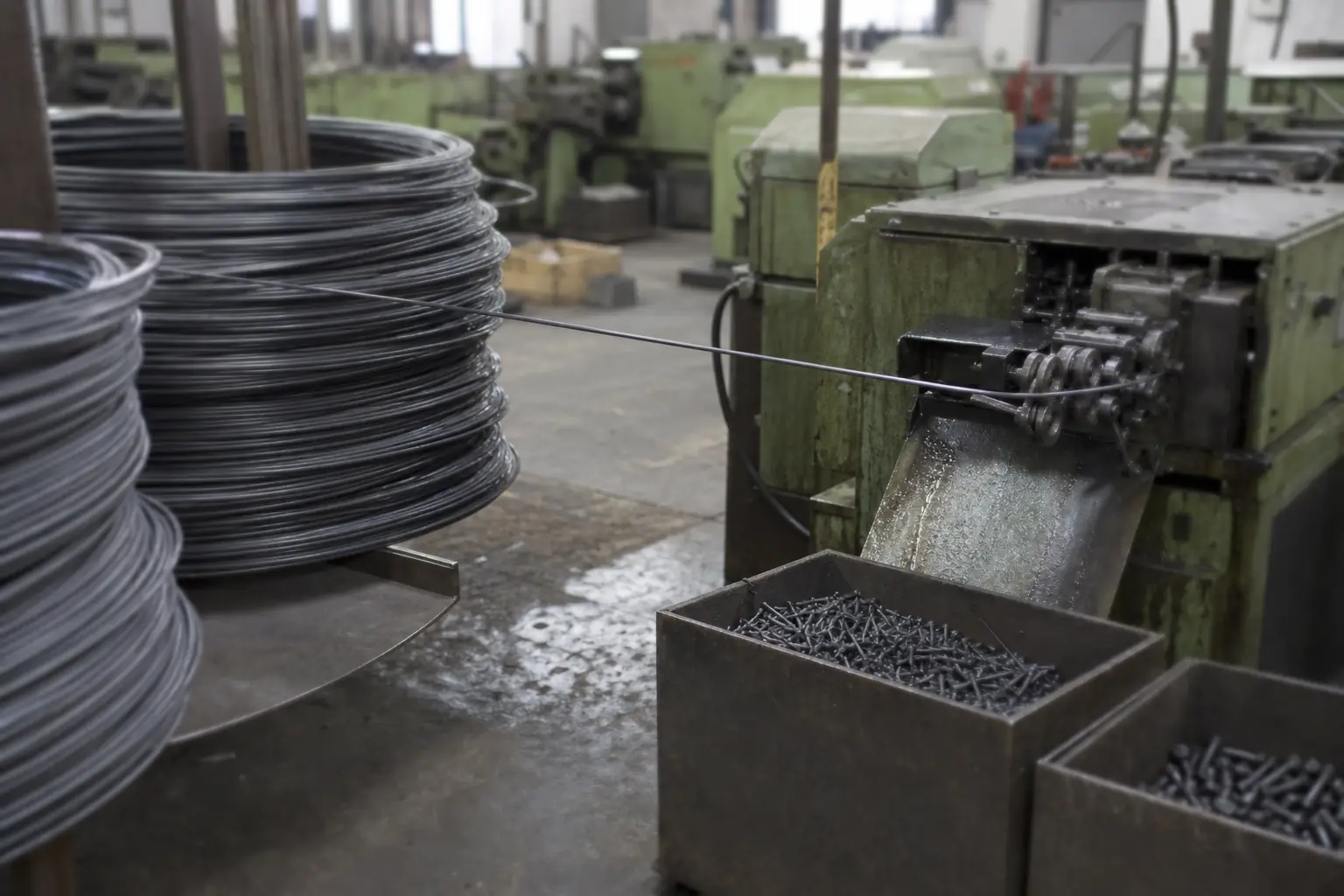
01 Cold heading
Wire rod is drawn to size and cold-formed into blanks. Forming rather than cutting keeps the grain flow continuous around the head, which is where a bolt is most likely to fail.
Head dimensions and under-head radius checked at set-up and per shift.
-
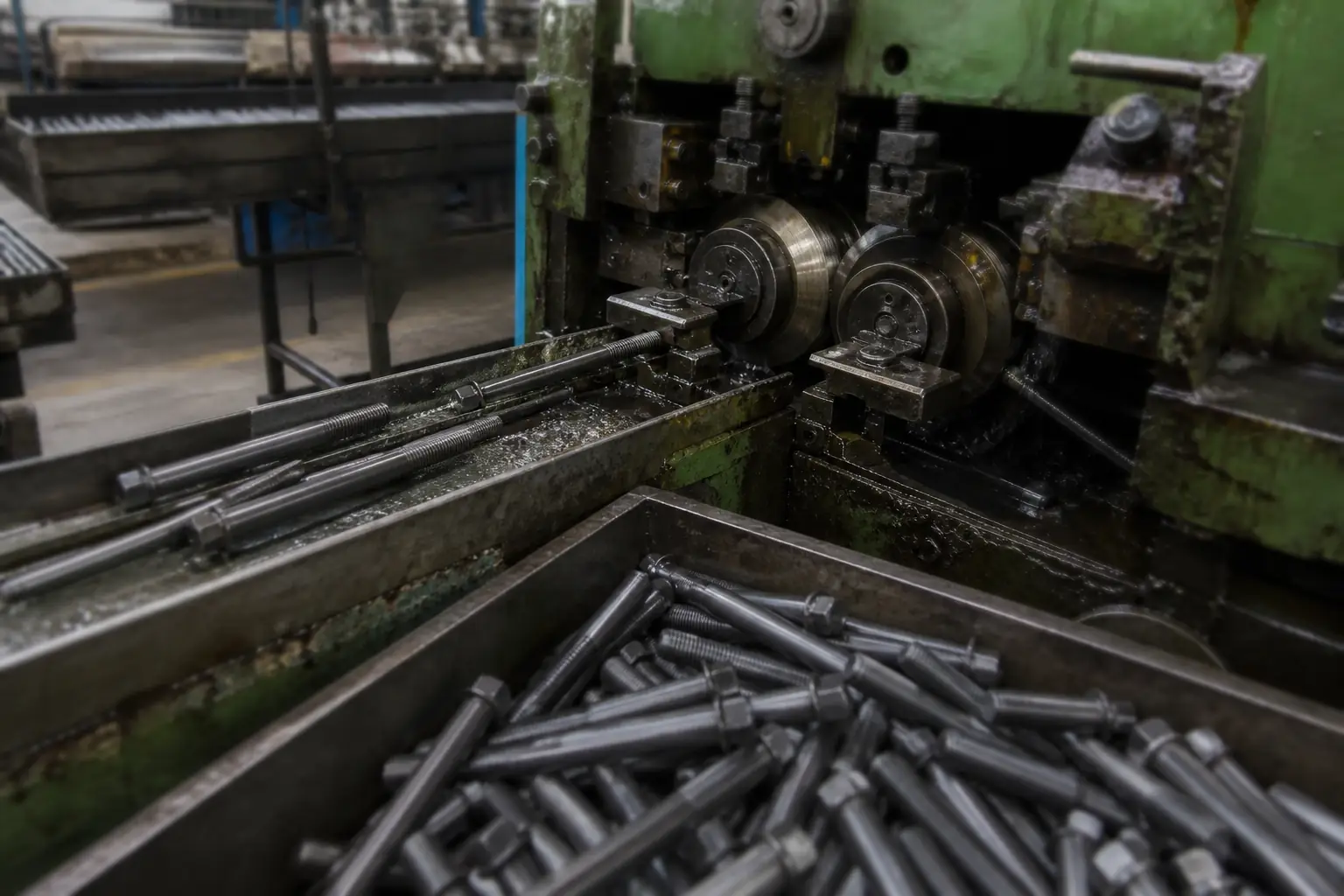
02 Thread rolling
Threads are rolled between hardened dies rather than cut. Rolled threads are stronger in fatigue than cut threads and hold pitch and flank angle far more consistently across a batch.
Go / no-go ring gauges to ISO 965 tolerance class 6g.
-
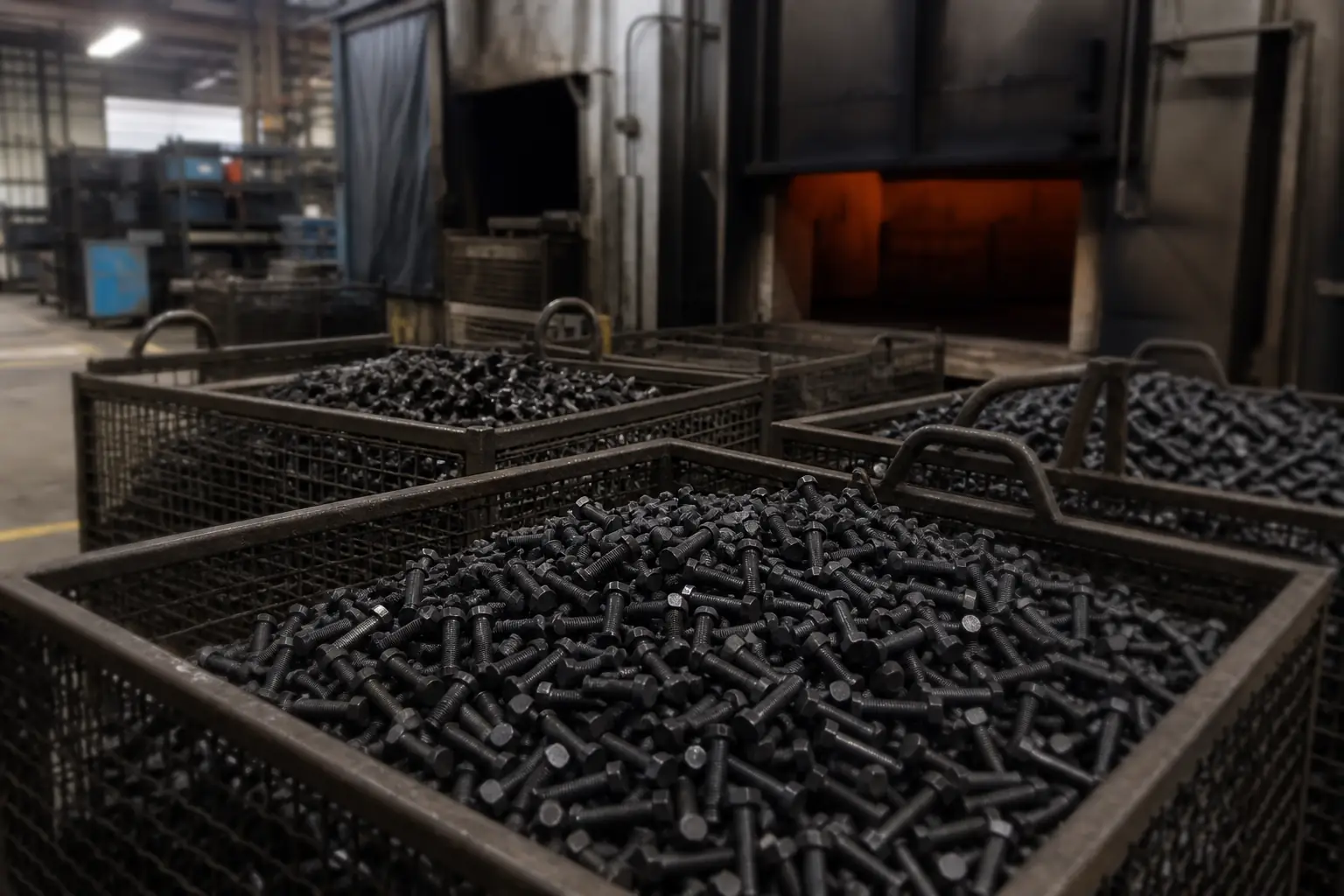
03 Heat treatment
Quench-and-temper brings carbon and alloy steel to the property class ordered — 8.8, 10.9 or 12.9 — with the furnace charge tracked so a finished lot can be traced back to it.
Core hardness and tensile tested per lot to ISO 898-1.
-
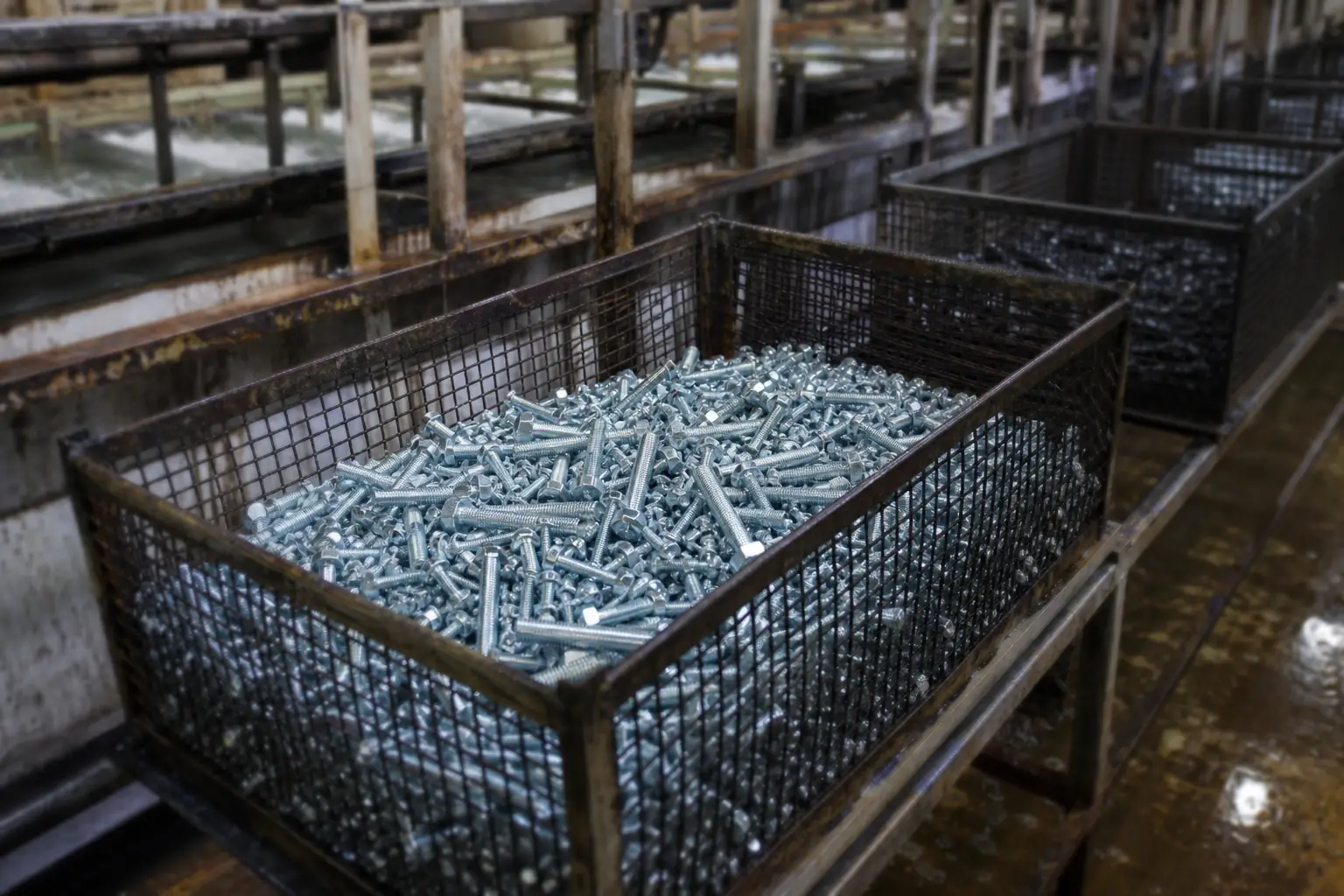
04 Surface treatment
Zinc, zinc-nickel, hot-dip galvanizing, black oxide, phosphate and Dacromet, selected against the service environment rather than against the price list.
Coating thickness and neutral salt spray hours to ISO 9227.