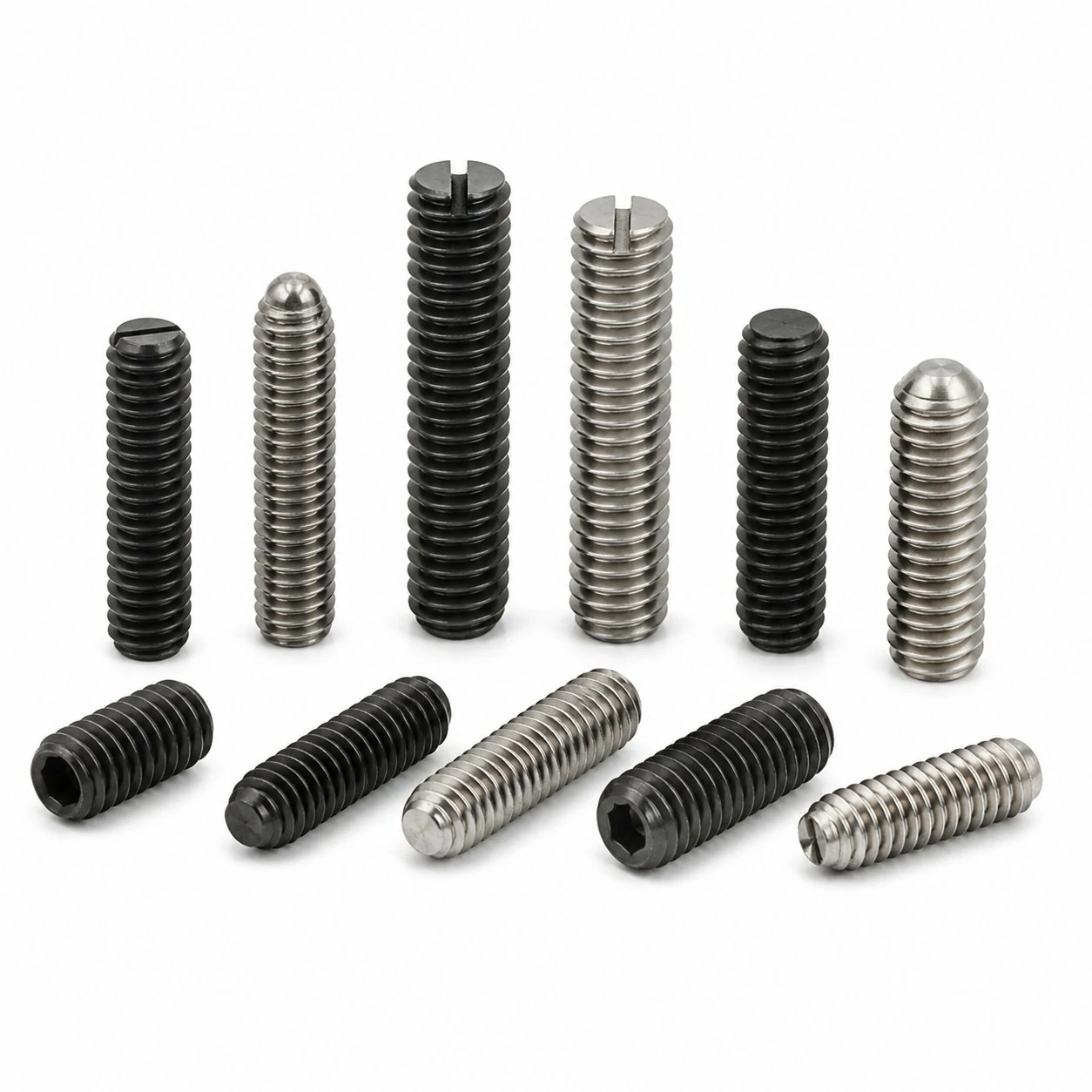
Property Class 12.9 Steel Slotted Adjusting Screws (DIN 551) are supplied to ISO 898-1 property class 12.9. Corrosion behaviour is requires plating or black-oxide protection, the material is magnetic, and the usable service range is commonly limited to approx. +300 °C; confirm against the coating and the load. In practice this grade is the highest common strength class, for high-load machine assembly.
- Grade
- ISO 898-1 property class 12.9
- Corrosion resistance
- Requires plating or black-oxide protection
- Magnetic response
- Magnetic
- Service temperature
- commonly limited to approx. +300 °C; confirm against the coating and the load
Property values are typical for the grade. Certified mechanical test data is available on request for production orders.
Property Class 12.9 Steel Slotted Adjusting Screws (DIN 551) are supplied to DIN 551. The grade provides requires plating or black-oxide protection and is magnetic; the practical service range is commonly limited to approx. +300 °C; confirm against the coating and the load. Property data, grade comparison and the full size table follow.
Why Choose Property Class 12.9 Steel for Slotted Adjusting Screws (DIN 551)
The highest common strength class, for high-load machine assembly. For slotted adjusting screws (din 551), this matters when requires plating or black-oxide protection is the primary requirement.
Mechanical & Physical Properties
| Grade designation | ISO 898-1 property class 12.9 |
|---|
| Magnetic response | Magnetic |
|---|
| Service temperature | commonly limited to approx. +300 °C; confirm against the coating and the load |
|---|
| Corrosion characteristic | Requires plating or black-oxide protection |
|---|
Corrosion Behavior in Service
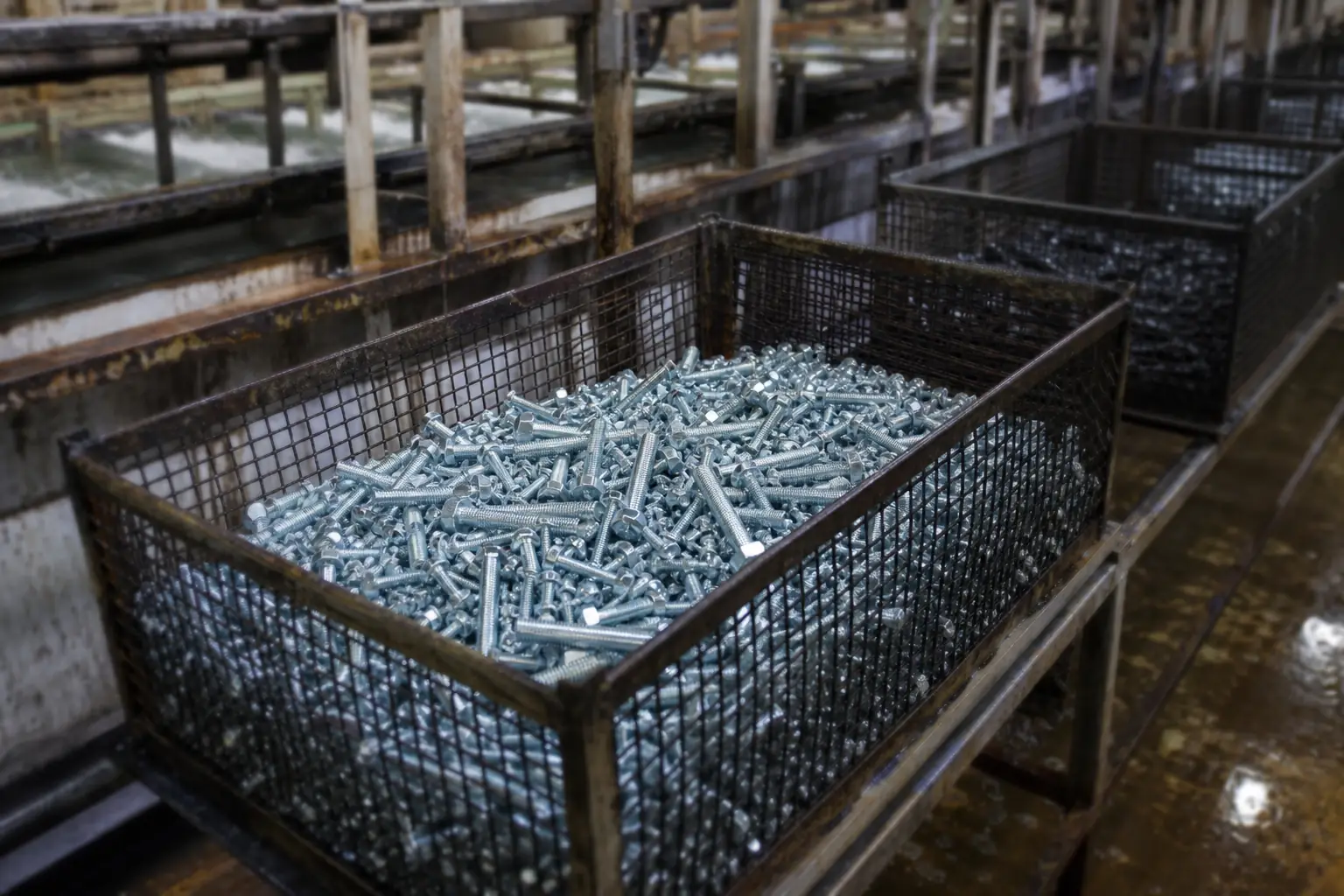
Carbon and alloy steel slotted adjusting screws (din 551) require a coating for corrosion protection. Zinc plating (with or without passivation) is the most common; hot-dip galvanizing is used for outdoor structural service; black-oxide is mainly a tarnish-prevention finish for tool-room use.
Galvanic & Galling Considerations
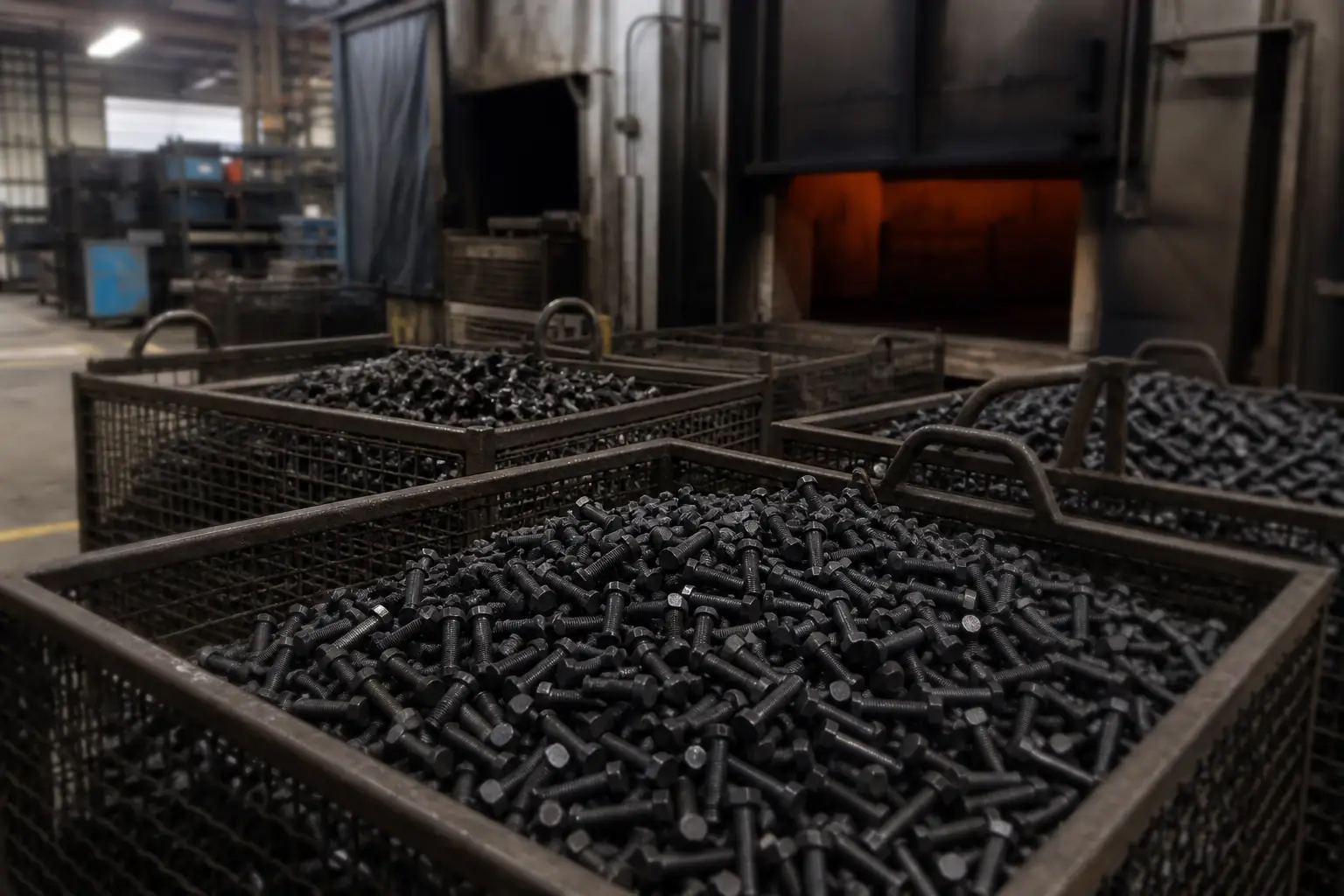
For slotted adjusting screws (din 551) in steel, the dominant compatibility issue is hydrogen embrittlement at high property classes (10.9 and above) when electroplated. Plating must be followed by an appropriate baking treatment, or a non-electroplated finish (mechanical zinc, zinc flake) should be substituted.
Sizes of Slotted Adjusting Screws (DIN 551) Available in Property Class 12.9 Steel
| Thread size | Pitch (mm) | Slot width n (mm) | Slot depth t (mm) | Point form | Common length range (mm) | Property class | Reference standard |
|---|
| M3 | 0.5 | 0.4 | 0.8 | Flat | 3~16 | 14H | DIN 551 |
| M4 | 0.7 | 0.6 | 1.1 | Flat | 4~20 | 14H | DIN 551 |
| M5 | 0.8 | 0.8 | 1.3 | Flat | 5~25 | 14H | DIN 551 |
| M6 | 1.0 | 1.0 | 1.5 | Flat | 6~30 | 14H | DIN 551 |
| M8 | 1.25 | 1.2 | 2.0 | Flat | 8~40 | 14H | DIN 551 |
| M10 | 1.5 | 1.6 | 2.5 | Flat | 10~50 | 14H | DIN 551 |
Dimensions are independent of the material: every size above is available in Property Class 12.9 Steel.
Custom manufacturing · Made to drawing
Need this screw in a grade that is not listed?
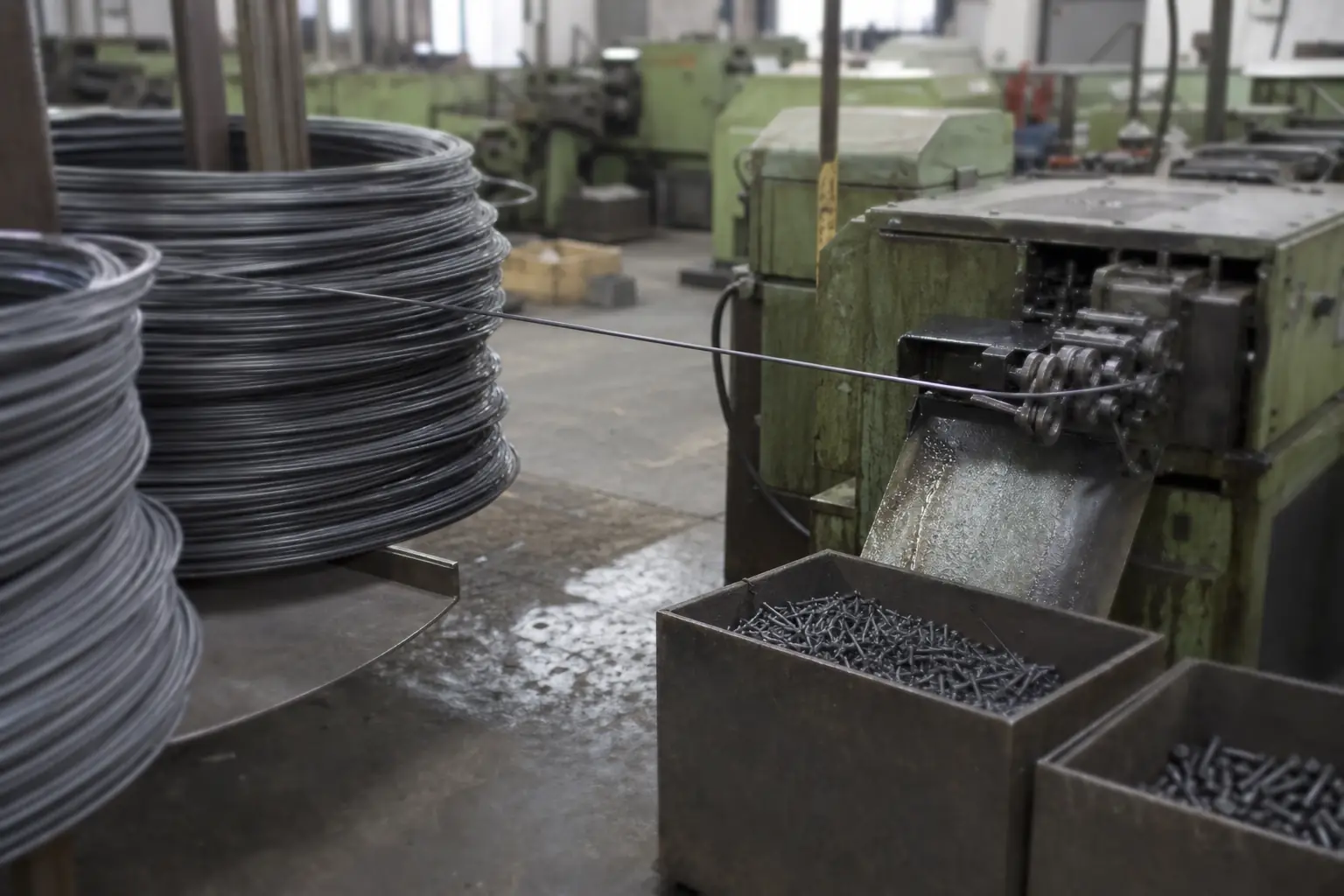
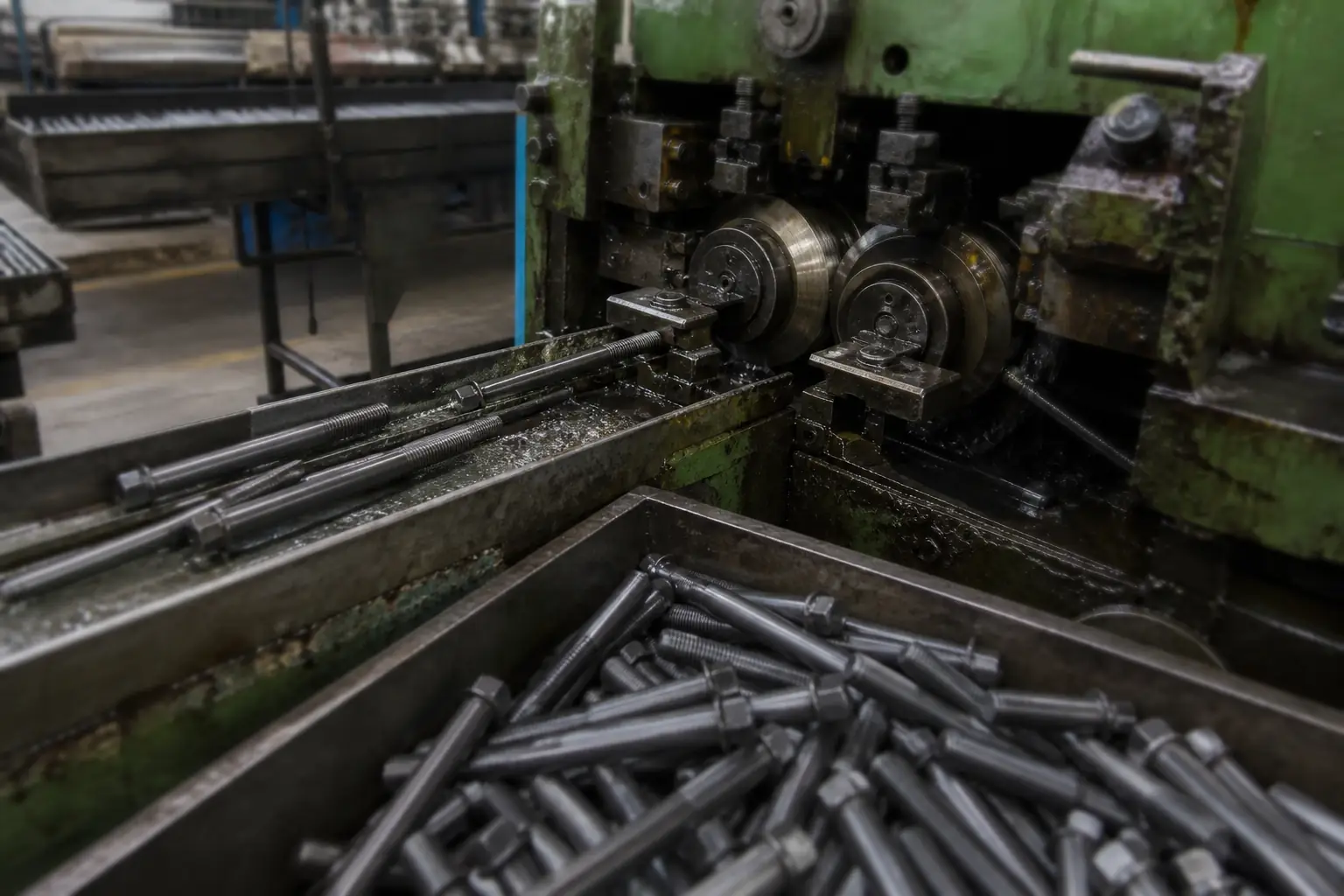
Grade 12 9 Steel is one of the grades the catalog describes. Head form and drive can be specified to the assembly rather than to a standard: a larger bearing face, a security drive, or a socket sized for the tool already on the bench. Made by cold heading or warm forging.
Minimum order from 2,000 pieces; samples within 7 days of drawing approval.
Custom screw manufacturingSend a drawing
Applications & Industries
The sectors that buy Slotted Adjusting Screws to DIN 551, and the duty each one buys them for. Stocked from M3 to M10.
Industries that specify Slotted Adjusting Screws
-
Energy & infrastructure
Tower, pipework, switchgear and plant fixings specified for long service life and inspectable joints.
-
Maintenance & MRO
Stocked replacements matched to an existing property class, thread and finish.
-
Food, pharma & cleanroom
Stainless assemblies that are washed down, where the finish matters as much as the strength.
-
Machine building & OEM
The default fastener on production equipment: covers, brackets, motor mounts and sub-assemblies tightened to a specified torque.
-
Automotive & transport
Chassis, driveline and body fixings that see vibration and are assembled to a controlled preload.
-
Steel fabrication
Bolted connections in frames, enclosures, walkways and weldments, on the bench and on site.
Typical applications
- bolting brackets, motors and gearboxes to a frame
- assemblies that are dismantled for service and re-torqued
- joints where the property class is stated on the drawing
- clamping two machined faces to a calculated preload
Service conditions to specify against
- Marine and coastal
- Available in A4 (316) stainless for chloride exposure — coastal structures, pool halls, water treatment and deck hardware, where A2 will eventually pit.
- High load
- Supplied in ISO 898-1 property classes, so the joint can be designed to a stated proof load and tightened to a calculated torque rather than by feel.
- Torque and preload
- The joint is designed around bolt tension, so lubrication, coating and the friction coefficient all change the torque figure — state them together.
Where to use something else
- Do not use a machine thread into unthreaded sheet or timber; use a tapping screw, rivet nut or insert made for that parent material.
Full application guide: where Slotted Adjusting Screws are used, how to specify them, and the cases they are wrong for