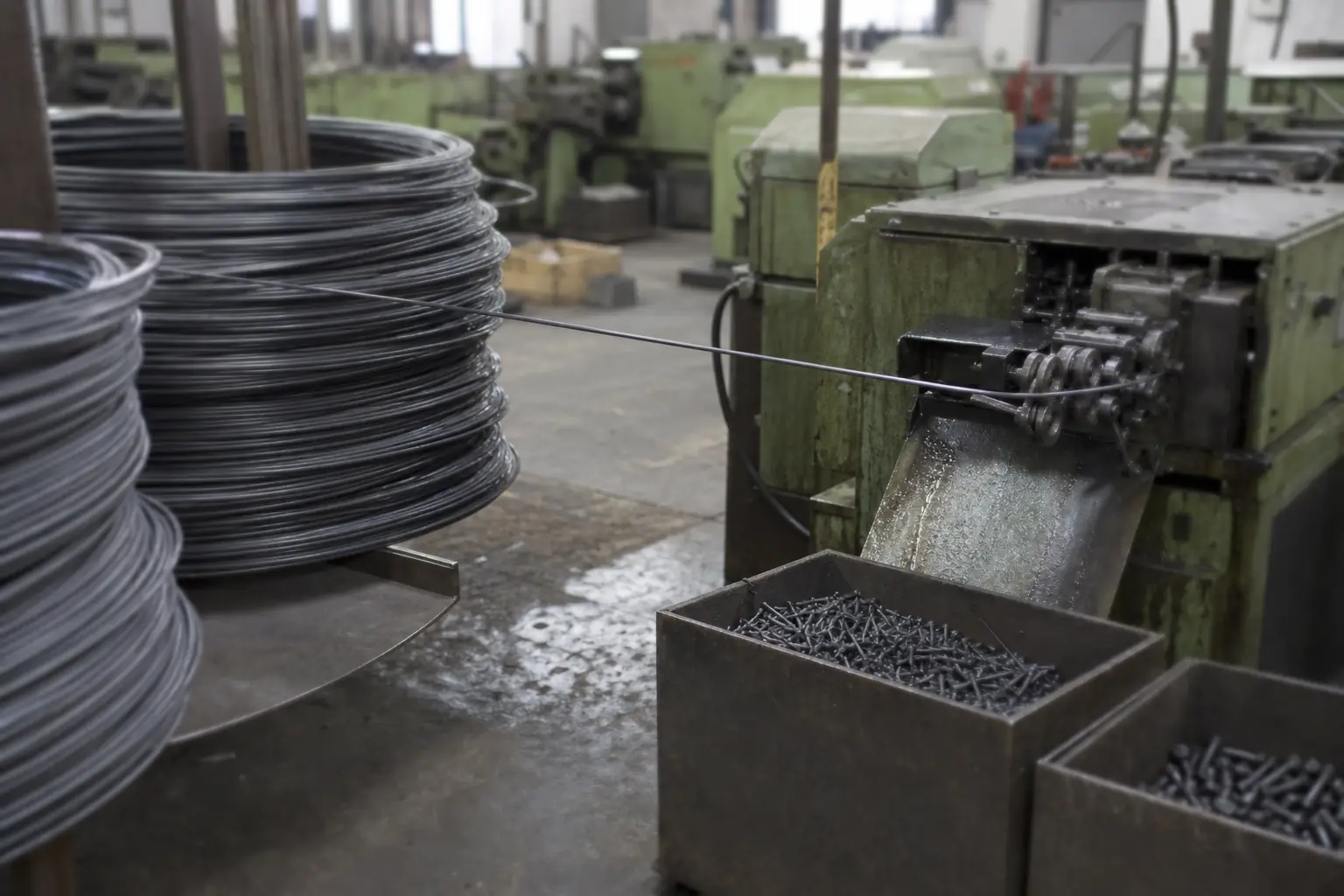
M1.6 is one of the standard coarse-thread sizes for phillips countersunk screws under ISO 7046 / DIN 965. The sections below reproduce the dimensional row, list the matching tools and hole sizes, and summarize where this size is normally specified.
M1.6 Dimensional Row (ISO 7046 / DIN 965)
| Size | Pitch (mm) | Head diameter dk (mm) | Head height k (mm) | Cross recess | Countersink angle (deg) | Reference standard |
|---|---|---|---|---|---|---|
| M1.6 | 0.35 | 3.0 | 0.96 | PH0 | 90 | ISO 7046 / DIN 965 |
Spanner & Drive for M1.6 Phillips Countersunk Screws
The hex socket for M1.6 Phillips Countersunk Screws is shown in the spec table — use the matching Allen / hex key (an ISO 2936 hex key set covers the full range). A T-handle Allen key gives the best feel for setting preload by feel; for production work use a torque-controlled driver.
Common Applications for M1.6 Phillips Countersunk Screws
M1.6 Phillips Countersunk Screws are commonly specified for electronics, PCB hardware, optical mounts and small-scale machinery.
Installation Tips for M1.6 Phillips Countersunk Screws
- Use a quality Allen key fully seated in the socket — partial engagement is the most common cause of stripped sockets at this size.
- For countersunk and button-head variants, chamfer the through-hole to seat the head flush without preloading the head/shank fillet.
- At M1.6 the joint is sensitive to over-torque — use a torque-limiting driver and check the head doesn't bury into a softer counterpart.
Mating Parts for M1.6
For M1.6, pair with a M1.6 hex nut (ISO 4032 / DIN 934) and, where used, a M1.6 flat washer (ISO 7089 / DIN 125A) under the head and under the nut.