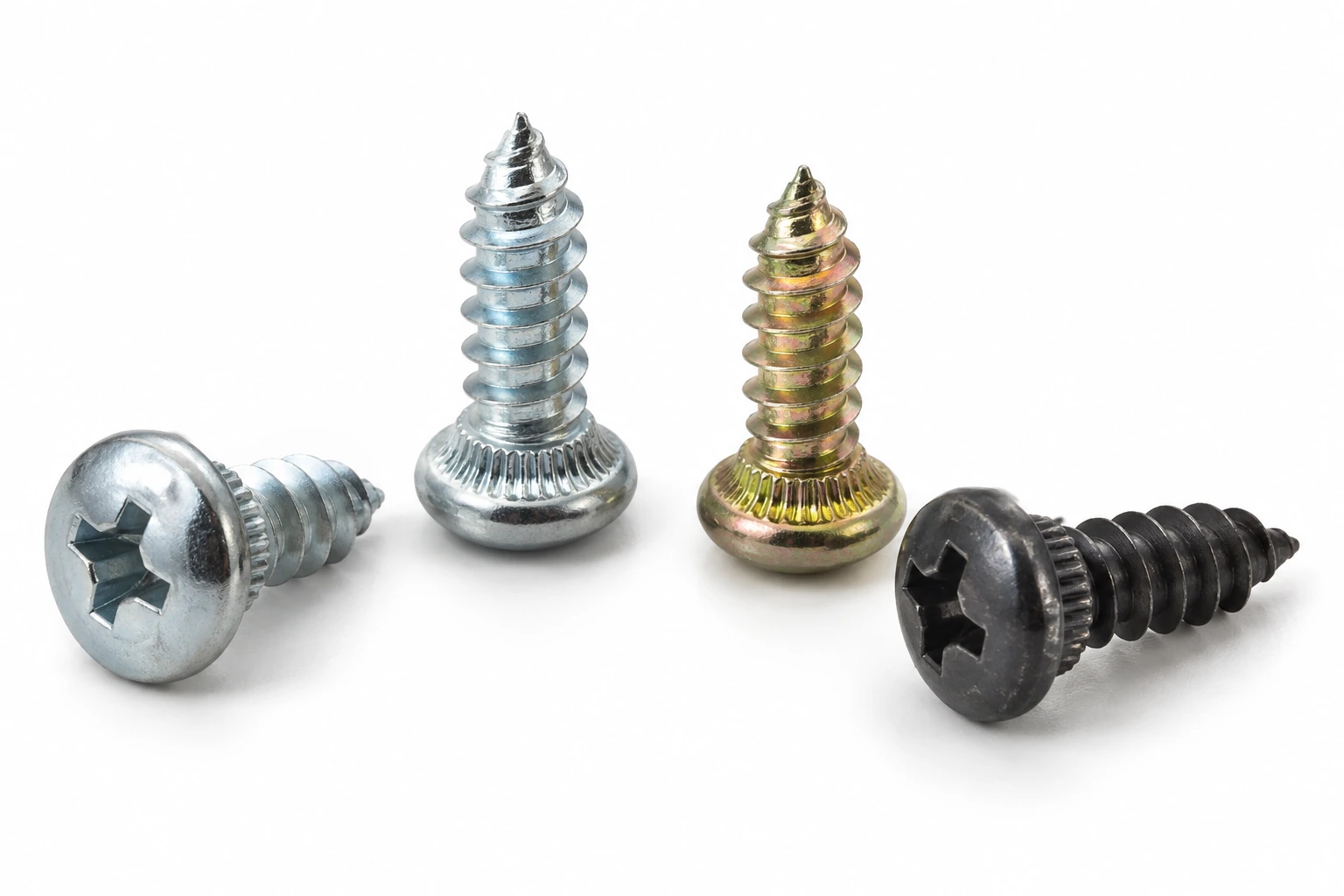
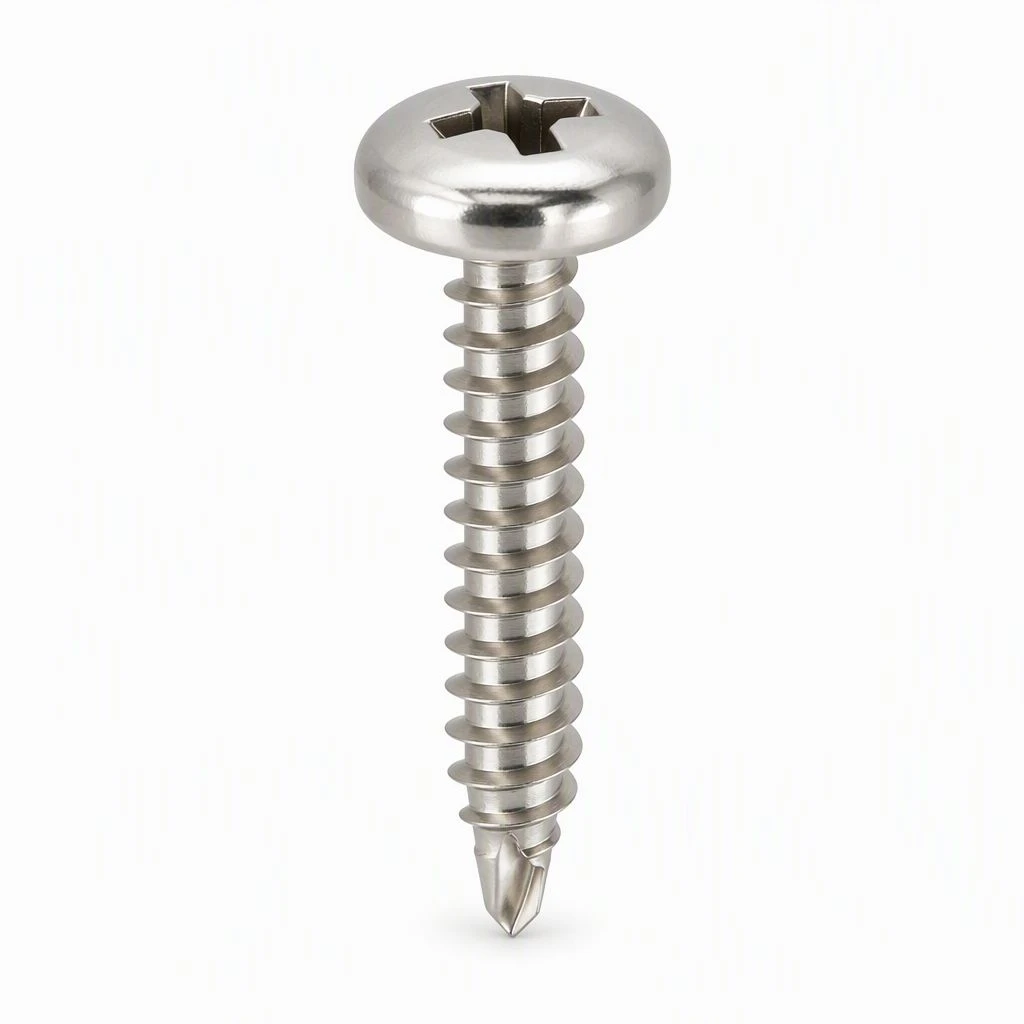
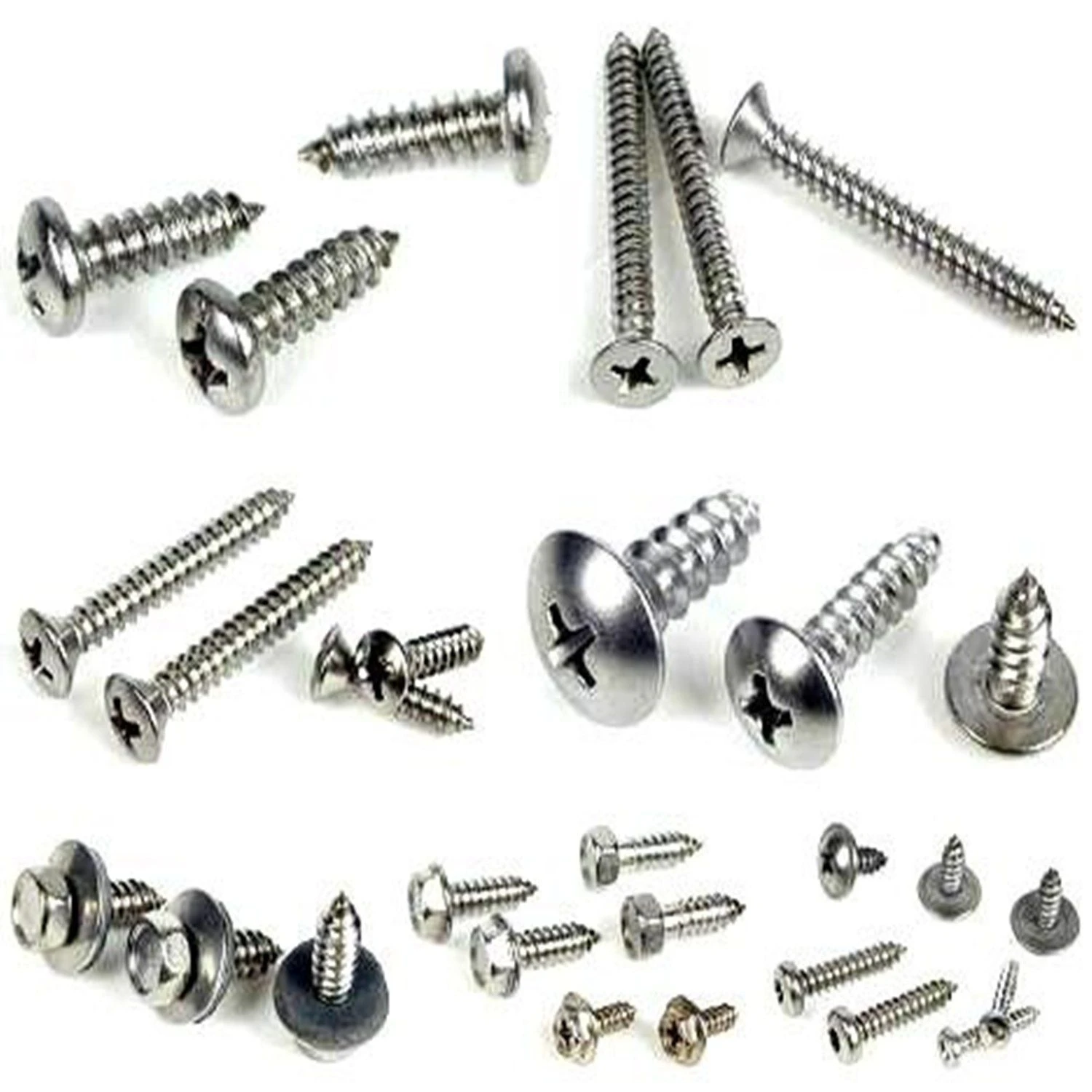
DIN 7981 specifies the dimensions and tolerances for cross flat-head knurled self-tapping screws. The full dimensional table is reproduced below, followed by the DIN, ISO and ASME parts that match or supersede it.
- Standard
- DIN 7981
- Product
- Cross Flat-Head Knurled Self-Tapping Screws
- Governing standards
- GB/T 845 / DIN 7981 / GB/T 5267.1
Equivalence between national standards is dimensional, not always metallurgical. Check the property class separately when substituting.
DIN 7981 is the standard cited for cross flat-head knurled self-tapping screws. This page sets out what the standard controls for this part, reproduces the dimensional table supplied against it, and notes the related designations referenced on drawings.
DIN 7981 — Scope
The table below lists the dimensions catalogued for cross flat-head knurled self-tapping screws under DIN 7981. The scope of DIN 7981 itself is not summarised here — where a figure matters, confirm it against the published document.
Tolerance & Product Grades
Product grade is a concept from dimensional fastener standards and does not apply to DIN 7981. Tolerances for this part are the limits shown against each dimension in the table.
Dimensions Specified by DIN 7981
| Head form | Under-head feature | Material | Finish options | Substrate |
|---|
| cross-recess flat head | under-head knurling | carbon steel | zinc plating | wood |
| cross-recess flat head | under-head knurling | carbon steel | colour zinc plating | plastic |
| cross-recess flat head | under-head knurling | carbon steel | black oxide | thin plate |
Companion Standards
A complete specification for cross flat-head knurled self-tapping screws normally cites several documents: one for the geometry, one for the material or mechanical properties, and one for the finish. DIN 7981 is one of them, not all of them.
When to Specify DIN 7981
DIN 7981 is still widely used in European mechanical engineering and as a cross-reference on legacy drawings; its ISO equivalent is preferred for new designs.
Custom manufacturing · Made to drawing
Need a screw to this standard in a non-standard size?
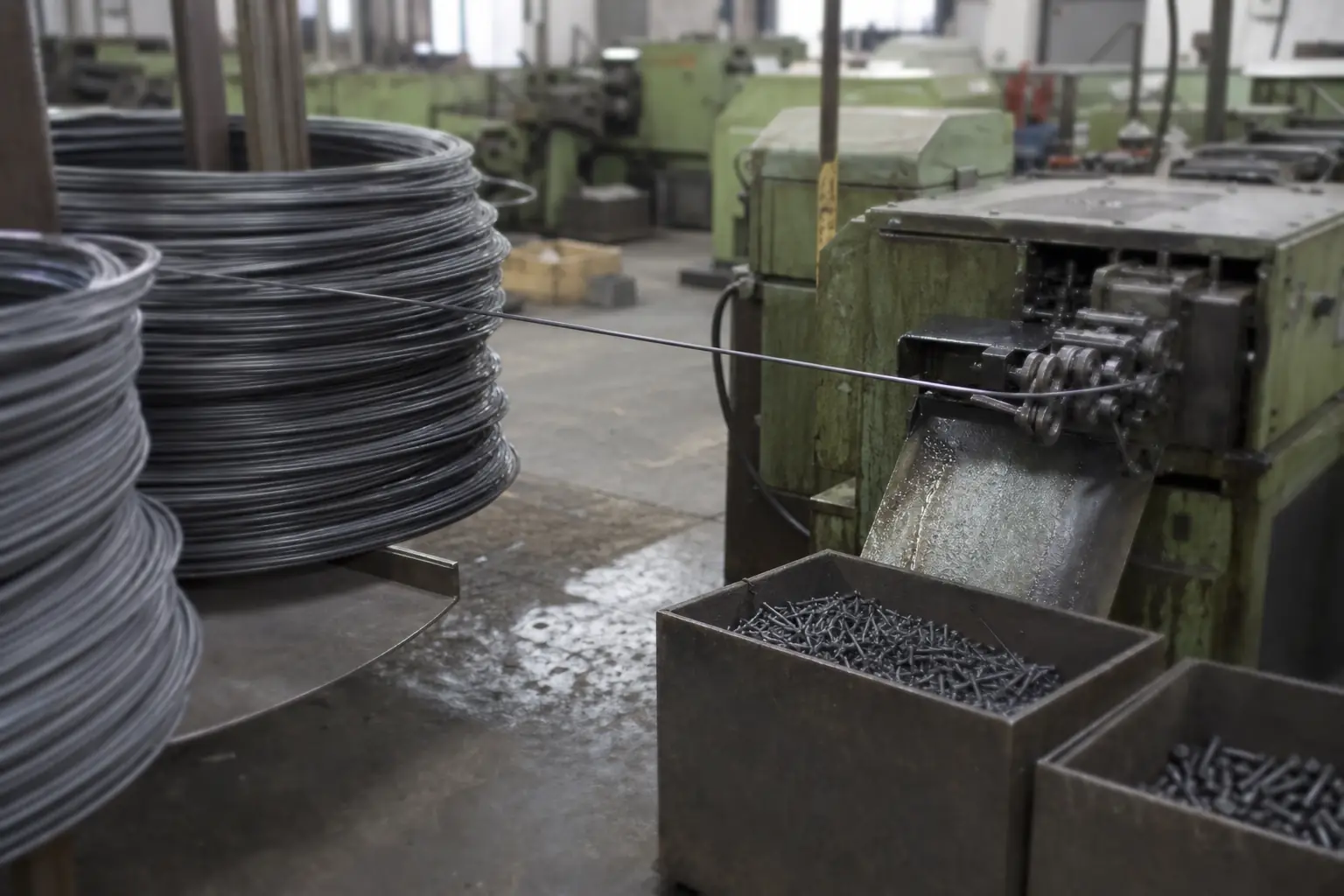
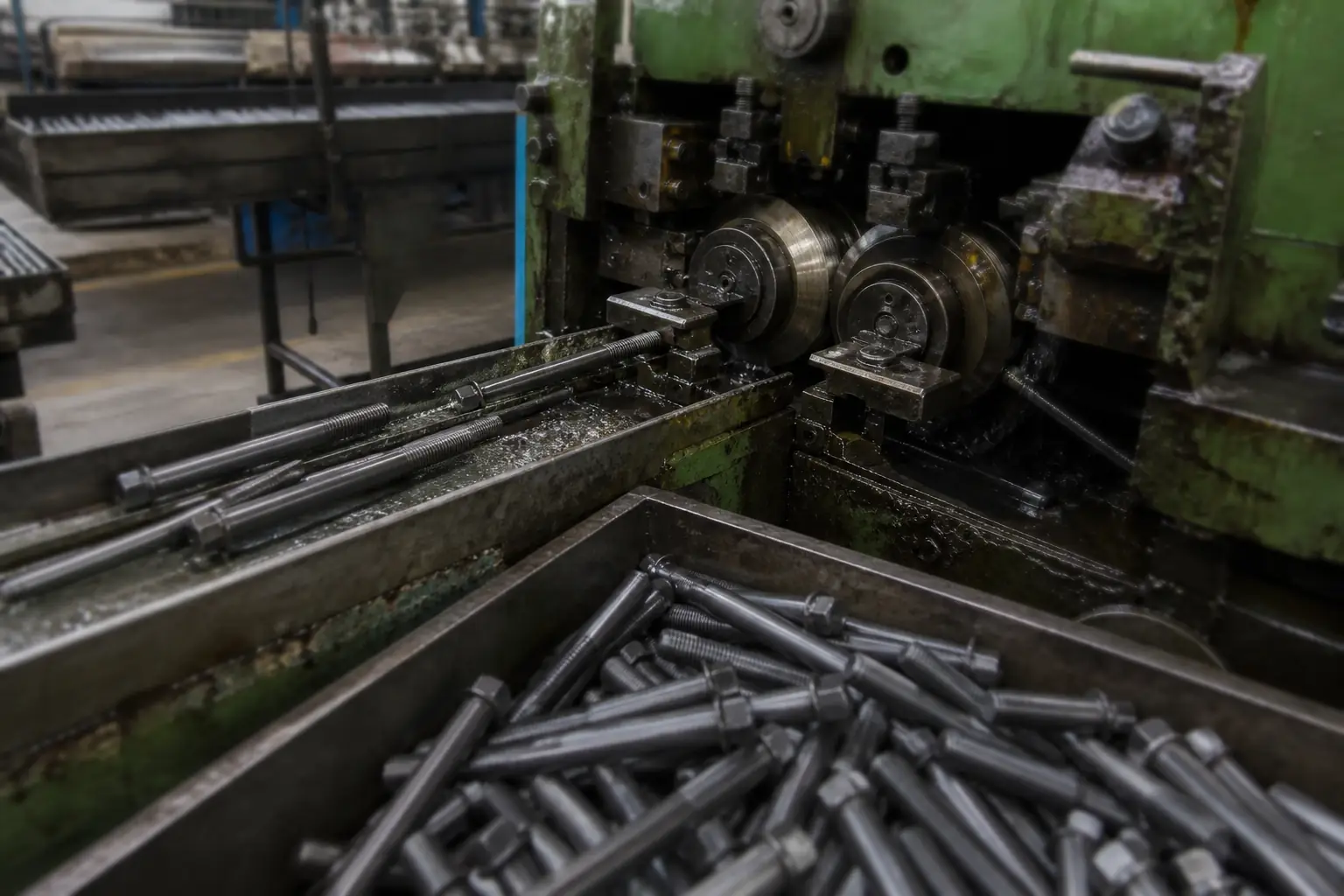
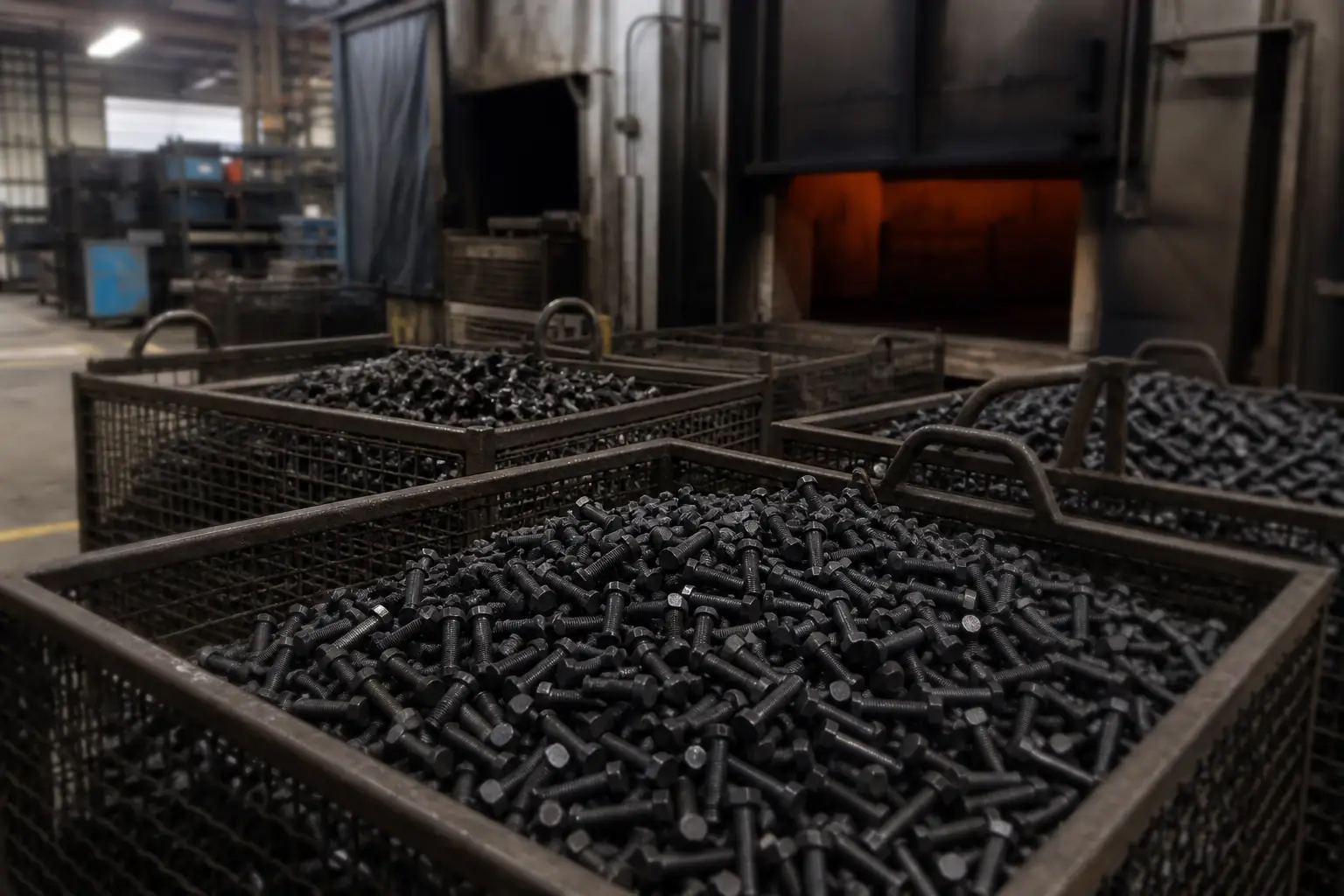
Parts built to DIN 7981 are already in the catalog, so a special is usually a variation on existing tooling rather than a new design — which is what keeps the cost down. Made by cold heading or warm forging.
Minimum order from 2,000 pieces; samples within 7 days of drawing approval.
Custom screw manufacturingSend a drawing
Applications & Industries
The sectors that buy Cross Flat-Head Knurled Self-Tapping Screws to GB/T 845 / DIN 7981 / GB/T 5267.1, and the duty each one buys them for.
Industries that specify Cross Flat-Head Knurled Self-Tapping Screws
-
Plastic assemblies
Flat head seats without cracking a thin moulding.
-
Sheet-metal work
Extra friction against vibration without a thread locker.
-
General fabrication
Zinc, colour zinc and black oxide for the visible finish.
-
Furniture manufacture
Under-head knurling bites the surface and resists backing out.
-
Construction & fit-out
Fixing board, batten, framing and trim into timber and light-gauge steel.
-
Sheet-metal & HVAC
Ducting, enclosures, trunking and cladding assembled without tapped holes.
Typical applications
- choosing the finish to suit the visible face
- selecting for wood, plastic or thin plate
- keeping installation torque within what the parent material takes
- letting the knurl bite the mating surface as the head seats
- fixing where there is no access to add a nut behind the panel
- high-volume driving with a bit and a clutch-set driver
Service conditions to specify against
- Marine and coastal
- Available in A4 (316) stainless for chloride exposure — coastal structures, pool halls, water treatment and deck hardware, where A2 will eventually pit.
- Pilot hole
- Selection is really a hole-size decision: too small and the screw snaps or splits the material, too large and it strips. The size is stated per row.
Where to use something else
- Do not use a knurled head where the surface must stay unmarked; the knurl works by scoring it.
- Not for a joint that will be dismantled and reassembled repeatedly in the same hole — use an insert or a rivet nut instead.
Full application guide: where Cross Flat-Head Knurled Self-Tapping Screws are used, how to specify them, and the cases they are wrong for