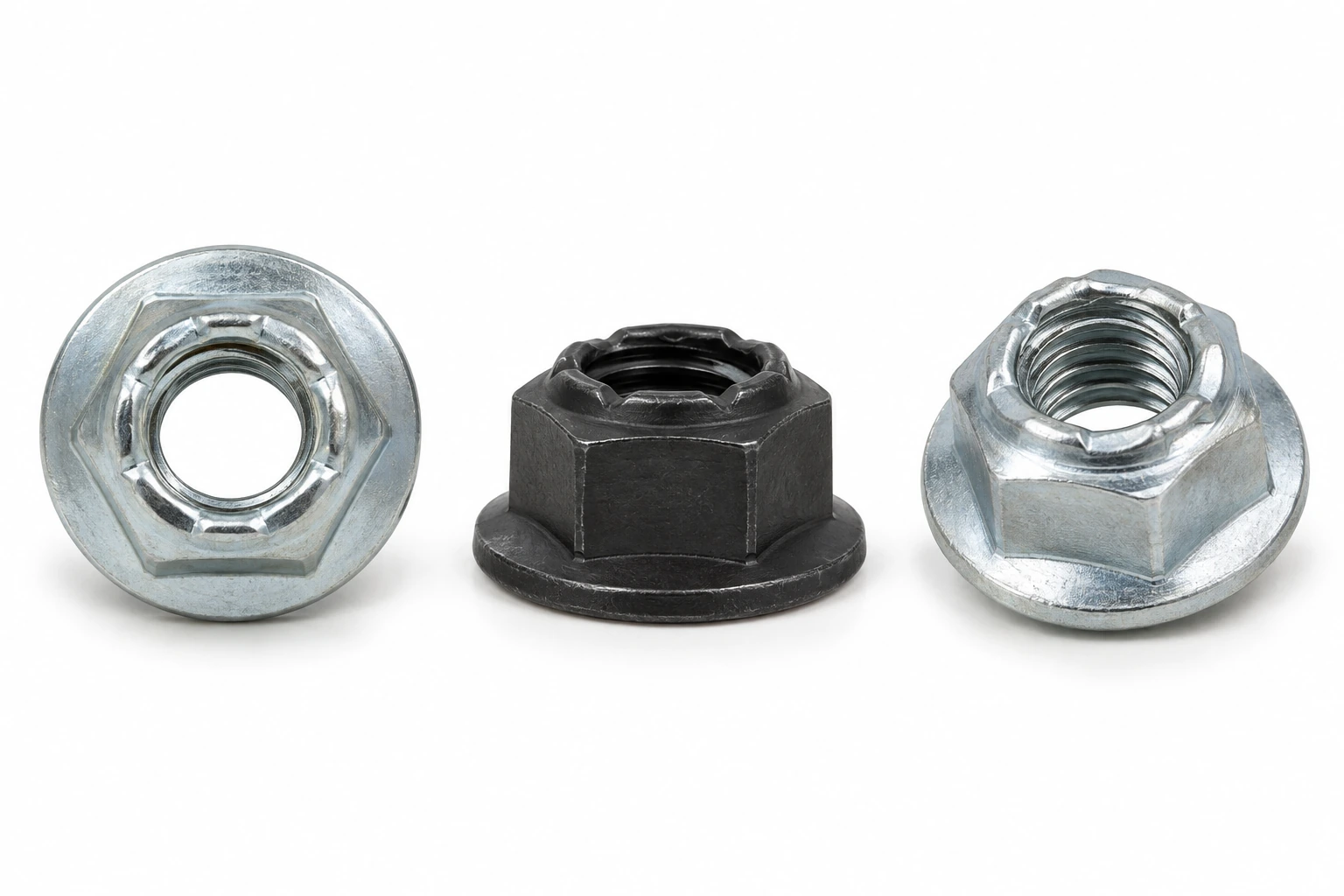
The table below lists the dimensions catalogued for all-metal hex flange lock nuts under GB/T 6187. The scope of GB/T 6187 itself is not summarised here — where a figure matters, confirm it against the published document.
GB/T 6187 — Scope
The table below lists the dimensions catalogued for all-metal hex flange lock nuts under GB/T 6187. The scope of GB/T 6187 itself is not summarised here — where a figure matters, confirm it against the published document.
Tolerance & Product Grades
Product grade is a concept from dimensional fastener standards and does not apply to GB/T 6187. Tolerances for this part are the limits shown against each dimension in the table.
Dimensions Specified by GB/T 6187
| Strength class | Material | Locking method | Finish options | Service |
|---|
| 8 | carbon steel | deformed all-metal thread | black oxide or zinc | general vibration-exposed joints |
| 10 | carbon steel or alloy steel | deformed all-metal thread | black oxide or zinc | higher-preload vibration service |
| 12 | alloy steel | deformed all-metal thread | black oxide or zinc | high-temperature and high-preload service |
Equivalent Standards
Where direct equivalents exist (ISO ↔ DIN, ISO ↔ ASME), they are listed on the parent All-Metal Hex Flange Lock Nuts page.
Always confirm against the dimensions on this page, since some "equivalent" standards differ in tolerances and head geometry.
Companion Standards
A complete specification for all-metal hex flange lock nuts normally cites several documents: one for the geometry, one for the material or mechanical properties, and one for the finish. GB/T 6187 is one of them, not all of them.
Custom manufacturing · Made to drawing
Need a nut to this standard in a non-standard size?
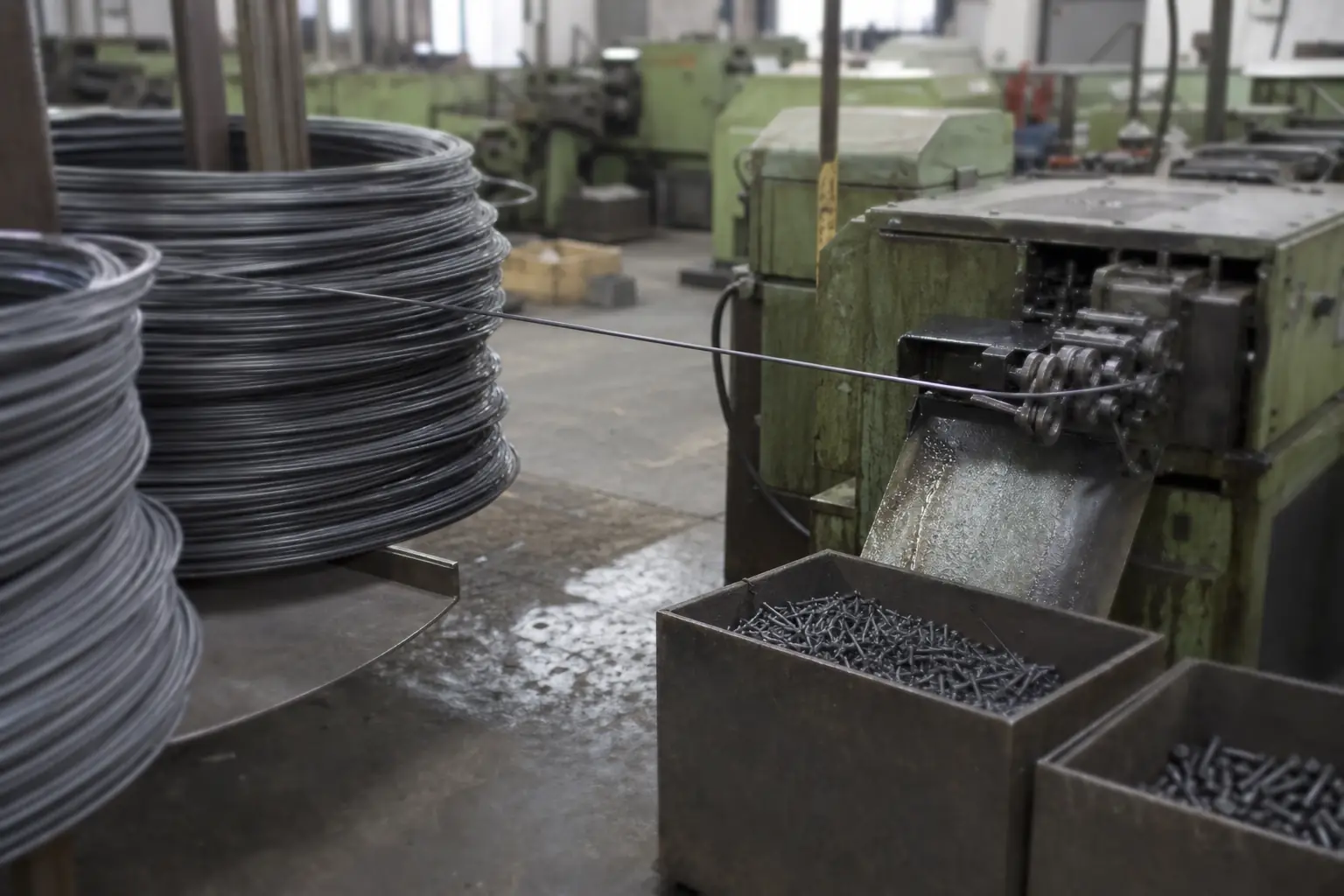
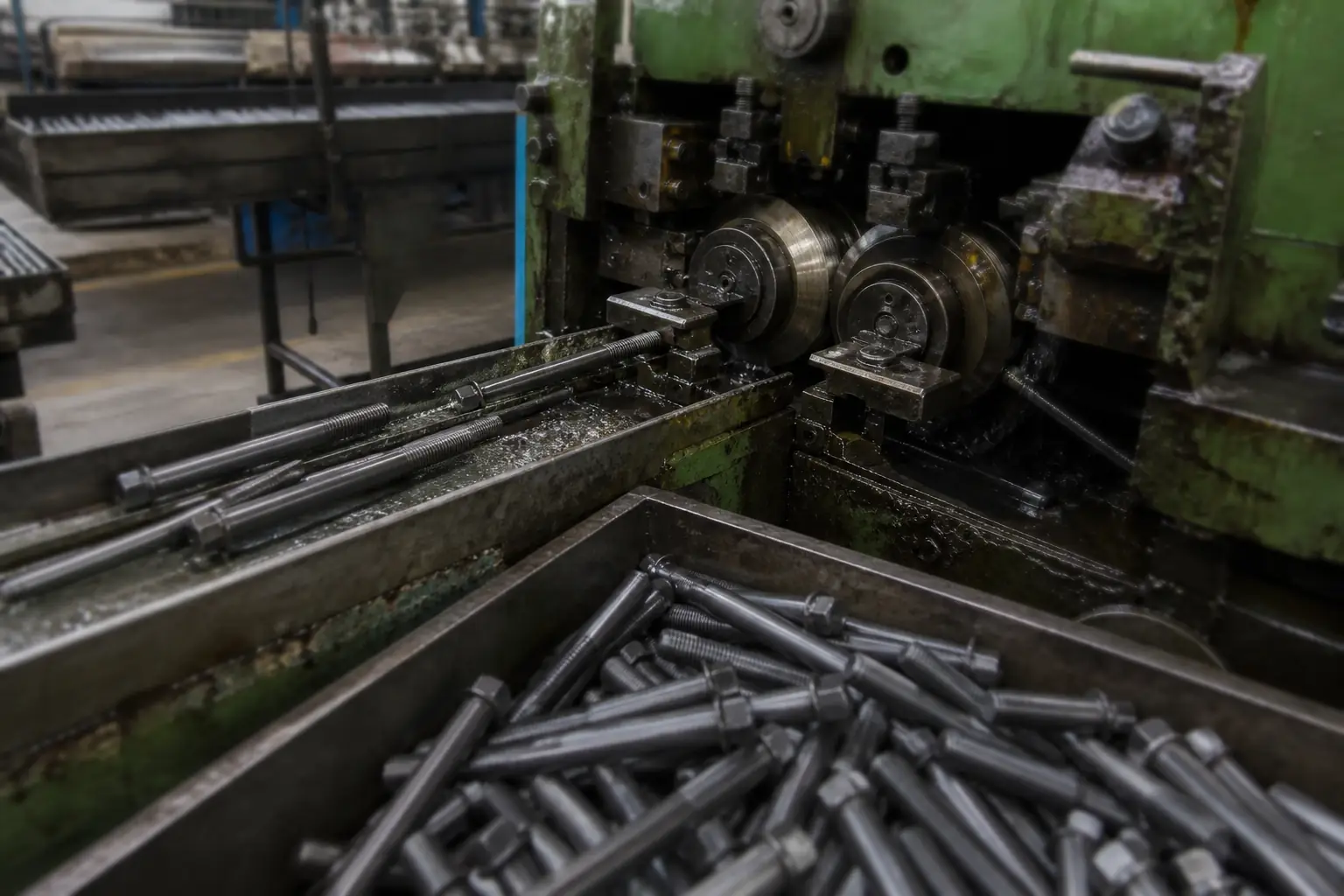
Parts built to GB T 6187 are already in the catalog, so a special is usually a variation on existing tooling rather than a new design — which is what keeps the cost down. Made by cold heading or tapping.
Minimum order from 2,000 pieces; samples within 7 days of drawing approval.
Custom nut manufacturingSend a drawing
Applications & Industries
The sectors that buy All-Metal Hex Flange Lock Nuts to GB/T 6187 / DIN 6927 / ASME B18.2.2, and the duty each one buys them for. Stocked from 8 to 12 (nominal diameter).
Industries that specify All-Metal Hex Flange Lock Nuts
-
Vehicle chassis
Prevailing torque plus a flange bearing face in one part.
-
Rotating machinery
Vibration resistance without a separate lock washer.
-
Heavy equipment
Class 10 and 12 for higher preload joints.
-
Exhaust and hot assemblies
All-metal locking survives temperatures that destroy a nylon insert.
-
Machine building & OEM
The clamping counter-face on studs and bolts throughout an assembly.
-
Steel fabrication
Bolted structural and frame connections.
Typical applications
- selecting class 8, 10 or 12 against the bolt grade
- using it where service temperature rules out nylon
- checking the flange seats fully on the joint face
- replacing a nut plus lock washer with one flanged part
- completing a bolted joint on a stud, rod or bolt
- locking an adjustment so it cannot drift
Service conditions to specify against
- Marine and coastal
- Available in A4 (316) stainless for chloride exposure — coastal structures, pool halls, water treatment and deck hardware, where A2 will eventually pit.
- High load
- Supplied in ISO 898-1 property classes, so the joint can be designed to a stated proof load and tightened to a calculated torque rather than by feel.
- Vibration
- Specified where cyclic load would loosen a plain nut or screw — rotating plant, rail, mobile equipment and anything that is not re-torqued in service.
- Match the class
- A nut below the bolt property class strips before the bolt reaches its own limit — pair class 8 nuts with 8.8 bolts, class 10 with 10.9.
Where to use something else
- Do not re-use an all-metal lock nut indefinitely; the deformed thread loses prevailing torque each time it is run on.
Full application guide: where All-Metal Hex Flange Lock Nuts are used, how to specify them, and the cases they are wrong for