
Fastener Industry Navigates Complex Global Certification Maze
Fastener producers and distributors worldwide confront a tangled array of international certification demands, with divergent standards, testing requirements and regional marks causing compliance delays and added costs.
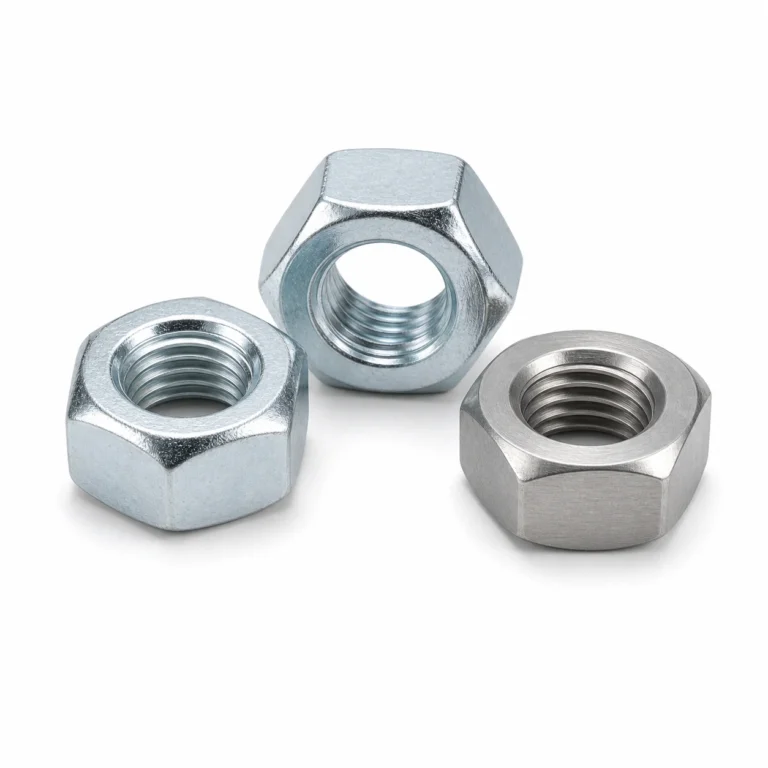
Global trade in industrial fasteners—bolts, nuts, screws, washers and related components—remains anchored in a certification framework that varies sharply across jurisdictions. Export-oriented manufacturers must satisfy a tangle of national and international standards, testing protocols, and regional marks, a puzzle that has deepened as supply chains become more transnational and regulatory bodies update their requirements.
Divergent Standards Create Compliance Burden
Multiple standards systems govern fastener design and performance. ISO, ASTM, DIN, JIS and GB/T each publish specifications that may appear similar yet contain critical differences in dimensions, tolerances and mechanical properties. A Hex Bolts product certified to ISO 4014, for instance, does not automatically meet DIN 931 requirements, even where thread dimensions align. Similarly, Bolt Property Classes defined in ISO 898-1 may need separate verification under ASTM F606. This patchwork forces manufacturers to maintain multiple inventory lines and invest in repeated conformity assessments.

Testing and Documentation Hurdles
Certification typically requires accredited third-party testing for tensile strength, hardness, proof load, surface finish and corrosion resistance. Laboratories such as TÜV, SGS or Bureau Veritas must issue detailed reports, while material certificates, mill test reports and declarations of performance add to the paperwork. Testing backlogs at recognised facilities can delay shipments by weeks, and any non-conformance triggers costly rework. The administrative load falls especially hard on small and medium-sized fastener distributors, who often lack in-house compliance teams.
Regional Markings Fragment Market Access
Mandatory product marks further segment the landscape. Europe’s Construction Products Regulation requires CE marking for structural fasteners, whereas the United Kingdom now insists on UKCA marking post-Brexit. China mandates CCC for certain categories, and North America relies on voluntary listings by bodies like UL or Intertek within code-driven approvals. Because mutual recognition remains limited, a bolt certified for the EU market cannot be sold into the UK or China without additional testing and factory audits, leaving stockpiles of region-specific inventory.
Industry Pushes for Harmonization
Trade associations are working to reduce redundant testing. The European Fastener Distributor Association (EFDA) and the Industrial Fasteners Institute (IFI) actively promote harmonised standards and mutual acceptance of test reports. The International Laboratory Accreditation Cooperation (ILAC) arrangement allows some cross-border acceptance of lab results, but its scope is uneven. At the standards-writing level, ISO committees and ASTM International task groups occasionally align specifications, yet full convergence remains a long-term ambition rather than near-term reality.
Impact on Supply Chains and Costs
Certification delays ripple through procurement and logistics. Lead times stretch when every new market entry demands fresh testing. Inventory carrying costs rise because safety stock must cover multiple certified variants. Administrative overhead climbs with the need to track and renew certificates, which often expire after a set period. Just-in-time manufacturing systems, common in automotive and industrial assembly, are particularly sensitive to such disruptions, making fastener certification a strategic concern well beyond the quality department.
| Aspect | Key Players/Regimes | Main Challenge | Typical Requirement |
|---|---|---|---|
| International standards | ISO, ASTM, DIN, JIS, GB/T | Overlap without full equivalence | Separate conformity testing |
| Product markings | CE, UKCA, CCC, UL listing | No universal mutual recognition | Region-specific audits |
| Testing & documentation | Third-party labs: TÜV, SGS, Bureau Veritas | Backlogs & document complexity | Mill certs, test reports, DoP |
| Supply-chain effects | Manufacturers, distributors, SMEs | Longer lead times, higher inventory | Multiple certified stock lines |
Mastering the certification maze demands constant monitoring of regulatory shifts, strategic use of accredited laboratories, and active participation in standards development. For an industry that supplies nearly every manufacturing sector, achieving smoother cross-border recognition of fastener certifications has moved from a back-office issue to a boardroom priority.
Why This Matters
Fasteners are the backbone of construction, automotive and machinery assembly. Certification bottlenecks not only inflate lead times and inventory costs but also restrict market access for manufacturers, particularly SMEs. Streamlining mutual recognition would reduce redundant testing, accelerate trade, and strengthen the resilience of global industrial supply chains.
Sources
- ISO (iso.org)
- ASTM International (astm.org)
- European Committee for Standardization (cencenelec.eu)
Source: Fastener + Fixing Magazine
FAQ
Is Fastener + Fixing Magazine the only source for this fastener story?
Fastener + Fixing Magazine is the outlet attached to this item, but it should not be the only reference for an important development. Comparing it with other independent reports gives a fuller and more reliable picture.
What is this fastener story about?
It summarises a recent development in fastener, drawing on the original reporting. The key facts — who is involved, what changed and any figures or dates attached — are highlighted so the story is quick to grasp.
Why does this fastener development matter?
The significance lies in what it signals: a notable figure, a decision, or a shift that affects the people, places or organisations named. Those are the points worth following as the story continues.
How current is this fastener information?
This article was published on July 31, 2026. News changes quickly, so use it as a starting point and check the named source for later corrections, revised figures or follow-up reporting.
Is this fastener report confirmed?
It reflects what the cited reporting stated at the time, which can be preliminary. For anything consequential, comparing two or more independent reports is the most reliable way to confirm the details.
Who and where is involved in this fastener story?
The article identifies the main organisations, people and locations tied to the development. Those named entities are the anchors for following how the story evolves across later coverage.