
How Fastener Choices Define Marine Robot Longevity
Threaded standoff fasteners keep marine robots operational by balancing corrosion resistance, precise net positioning, and easy maintenance, guided by standards like ISO 3506 and ISO 9227.
Autonomous water-cleaning robots demand fasteners that withstand continuous moisture and mechanical stress without failure.
The Unique Demands of Marine Robotics
Floating waste skimmers operate in some of the most corrosive environments on earth. Whether deployed in a saltwater harbor or a freshwater lake, these robots submerge their fastening points repeatedly, exposing them to chlorides, biofouling, and constant vibration. A single seized or rusted bolt can sidelong an entire unit, interrupting cleanup operations and driving up maintenance costs.

Netting and filtration assemblies present a particularly challenging attachment problem. The hardware must not only resist corrosion but also maintain a precise, repeatable offset between the robot frame and the collected debris. That geometry ensures adequate water flow while keeping captured waste from escaping. Ordinary bolts fall short here; threaded standoff fasteners are engineered specifically to create that fixed gap, distributing tension evenly and preserving net shape under load.
Material Science Drives Corrosion Resistance
Metallic fastener selection in marine service revolves around alloy composition. Austenitic stainless steels dominate, with molybdenum-bearing grades like AISI 316 (1.4401) and its low-carbon variant 316L providing the pitting resistance needed in chloride-rich waters. In less aggressive freshwater, 304 stainless or even high-tensile brass can be cost-effective alternatives, though they sacrifice some durability.
Polymer standoffs—commonly nylon or polyacetal—see occasional use where electrical ISOlation or weight savings matter more than brute strength. Their load limits restrict them to smaller nets, however. Across all materials, secondary processes like passivation or fluoropolymer coating significantly extend service life by creating a barrier against biofouling and crevice attack. These treatments can double the interval between scheduled maintenance stops.
Standards and Compliance in Fastener Selection
Procurement teams lean heavily on international standards to cut through material claims. Dimensional accuracy follows Metric thread dimensions laid out in ISO 724, with thread fits typically targeted to 6g/6H per ISO 965 to prevent galling during assembly. Mechanical properties for steel fasteners are governed by property classes under ISO 898-1, while stainless steel components fall under the ISO 3506 series—class A4-70, for instance, denotes the austenitic alloy and its minimum tensile strength.
Corrosion resistance is validated through accelerated salt spray tests defined in ISO 9227. A common benchmark calls for a minimum of 240 hours of neutral salt spray for freshwater applications, rising to 1,000 hours for full marine exposure. Dimensional tolerances, unless otherwise specified, are held to ISO 2768-m class. Adhering to these benchmarks gives engineers confidence that a standoff will perform as long as the robot itself.
Procurement and Supply Chain Realities
Standard standoffs in M3 through M8 threads and lengths from 5 mm to 50 mm are available from catalog suppliers. Many water-robot designs, however, require non-standard lengths, integrated flanges, or partial threading that force buyers toward custom manufacturing. Small-batch CNC turning or cold-forming shops typically quote lead times of 4–8 weeks for such parts, making advanced planning essential.
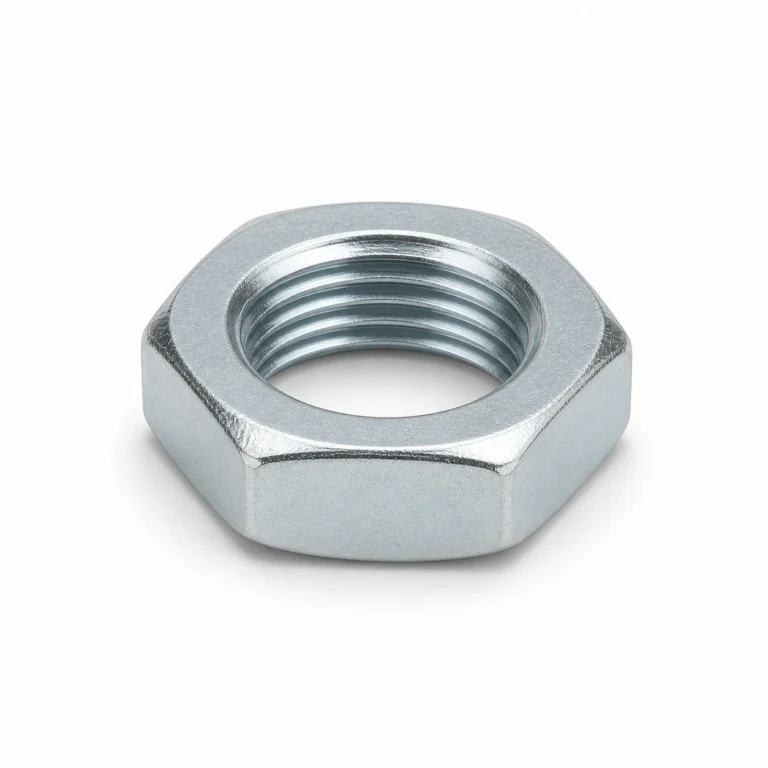
Quality-conscious distributors now bundle standoffs with companion hardware like Hex Bolts and All-Metal Lock Nuts in pre-assembled kits. This approach reduces on-site assembly errors and ensures that every component meets the same material traceability requirements—particularly critical for 316-grade items, where mill test certificates must accompany each batch.
| Criterion | Details |
|---|---|
| Corrosion Resistance | Validated via ISO 9227 salt spray; 240 h (freshwater) / 1,000 h (marine) minimum |
| Common Materials | AISI 316/316L stainless, 304 stainless, brass, nylon for low-load duty |
| Governing Standards | ISO 898-1 (property classes), ISO 3506 (stainless), ISO 724/965 (threads), ISO 2768 (tolerances) |
| Typical Size Range | M3–M8 threads, 5–50 mm lengths; custom dimensions widely available |
| Custom Part Lead Time | 4–8 weeks for non-standard standoffs |
| Maintenance Enhancement | Threaded design permits rapid net replacement; coatings extend service intervals |
Engineers evaluating marine fasteners should verify the salt spray test duration required for their target water chemistry, confirm material certifications against ISO 3506, and account for custom lead times early in the design phase.
Key Figures
This story includes concrete figures such as 4-8 weeks and 1000 hours minimum. The points below pull out the key numbers so the reporting is easier to scan and verify.
- Custom part lead time: 4-8 weeks Small-batch CNC or cold-forming shops typically require 4 to 8 weeks to deliver non-standard threaded standoffs.
- Salt spray test (marine): 1000 hours minimum For full marine environments, the same test is extended to a 1,000-hour minimum to validate corrosion resistance.
Why This Matters
As fleets of autonomous water-cleaning robots scale up, fastener reliability directly dictates fleet uptime and maintenance overhead. Selecting corrosion-resistant alloys with verified salt-spray performance and adherence to international standards prevents unplanned downtime. Standardizing on a few proven fastener configurations will streamline supply chains and make field servicing more predictable, accelerating adoption in municipal and industrial waterway management.
Sources
- ISO (iso.org)
- TCT Magazine (tctmagazine.com)
Related news: Threaded Net Standoffs Provide Robust Attachment for Water Robots
FAQ
What are the key figures in this How Fastener Choices Define Marine story?
The article cites figures such as 4-8 weeks and 1000 hours minimum. Numbers like these convey the scale and direction of what happened; for the exact amount and the context around it, the original report is the reference.
What is this How Fastener Choices Define Marine story about?
It summarises a recent development in How Fastener Choices Define Marine, drawing on the original reporting. The key facts — who is involved, what changed and any figures or dates attached — are highlighted so the story is quick to grasp.
Why does this How Fastener Choices Define Marine development matter?
The significance lies in what it signals: a notable figure, a decision, or a shift that affects the people, places or organisations named. Those are the points worth following as the story continues.
How current is this How Fastener Choices Define Marine information?
This article was published on July 31, 2026. News changes quickly, so use it as a starting point and check the named source for later corrections, revised figures or follow-up reporting.
Is this How Fastener Choices Define Marine report confirmed?
It reflects what the cited reporting stated at the time, which can be preliminary. For anything consequential, comparing two or more independent reports is the most reliable way to confirm the details.
Who and where is involved in this How Fastener Choices Define Marine story?
The article identifies the main organisations, people and locations tied to the development. Those named entities are the anchors for following how the story evolves across later coverage.